Affordable Housing

February 11, 2015

The New Broadway Plan Could Bring 3,000 Housing Units to West Harlem, 50 Percent Will Be Affordable

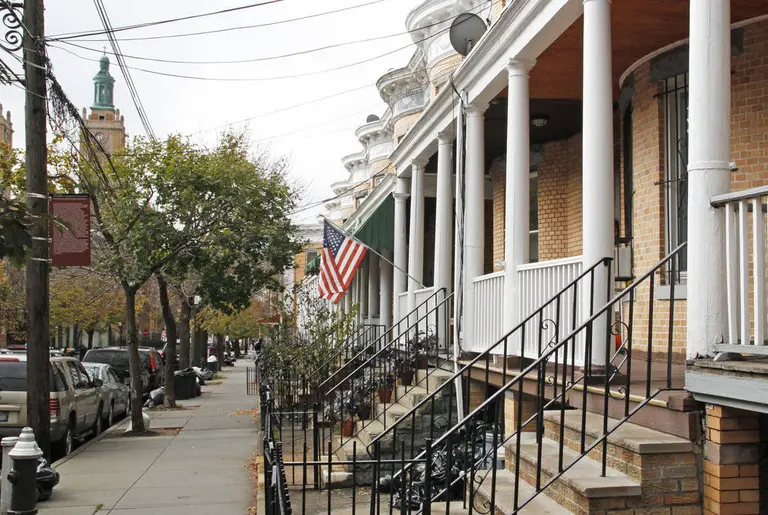
You may remember the Harlem Promenade project, which proposed transferring air rights over the Amtrak rail lines in West Harlem to create affordable housing and using the sale of the air rights to pay for $170 million in community improvements in Hamilton Heights, including a High Line-esque park. We've now learned that the project has taken on a new life as the New Broadway Plan, which may be smaller in scope than the original plan, but would be the largest creation of affordable housing in Manhattan since 1959 if fully realized. It would also make a huge dent in Mayor De Blasio's goal of creating or preserving 200,000 affordable units over ten years. The Plan proposes a rezoning of portions of Broadway from 125th to 155th Streets in order to build 3,000 new units of housing, 50 percent of which will be permanently affordable, and to equalize the amount of new affordable to market rate housing stock, which is currently at a disproportionate ratio of 20 percent to 80 percent, respectively.
Get the scoop here
February 3, 2015

HIGHLIGHTS: De Blasio Announces Plans for More Affordable Housing and a New City-Wide Ferry Service

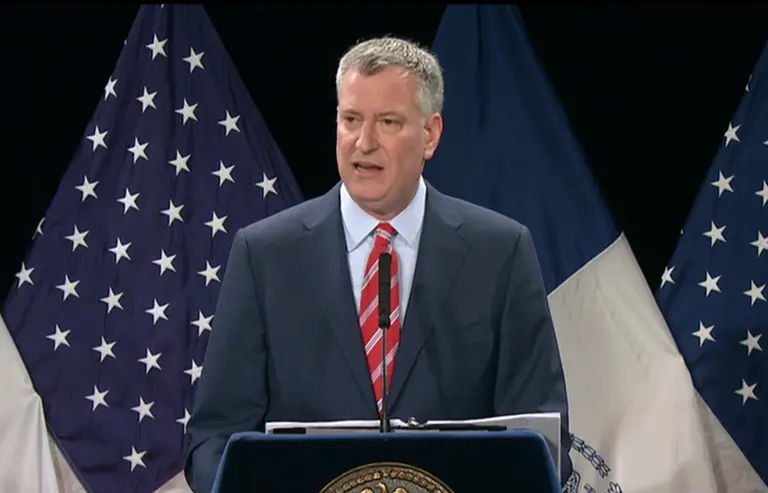
Mayor Bill de Blasio just wrapped up his State of the City address, and in addition to focusing in like a laser beam on affordable housing, the mayor also unveiled a number of additional improvements that certainly had us sitting up straight in our seats. In his address, De Blasio emphasized that his plan would look to creating denser, economically diverse affordable residential communities for not only low-income New Yorkers, but also for chronically homeless vets, seniors and artists. “While the state of our city is strong, we face a profound challenge,” de Blasio said during his speech. "If we fail to be a city for everyone, we risk losing what makes New York, New York…Nothing more clearly expresses the inequality gap—the opportunity gap—than the soaring cost of housing." The mayor also spoke about the administration's plan to raise minimum wage and expand public transit, which would include adding more Bus Rapid Transit lines to the outer boroughs, and, most notably, a brand new city-wide ferry system that would serve areas such as the Lower East Side, the Rockaways and Red Hook for the same cost as a subway ride. Keep reading for more highlights.
Highlights from de Blasio's speech here
February 2, 2015

Developers Rush to Break Ground and Add Affordable Housing Before Tax Incentives End

It would be nice to think that developers added affordable housing to their projects out of the goodness of their hearts, but it probably has more to do with the construction bonuses and tax incentives afforded for up to 25 years to developers when they reserve at least 20 percent of a building's units for poor and moderate-income tenants. But this real estate tax break, known as the 421a abatement, is set to expire on June 15, lighting a fire under developers to break ground on new projects. The concern, though, is that some development sites receive 421a benefits as of right (meaning solely for putting up a new building), while others are required to include affordable housing. The difference is based on geographic location. For example, Manhattan between 14th and 96th Streets and the waterfronts of Brooklyn and Queens must include affordable housing. According to Crain's, some housing advocates "want projects to get abatements only if they create affordable units—which are priced for renters who earn 60 percent or less of the area's median income."
What does this mean for the future of affordable housing?
January 16, 2015

City Exceeds 2014 Affordable Housing Goals, but Few Apartments Are Below 96th Street

Photo via Pexels The Mayor announced yesterday that the city had exceeded its affordable housing goal for 2014 by 1,300 apartments, building or preserving 17,300 affordable units. This represents 8.6 percent of de Blasio's larger goal of 200,000 units over 10 years. But on the heels of the announcement, a report by New York University's Furman Center shows that only 6 percent of new subsidized affordable rental units have been built below 96th Street since 2000, compared with 16 percent in the '70s. The city says it's ramping up its building and preservation efforts to 20,000 affordable units per year, but this likely won't do much to sway the numbers above 96th Street.
More on the affordable housing news here
January 16, 2015

Could These Portable Temporary Homes Help Solve NYC’s Affordable Housing Crisis?

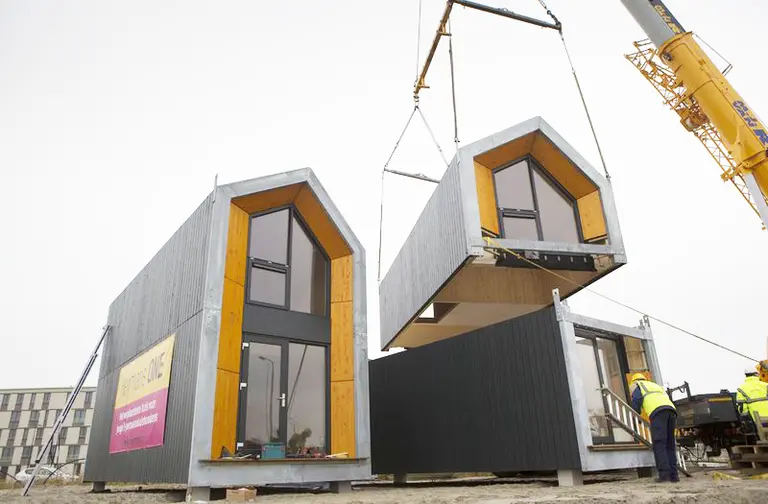
As the De Blasio administration struggles to find ways to remedy the city's affordable housing crisis, here comes a solution from overseas that could help solve their woes while also putting the city's nearly 15,000 revitalization-ready vacant lots to use. Dubbed Heijmans ONE, these Dutch-made prefab homes are easily portable, easily deployable, and are designed specifically to provide cheap housing for those who need it.
More details on the beautiful design here
December 29, 2014

The Bronx Is the Least Affordable County in the U.S. for Renters

Brooklyn may hold the title for most unaffordable place to buy a home in America, but when it comes to affordability for renters, the Bronx is the worst. According to the Daily News, a new report shows that tenants in the borough spend 68% of their earnings on rent, which roughly equates to $2,000 per month for a three-bedroom […]

November 21, 2014

Study Says Brooklyn Bridge Park Towers Will Have Insignificant Environmental Impact

Critics of the two new residential towers planned for Pier 6 in Brooklyn Bridge Park have made complaints that the structures' environmental impact needed further analysis, but a new study, completed by environmental engineering firm AKRF and set to be released today by the city-controlled Brooklyn Bridge Park Corporation asserts that the towers' environmental impact will be insignificant. In a statement, Brooklyn Bridge Park said: “After evaluating the potential impacts on 19 distinct environmental categories—including schools, flood resiliency, traffic and open space—and incorporating any relevant updated changes to the project, the environmental regulations and background conditions, the technical memorandum concludes that the Pier 6 uplands project would not have any additional significant impacts.”
More on the planned towers here
November 19, 2014

City Wants to Up Mansion Tax to Raise Funds for Affordable Housing

As the city continues to explore new avenues for the creation of affordable housing, the WSJ reports the latest idea being floated is a new "mansion tax" that would increase the amount collected on the most expensive apartment sales. Currently, homes that change hands for more than a million dollars are subject to a 1% tax, but the city wants to up this to take advantage of the red hot luxury housing market. The proposal, unsurprisingly, has met with much criticism.
More on the mansion tax here
November 18, 2014

Dear Developers: City Proposes Swapping Air Rights for Permanent Affordable Housing

In the ongoing battle to provide more affordable housing to New Yorkers, the city has drawn up a new proposal that might just get developers clamoring to build more below-market units. The Economic Development Corporation has issued a request for proposals from developers who would, in exchange for no-cost air rights, provide a permanently affordable housing program that maximizes the number of units available and their affordability.
Find out more here
November 10, 2014

Home and Away: Is Airbnb a Threat to the Affordable Housing Market?

Controversial room-sharing startup Airbnb, one of the most visible players in what is being called the “sharing economy,” has recently awakened the innovation vs. regulation argument in all the usual ways–and a few new ones, including the accusation that these short-term rentals are depleting the already-scarce affordable housing stock in pricey metro areas like San Francisco and New York City.
What the latest data reveals–and what's being done about it
November 10, 2014

Quooklyn: The Rise of Ridgewood and Why Your Friends Will be Moving There

Among neighborhoods primed to be the next untapped frontier, Ridgewood isn’t a newcomer. This low-key community on the western border of Queens has seen a steady migration of L-train riders, including the young and restless fleeing Williamsburg and professionals looking for a safe, accessible, quiet ‘hood to call home. In New York City, where every square foot vies for “next big thing” status, Ridgewood is a smart alternative to its headline-stealing North Brooklyn neighbors, Bushwick and Williamsburg, for anyone looking to invest in an up-and-coming residential area.
More on the rise of Ridgewood this way
September 15, 2014

INTERVIEW: Karim Rashid on His Move into Architecture and Designing Colorful NYC Condos

You may not recognize Karim Rashid immediately, but odds are you have at least one of his designs in your home. A staunch believer that everyone deserves access to great design no matter what their budget (it's what he calls "designocrasy"), Karim has become one of the world's most celebrated designers having brought thousands of new ideas and innovations to the widest-possible audience. As such, Karim has won hundreds of international awards, including the prestigious Red Dot, and his work can be found in more than 20 permanent collections including those of the MoMA, Centre Pompidou, and SFMOMA. Karim also calls everyone from Umbra to Giorgio Armani, Kenzo, Alessi, Artemide and Veuve Clicquot as his clients, and Time magazine once described him as the "most famous industrial designer in all the Americas". Clearly having conquered the industrial design realm, Karim recently turned his creative eye to architecture. We recently caught up with the designer cum architect to talk about the evolution of his career and the three eye-popping HAP condos he's now got under construction for New York City. Hear what he has to say about his grand new endeavors—color, controversy and all.
Read our interview with Karim Rashid here
September 3, 2014

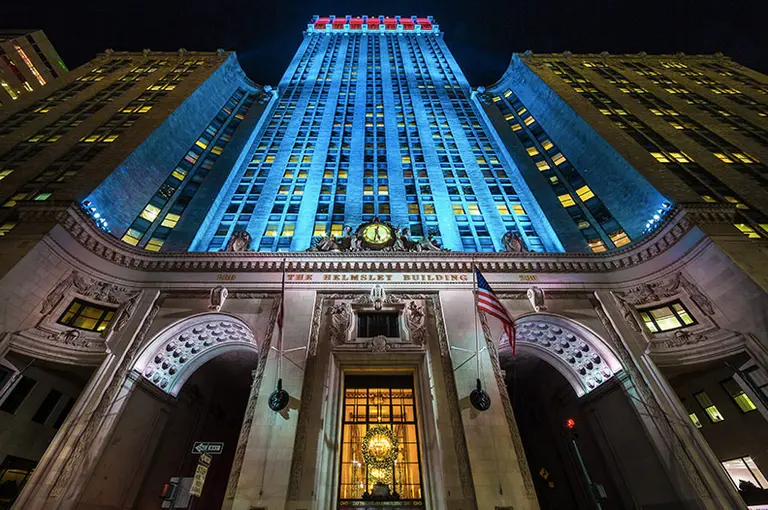
Real Estate Wire: The Helmsley Building Could Hit the Market for $1.5B; Carnegie Park Going Co-Op

The Commercial Observer interviews Gary Barnett of Extell. The developer discusses everything from his aggressive development stance to the “poor door” controversy that’s gotten everyone all riled up. [CO] An epic tale of murder at 31 Bond Street—the site of new condos coming to the NoHo market. [NYT] The “Gossip Girl Penthouse” at 1136 Fifth Avenue sold […]

August 6, 2014

14 New Designs Proposed for Brooklyn Bridge Park Project – BIG, Asymptote and FXFOWLE on the Roster

The city has just received 14 new design proposals for the two remaining housing developments on the southern edge of Brooklyn Bridge Park, a site that has been the focus of a contentious affordable housing debate; namely whether such units should be added to the coveted waterfront site. According to the Wall Street Journal, the Brooklyn Bridge Park Corp., which runs the park, will discuss the new proposals in a meeting today.
See all 14 proposals here
August 5, 2014

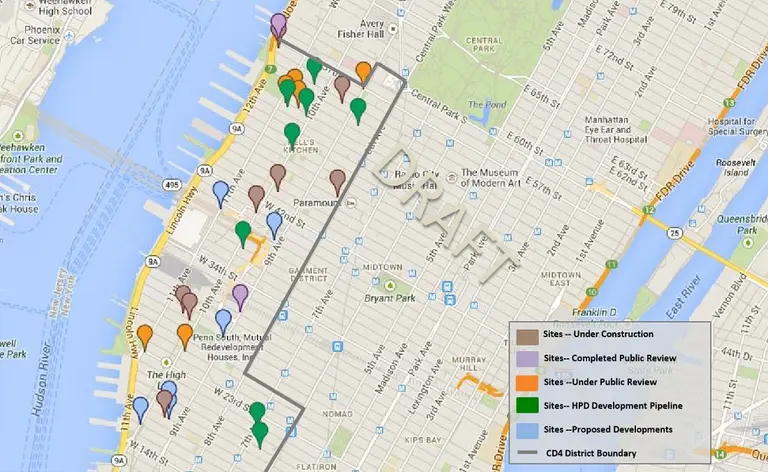
CB4 Housing Plan Calls for 11,000 Units of Affordable Housing

Mayor de Blasio called for all 59 New York City community boards to propose ways to increase the number of affordable housing units within their district, and CB4, which covers Chelsea, Clinton, and Hell's Kitchen, is the first to respond. The Manhattan District Board 4 Affordable Housing Plan was voted on internally by the board on July 23, but is expected to be officially presented to the city on August 8th. The 81-page plan, which could influence affordable housing policy throughout the city, focuses on six major themes that will outline how the west side neighborhoods tackle the addition of 11,000 units of affordable housing.
We break down the themes
August 4, 2014

Mythbusters: Shedding Light on 80/20 Affordable Housing and ‘Poor Doors’

There’s been lots of chatter on the street and in the media on the subject of “poor doors” in new developments for those who have qualified for affordable housing. And though this subject has created quite a bit of controversy, it's actually not quite what it seems. Rather than being outraged that our city allows real estate developers to “discriminate” against those who could never consider paying for the privilege of residing in their latest and greatest luxury building, naysayers should think about reading up on exactly what affordable housing is and isn’t—“rich” home seekers having an edge over the so-called “poor.”
We look at 80/20 and the 'poor door' controversy here