These 12 NYC neighborhoods will see affordable housing projects fast-tracked
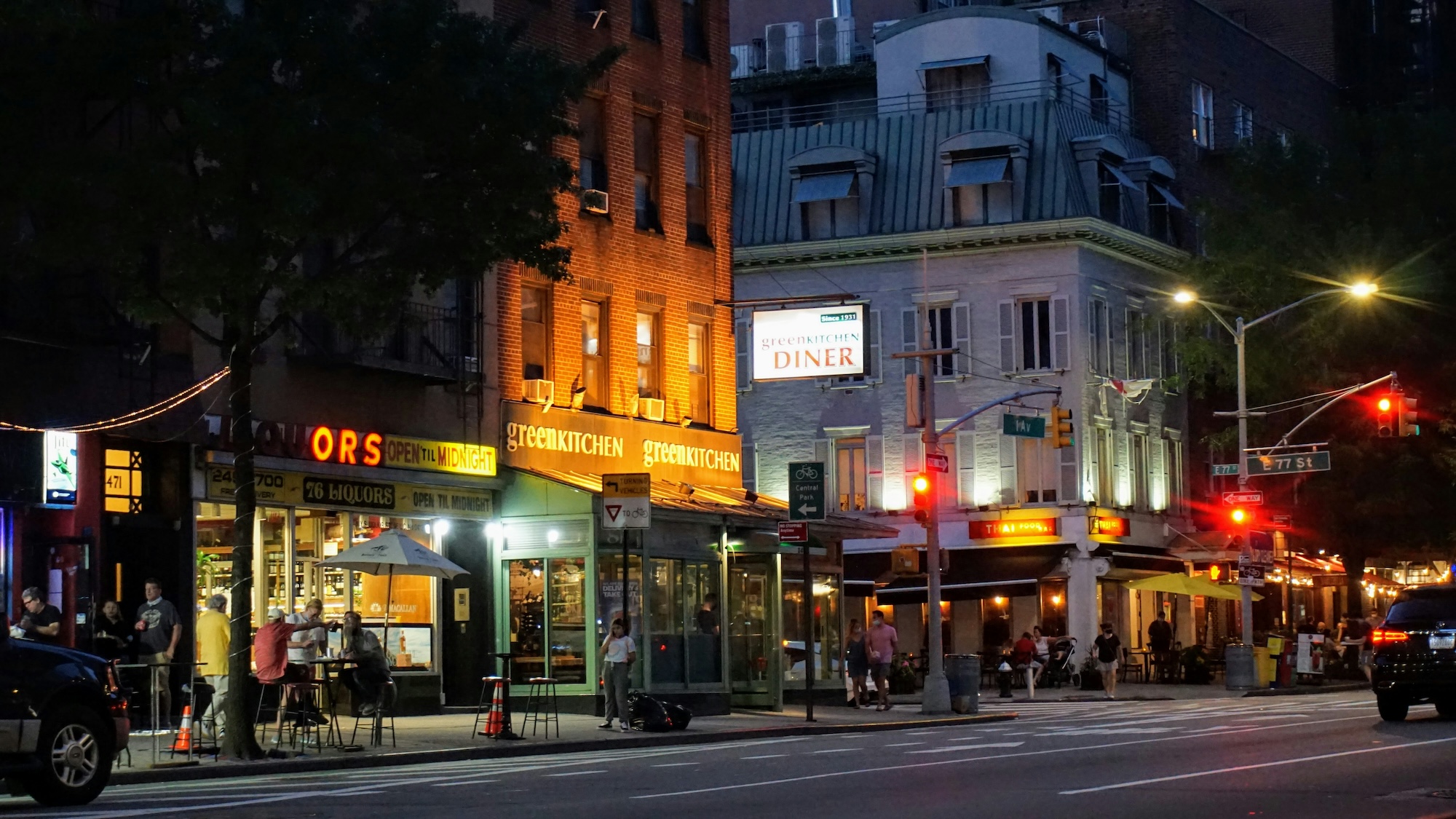
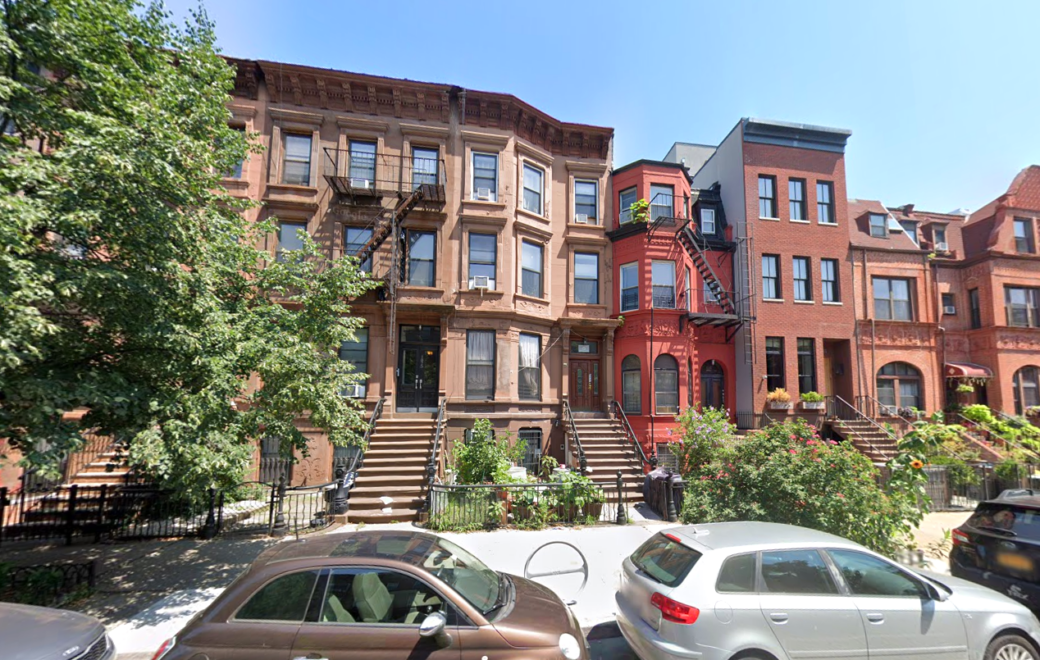
Photo by Ricky Singh on Unsplash
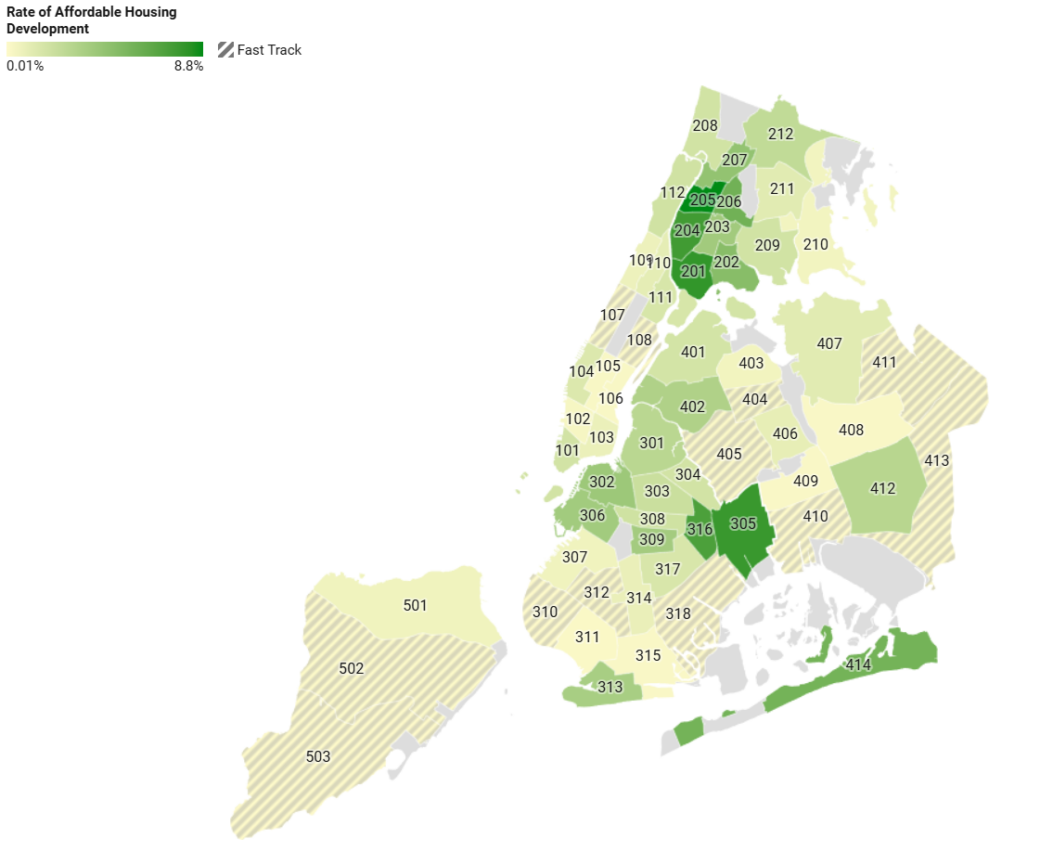
New York City neighborhoods that have produced the least amount of affordable housing will see new projects streamlined under a new process that takes effect next year. The Department of City Planning on Thursday published a list of 12 community districts that will be eligible for the Affordable Housing Fast Track, a measure approved by voters last November that speeds up the approval process for affordable housing by cutting out input from the City Council, reducing the review time from seven months to three months. The city identified the neighborhoods, which range from the South Shore on Staten Island to the Upper West Side, by looking at affordable housing production relative to each district’s existing housing stock over the last five years.
Initiated under former Mayor Eric Adams, the measure is one of several policies designed to confront the city’s housing shortage and rising cost of living.
With a rental vacancy rate of just 1.41 percent in a recent city survey, housing advocates and city officials have argued that increasing the housing supply is necessary to help address affordability, with the measure offering one way to accelerate new development.
It also seeks to address disparities in affordable housing development across community districts. While some areas have produced significant amounts of new affordable housing in recent years, others have lagged behind, with most of the districts selected for the fast-track process located in the city’s more suburban neighborhoods.
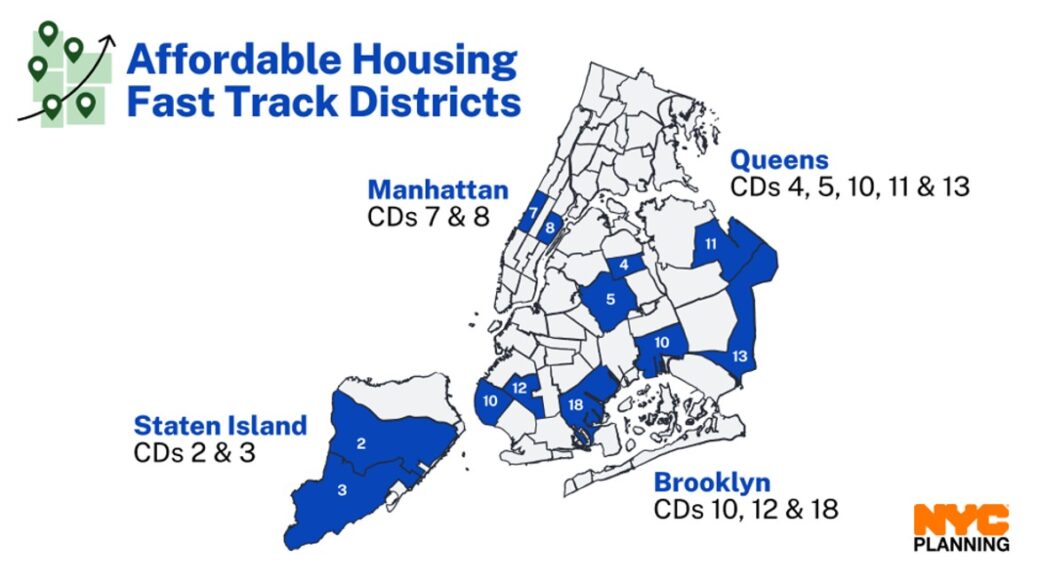
The 12 districts included in the fast-track process represent roughly one-fifth of the city’s 59 community districts but produced just 883 of 63,870 new affordable homes over the past five years, or about 1.1 percent of the citywide total. The highest-producing district created eight times as many affordable homes as all 12 Fast Track districts combined.
In ranked order, the 12 districts with the lowest rate of affordable housing production are as follows:
- Brooklyn Community District 10: Bay Ridge, Dyker Heights
- Staten Island Community District 3: South Shore
- Queens Community District 13: Queens Village, Bellerose, Rosedale
- Queens Community District 10: South Ozone Park, Howard Beach
- Staten Island Community District 2: Mid-Island
- Brooklyn Community District 18: Canarsie, Flatlands
- Manhattan Community District 8: Upper East Side, Roosevelt Island
- Queens Community Board 5: Ridgewood, Maspeth, Middle Village
- Queens Community Board 11: Auburndale, Bayside, Douglaston
- Manhattan Community Board 7: Upper West Side
- Brooklyn Community District 12: Borough Park, Kensington
- Queens Community District 4: Corona, Elmhurst
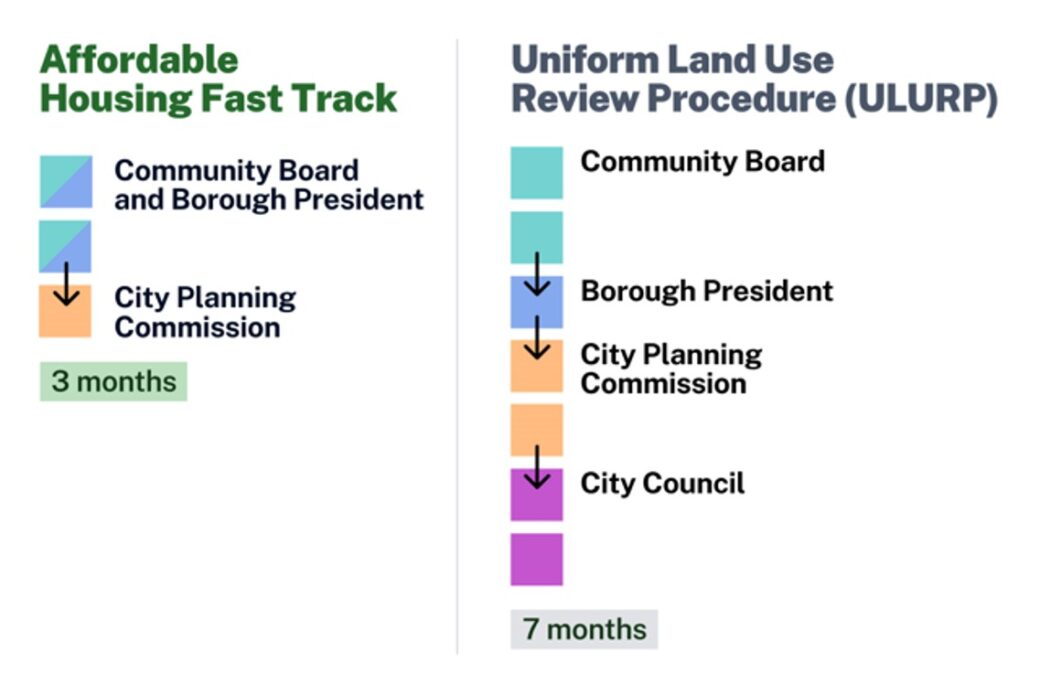
The Affordable Housing Fast Track takes effect on January 1, 2027. Under the new process, eligible rezoning proposals that create affordable housing in the 12 designated districts will get a streamlined 90-day public review, cutting roughly four months from the traditional uniform land use review procedure (ULURP).
The measure preserves community board and borough president review, as well as opportunities for public input, and does not change environmental review requirements or landmark protections.
However, the measure has been criticized by some elected officials, particularly those whose districts are among the 12 selected for the fast-track process.
Previously, council members wielded significant influence over new development in their districts through a practice known as “member deference,” in which the broader council would typically defer to the member representing the district where a land-use decision would take effect.
Under the new process, the council no longer has a final vote on eligible rezonings. Instead, the City Planning Commission makes the final decision, with members appointed by the mayor and borough presidents.
Some council members also oppose the measures because they worry that new development could alter the character of these suburban-style neighborhoods and overlook local residents’ concerns.
Council Member Phil Wong, who represents District 30, which includes Ridgewood, Maspeth, and Middle Village, told Gothamist ahead of the list’s release that he opposed any “top-down mandates that ignore the character of our neighborhoods and shut communities out of decisions that directly affect them.”
“I have serious concerns about another ‘fast-track’ process that gives developers more power while residents, community boards, and local councilmembers get less.”
Mayor Zohran Mamdani, who has championed the Adams-era measure, views the fast track as a way to spread housing development more evenly across the five boroughs and address the city’s cost-of-living crisis, a central focus of his administration.
“New York’s housing crisis is not going to be solved by asking the same neighborhoods to do all the building,” Mamdani said. “Every New Yorker deserves a home they can afford, and every neighborhood must be part of delivering it.”
“The Affordable Housing Fast Track gives us a new tool to cut through red tape and make sure our housing growth is shared more fairly across all five boroughs,” he added. “We are going to build–block by block, neighborhood by neighborhood—at the scale this crisis demands.”
DCP will host a virtual public information session on December 3 to explain how the fast-track process works and answer questions from New Yorkers.
RELATED: