Riverside Park South is complete after nearly 30 years
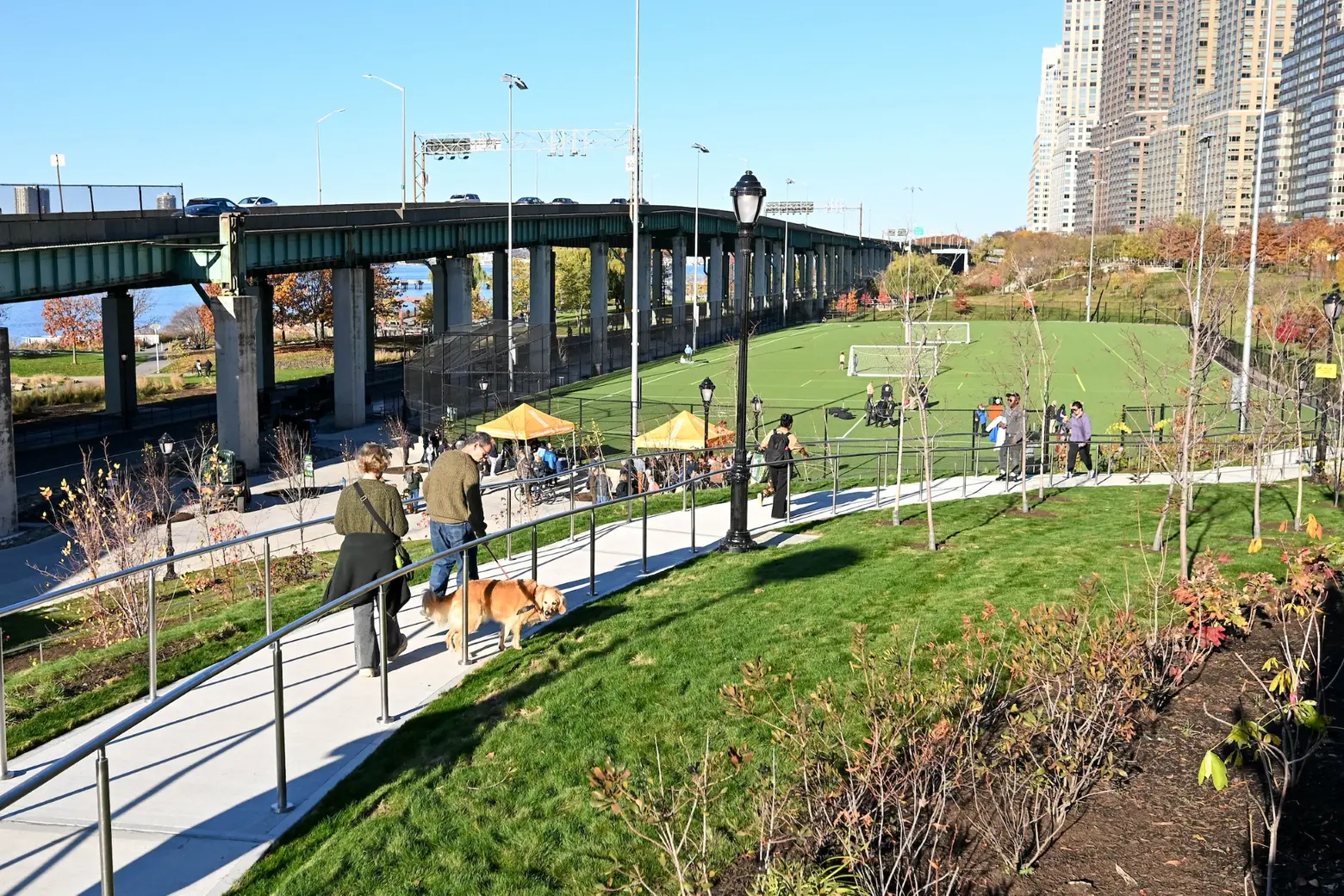
Photos courtesy of NYC Parks / Hannah Mrakovčić
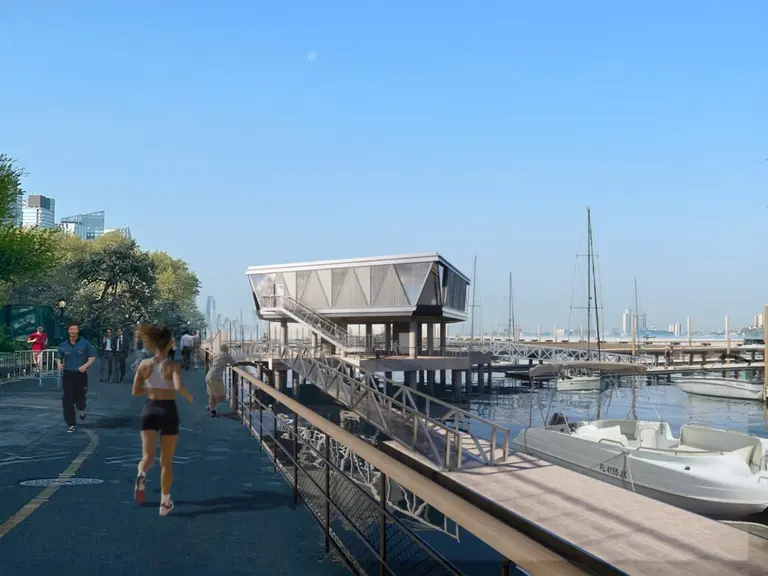
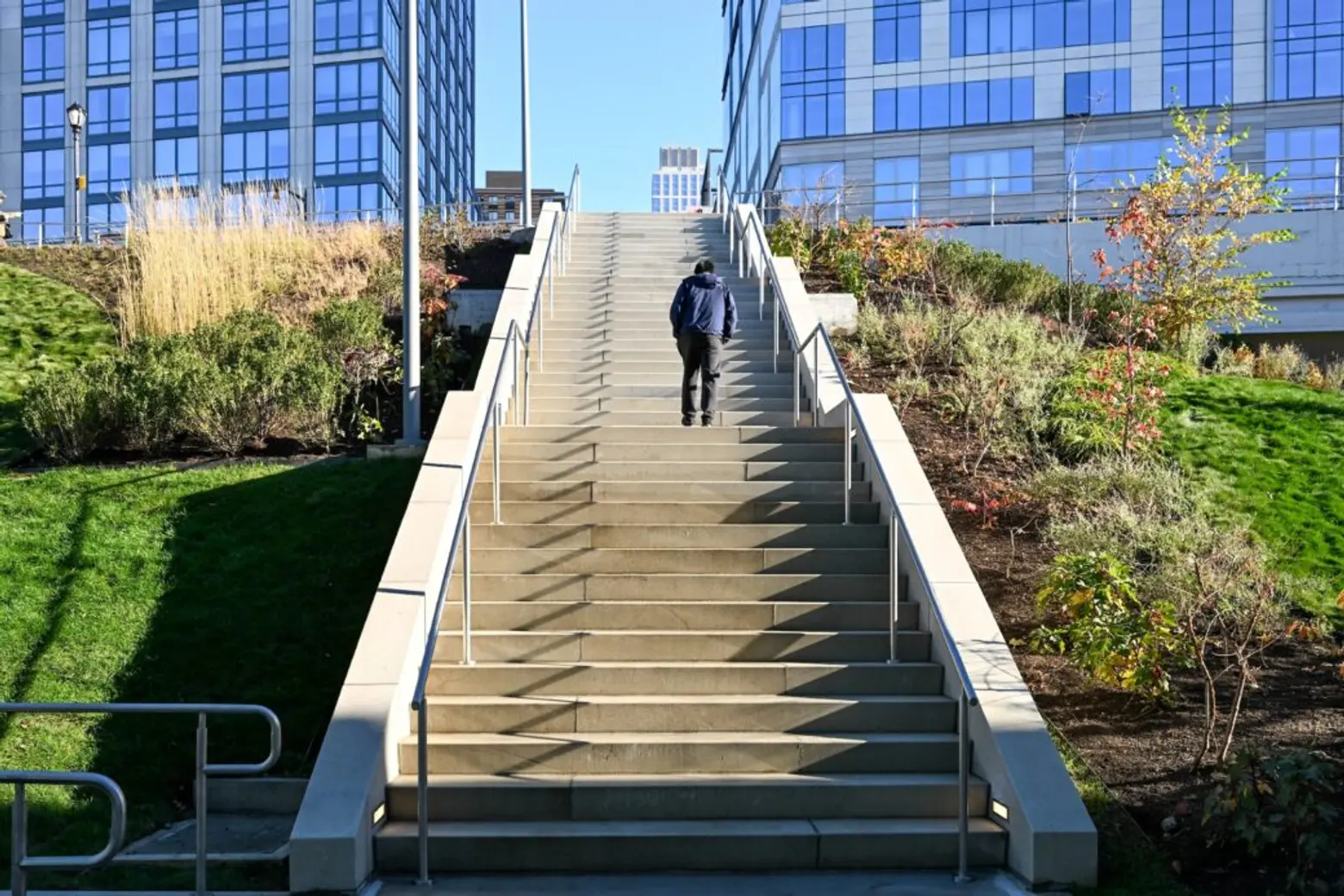
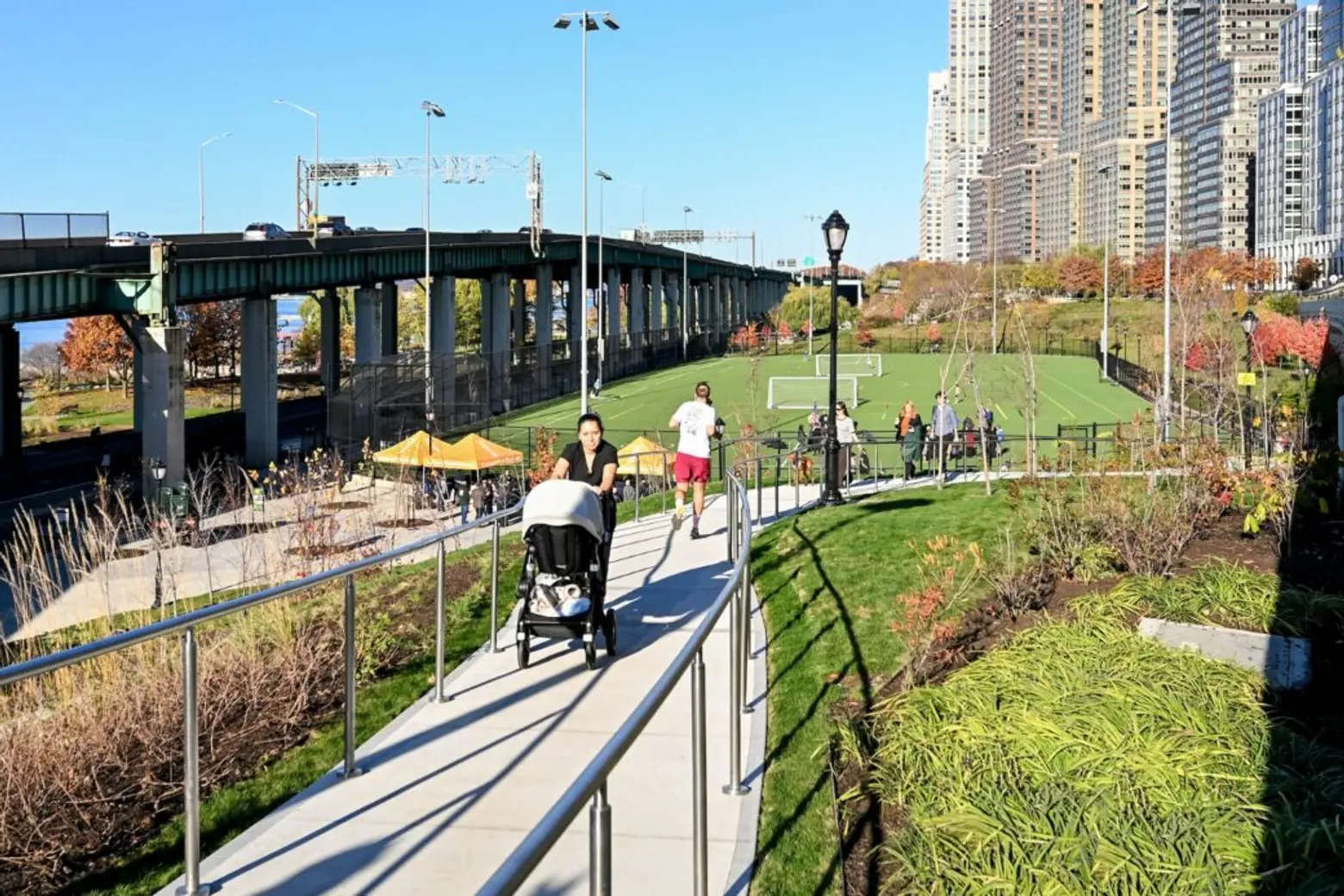
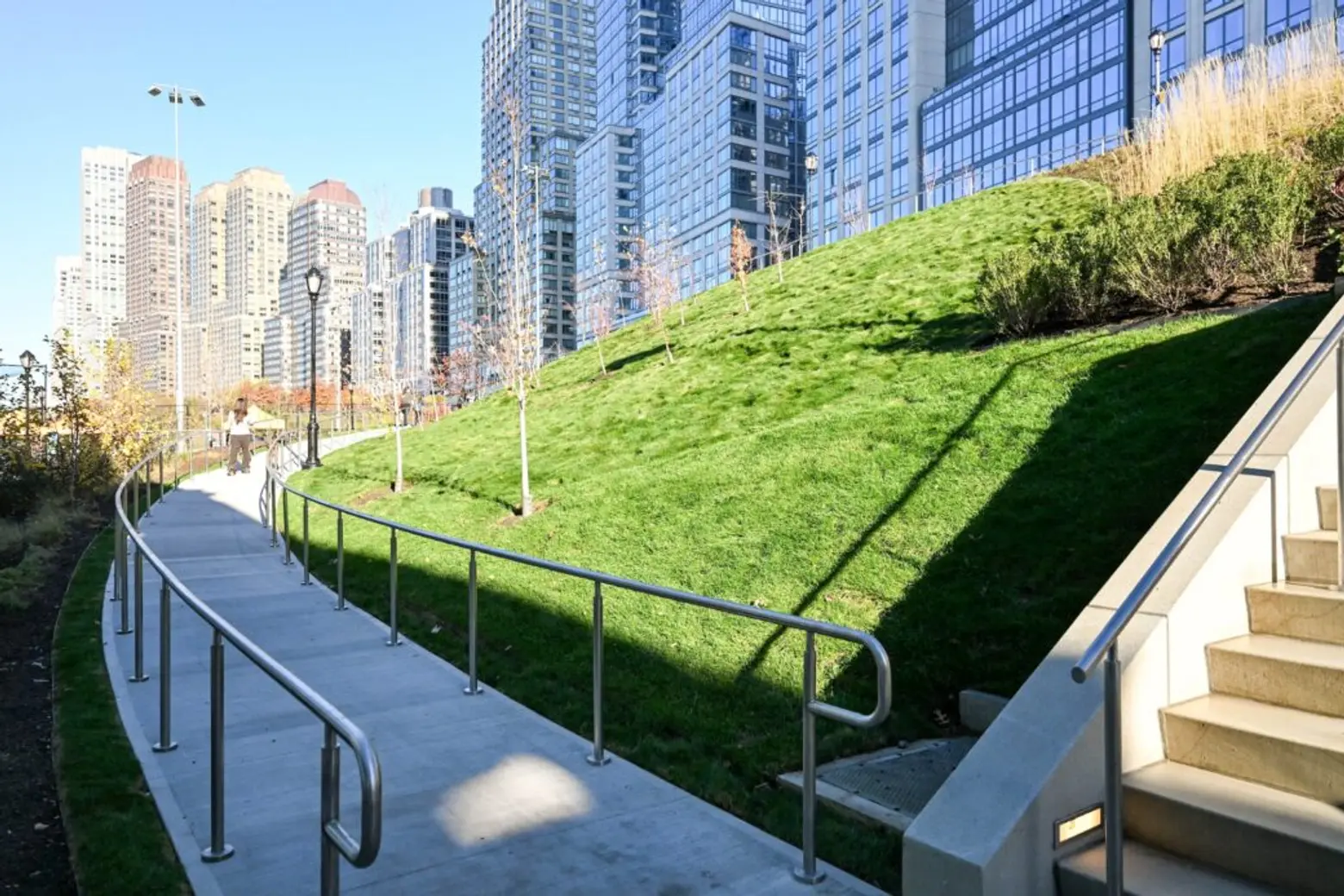
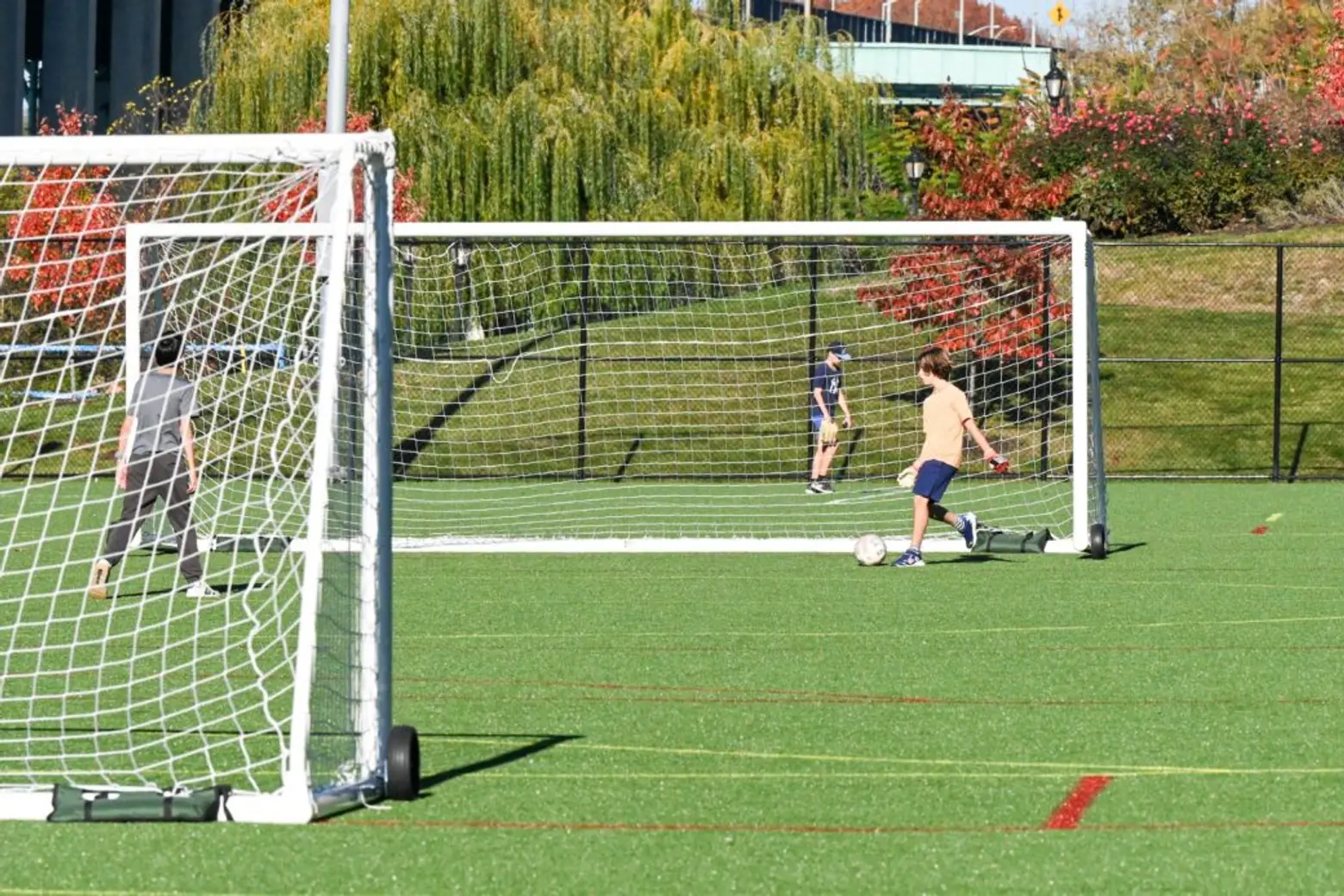
After nearly three decades of work, the transformation of a former Upper West Side railyard into 28 acres of public waterfront space is finally complete. City and state officials on Friday celebrated the opening of Riverside Park South’s final phase, capping a transformation that began in 1998 and has turned the site into a vibrant public space with amenities, waterfront access, and cycling connections. The sixth and final phase adds a multipurpose synthetic turf athletic field, new lighting, pickleball and basketball courts, an ADA-accessible pedestrian ramp, a new staircase, and more than 400 trees.
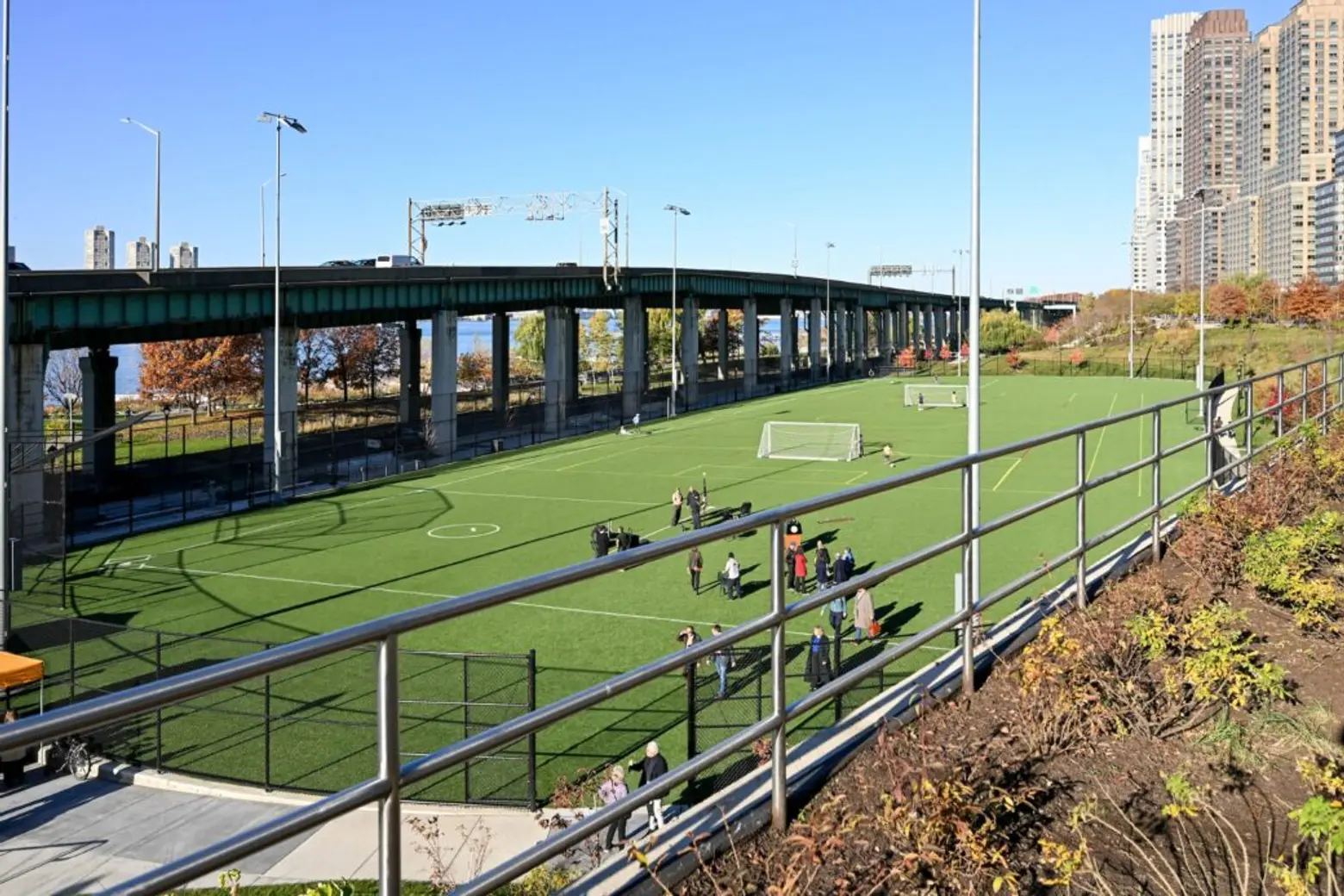
Spanning from West 59th to West 72nd Streets along the Hudson River, the park sits on the site of the former New York Central Railroad’s 60th Street Yard. The facility served as Manhattan’s primary freight rail yard for more than a century, handling between 800 and 900 rail cars a day at its peak before being abandoned in 1976 as freight operations moved away from New York City.
The vision for the park first emerged in 1991, amid plans to redevelop the site. That year, six civic and environmental groups joined with elected officials and city agencies to push for an alternative development plan that reduced the scale of the proposed residential development and called for an expansive waterfront park.
Approved in 1992, the plan mandated the developer fund the park’s creation, maintenance, and programming. The parkland was later deeded to the city.
With more than $103 million in public and private investment, the six-phase project broke ground in 1998. Today, the park’s annual maintenance and programming are funded by the Riverside South Property Owners Association, which represents the 19 buildings of Riverside South.
Its first phase opened in 2001, delivering 7.8 acres between West 68th and West 72nd Streets, including a soccer field, basketball and handball courts, a recreational pier, waterfront pathways, and the Pier i Cafe.
The second phase, which opened in 2003, added two waterfront plazas, a natural riprap shoreline, and additional pathways. In 2006, the third phase further expanded the waterfront with boardwalks and pathways, as well as the Little Engine Playground.
The following year, the fourth phase completed the park west of the highway, adding a southern waterfront section with a kayak launch and a historic locomotive honoring the site’s railroad past.
In 2020, the fifth phase added pathways, pedestrian and bicycle connections, playgrounds, plazas, passive lawns, sand volleyball courts, and a dog run. Now, the sixth and final phase officially completes the park.
Beyond providing critical public green space, the park also plays an important role in Manhattan’s waterfront network. Its bike and pedestrian paths connect to the Hudson River Greenway and the Empire State Trail, allowing New Yorkers to explore the city and travel along the waterfront by bike or on foot.
“Riverside Park South is a remarkable example of what can happen when we make a long-term commitment to creating public spaces that connect New Yorkers to their waterfront and strengthen Manhattan’s bicycle and pedestrian network,” NYC Parks Commissioner Tricia Shimamura said.
“What was once an active industrial rail yard is now a beautiful, welcoming waterfront destination where people can play sports, enjoy nature, gather with neighbors, and experience the Hudson River.”
In 2010, a Uniform Land Use Review Procedure (ULURP) application requested by Council Member Gale Brewer helped move the project toward completion. The proposal was unanimously approved by the City Council on December 20, 2010.
“For nearly 30 years, our community has been working to transform the old 60th Street rail yard into a great, accessible waterfront park for all New Yorkers,” Brewer said. “The ULURP process I requested enabled us to complete the park.”
“With the completion of phase six, Riverside Park South is finally whole, with the addition of much-needed athletic fields, pickleball and basketball courts, over 400 new trees, and full ADA accessibility for the Upper West Side,” she added.
RELATED: