24-story rental tower above historic Fort Greene church approved by Landmarks
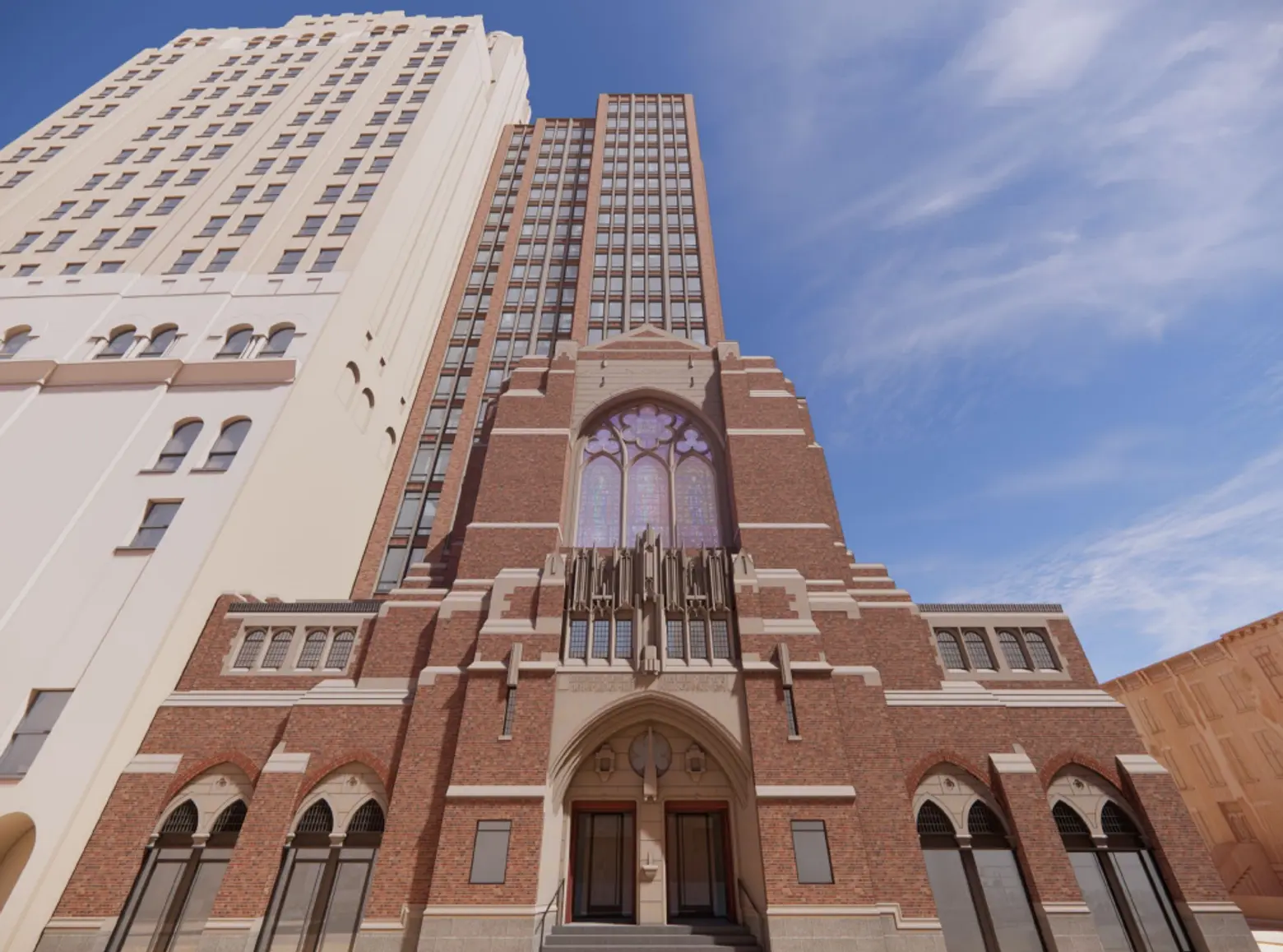
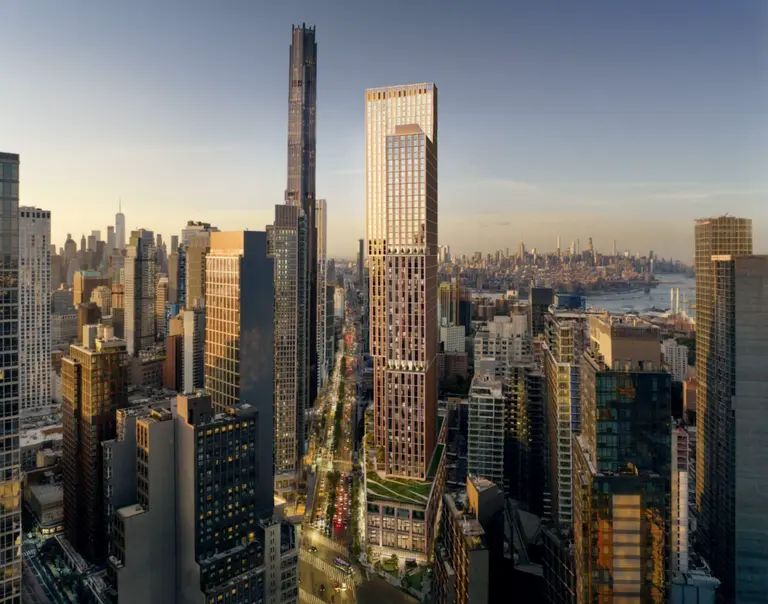
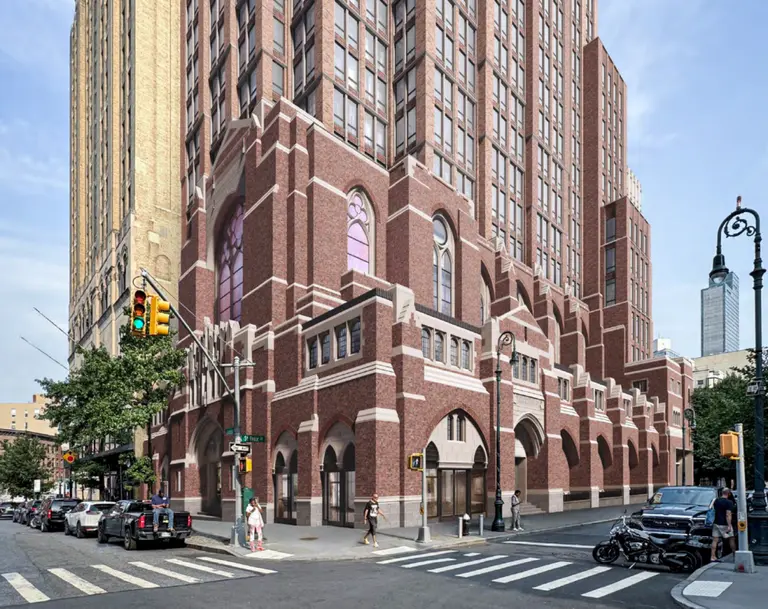
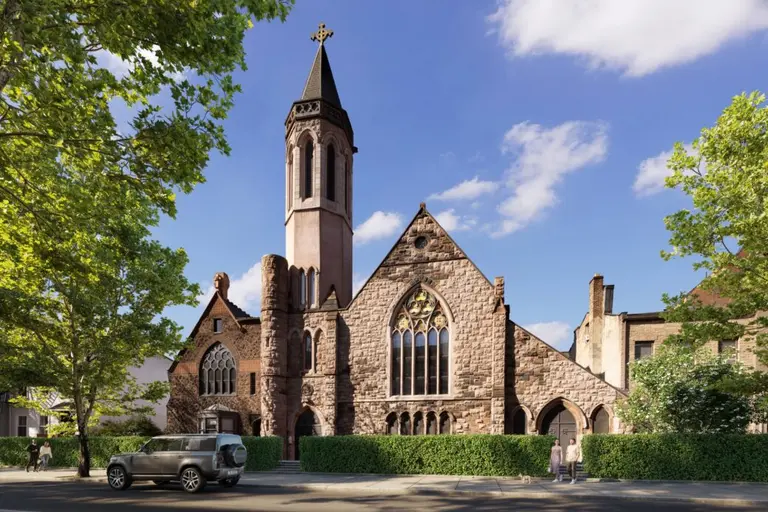
144 Saint Felix, view looking up from the south. All images courtesy of FXCollaborative.
After revising their original proposal, developers won Landmarks Preservation Commission approval Tuesday to build an apartment building on top of a historic Fort Greene church. Developer Stretke, along with architects FXCollaborative and ADP Architects, got the green light for the project at 144 St. Felix Street, which will restore the facade of the landmarked Hanson Place Central United Methodist Church and construct a 24-story tower above it. The developers were asked to address concerns about the building’s height and massing, which the local community board and residents called “inappropriate” for the site and the surrounding Brooklyn Academy of Music Historic District. The revised proposal lowered the height by about 30 feet, from 27 stories to 24 stories.
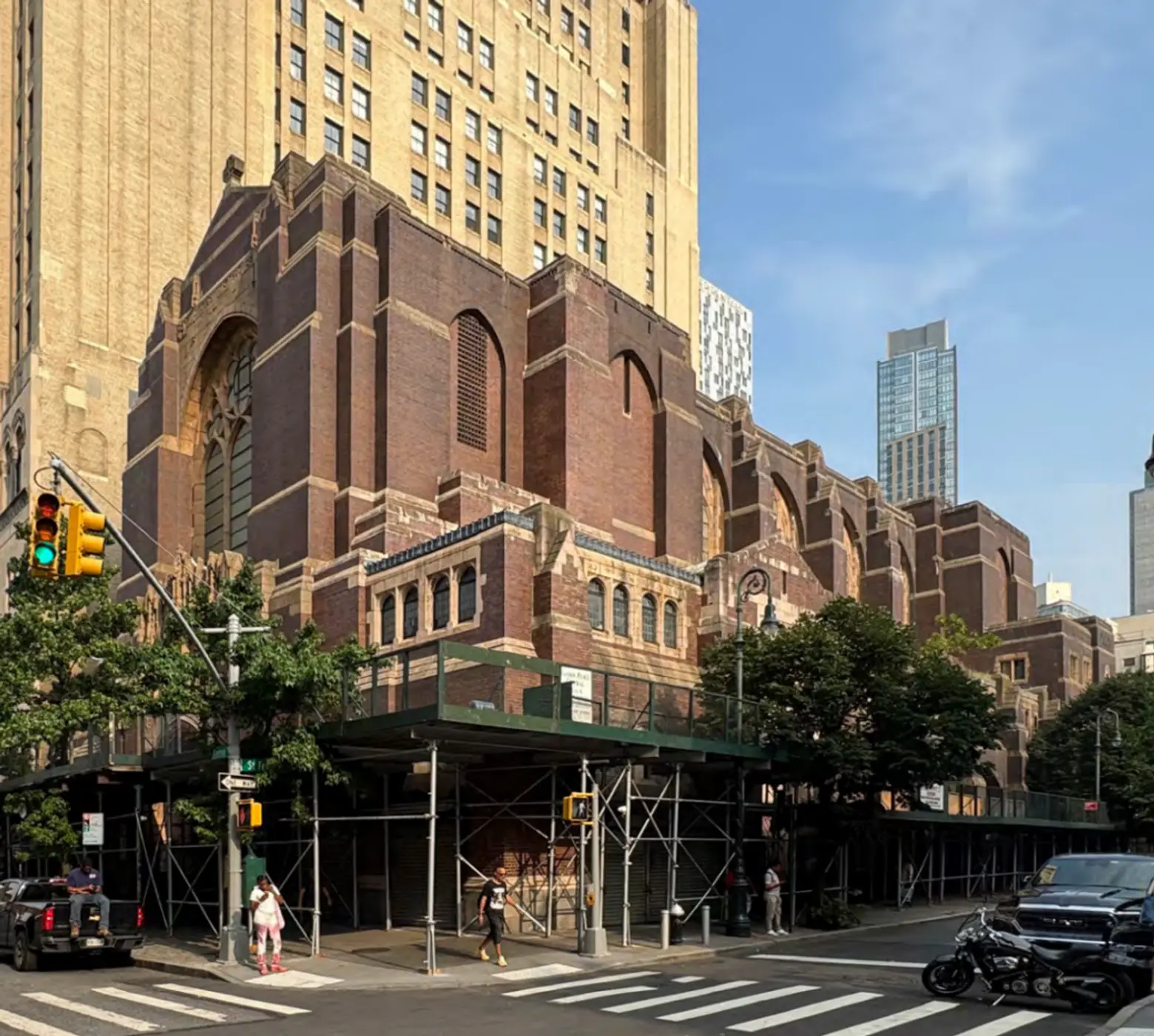
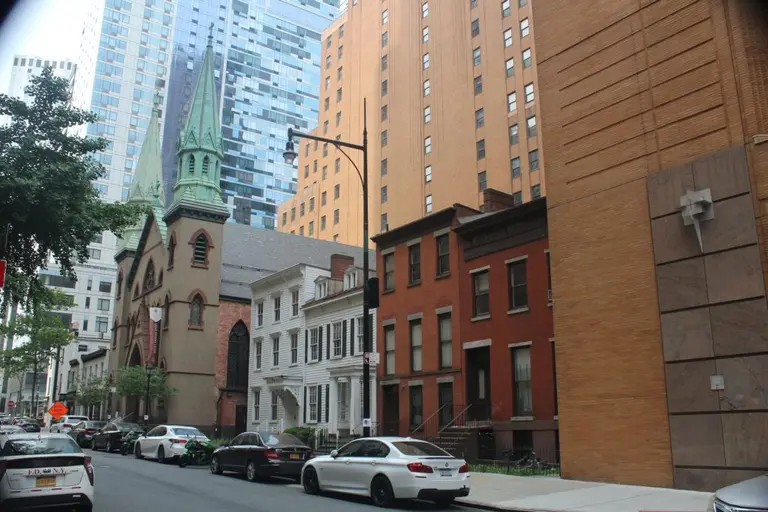
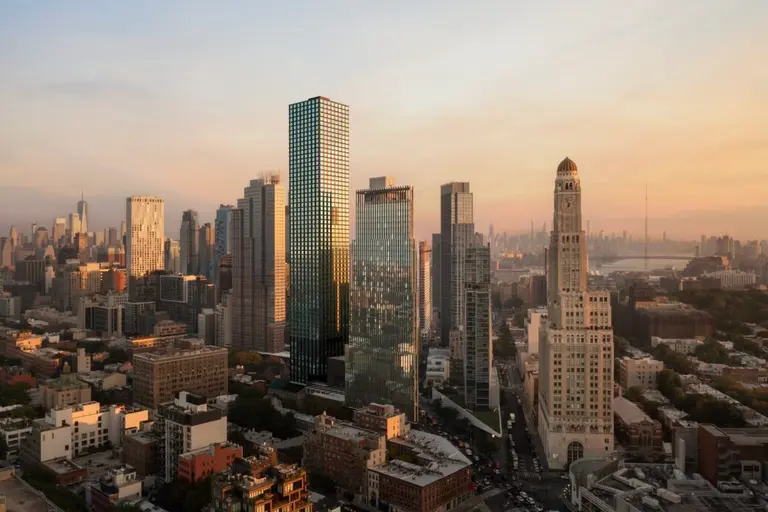
The historic church sits directly next to the landmarked Williamsburgh Savings Bank Tower. Designed by Halsey, McCormack and Helmer, the bank was converted into the One Hanson Place condominium in 2006, as 6sqft previously reported.
Constructed in 1931, the Hanson Place Central United Methodist Church was designed in the Neo-Gothic style by the same architectural firm. While the church sits within the BAM Historic District, it is not individually landmarked. Vacant since 2019, the building shows signs of exterior wear and more significant interior deterioration from water damage.
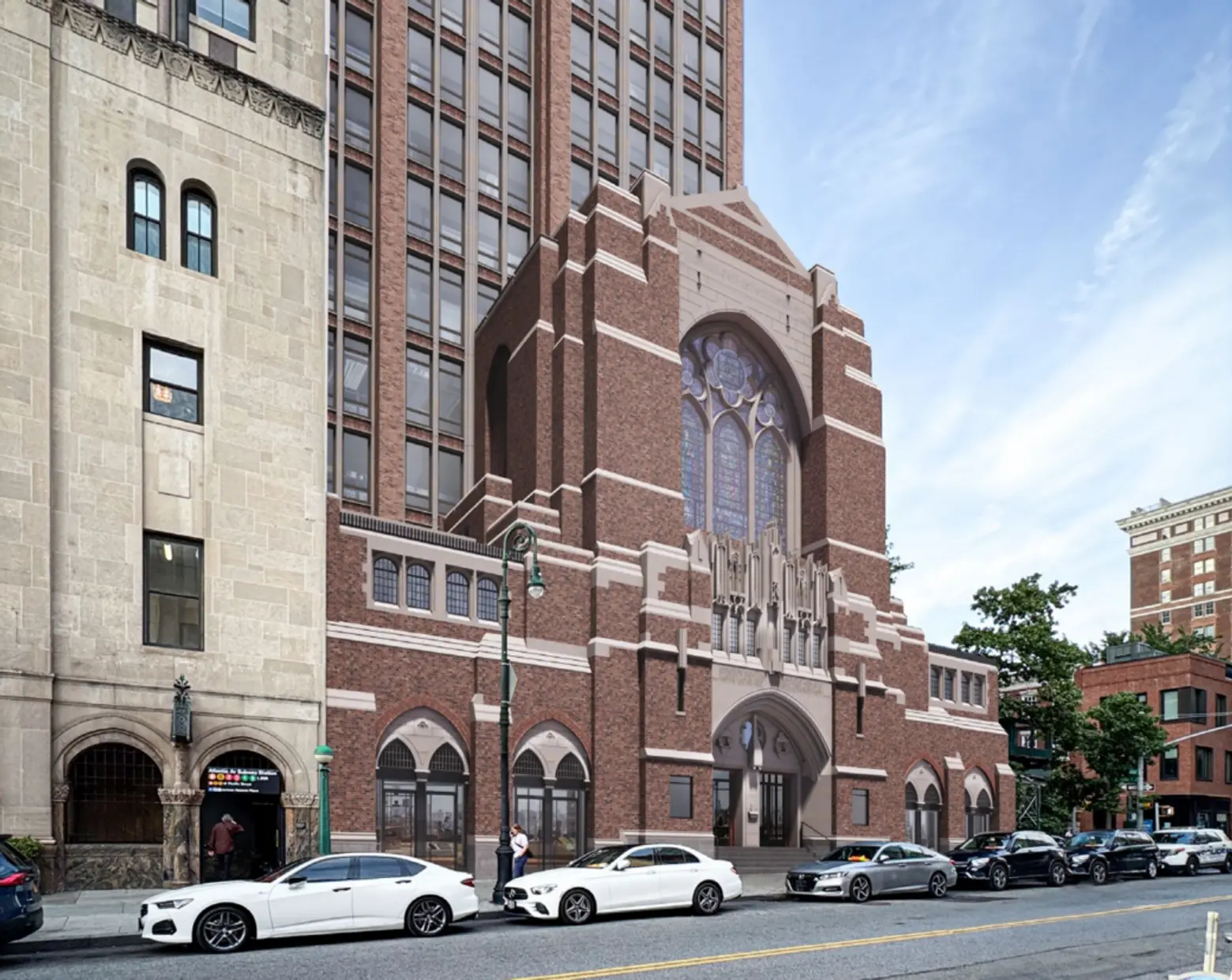
Plans for the tower were first presented to the land use committee of Brooklyn Community Board 2 in November. The proposal includes restoring the church’s facades on St. Felix Street and Hanson Place by repairing masonry and cast-stone ornamentation, restoring stained glass, preserving religious iconography, replacing windows to meet light and air requirements, and installing new doors, skylights, a roof, and retail and community spaces.
The community board ultimately disapproved the initial proposal, as Brownstoner reported. While the group supported redeveloping the church, the proposed tower “does not fit the character of our historic neighborhood” and is “inappropriate for the site.”
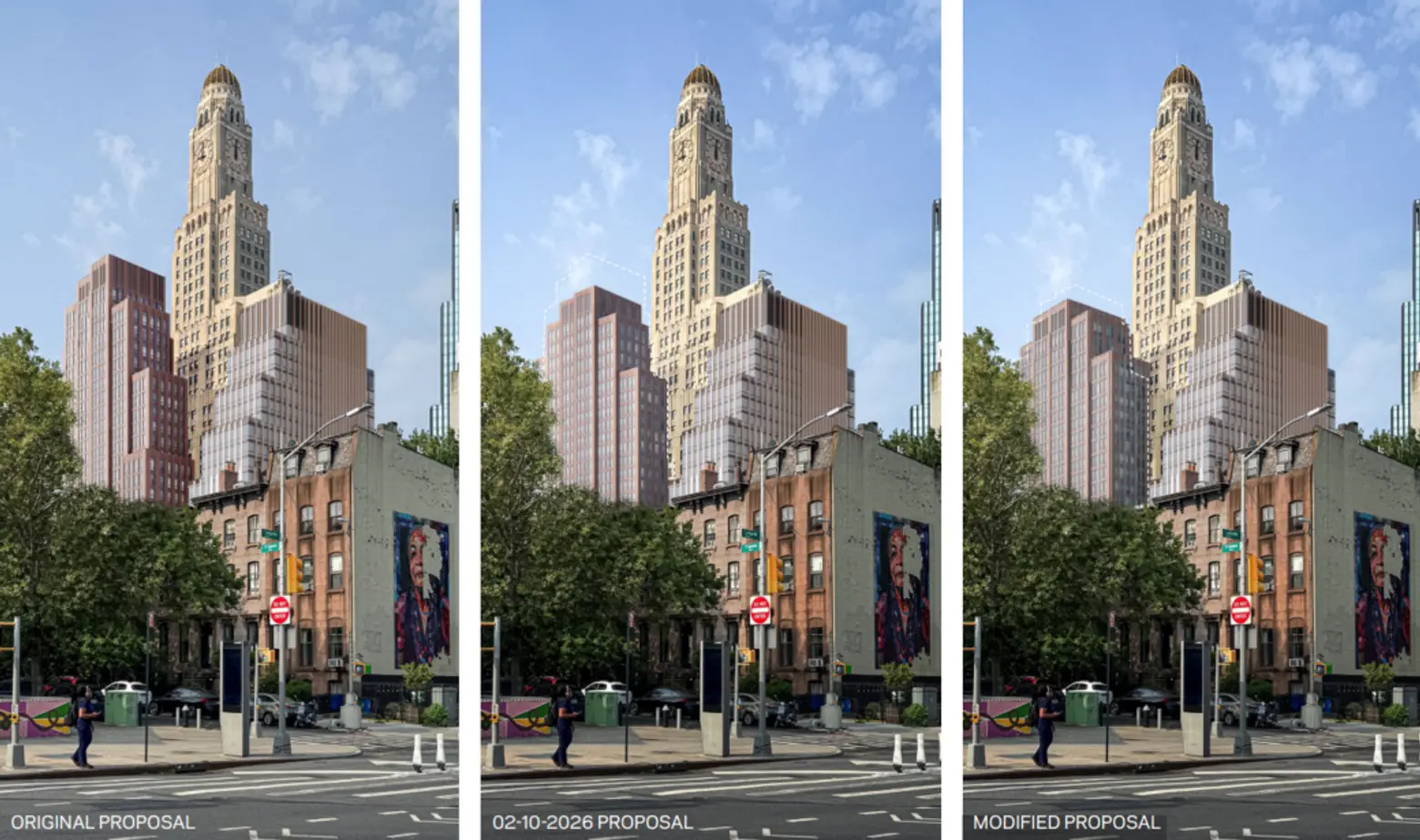
When the proposal went before the LPC in December, attendees echoed those concerns and raised additional issues. The feedback was so extensive that the commission ended the session without a decision, instructing the applicants to return after reviewing the comments.
The developers returned to the LPC in February, where the commission offered conditional support for the project, recommending further height and bulk reductions—from 328 to 298 feet—and increased retention of historic church features, including the preservation of its northern bay, according to Brownstoner.
Before that meeting, the residential board of One Hanson Place submitted a statement to LPC commissioners and Brownstoner, accompanied by mockups showing how a smaller, nine-story building might fit on the site.
The board argued that nine stories would be the tallest appropriate height and warned that approving a taller tower could set a precedent for “out-of-scale” construction within historic districts. They also noted that 80 of the 92 buildings in the district are three stories or fewer and questioned how a much taller structure could be appropriate in that context.
The original plan called for 240 apartments with 60 units designated as permanently affordable. It’s unclear whether this will change with the new height reduction.
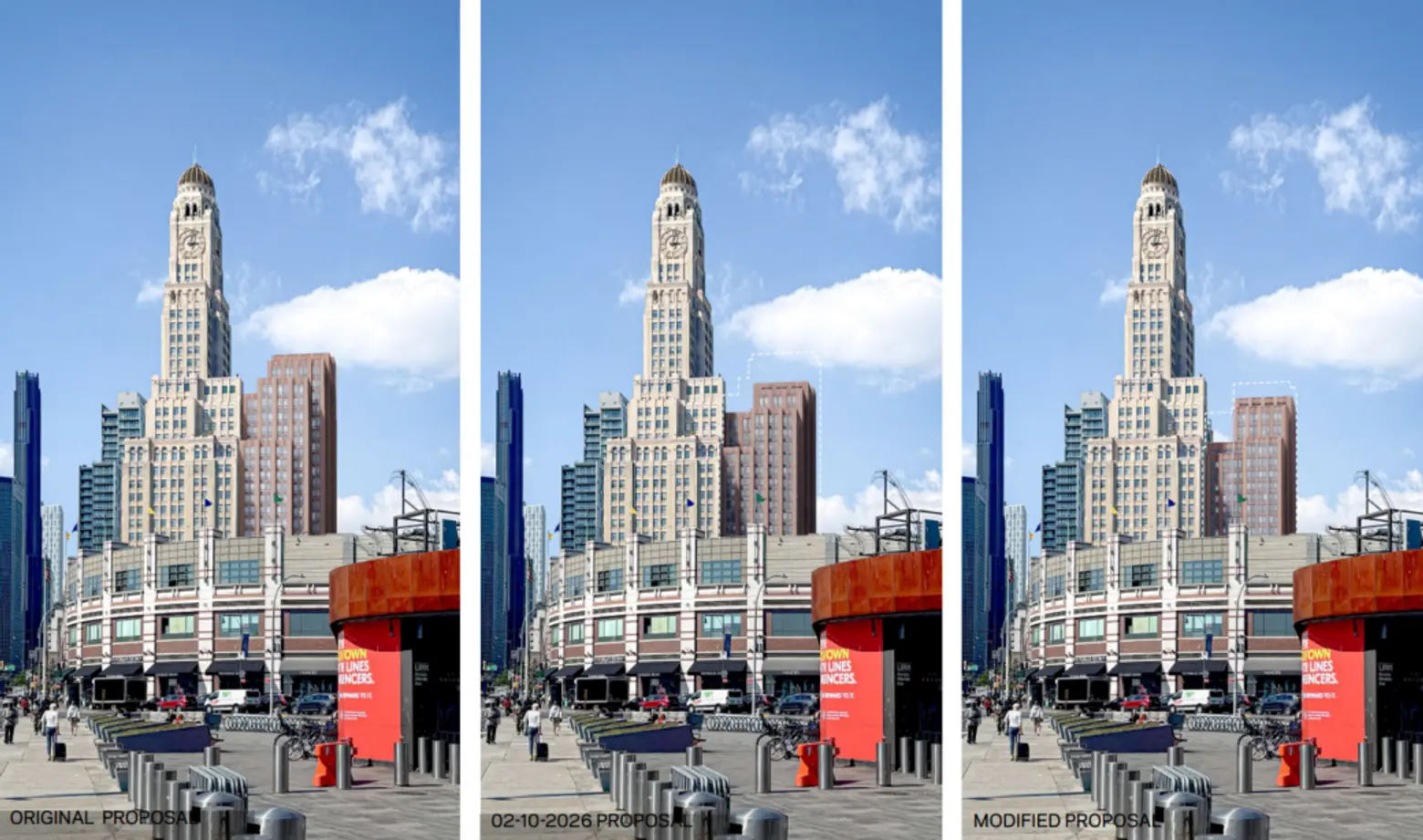
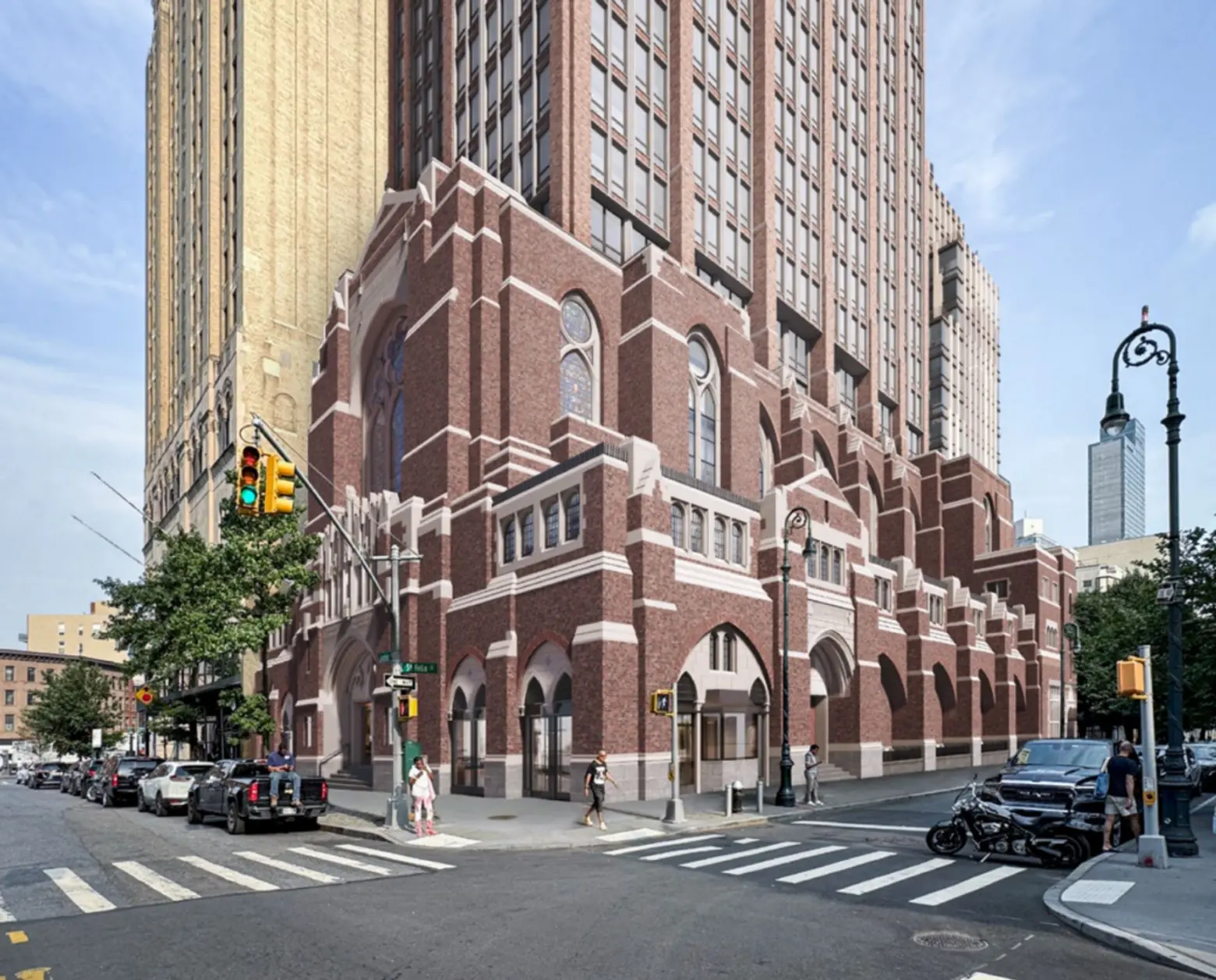
In response to the feedback, the applicants have once again revised the project. New renderings show reworked massing that aligns more closely with the church’s “governing geometries,” while simplified stepped forms and cast-stone piers now better complement the building’s fenestration.
The building’s height has been reduced to 285 feet, with symmetrical setbacks added on the east elevation. The north facade’s roof profile will now match the preserved Rose window on the church below.
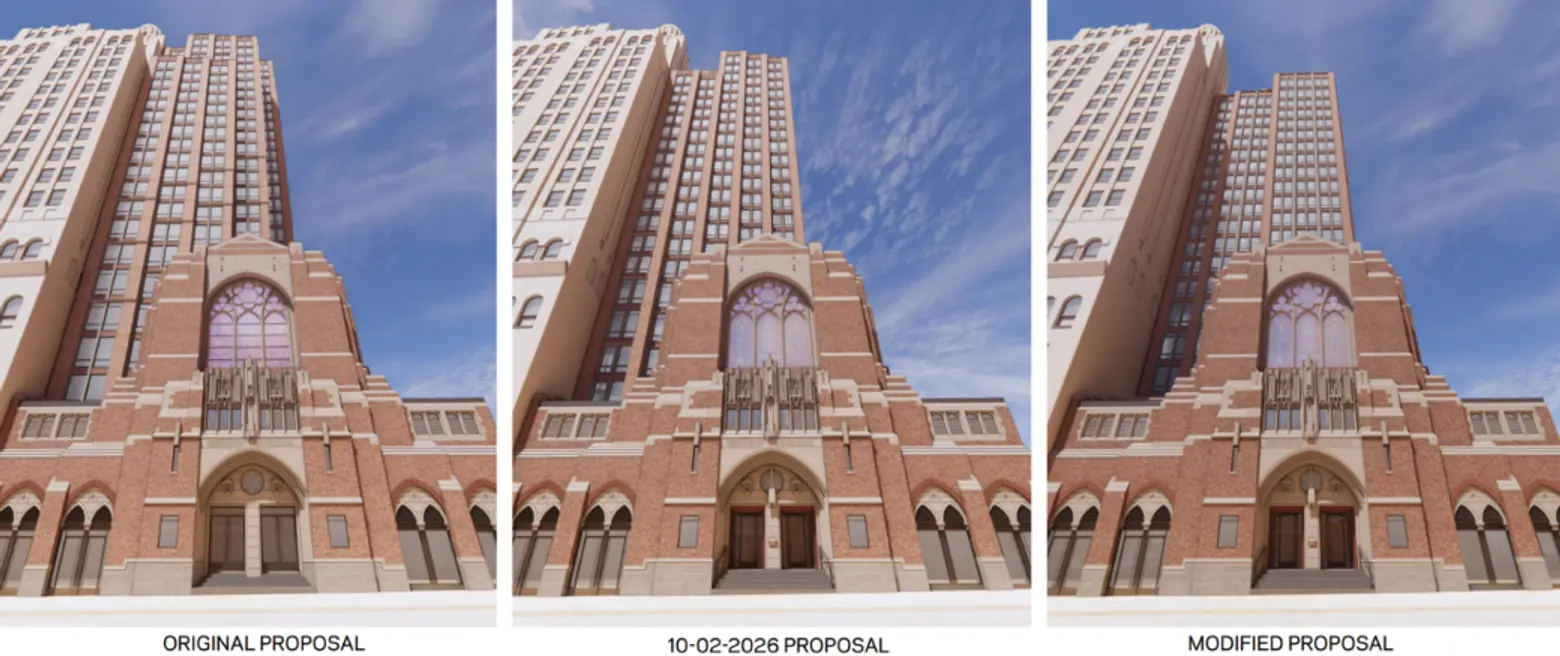
A double-height recess has been introduced on the first two floors above the church, creating a visual separation between old and new, while buttressing on the new brick piers further ties the tower to the church’s architectural expression.
The proposal’s southern end, one of its most contested elements, now features three distinct bays that better relate to the tracery and stained glass of the church’s southern facade. The bays step back progressively, allowing the central portion to more closely align with and complement the church.
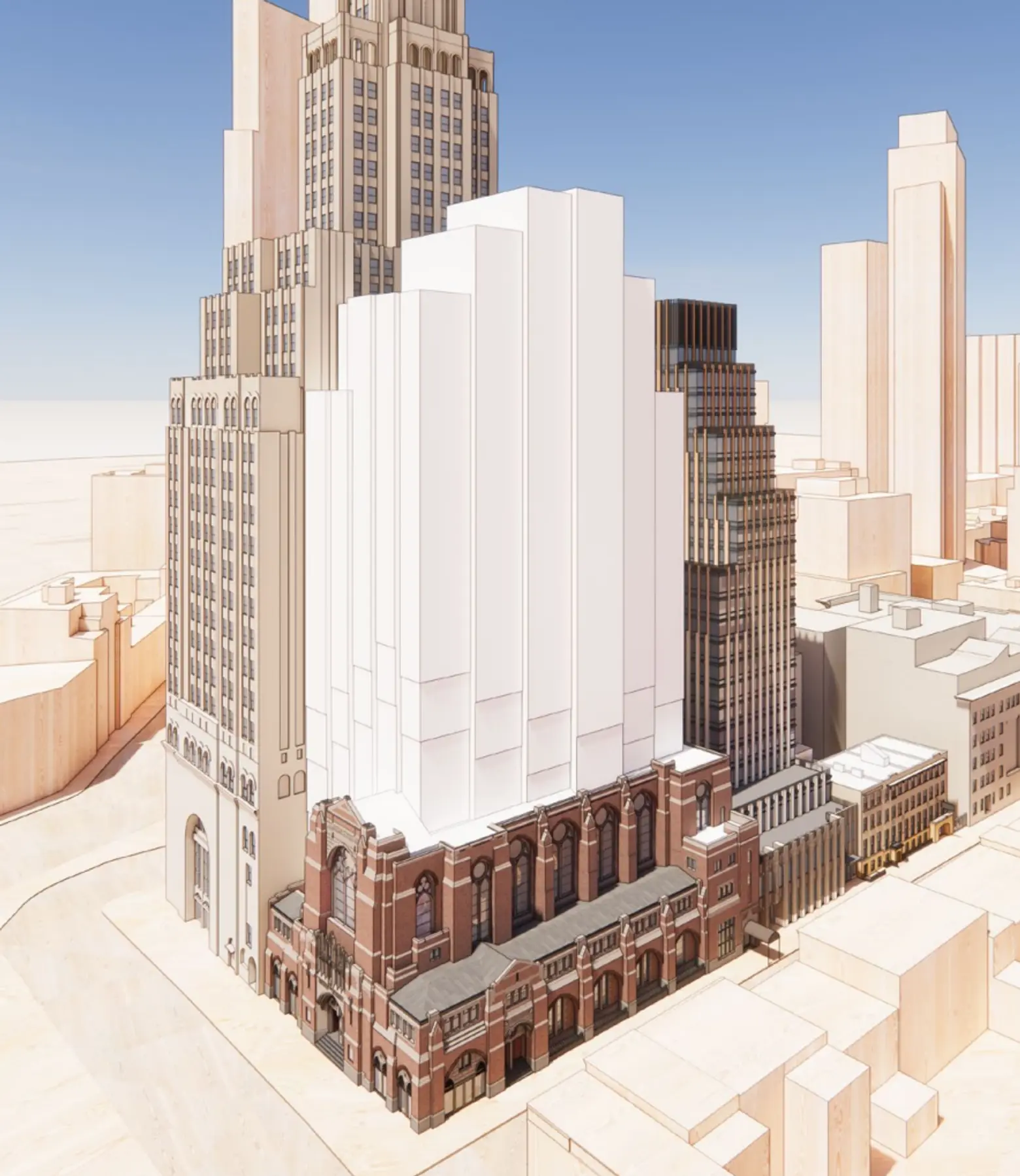
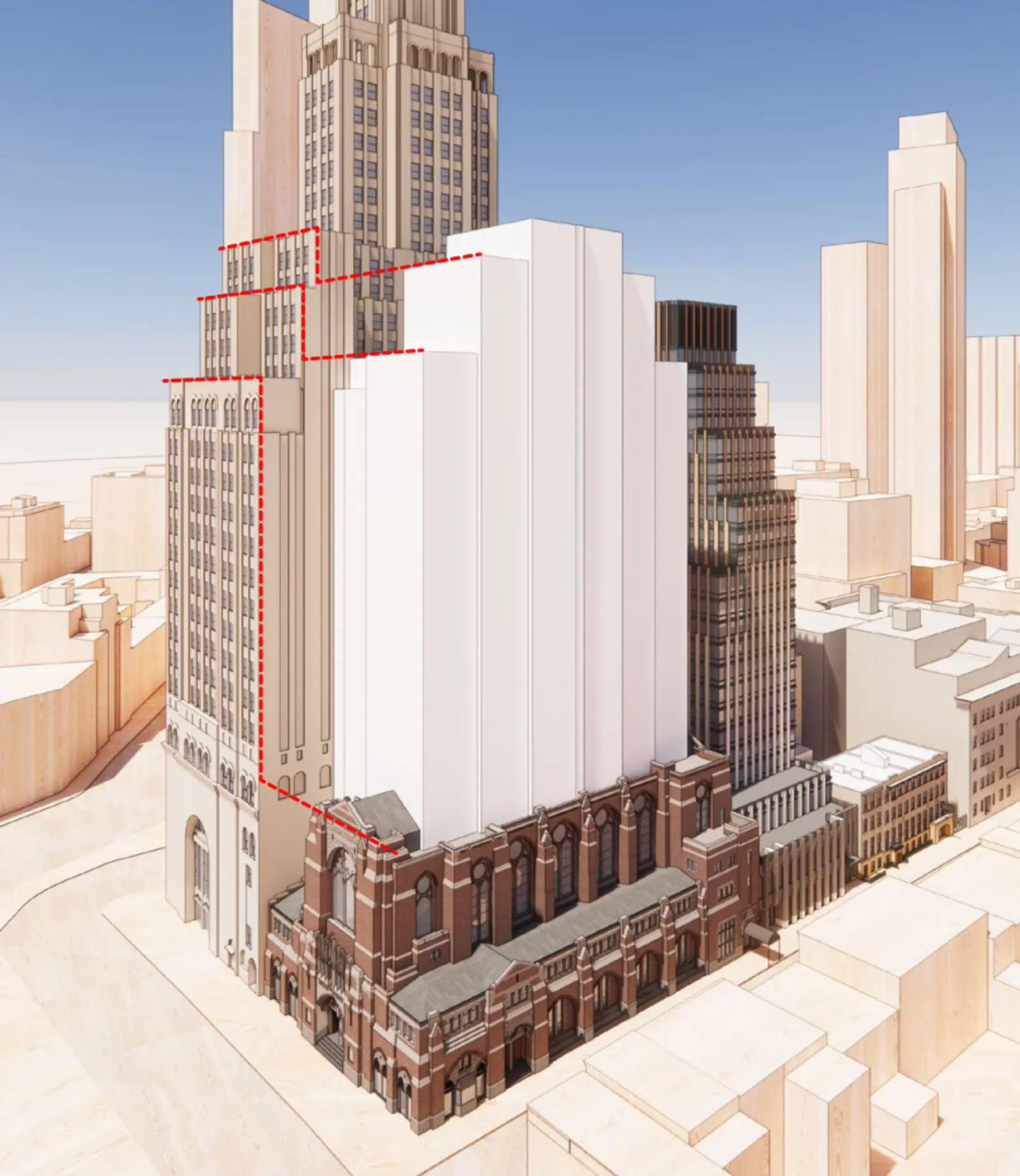
The modified proposal
LPC Commissioner Mark Ginsberg supported the revised proposal, saying the applicant successfully addressed the commission’s previous concerns.
“I think the applicant has listened to our comments and has addressed them,” Ginsberg said. “This is a good balance between preserving enough of the church building and restoring it so that it is still there while generating the income in a reasonable way to be able to restore it and keep it. There’s been a lot of thought put into this and I can find it appropriate.”
Similarly, LPC Commissioner Wellington Chen, who had previously raised concerns about the proposal’s height, massing, and the visibility of the church’s iconic rose window, praised the revised plans.
“The applicant has made much improvement,” Chen said. “For the people in the future looking at this record, we can say at least for sure that they went back to the basics, they scrapped the original assumption, which even though some of the commissioners had no problem with.”
He added, “I think there is now a very clear rationale and history and track record for the future generation to look at this and say, ‘I understand how they arrived at this.'”
RELATED: