NYC will study feasibility of affordable housing on Wards Island
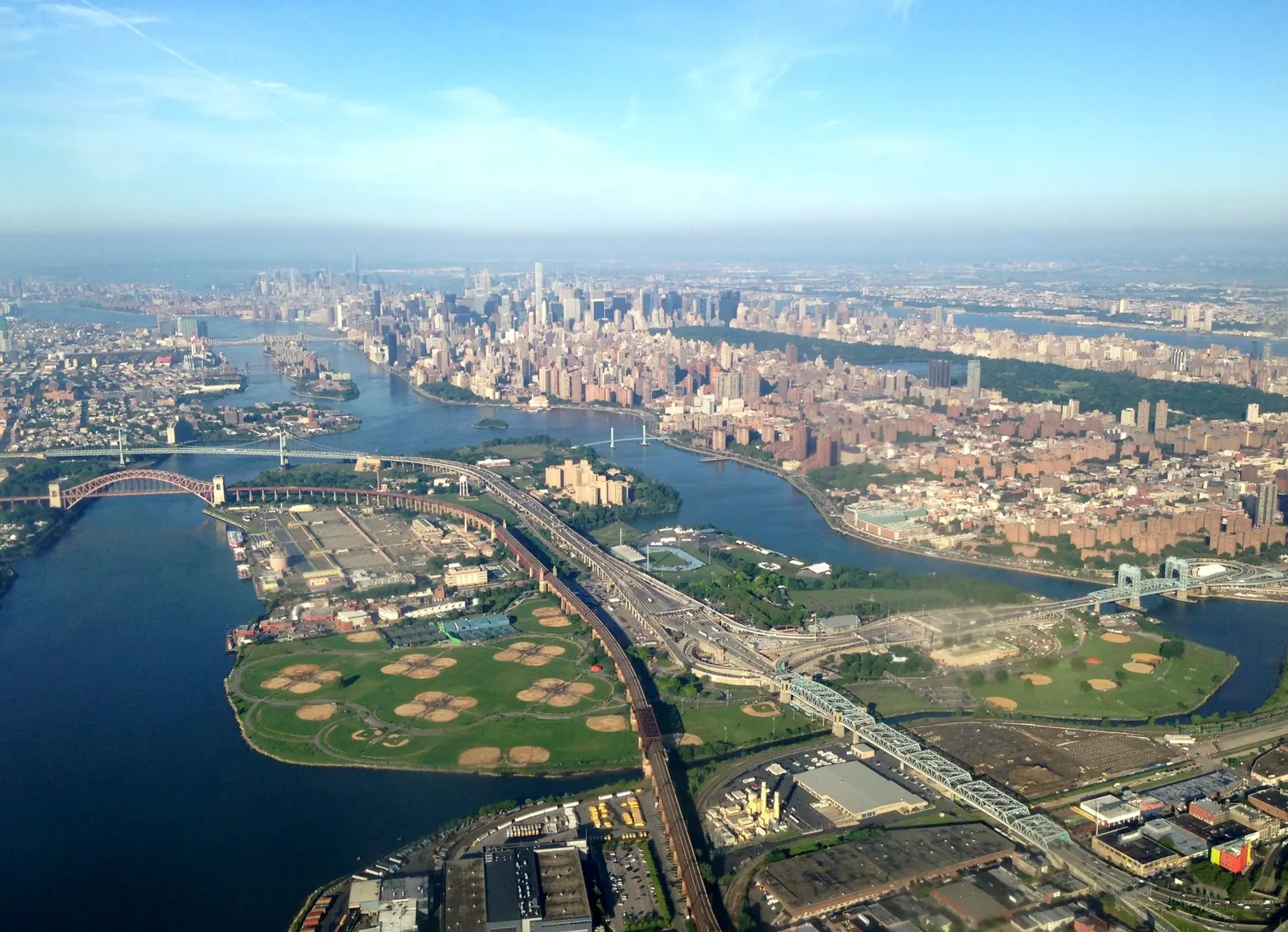
Aerial view of Randall’s and Wards Islands. Image via WikiCommons
A new City Council bill passed this week will explore the feasibility of creating affordable housing on Wards Island. Sponsored by Council Member Gale Brewer, Intro. 0571 directs the city’s Department of Housing Preservation and Development (HPD) to publish a study assessing the potential for residential development on the 255-acre island at the northern end of the East River between Manhattan and Queens. Due by July 1, 2027, the study will examine costs, land-use restrictions, and the provision of services and amenities on Wards Island.
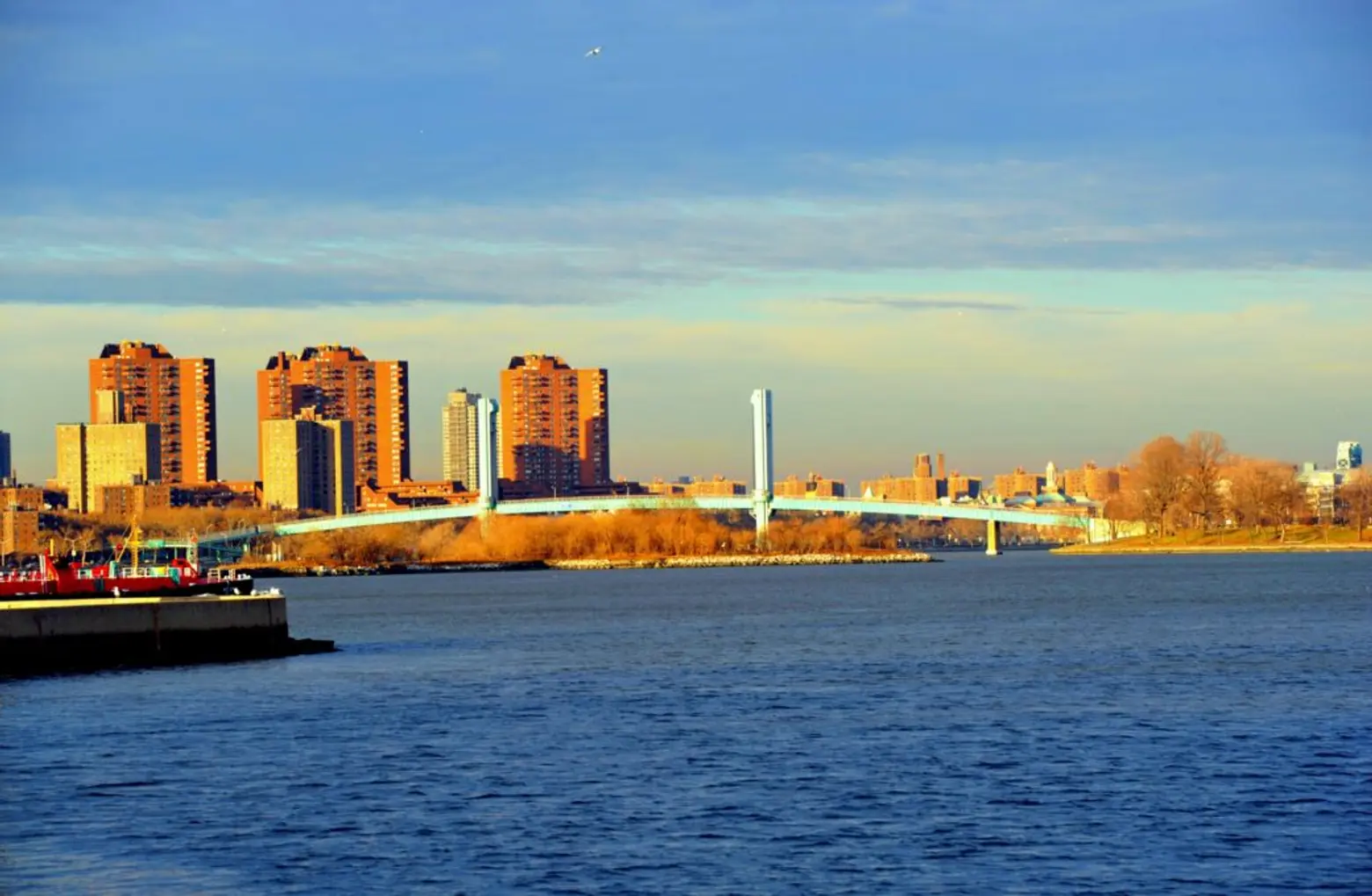
Sold by the Lenape to the Dutch in 1637, Wards Island—called “Tenkenas,” or “Wild Lands,” by the indigenous population—first served as a British military post during the Revolutionary War. While homes existed on the island as early as the 17th century, brothers Jaspar and Bartholomew Ward made settlement more attractive by opening a cotton mill and building the first bridge to Manhattan in 1807, according to the Parks Department.
Following the War of 1812, the cotton mill closed, and in 1821, a storm destroyed the bridge, leaving the island largely abandoned until 1840, when overcrowding in Manhattan spurred the development of almshouses, mental health facilities, and potter’s fields, or graveyards for the poor. Hundreds of thousands of bodies were relocated to Wards Island from other potter’s fields across the city.
The State Emigrant Refuge, a hospital for sick and destitute immigrants, opened in 1847, becoming the world’s largest hospital complex by the 1850s. In 1851, the city purchased the island, and in 1863, the NYC Asylum for the Insane was established. From 1860, Wards Island also served as an immigrant intake center alongside Ellis Island.
In 1899, the State Department of Mental Hygiene took over the asylum and immigration buildings, opening the Manhattan State Hospital. Housing 4,400 patients, it became the world’s largest psychiatric institution and exists today as the Manhattan Psychiatric Center.
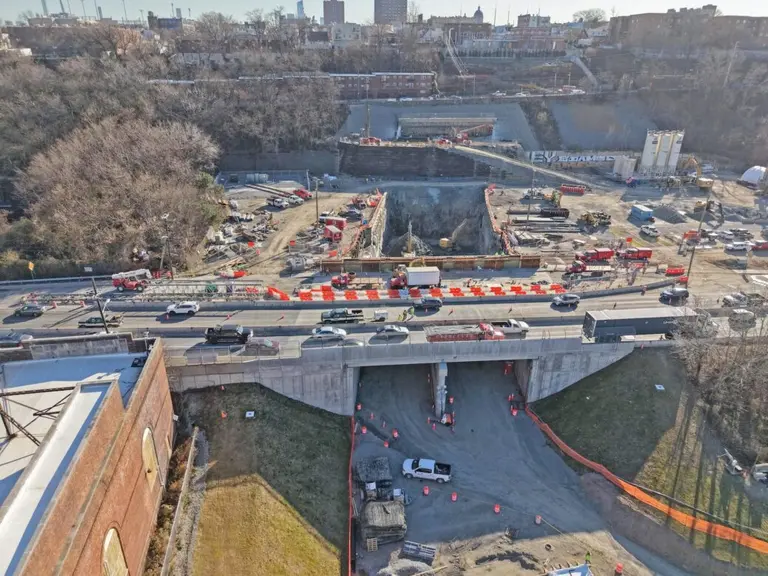
The most significant changes to Wards Island came in the 20th century, when Robert Moses connected it to neighboring Randall’s Island via landfill. The islands were cleared for playing fields and promenades with mid-Manhattan skyline views, and the Triborough Bridge brought massive concrete piles and steel towers to the island.
Other infrastructure on the island includes the Wards Island Water Pollution Control Plant, built in 1937 and still the world’s highest-capacity sewage treatment facility, a Fire Department training center, and several shelters.
During a City Council committee meeting in March, Brewer asked why no studies have been conducted on developing housing on Wards Island, similar to recent developments on Roosevelt Island.
“My question is: why are we not having a study group to discuss why it can’t become another Roosevelt Island or something to that effect?” Brewer asked. “Land in Manhattan, available for housing—make it a Mitchell-Lama.”
Acting HPD Commissioner Ahmed Tigani responded that the city has a housing activation task force. While he was unsure if Wards Island was on the task force’s list of sites to study, he said it would be a recommendation they could consider.
RELATED: