East Harlem

September 9, 2015

REVEALED: First Look at 1399 Park Avenue, 23-Story Tower Coming to East Harlem

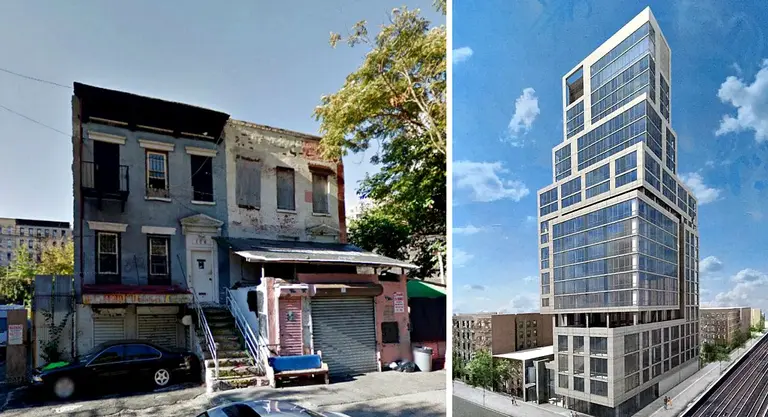
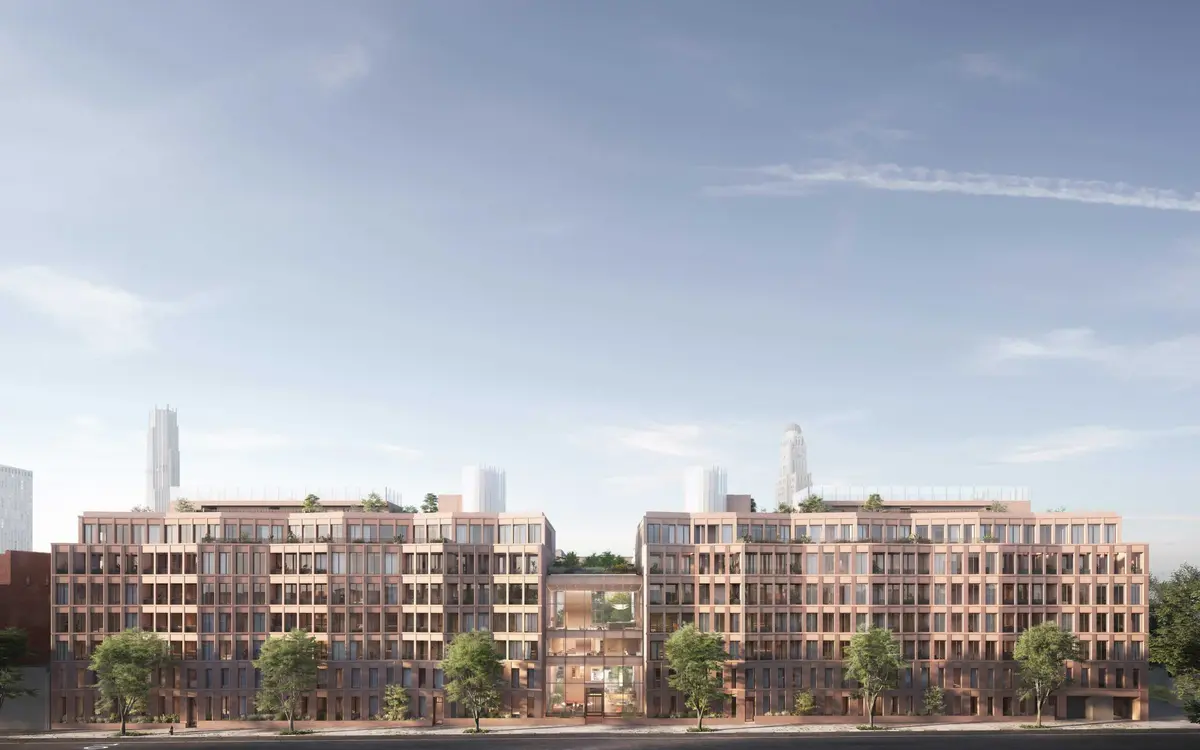
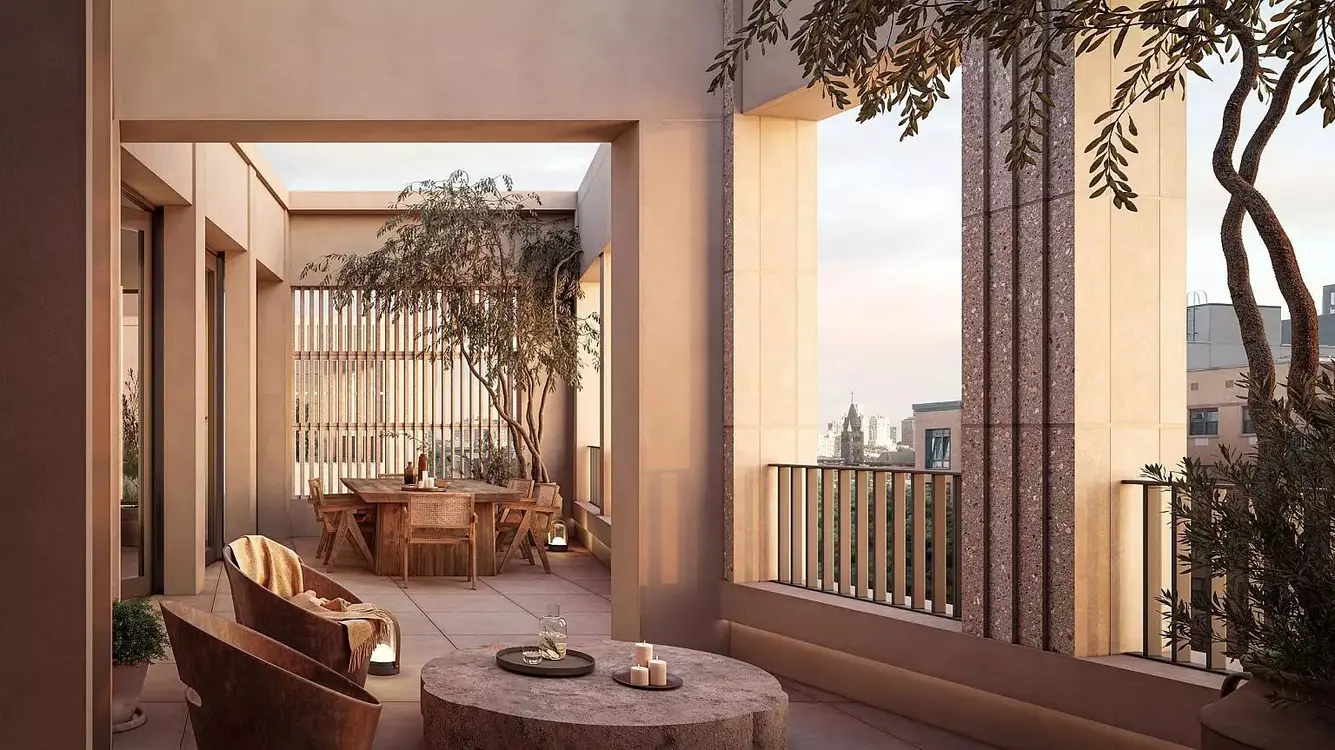
Here's our first look at Heritage Real Estate Partners' 23-story, 108-unit residential building underway at 1399 Park Avenue in East Harlem. Designed by Goldstein Hill & West Architects (GHWA), the 253-foot tall, glass and cast-stone tower is expressed as a stack of variably-sized, staggered volumes creating numerous terraces that face north towards the East River and west towards Central Park. Fittingly, Heritage has filed permits under the alias "Heritage on the Park LLC," possibly hinting at the official name for the tower.
More details ahead
August 24, 2015

Should Poor Neighborhoods Stay Poor to Avoid Gentrification? Mayor De Blasio Speaks Out

Recently on the Brian Lehrer radio show on WNYC, Mayor De Blasio addressed questions about the effects inclusionary development–i.e. giving developers the green light to build market rate housing if they set aside 25-30 percent of the units for low- and middle-income residents–has on the quality of life in lower-income neighborhoods. A growing concern among housing activists is that reliance on this kind of inclusionary zoning leads to gentrification that pushes out the lower income residents due to the 70-75 percent of market rate units bringing new, wealthy residents and new businesses that will cater to them.
Hear what the mayor has to say
April 9, 2015

East Harlem: From Manhattan’s First Little Italy to El Barrio to a Neighborhood on the Cusp of Gentrification

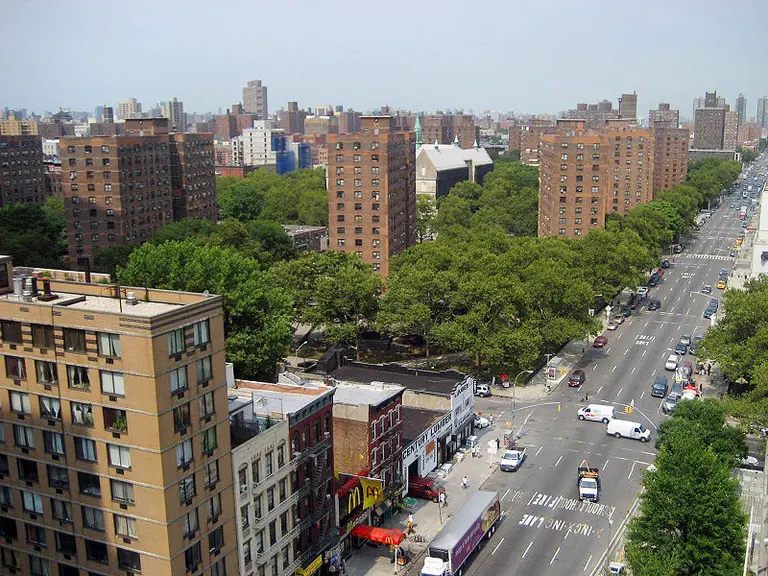
A lot of attention is paid to West Harlem, or what many people traditionally consider THE Harlem, thanks to its rich history rooted in places like the Apollo and up-and-coming hot spots like the Studio Museum in Harlem and Marcus Samuelson's renowned restaurant, the Red Rooster. But east of Fifth Avenue, there's a history just as deep, and the neighborhood is at that fragile stage where it could easily be thrust into a wave of gentrification at any time. Defined as the area bound by Fifth Avenue and First Avenue from 96th to 125th Streets, East Harlem is commonly known as Spanish Harlem, or El Barrio by locals. What many people unfamiliar with the neighborhood don't know, though, is that this area got its start as Manhattan's first Little Italy. And if you're the type of New Yorker who doesn't venture above 86th Street, you're likely unaware of the slew of new developments sprouting up in East Harlem thanks to a 2003 57-block rezoning.
Learn about the neighborhood's transformation here
April 8, 2015

My 500sqft: Artist Hector Castaneda Invites Us into His Spanish Harlem One-Bedroom ‘Museum’

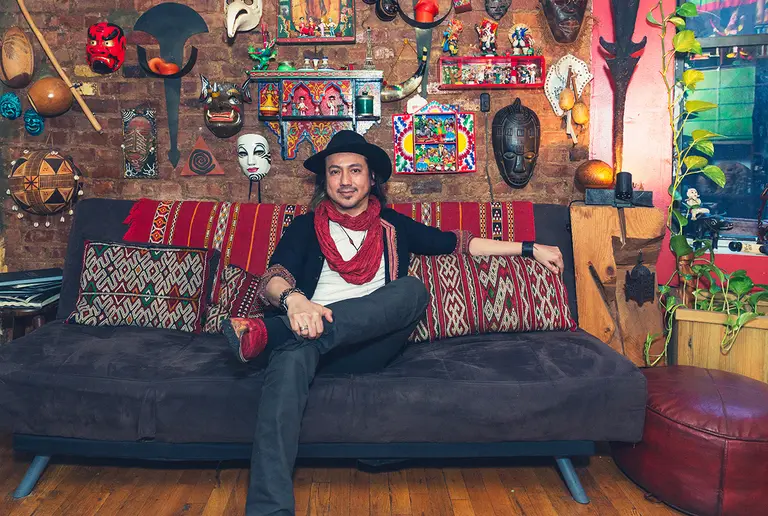
Located in an unassuming low-rise walk-up in Spanish Harlem is a tiny apartment with no views, a small living room, and thousands of pieces of one-of-a-kind art from around the world. Its owner, Hector Castaneda, is a world traveller who's visited more than 50 countries over the last 15 years. While most folks are happy simply snapping a few photos and heading home after a week or two, Hector is all about immersion and spends months at a time in some of the world's most exotic and extreme locales. As Hector travels the world he picks up art, tapestry, sculptures, furniture, and musical instruments from every country, which today magically fill every nook and cranny of his 500-square-foot apartment. "He is the only person I know who can turn a dingy walk-up building apartment into a work of art—it's really a private New York Museum and Hector is the curator," his friend Lisa Monroig told us. Once we heard that, we knew we had to pay him a visit.
Tour this miniature museum in the heart of Spanish Harlem here
April 2, 2015

Revealed: East Harlem Rental Building by Gerald J. Caliendo Architects Rising at 2183 Third Avenue

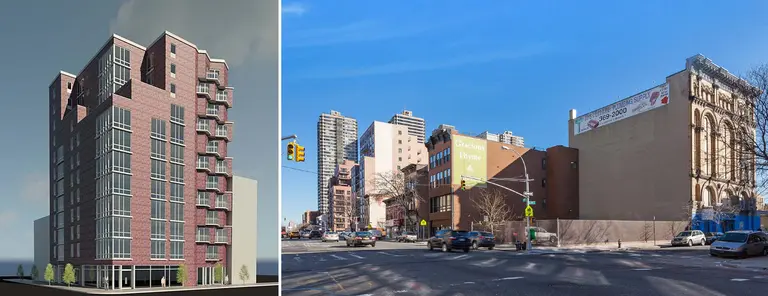
Here's our first look at 2183 Third Avenue, an under-construction mixed-use project in East Harlem being developed by Sharon Kahen and Haim Levi's East 119th Street Development LLC. The parcel at the northeast corner of East 119th Street and Third Avenue is giving rise to a 12-story, 64,000-square-foot building designed by the prolific Gerald J. Caliendo Architects. The building will contain 59 rental units, retail space, and a medical facility at ground level. In 2003, East Harlem underwent a 57-block rezoning spearheaded by the Bloomberg administration's City Planning chair Amanda Burden. The revision, the neighborhood's first in 40 years, increased density allowances along First, Second, and Third Avenues, while preserving the human-scaled midblocks in between. Over the past decade, more than a dozen residential mid-rises, roughly 8-12 stories, have blossomed along the area's wide, well-trafficked corridors. Recent developments spurred by the rezoning include Barry Rice's 119th & Third, Hunter College's Silberman School of Social Work, and Kahen and Levi's own CL Tower at Third Avenue and East 121st Street, two blocks north of their current project site.
More details on the new project here
October 30, 2014

Construction Halted on Karim Rashid’s Harlem Condo After Buddha Statue Gets Decapitated

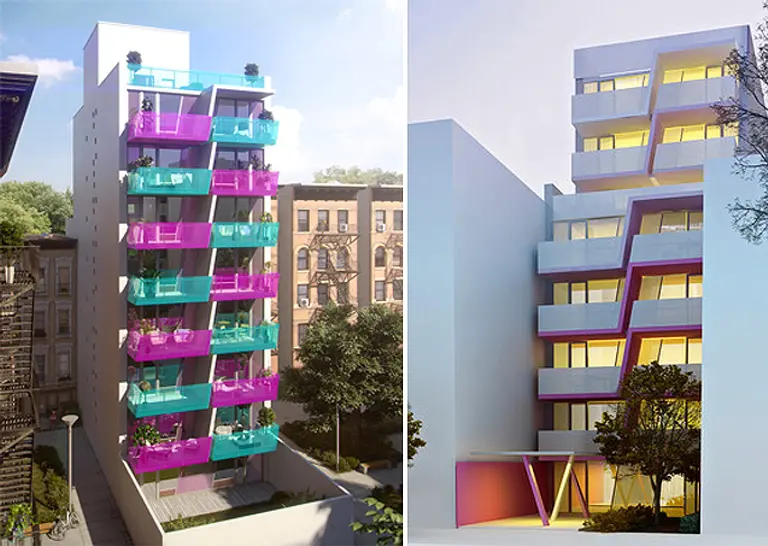
Karim Rashid's condo at 329 Pleasant Avenue just can't seem to win. Weeks ago, the designer was forced to scrap the building's cyan and magenta color scheme for a more subdued palette, and now DNA Info reports that the city has issued a partial stop-work order on the building. The halting of construction comes after the city received complaints from neighbors that their foundations were being damaged by digging and careless workers. But the greatest victim in all of this? How about this Buddha statue which was decapitated by a construction worker.
More on the drama
October 7, 2014

Karim Rashid’s East Harlem HAP Building Gets a New Color Scheme After Much Opposition

After much outcry, the Karim Rashid-designed residential building at 329 Pleasant Avenue in Harlem will be getting a new color scheme. According to the WSJ, locals have voted to scrap HAP Five's color-blocked magenta and turquoise design for a facade of simple white balconies with a less audacious “translucent cirrus with [a] graduated magenta balcony trim”.
Find out more here
September 3, 2014

Coffee Culture: Are Neighborhood Cafes the First Sign of Gentrification?

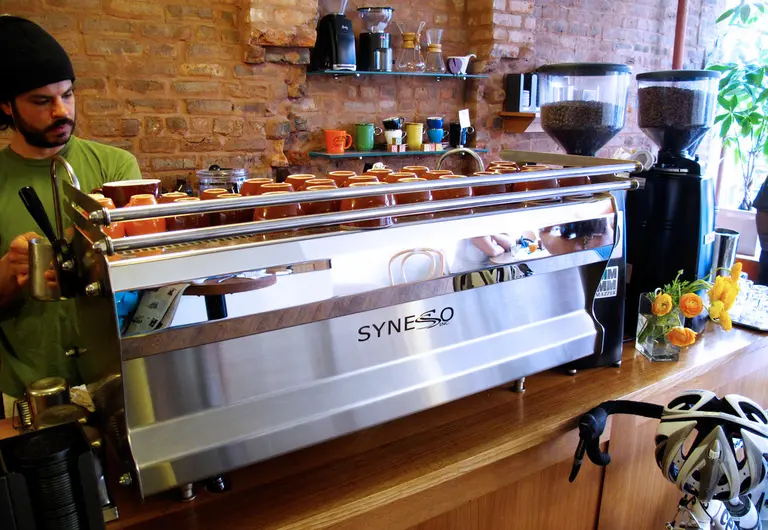
From “coffices” to lab-like minimalist gourmet coffee meccas to cozy neighborhood hangouts, neighborhood cafes are a fine example of the essential “third place” mentioned in discussions of community dynamics: that place, neither work nor home, where regulars gather and everyone’s welcome. Along with yoga studios, art galleries, community gardens, vintage clothing shops, restaurants with pedigreed owners and adventurous menus and, some say, a change in the offerings on local grocery shelves, cafes are often the earliest sign of neighborhood change. The neighborhood cafe serves as a testing ground for community cohesiveness while adventurous entrepreneurs test the still-unfamiliar waters around them. Beyond the literal gesture of offering sustenance, cafes provide a place where you can actually see who your neighbors are and appreciate the fact that at least some of them are willing to make an investment locally.
Get a fleeting glimpse of old New York City cafe culture in the West Village, meet the future of coffee distribution in Red Hook.