
First major Raphael exhibition in the U.S. opens at The Met
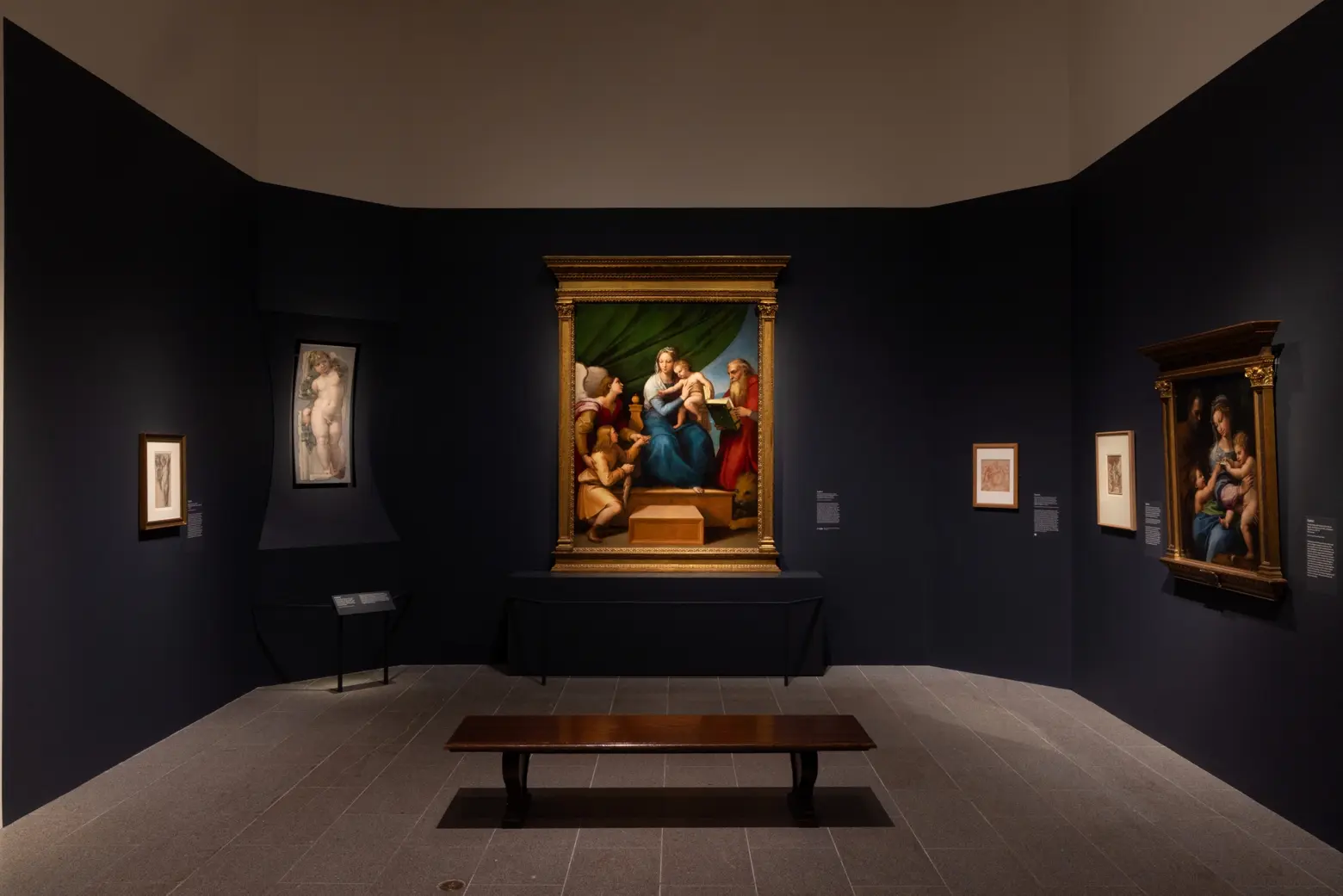
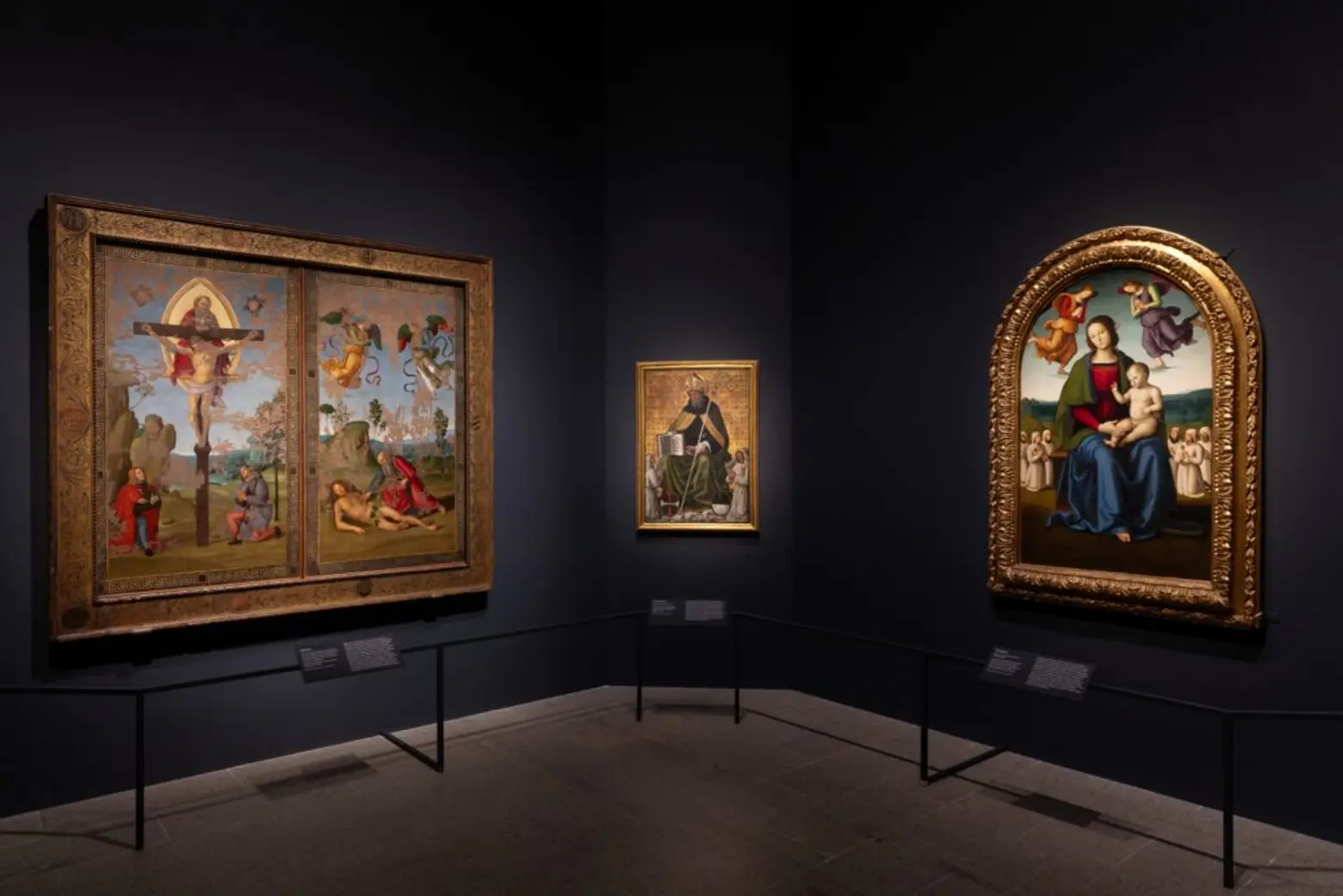
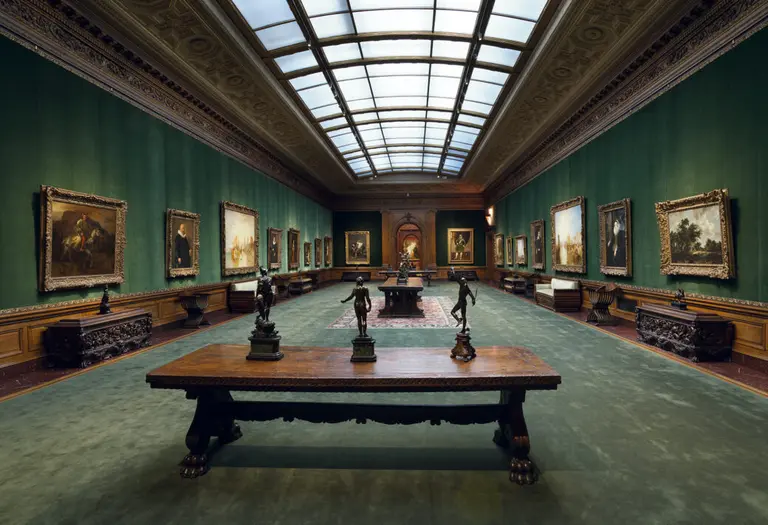
Installation view of Raphael: Sublime Poetry, on view March 29–June 28, 2026, at The Metropolitan Museum of Art. All installation view photos are by Eileen Travell, Courtesy of The Met.
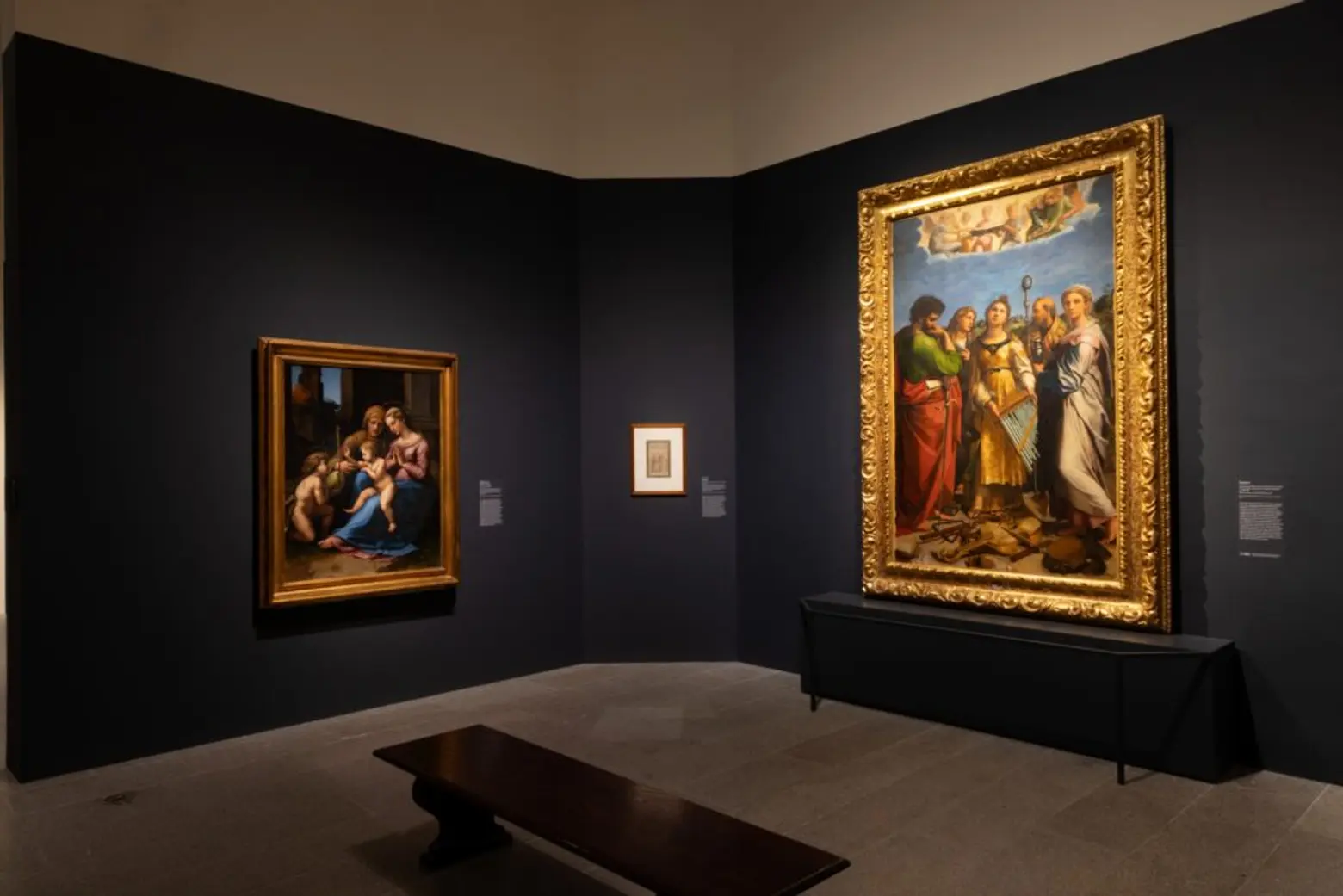
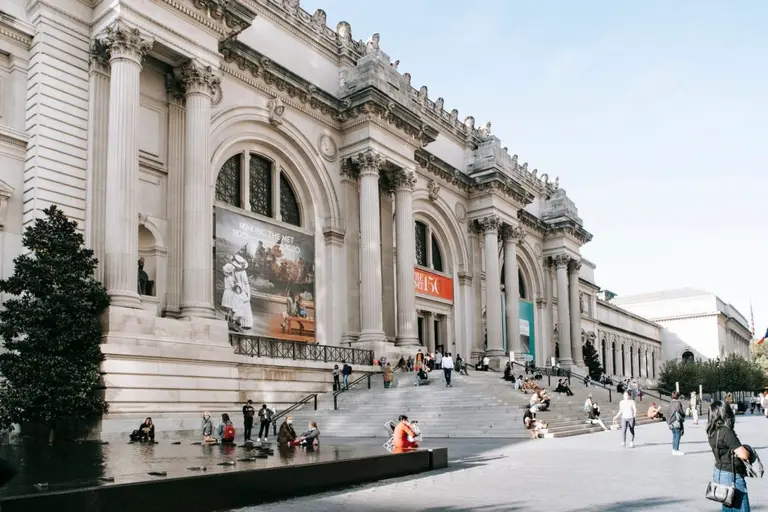
Iconic works by Italian Renaissance master Raphael will go on view at the Metropolitan Museum of Art, bringing many of the artist’s most celebrated pieces to the United States for the first time. On view from March 29 through June 28, “Raphael: Sublime Poetry” is the first comprehensive international loan exhibition in the country dedicated to the artist. Spanning his full career, the exhibition will feature more than 200 works, including over 170 drawings, paintings, tapestries, and decorative arts from public and private collections around the world.
“This unprecedented exhibition will offer a groundbreaking look at the brilliance and legacy of Raphael, a true titan of the Italian Renaissance,” Max Hollein, The Met’s Marina Kellen French Director and Chief Executive Officer, said.
“Visitors will have an exceptionally rare opportunity to experience the breathtaking range of his creative genius through some of the artist’s most iconic and seldom loaned works from around the globe–many never before shown together.”
Born Raffaello di Giovanni Santi on April 6, 1483, in the Italian hilltop town of Urbino, the famed painter, designer, and architect rose from creating altarpieces and small devotional works to producing otherworldly frescoes in the Vatican, all within his short 37-year life.
The exhibition begins with Raphael’s early work in Città di Castello, where, while studying under Pietro Perugino, he began painting notable church altarpieces. It features paintings and related studies created for confraternities by both Perugino and Raphael, including the first work fully attributed to Raphael, as confirmed by recent conservation treatment.
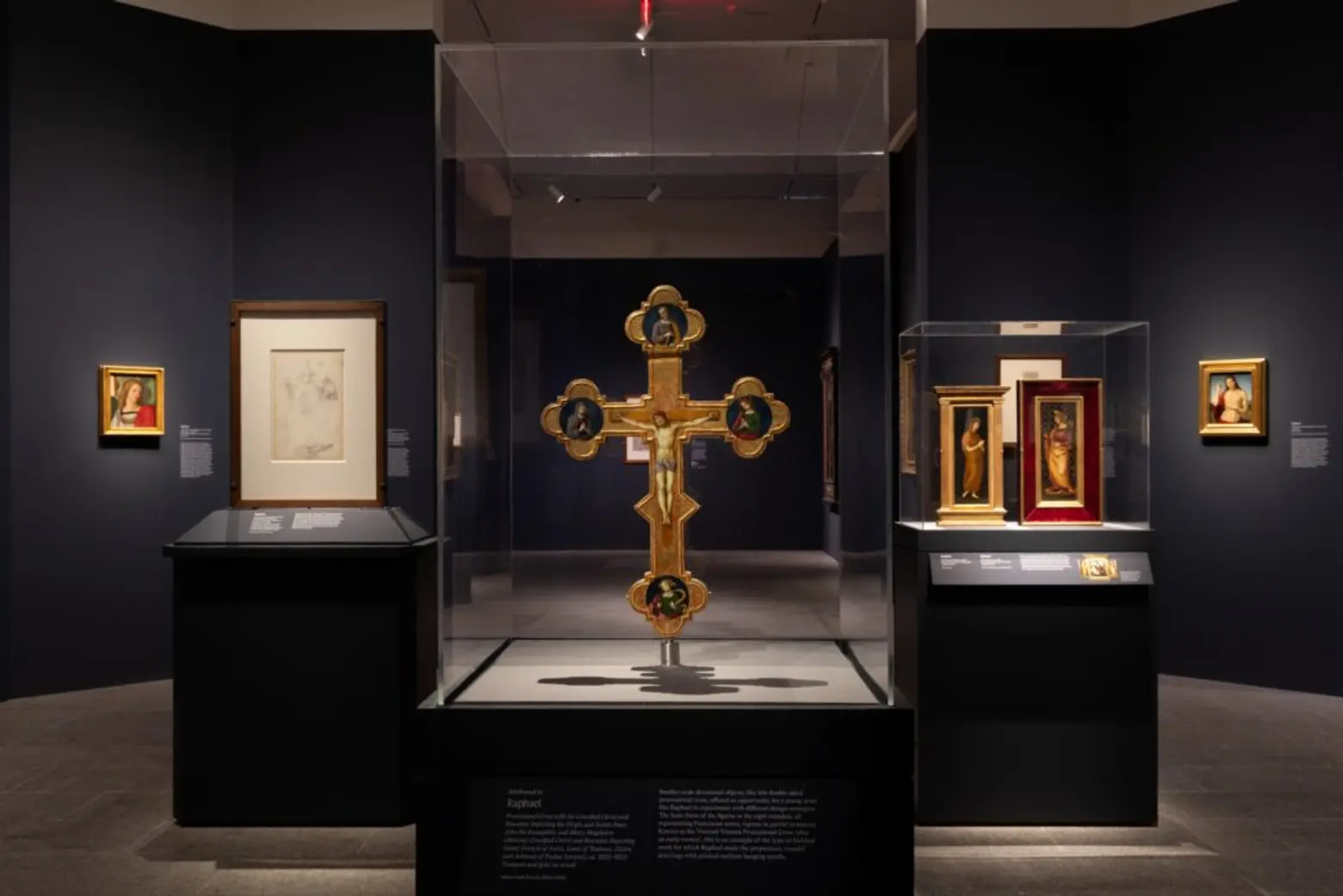
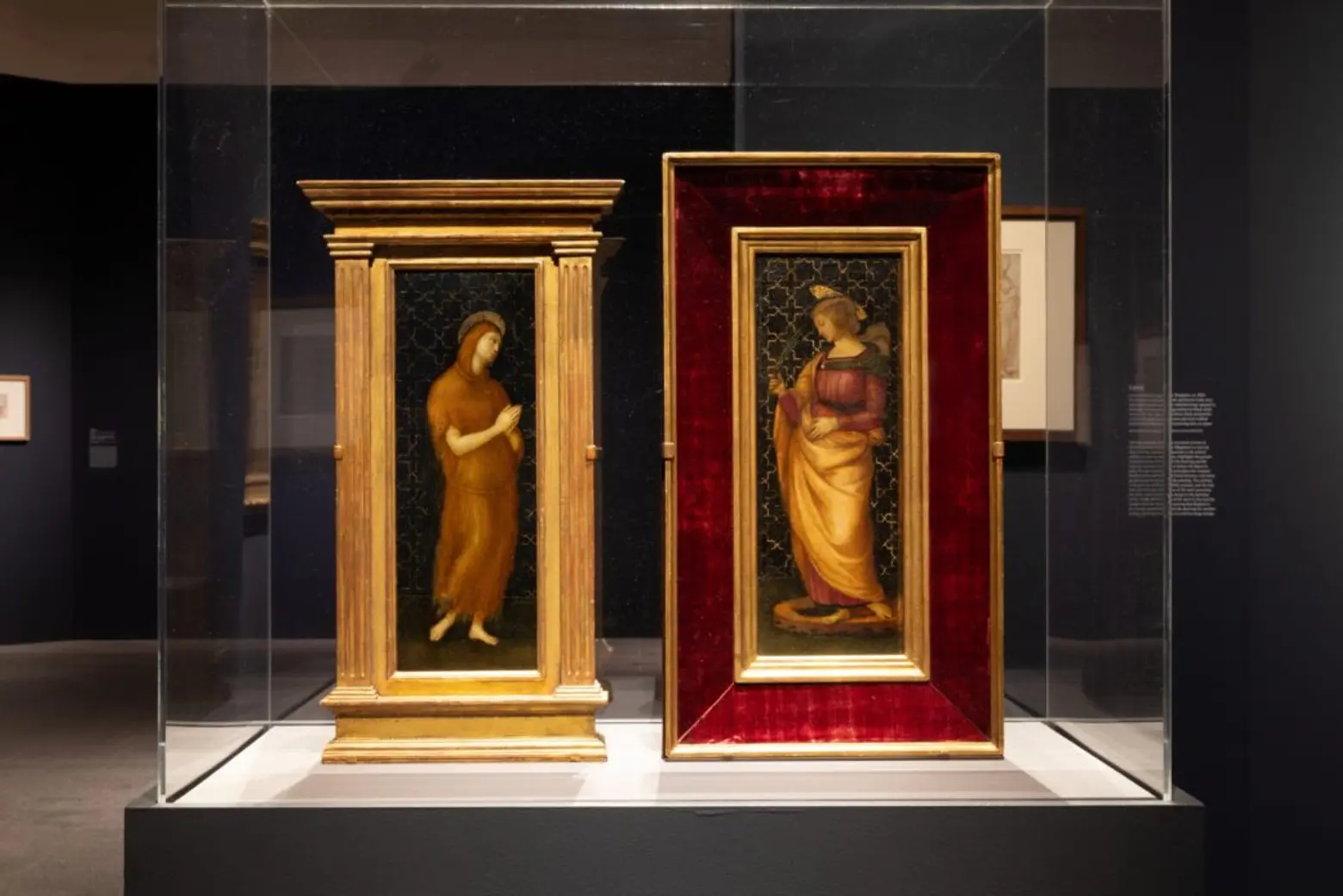
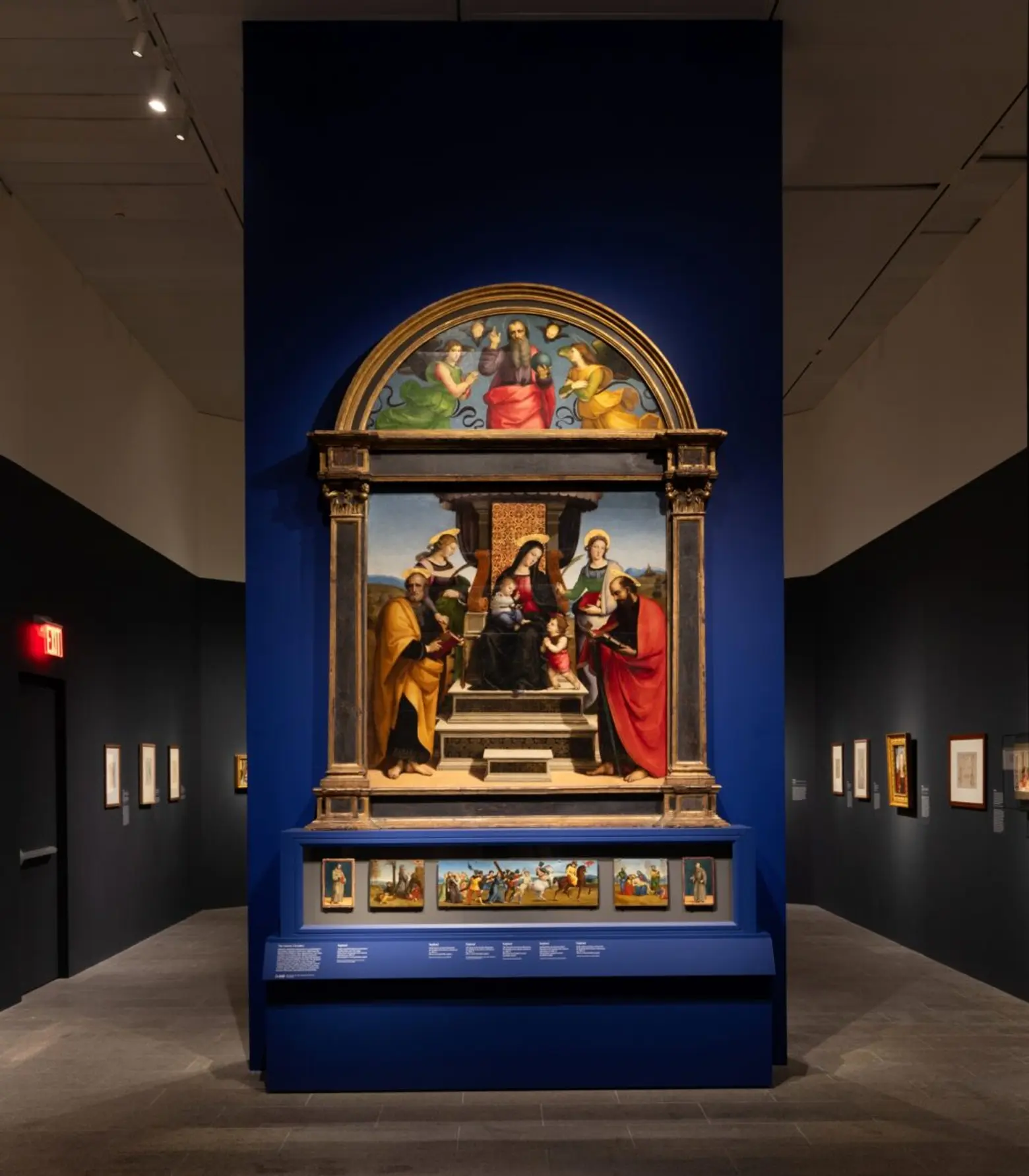
Next, the exhibition examines the period from 1500 to 1507, when the young Raphael cultivated patrons by producing monumental altarpieces and small devotional works across the regions of Marche, Umbria, and Tuscany. One highlighted example is the large, multipart Colonna Altarpiece, created for nuns in Perugia.
The full ensemble of the altarpiece will be presented as a complete work for the first time since it was disassembled around 1663, and its individual paintings were dispersed. Full-scale drawings of an exemplary altarpiece for the Oddi family chapel in Perugia offer insight into the workshop practices Raphael absorbed while working with Perugino.
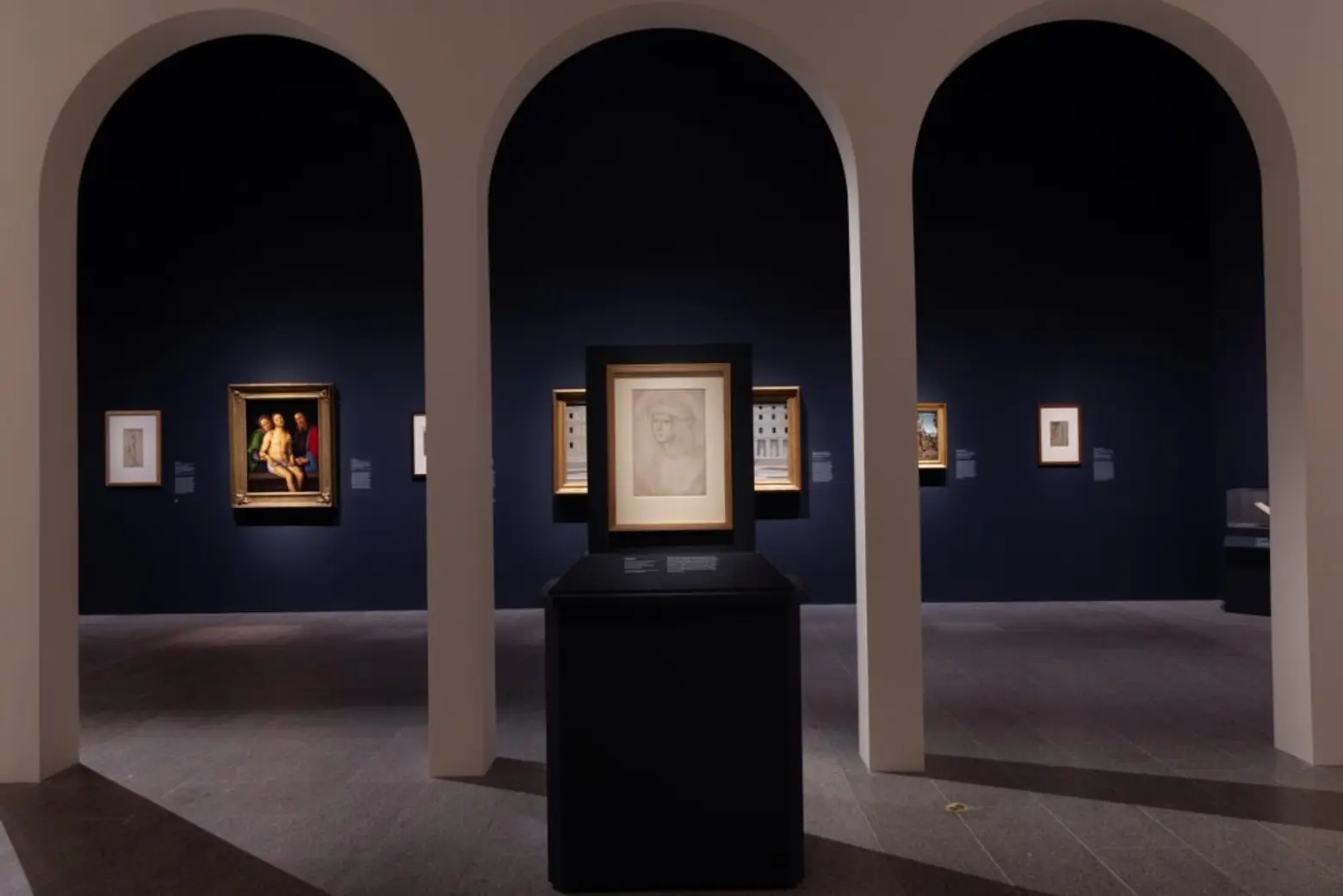
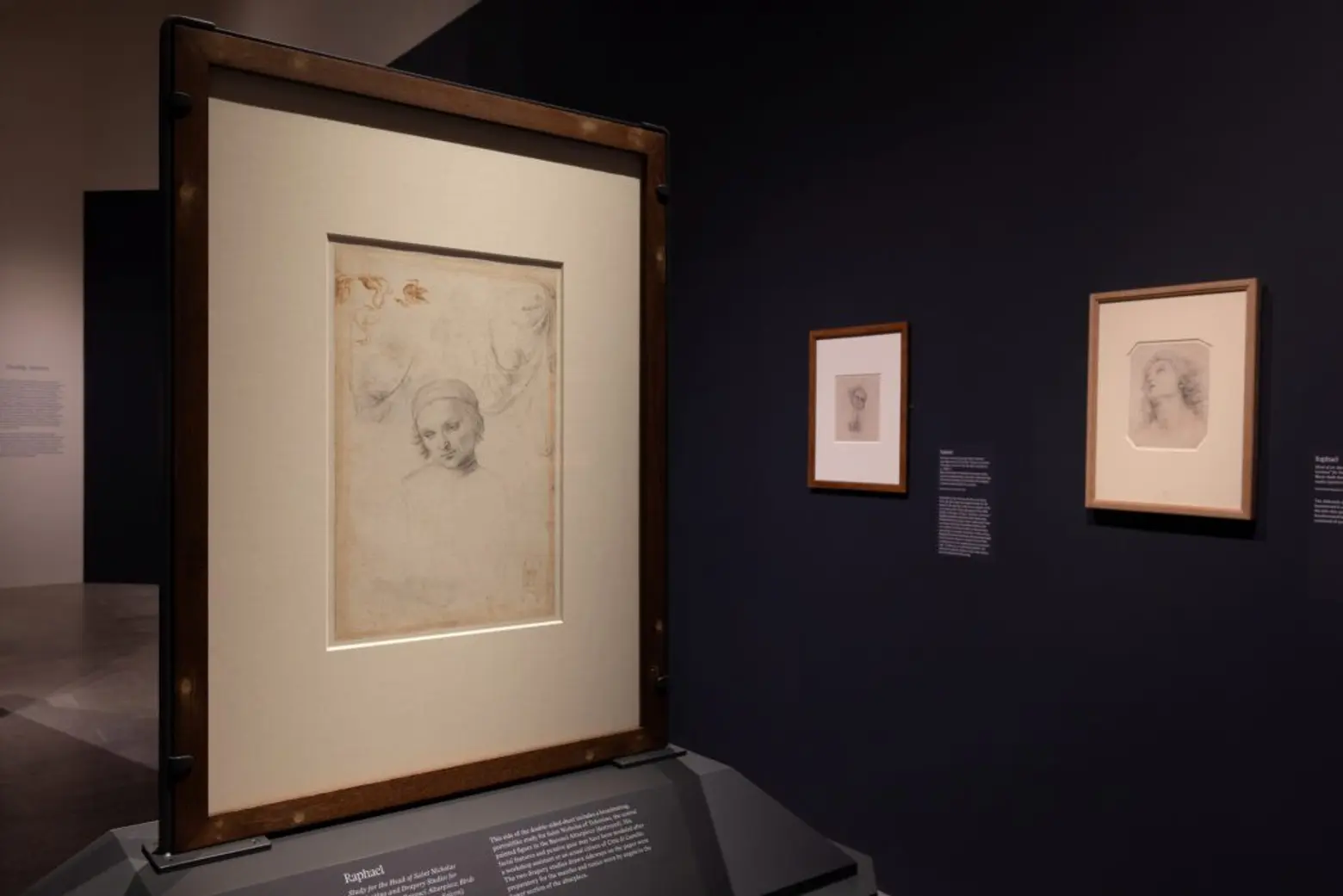
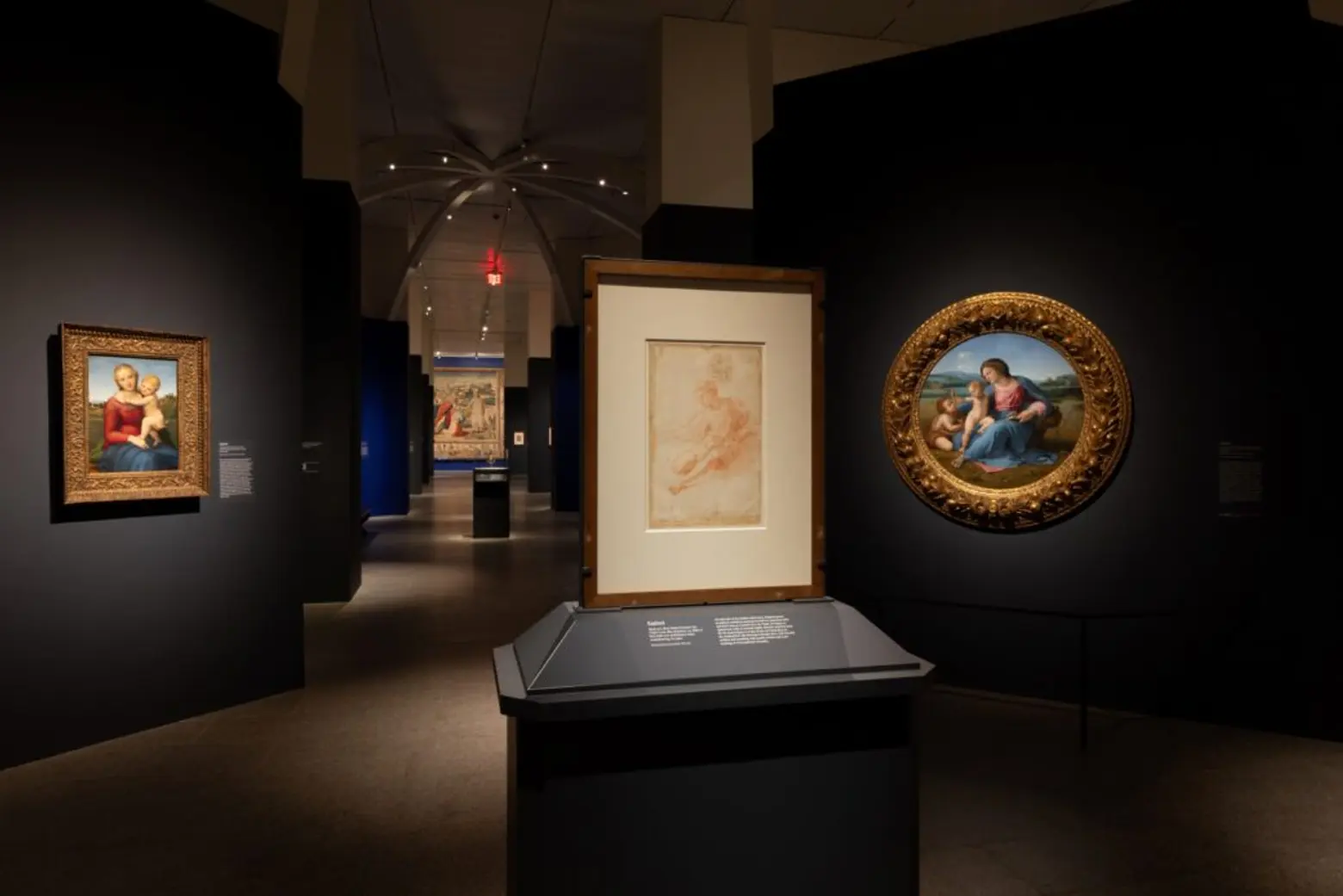
Studies on paper further reveal Raphael’s versatility across media, including black chalk, pen and ink, and metalpoint on prepared paper, each demonstrating a virtuosic command of technique.
The exhibition then transitions to Raphael’s move to Florence from 1504 to 1508, likely drawn by the spectacular murals of fellow Renaissance masters Leonardo da Vinci and Michelangelo. In Florence, Raphael’s compositions evolved, gaining a heightened sense of space, sculptural monumentality, and expressive force, the result of his relentless experimentation on paper.
Sequences of drawings, from quick sketches to studies of arrangements based on three-dimensional clay or wax models, illustrate Raphael’s “increasingly disciplined approach to the design process,” according to a press release.
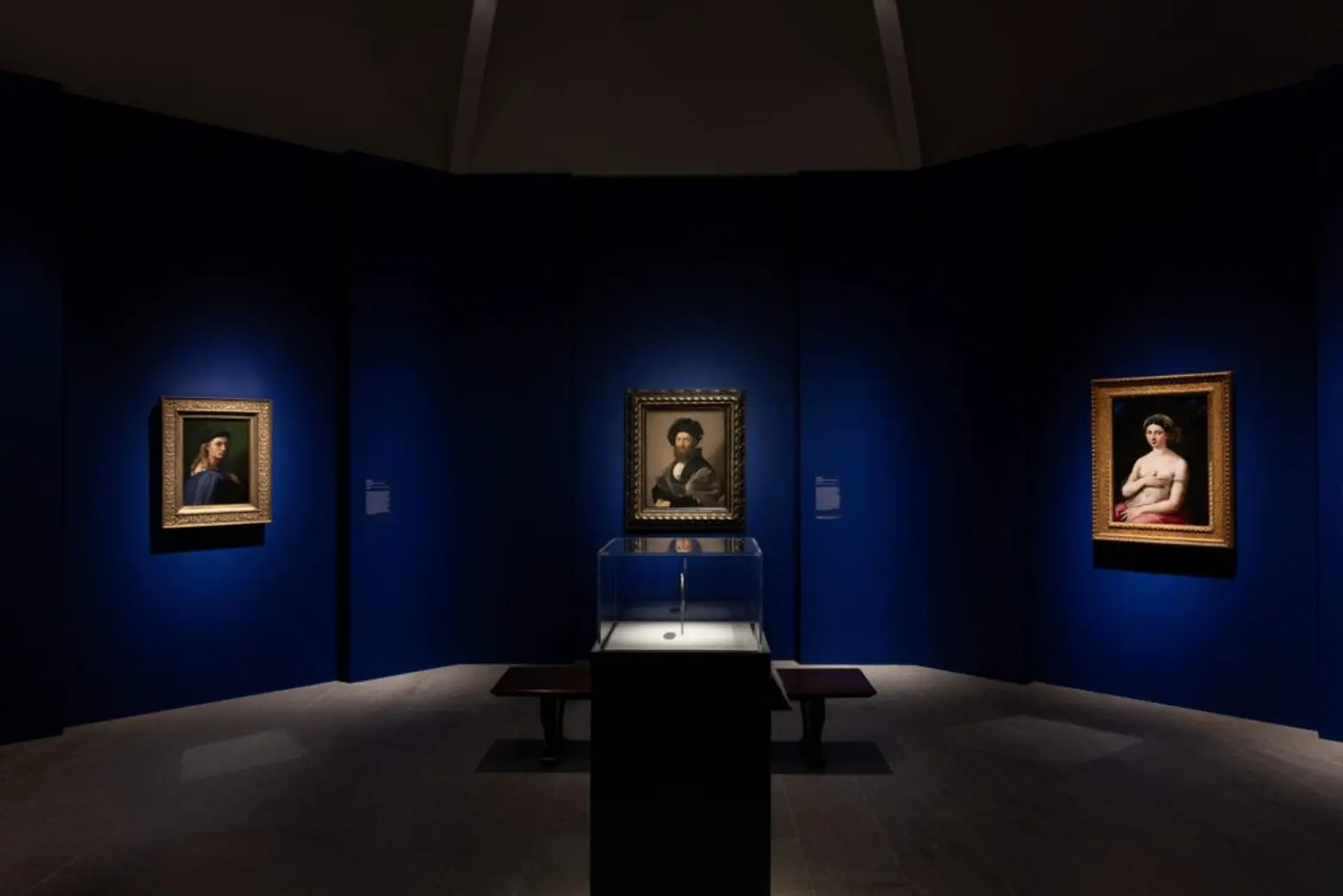
The exhibition then examines Raphael’s portrait work, one of his most reliable sources of patronage among wealthy Florentine merchants, who frequently commissioned portraits, as well as devotional paintings. It shows how the artist’s portraits convey a sense of empathy and reflect years of careful practice aimed at achieving an intimate portrayal of each subject.
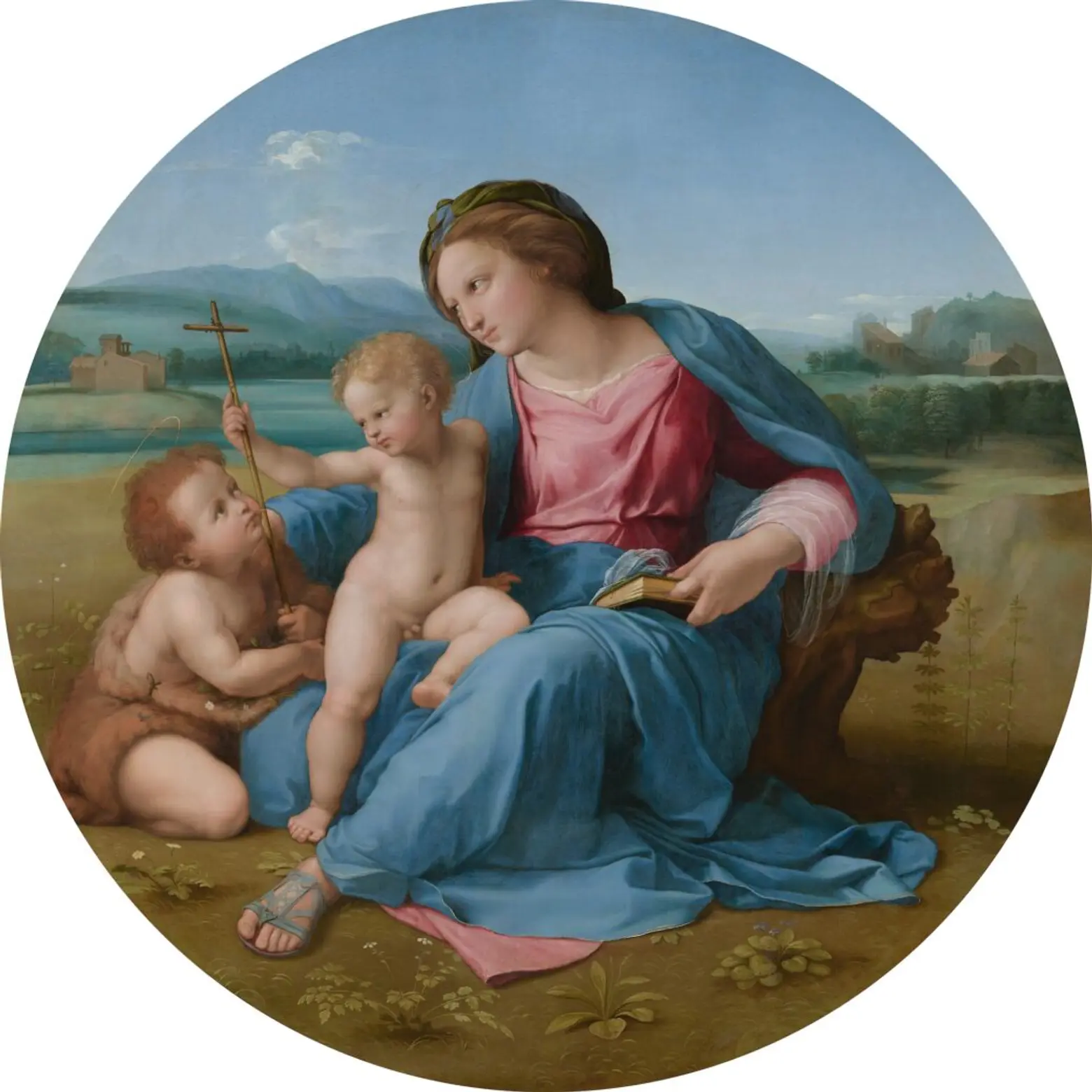
Among the devotional paintings for which Raphael is known is “The Virgin and Child with Infant Saint John the Baptist in a Landscape (The Alba Madonna),” widely considered a Renaissance masterpiece. The exhibition will reunite the “Alba Madonna” with another renowned work, “Portrait of Baldassarre Castiglione,” now in the Louvre, similarly regarded as one of the greatest portraits of the High Renaissance.
Next, the exhibition follows Raphael to Rome, where he arrived in 1508 at age 25 and quickly became the favored court artist of Popes Julius II and Leo X. He managed to surpass an older generation of Vatican patrons and take control of the fresco decoration in one of its most important rooms, the Stanza della Segnatura.
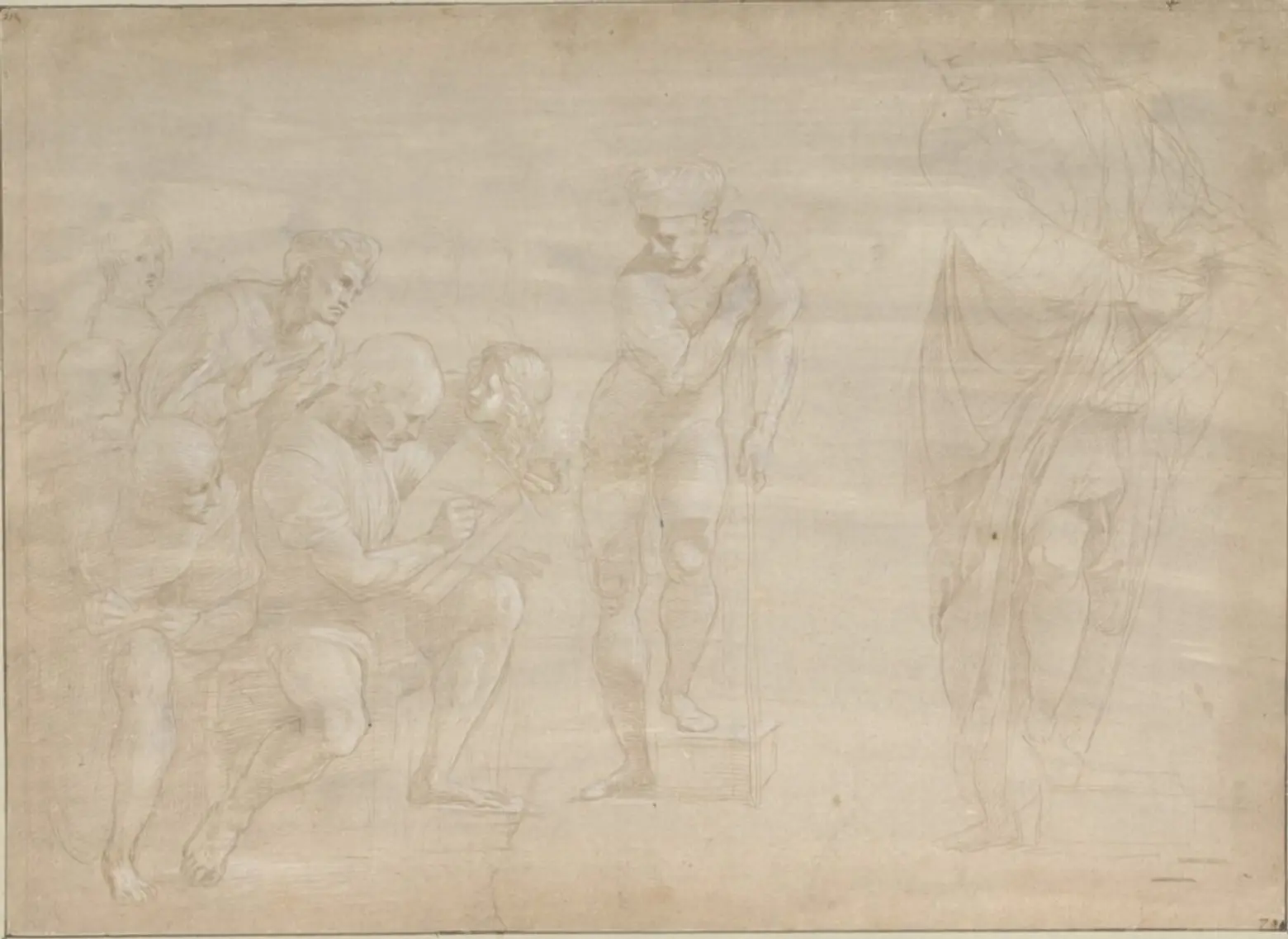
Raphael’s studies for those famed Vatican frescoes, including “The School of Athens” and “The Disputa,” show the artist in full command of the expressive potential of a range of drawing media.
Around 1510, Raphael emerged as one of the most visible and prolific painters in Rome’s papal court, while Michelangelo completed his ceiling frescoes in the Sistine Chapel, which Raphael reportedly visited in secret, according to a press release. Drawings in this section connect to projects Raphael undertook as he completed his first series of Vatican frescoes and began work on the second series in the Stanza di Eliodoro.
The next section features paintings that showcase the breathtaking visual eloquence of Raphael’s later years, in which he shapes new “harmonies of color” with a “dark chiaroscuro,” and composes sculptural forms that appear to project from dense compositions.
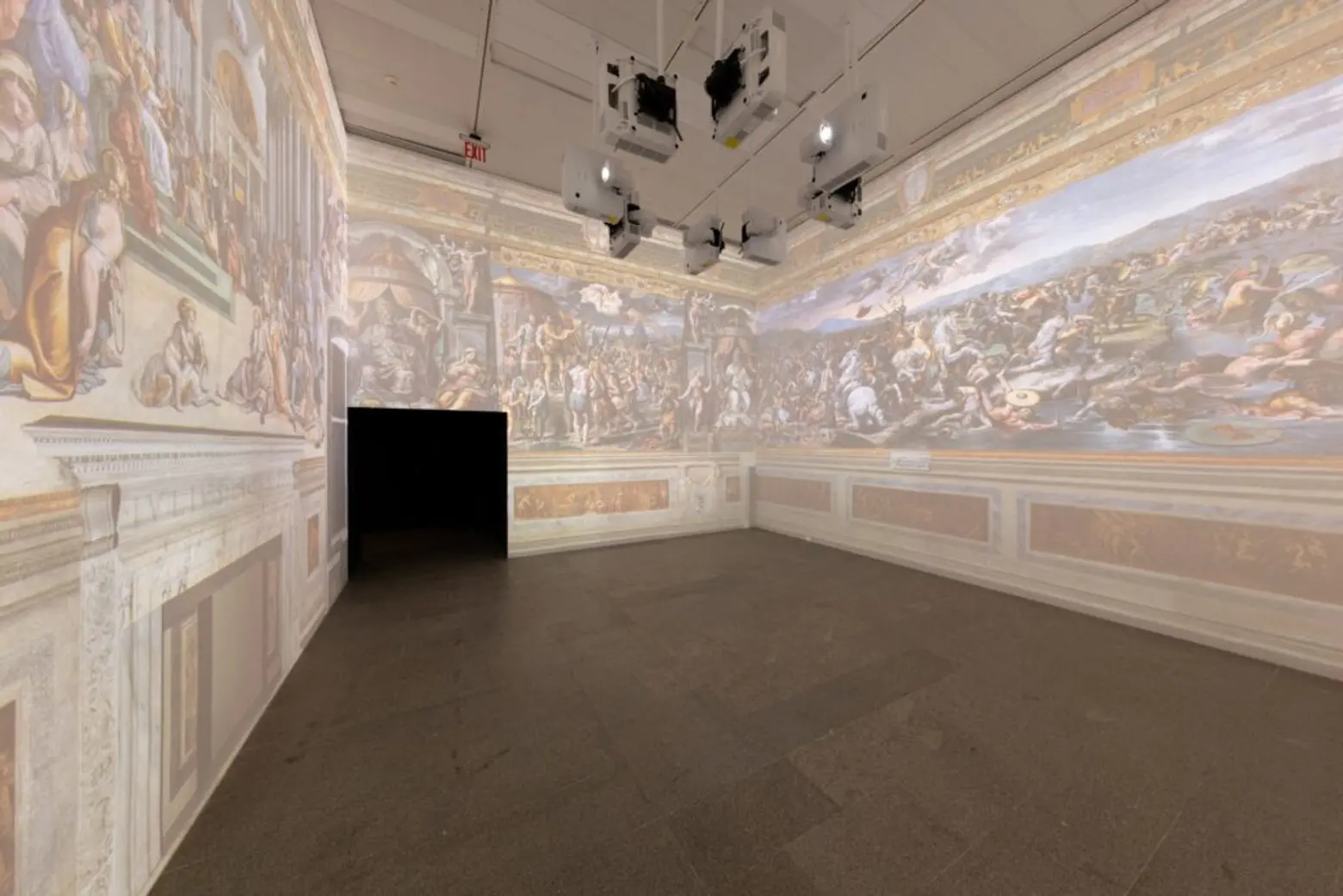
A digital video showcasing Raphael’s monumental fresco cycles in four rooms of the Vatican provides a sense of scale and context for the many related drawings throughout the exhibition. The frescoes were painted between 1508 and 1524.
In Rome, Pope Leo X tasked Raphael with designing a set of large tapestries to hang in the Sistine Chapel during special occasions. Beginning in 1515, Raphael created small preliminary studies, after which he and his workshop assistants used gouache on paper to develop full-scale designs to guide the weavers.
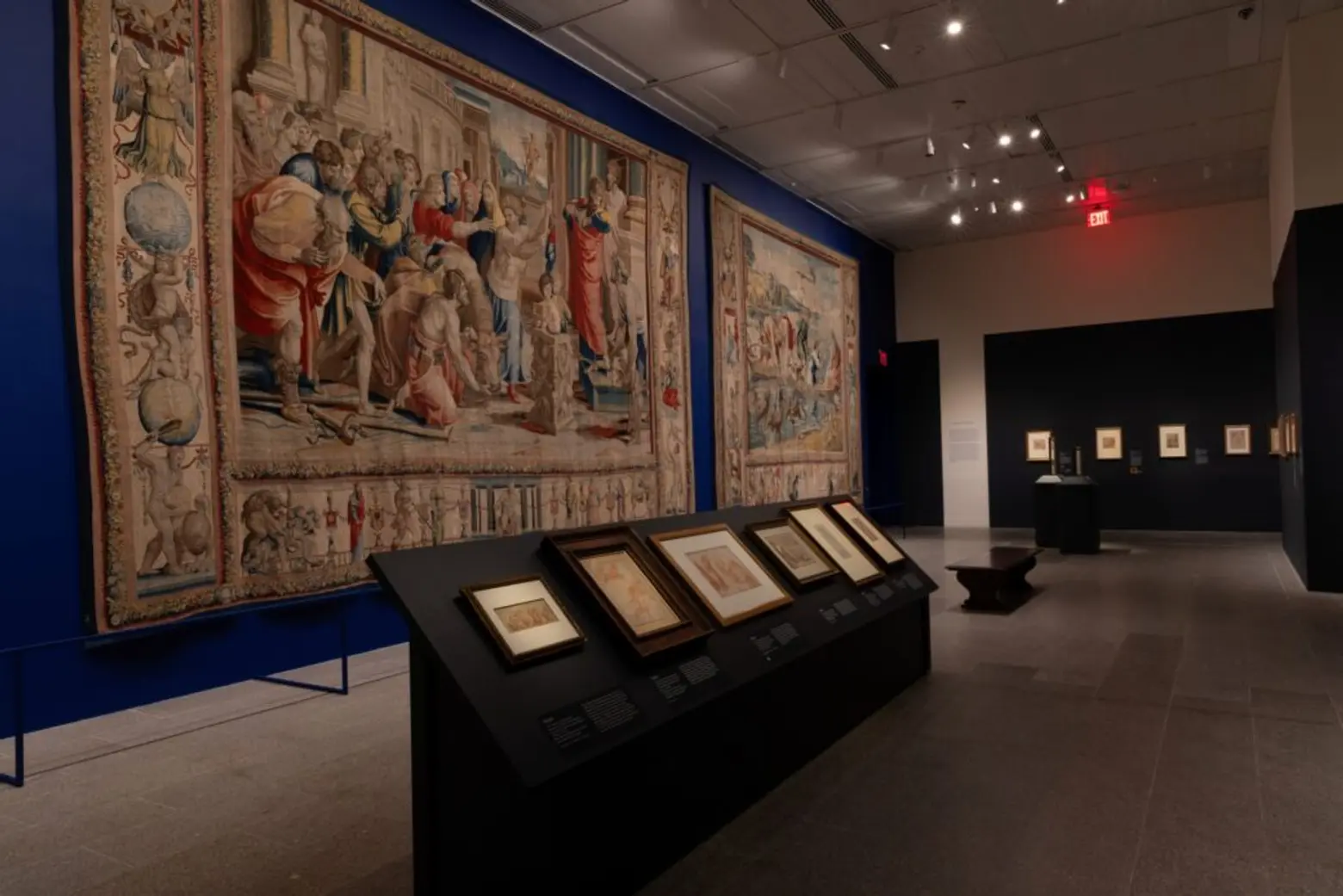
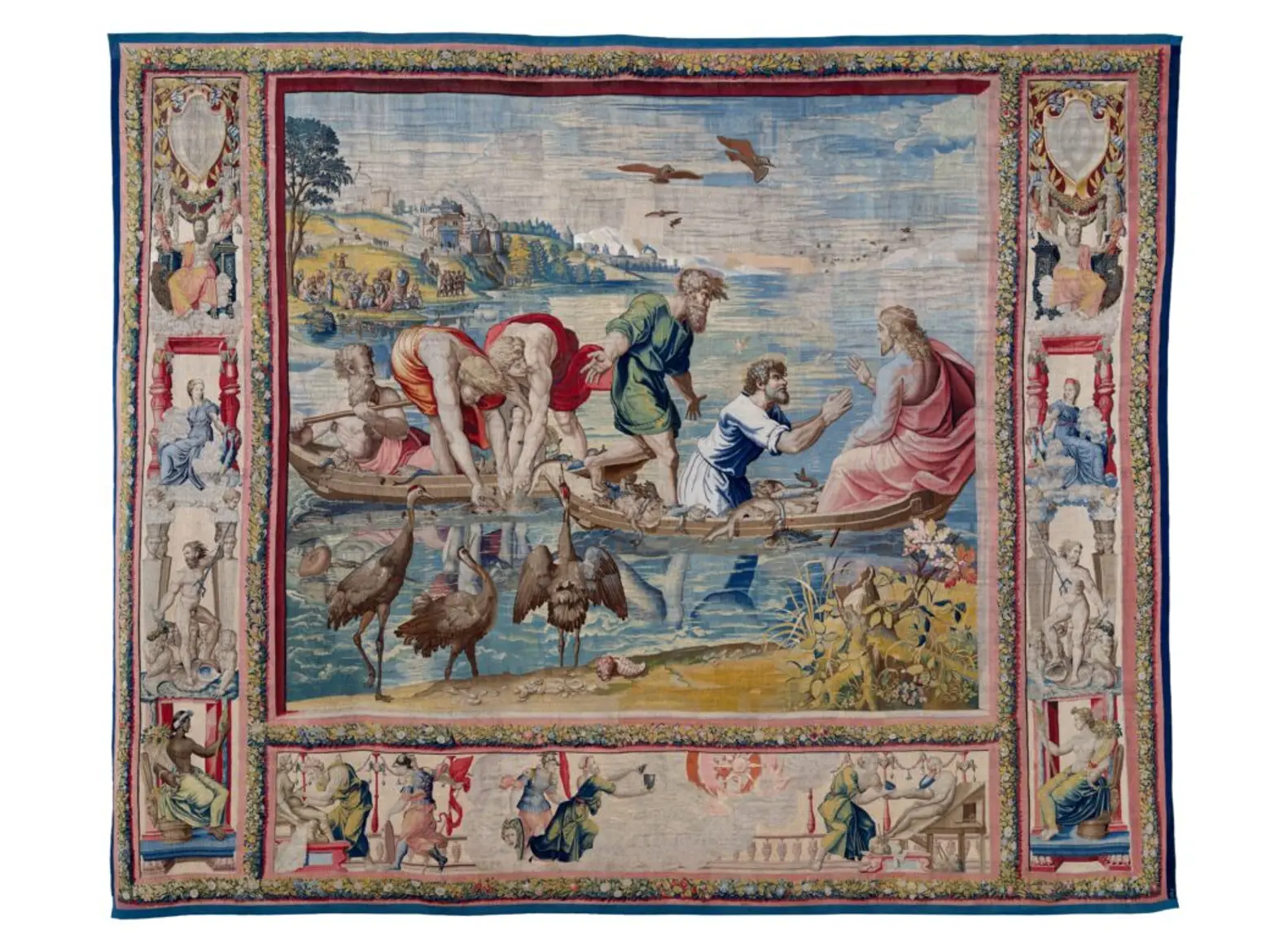
Woven in Brussels with rich materials, the tapestries helped strain Leo’s finances, but their inventive compositions, bold colors, and monumental scale quickly became the envy of other European monarchs. Henry VIII, Francis I, and Charles V all commissioned second editions based on Raphael’s designs, three of which are represented in the exhibition.
The exhibition concludes with an analysis of how Rome and its ancient monuments influenced Raphael’s art, and how his work, in turn, reshaped the city’s visual landscape. After arriving in 1508, Raphael undertook extensive archaeological studies and drew monuments with “nearly scientific rigor.” Drawings and paintings in this section explore Raphael’s architectural work after he assumed control of the project to design a new St. Peter’s Basilica for Pope Julius II.
“Raphael: Sublime Poetry” is curated by Carmen C. Bambach, the Marica F. and Jan T. Vilcek Curator in the Met’s Department of Drawings and Prints. The exhibition’s list of lenders includes the Louvre, the Vatican Museums, and the British Museum.
In a statement, Bambach said the exhibition was curated over a “seven-year journey” that reframed her understanding of Raphael as an artist.
“The seven-year journey of putting together this exhibition has been an extraordinary chance to reframe my understanding of this monumental artist,” Bambach said. “It is a thrilling opportunity to engage with his unique artistic personality through the visual power, intellectual depth, and tenderness of his imagery.”
RELATED:
Get Insider Updates with Our Newsletter!
Leave a reply
Your email address will not be published.





Dear Sir or Ma’am: Will there be book for purchase of this Raphael exhibit? Dave Gustafson, Moline, Illinois