Coney Island boardwalk to get $1 billion revamp
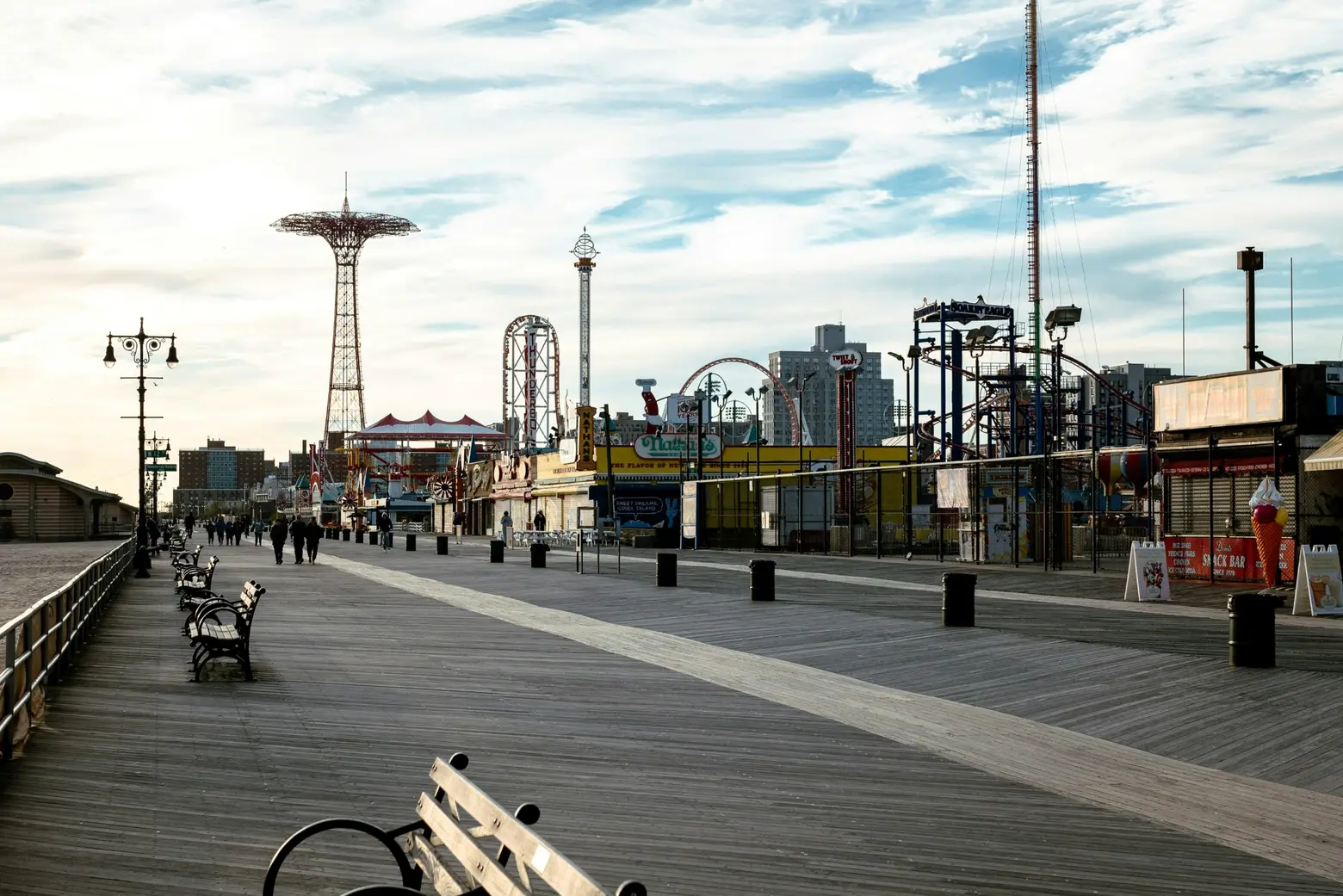
Credit: Danny Policarpo on Unsplash
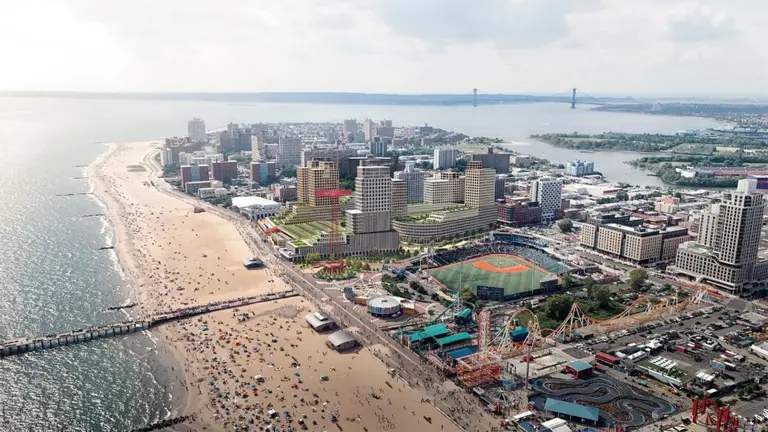
Coney Island’s landmarked Riegelmann Boardwalk will undergo a $1 billion reconstruction. During a Brooklyn Community Board 13 meeting on Monday, NYC Parks Program Director Grace Tang announced that the department received funding to fully reconstruct the 2.7-mile boardwalk, replace utilities and structural piles, and elevate it in certain areas. Mayor Eric Adams announced plans for the reconstruction as part of his “Coney Island West” plan, which aims to bring thousands of new homes, retail spaces, and infrastructure improvements to the neighborhood.
Today, the 102-year-old boardwalk shows clear signs of deterioration as accumulated sand, water, and weeds have caused the wood to rot. Many sections have uplifted decking and loose screws, requiring daily maintenance by carpenters—an approach the city calls unsustainable, as ongoing repairs have addressed only 1 percent of the boardwalk, according to The City.
Beneath the boardwalk, cracked support beams and concrete piles are visible. In many areas, large gaps allow sand and water to flow into the surrounding neighborhood, creating safety hazards. Addressing these issues will strengthen flood resilience in Coney Island and Brighton Beach, while raising certain sections of the boardwalk will further protect the area.
The Parks Department also proposed a conceptual design for a tiered boardwalk, with a lower level on the landward side and an upper level facing the water. This design would allow the many businesses along the boardwalk to continue offering outdoor seating while still elevating key sections.
Park officials assured the community board that raising the boardwalk would not block beach views and would align with any future coastal flood protection plans by the U.S. Army Corps of Engineers.
The project will also improve accessibility. Working with the city’s Economic Development Corporation (NYCEDC), the Parks Department will create new access points, converting outdated street-end entrances, some of which are not up to code, into ADA-compliant ramps and plazas.
NYC Parks will also renovate more than a dozen nearby buildings that currently house lifeguard quarters, public bathrooms, shade pavilions, and a garage.
In a separate $42 million project, the city is reconstructing the Abe Stark Sports Center, best known for its ice skating rink that opened in 1970. The initiative will modernize the rink and add a new entrance and signage along the boardwalk, improving its connection to the community.
NYCEDC and the Parks Department will now work to secure a design and construction team. Once design begins, community and stakeholder outreach will also commence, involving amusements and local businesses, the Alliance for Coney Island, NYCHA, the New York Aquarium, Community Board 13, and elected officials.
The project will be carried out in phases over several years, allowing the public to continue accessing the beach. At the meeting, Brooklyn Parks Commissioner Marty Maher estimated that community input sessions will begin in two years.
Previous boardwalk reconstruction efforts followed Hurricane Sandy in 2012, when a five-block section was rebuilt using plastic and concrete. Parks is currently reconstructing an additional three blocks between West 24th and West 27th Streets, according to The City.
After Tang’s presentation, attendees were invited to ask questions about the project. A recurring topic was the proposed elevation of the boardwalk and the potential use of natural flood barriers, such as seawalls and sand dunes, in tandem with the raised structure.
Brooklyn resident Craig Hammerman referenced previous recommendations from the Rise to Resilience Coalition, which called for a buried seawall covered with sand dunes set back from the boardwalk to preserve views and avoid conflicts with new access points.
This idea was later echoed by Abby Jordan, who said she viewed the storm resilience infrastructure in the Rockaways “with envy.”
“What needs to happen for there to be something in Coney Island and Brighton Beach that looks like what the Rockaways has,” Jordan said, “where beach grass helps to stabilize and fortify a sand dune system to mitigate chronic flooding and storm surges, alongside an elevated boardwalk.”
She added, “It would be a dream to see something that is hybrid, holistic, and works with nature-based solutions, but also meets the point of maintaining the historic amusement district.”
In response, Maher assured attendees that no part of the project would prevent the Army Corps of Engineers from adding similar storm barriers on Coney Island in the future. He emphasized that the proposed elevation would occur only in select sections and remains a conceptual idea.
Maher added that he supports green infrastructure and nature-based solutions, noting that he is approaching the project from a holistic perspective.
The boardwalk’s reconstruction is a major piece of Mayor Eric Adams’ and the NYCEDC’s “Coney Island West” plan, released in February.
Funding for the boardwalk was allocated by the Mayor’s Office of Management and Budget in September.
Under the plan, the city aims to develop the remaining parcels made available by the 2009 Coney Island rezoning, which is expected to produce 1,500 mixed-income apartments, along with new retail, streets, and public spaces.
New streets include Ocean Way and Parachute Way, which will be a pedestrian-friendly street next to Maimonides Park, home to the minor league baseball team the Brooklyn Cyclones.
“Coney Island is home to thousands of hard-working New Yorkers who work hard every day to leave behind something better for their families,” Adams said. “Life here shouldn’t be a rollercoaster, which is why our administration is committing $1 billion to rejuvenate America’s playground and build a better Coney Island.”
He added, “With this investment, we are going to deliver 1,500 new mixed income homes to the waterfront—25 percent of which will be affordable—and restore the over 100-year-old Riegelmann Boardwalk to its former glory.”
Since 2009, more than 3,400 units have already been built in Coney Island, with 90 percent completed in the last five years. This includes Surf Vets Place, a building at 2002 Surf Avenue with 135 housing units, and Raven Hall, a 216-unit development at 2006 Surf Avenue, which were completed in 2019 and 2022, respectively, as 6sqft previously reported.
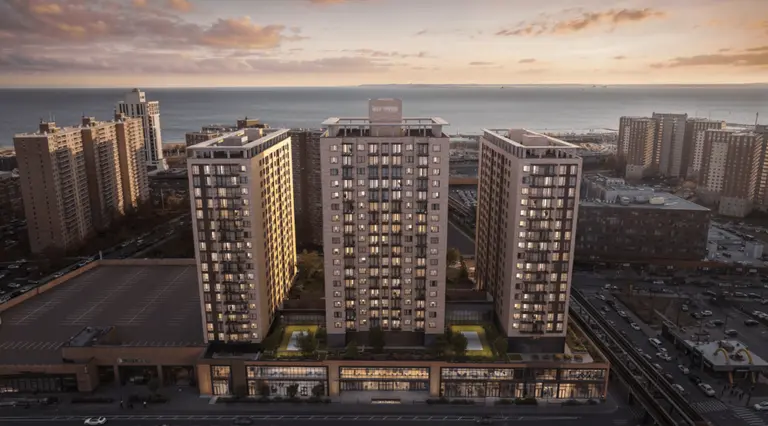
In September 2024, 1515 Surf Avenue, a 100 percent two-tower residential development with market-rate apartments, opened.
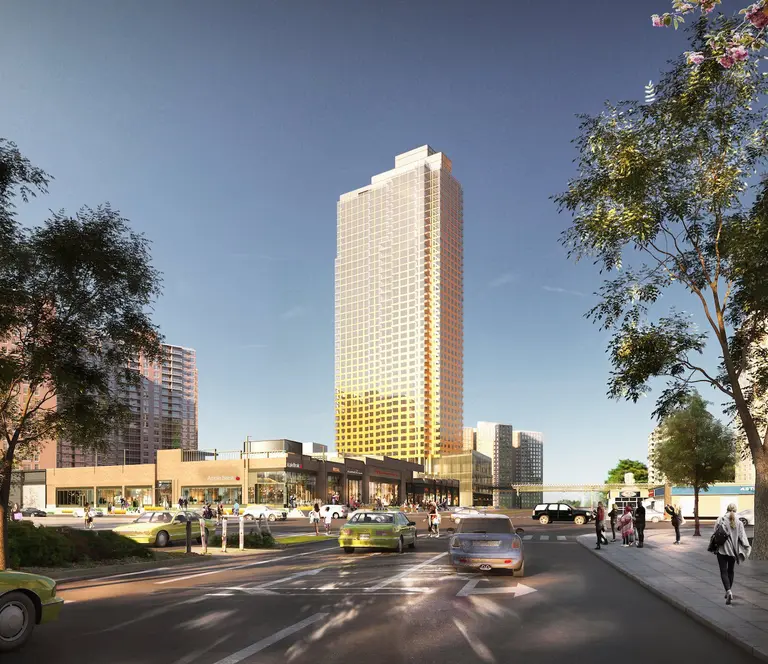
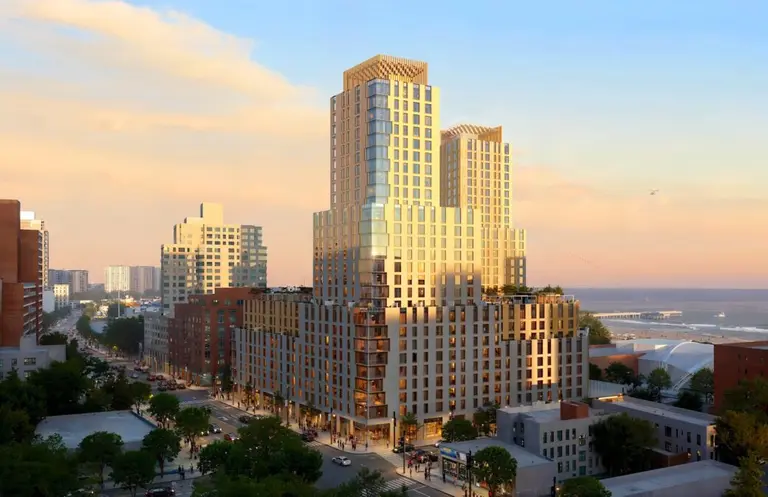
In October, the city unveiled plans for a new housing project at “Parcel A,” a former city-owned parking lot on Surf Avenue between West 21st and West 22nd Streets. Rybal Development is set to build a $350 million, 28-story mixed-use tower featuring more than 500 apartments.
RELATED: