Colossal Buddha sculpture opens on the High Line
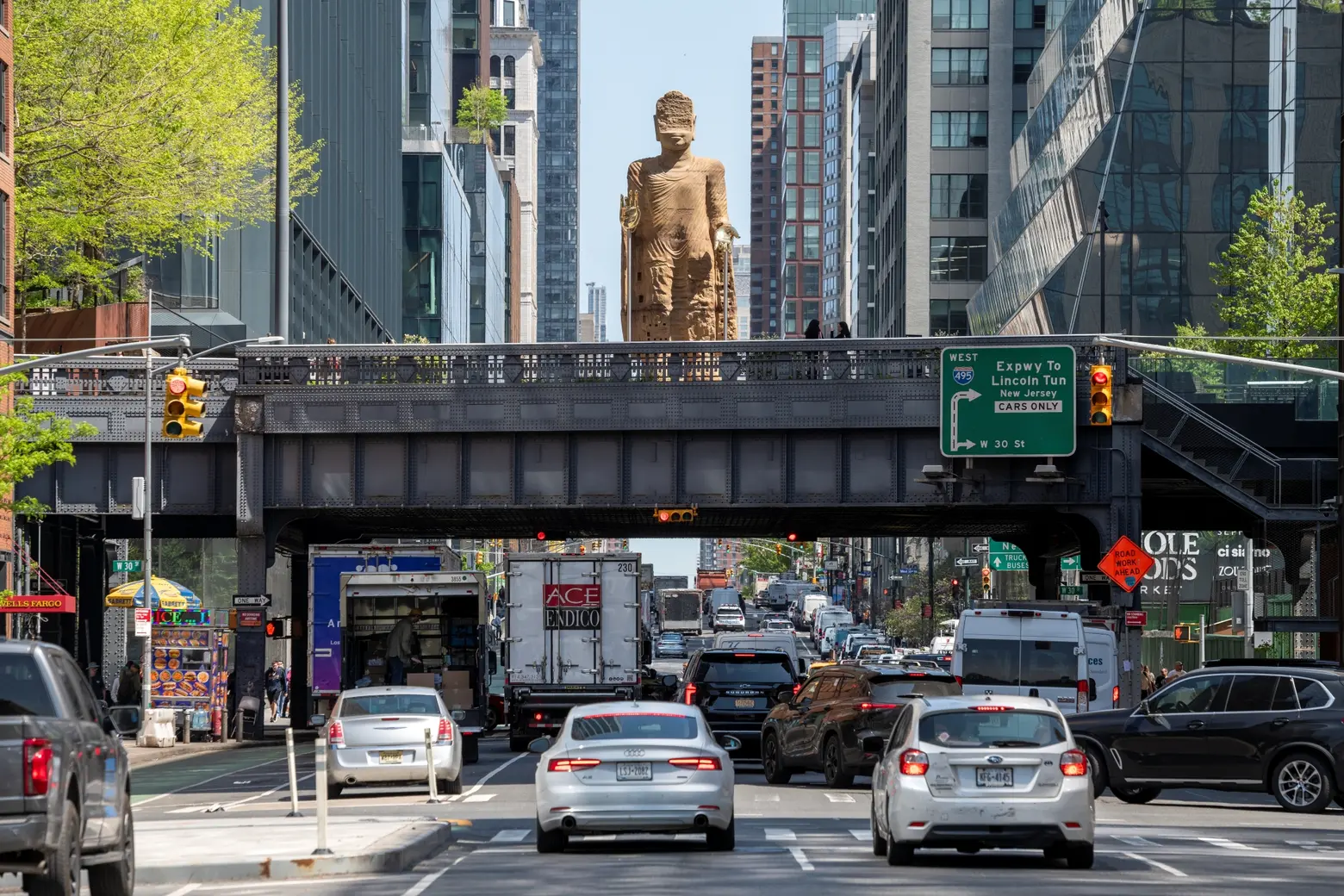
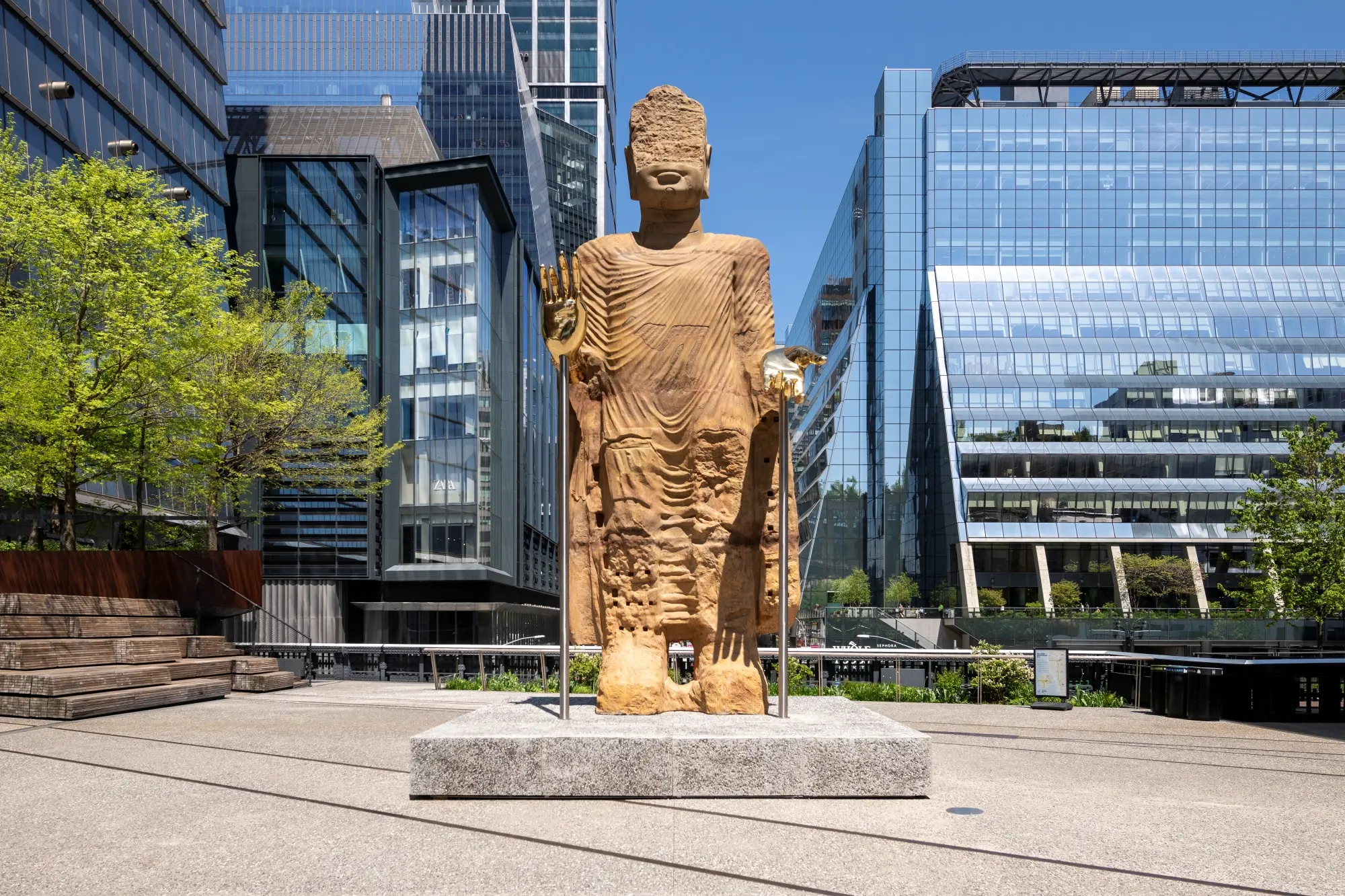
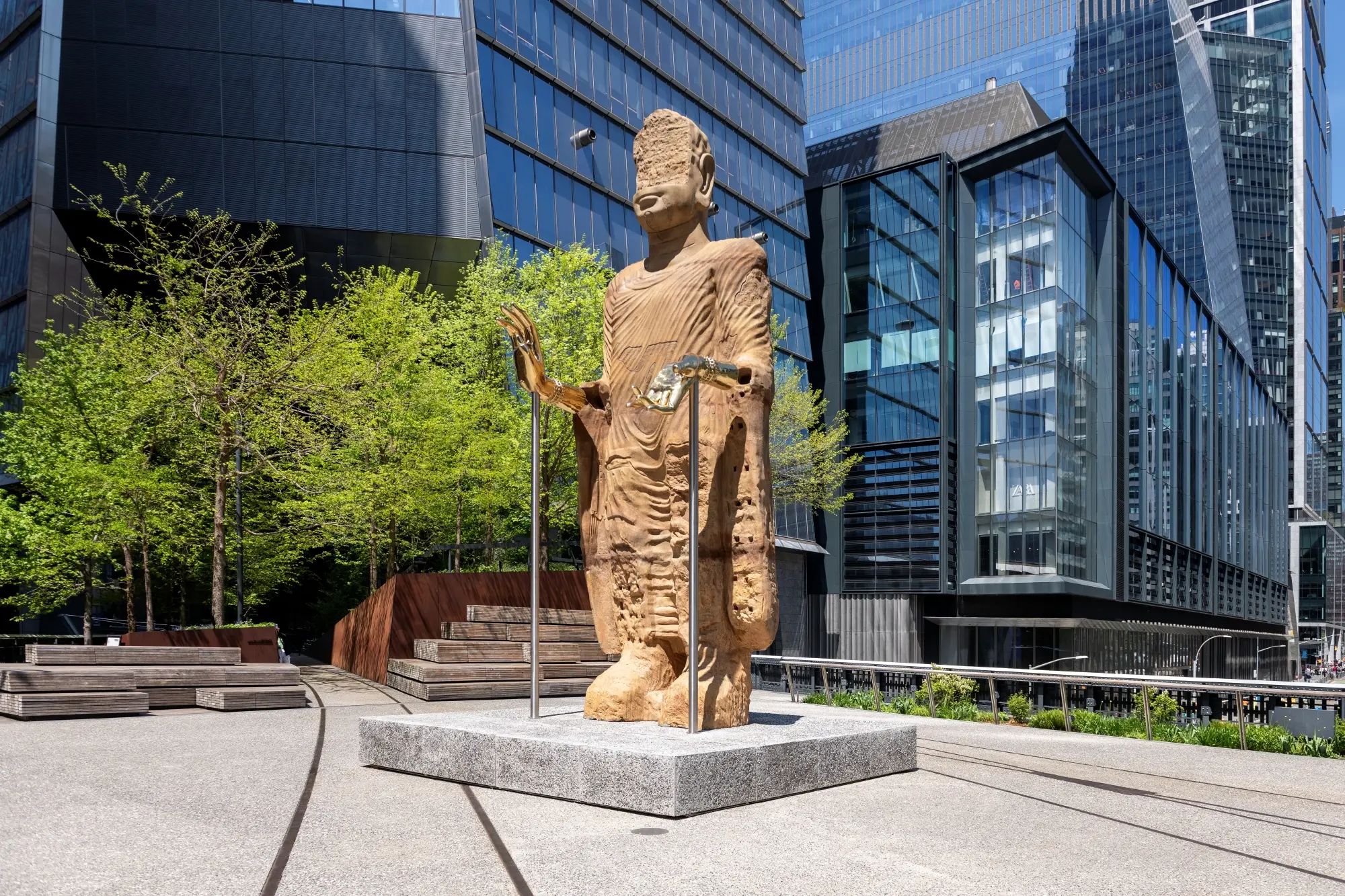
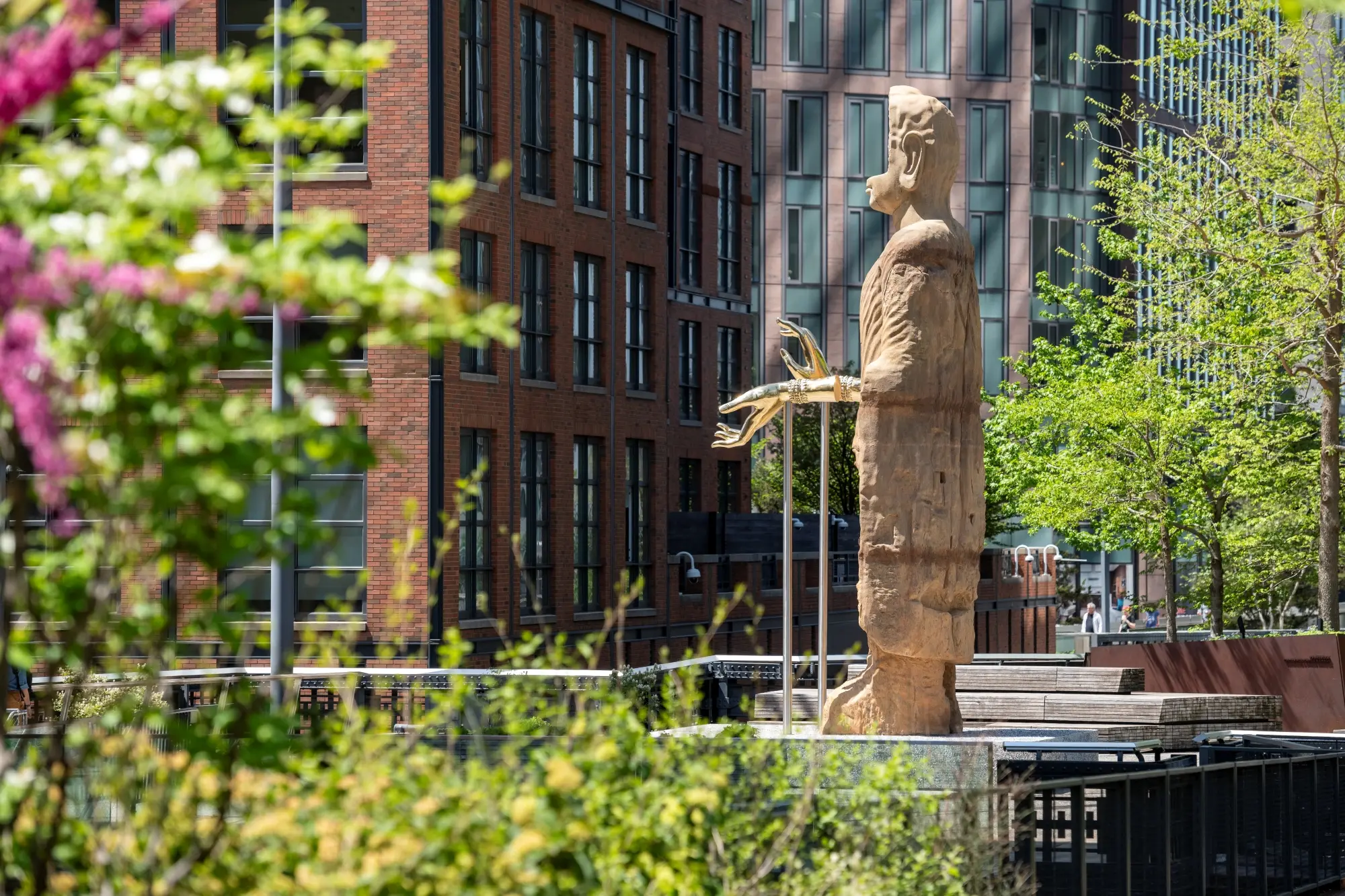
Tuan Andrew Nguyen, The Light That Shines Through the Universe, 2026. A High Line Plinth commission. On view April 2026 – Fall 2027. Photo by Timothy Schenck. Courtesy of the High Line.
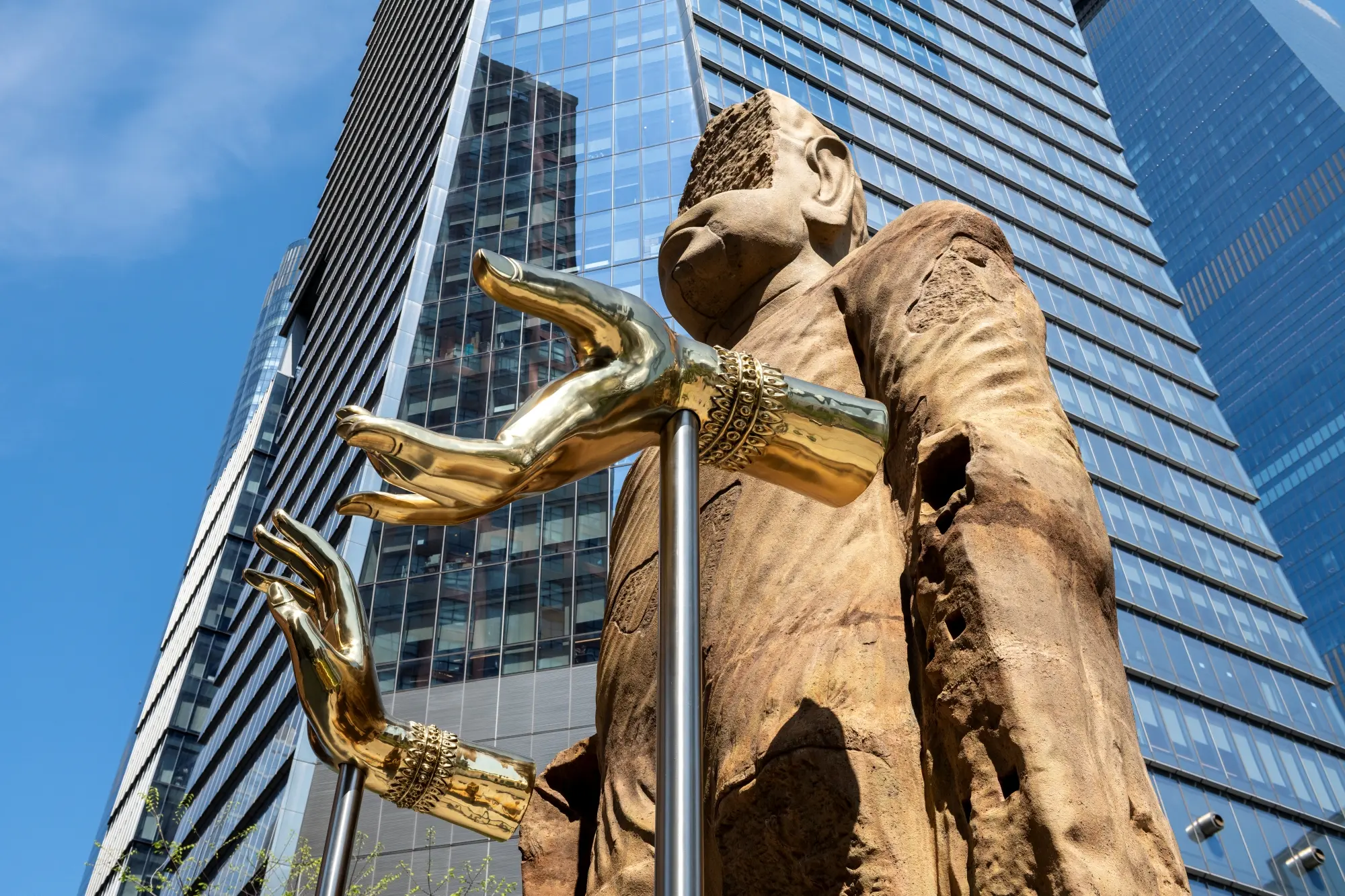
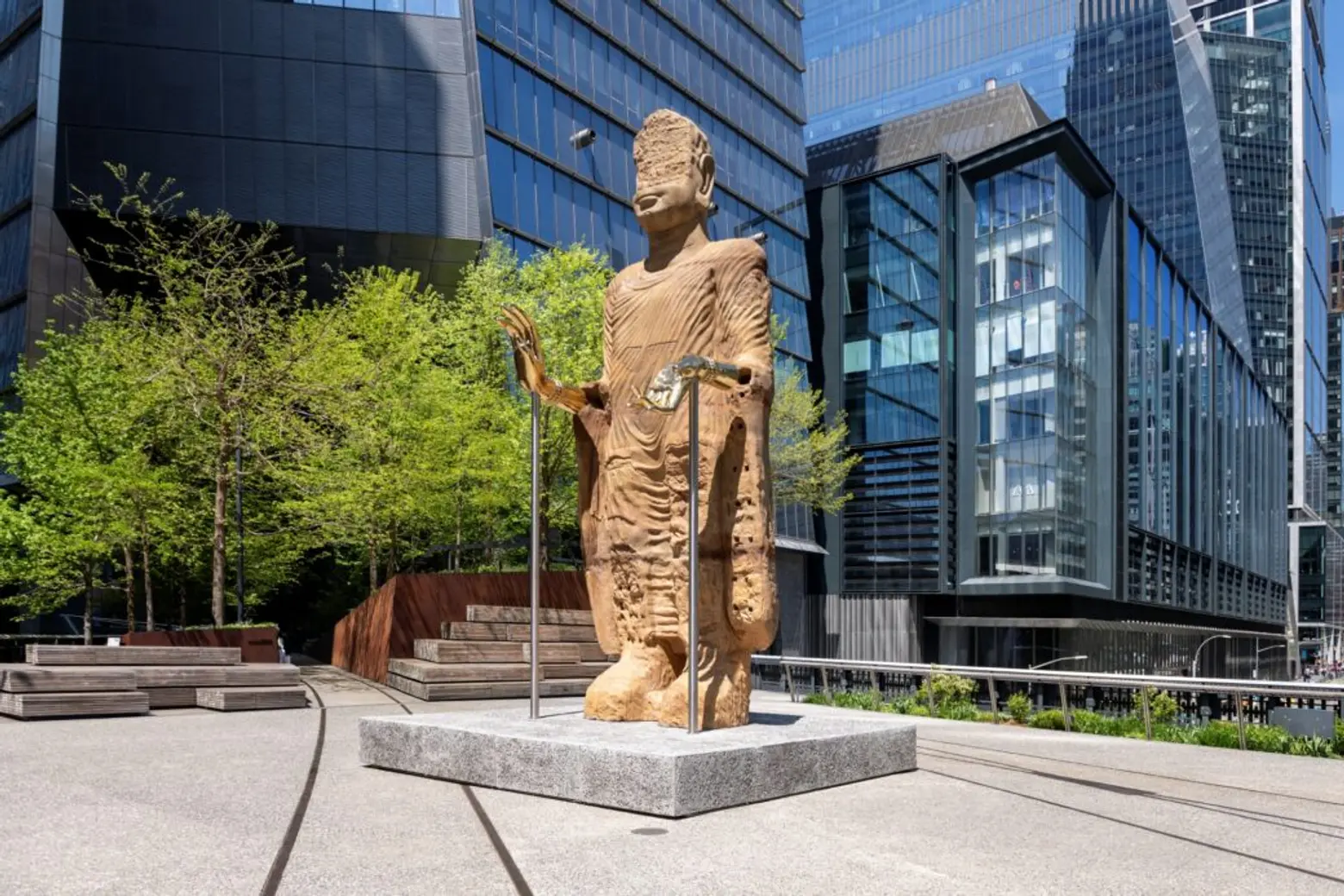
A 27-foot-tall recreation of a Buddha statue destroyed by the Taliban 25 years ago now towers over 10th Avenue from the High Line. The High Line installed Tuan Andrew Nguyen’s “The Light That Shines Through the Universe” last week above the intersection of 10th Avenue and 30th Street as part of its Plinth program. Carved in Vietnam, the sandstone sculpture recreates one of the Bamiyan Buddha statues destroyed in Afghanistan in 2001 and serves as a monument to cultural loss and resilience. The commission, which replaces the popular giant pigeon sculpture “Dinosaur,” will be on view for 18 months.
“This sculpture is a towering, 27-foot call to remembrance, asserting that our collective memory and our shared humanity remain the most enduring antidote against those who seek to break and scatter the human spirit,” Alan van Capelle, executive director of Friends of the High Line, said.
“What happened to the Buddhas of Bamiyan is not unique and is particularly resonant for many people across this country today who face a real fear of erasure and cultural persecution. A work of this magnitude requires a platform of equal magnitude, and I hope its debut on the Plinth offers people a powerful place to connect and find strength in this moment.”
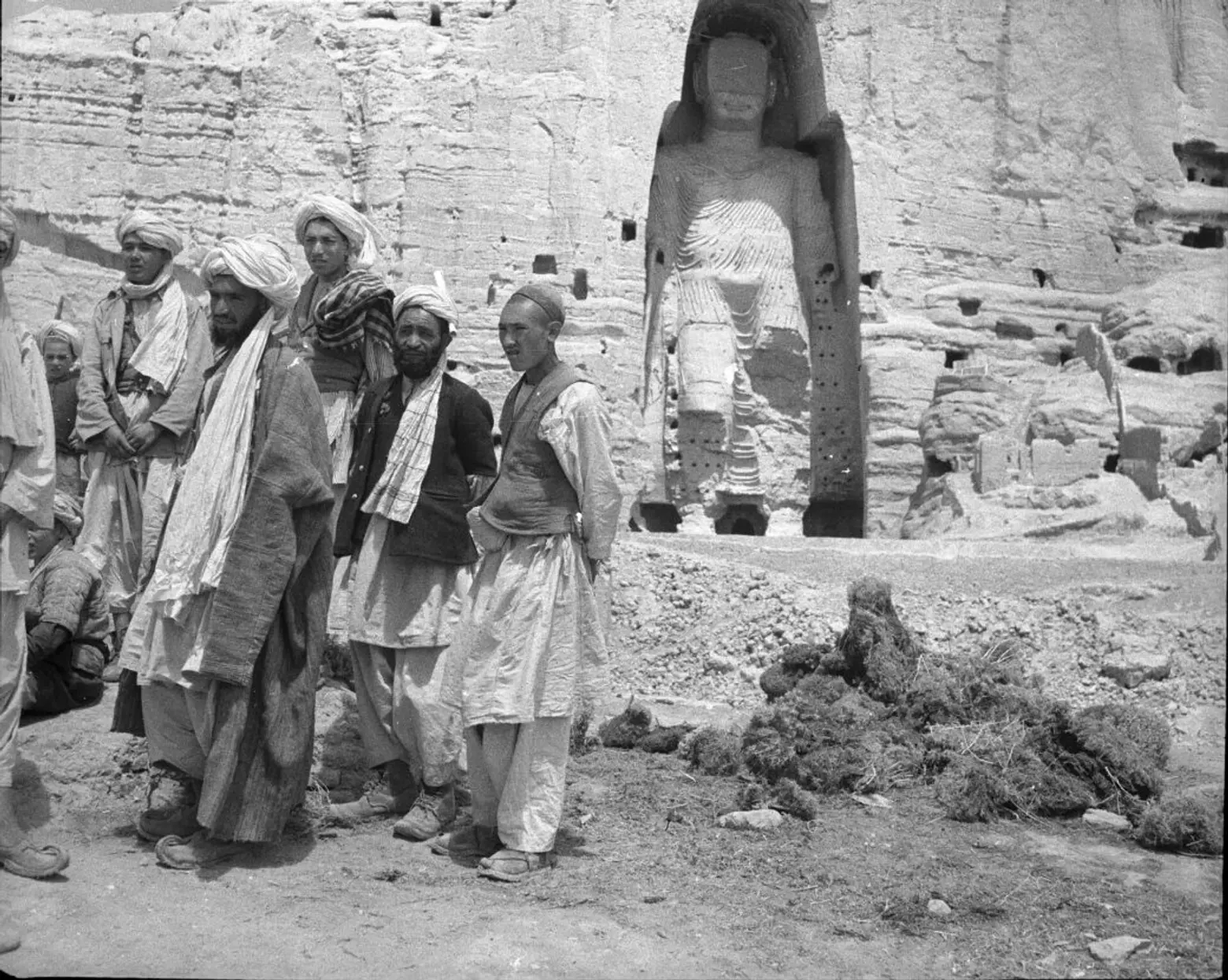
The installation references the Bamiyan Buddhas, two colossal 6th-century statues once located in central Afghanistan. Now a UNESCO World Heritage Site, all that remains are two empty cutouts in the mountain where the statues once stood.
Before their destruction, the statues held significance for a range of cultures and religions. They reflected centuries of cultural exchange along the Silk Road, as the Bamiyan Valley served as a key crossroads at the intersection of trade routes linking China, India, and Persia.
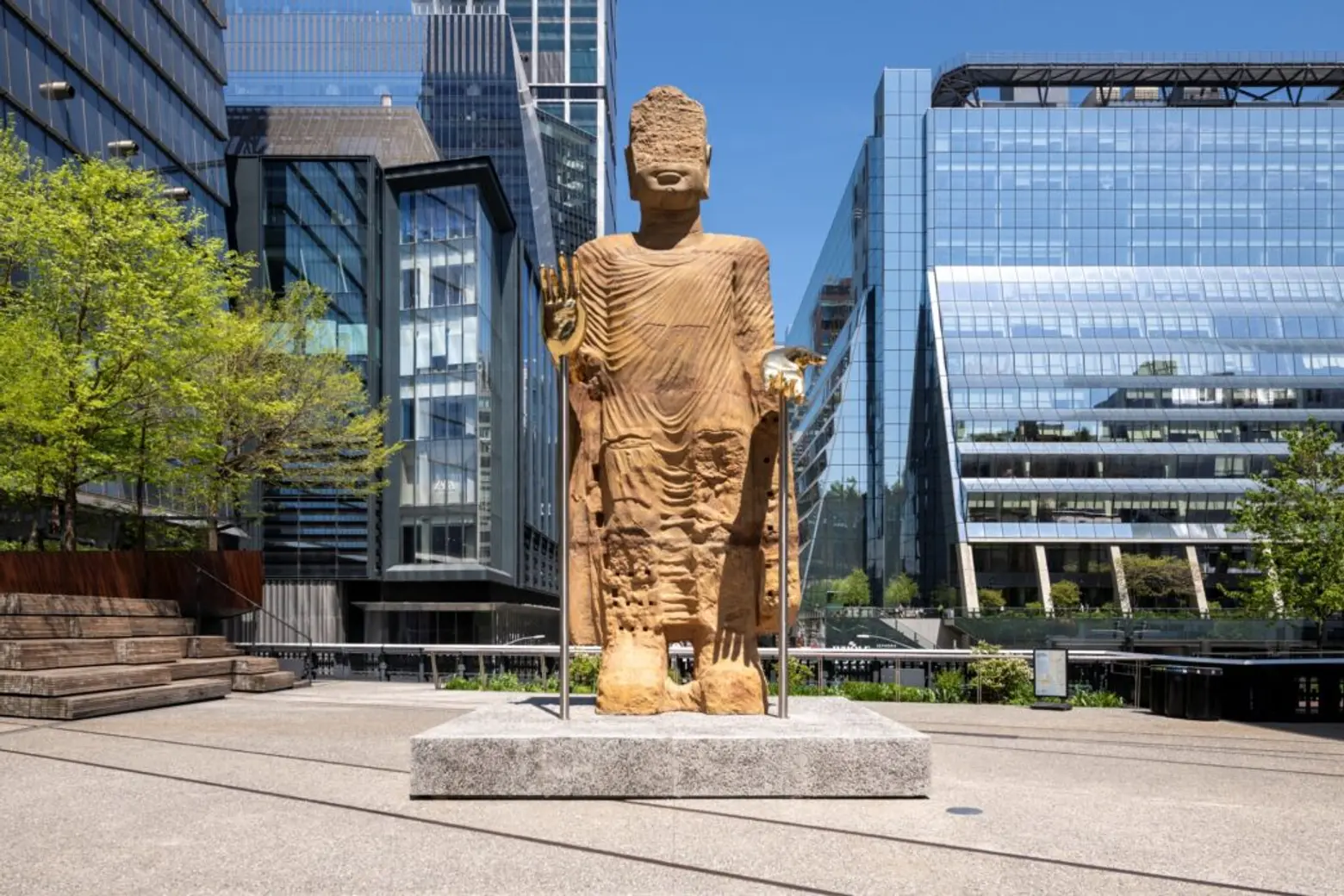
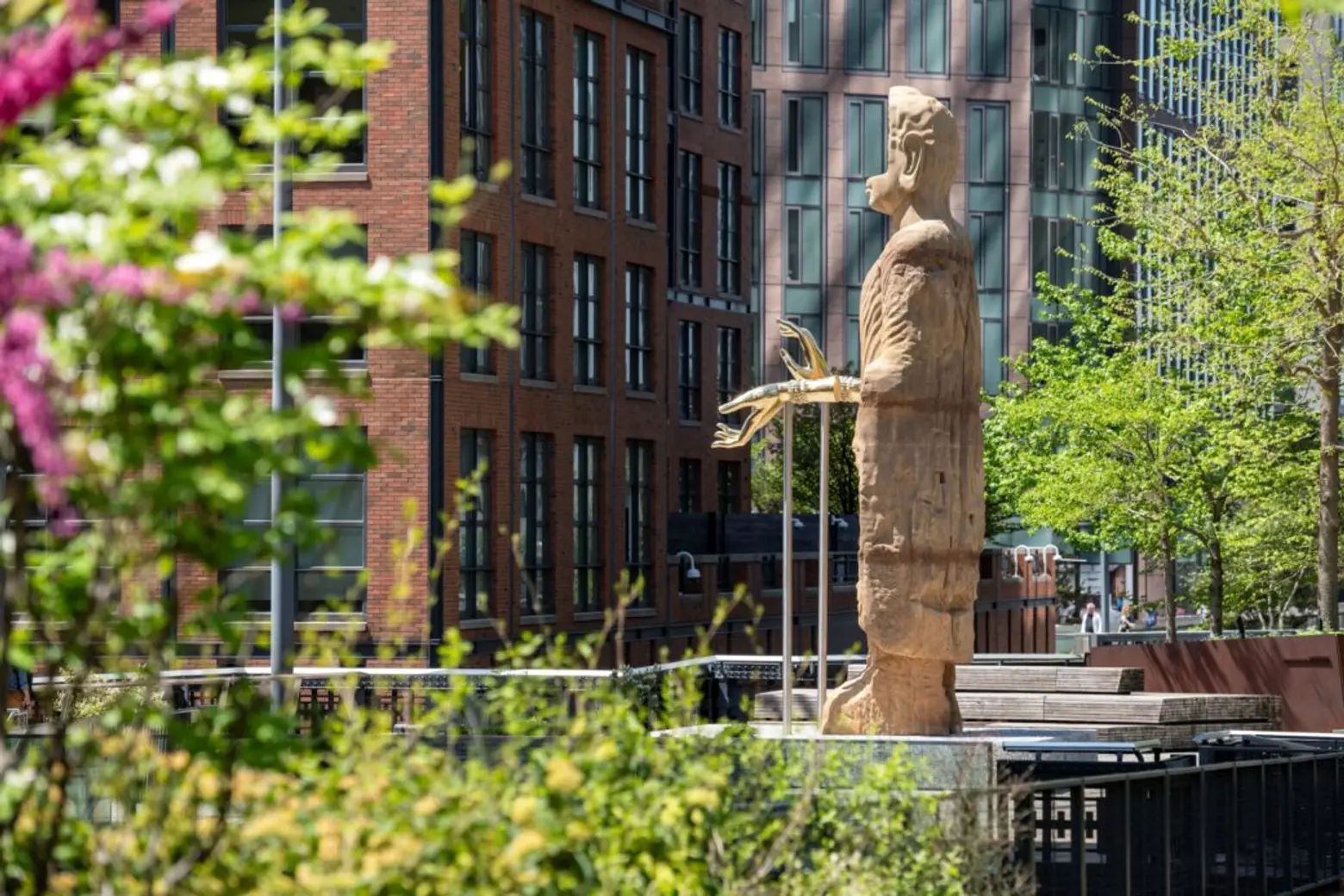
The sculpture’s title references the affectionate nickname local communities gave the larger statue, “Salsal,” which translates as “the light that shines through the universe.” Nguyen’s commission is not an exact replica of Salsal but an “echo,” intended to evoke the memory of the lost cultural relics.
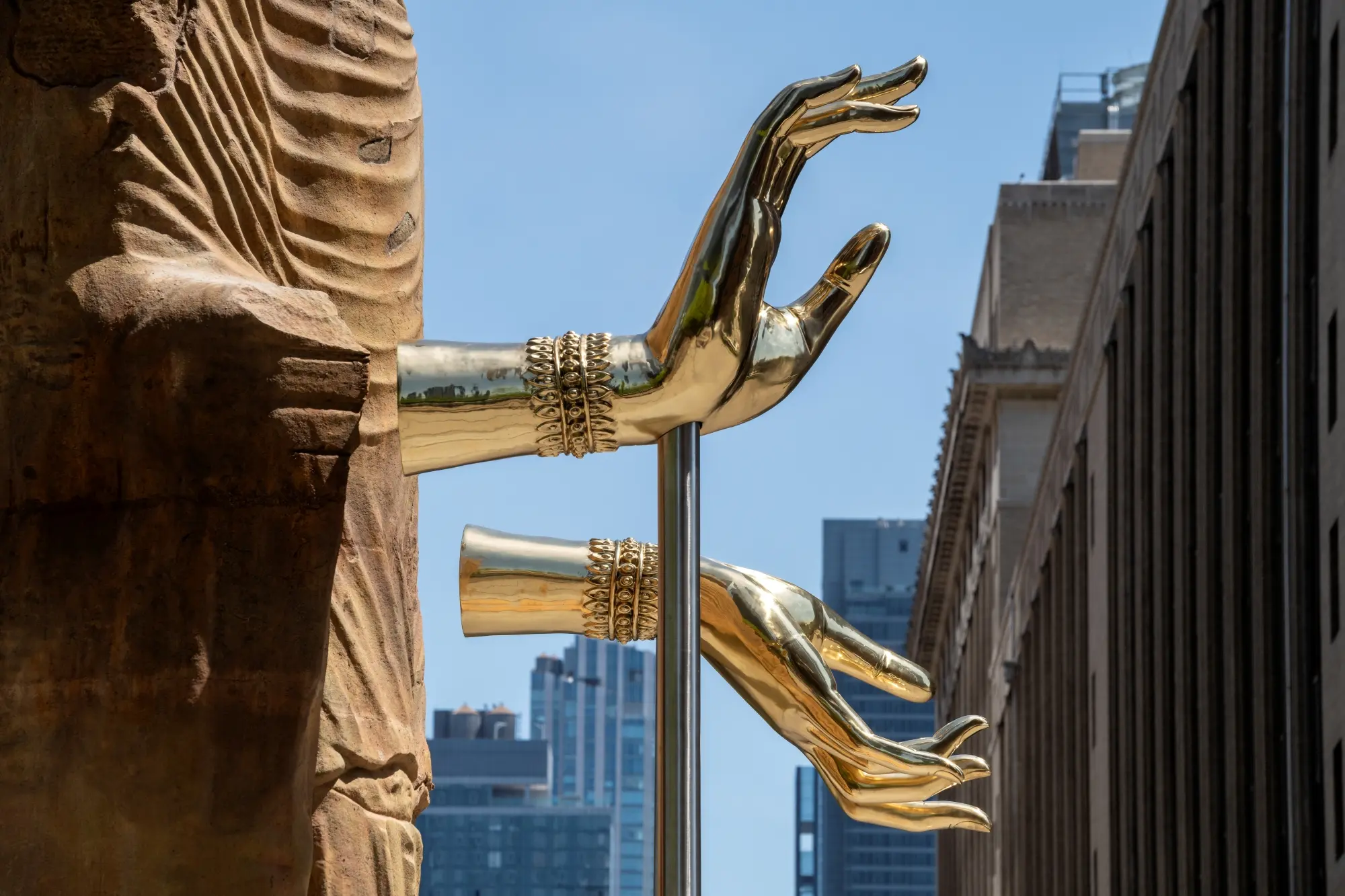
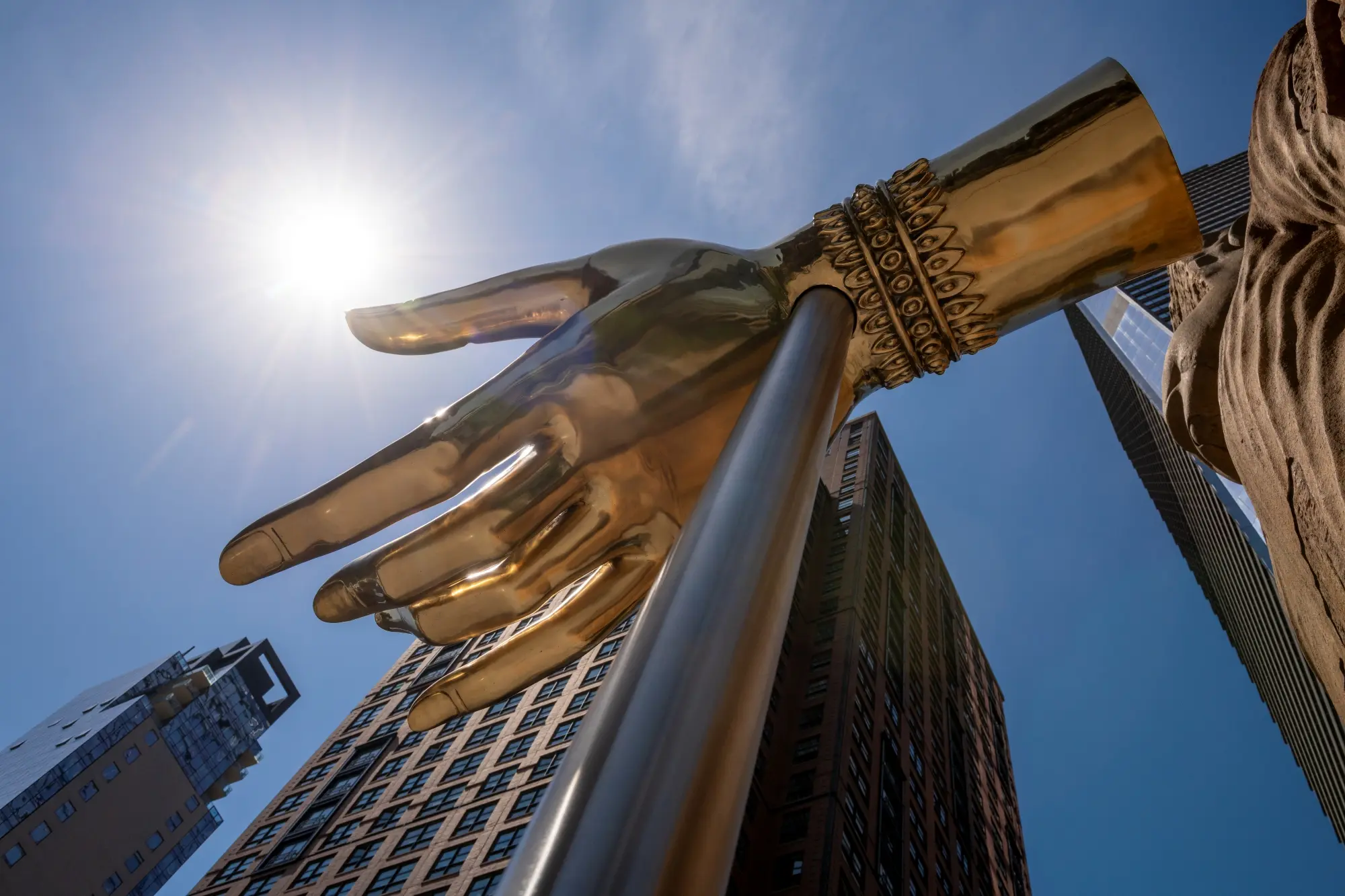
In his work, Nguyen reimagines the Buddha’s hands, which were lost to centuries of damage long before the statues were fully destroyed. Cast from melted-down brass artillery shells and arranged in ritual gestures symbolizing “fearlessness” and “compassion,” the hands serve as symbols of healing and empathy.
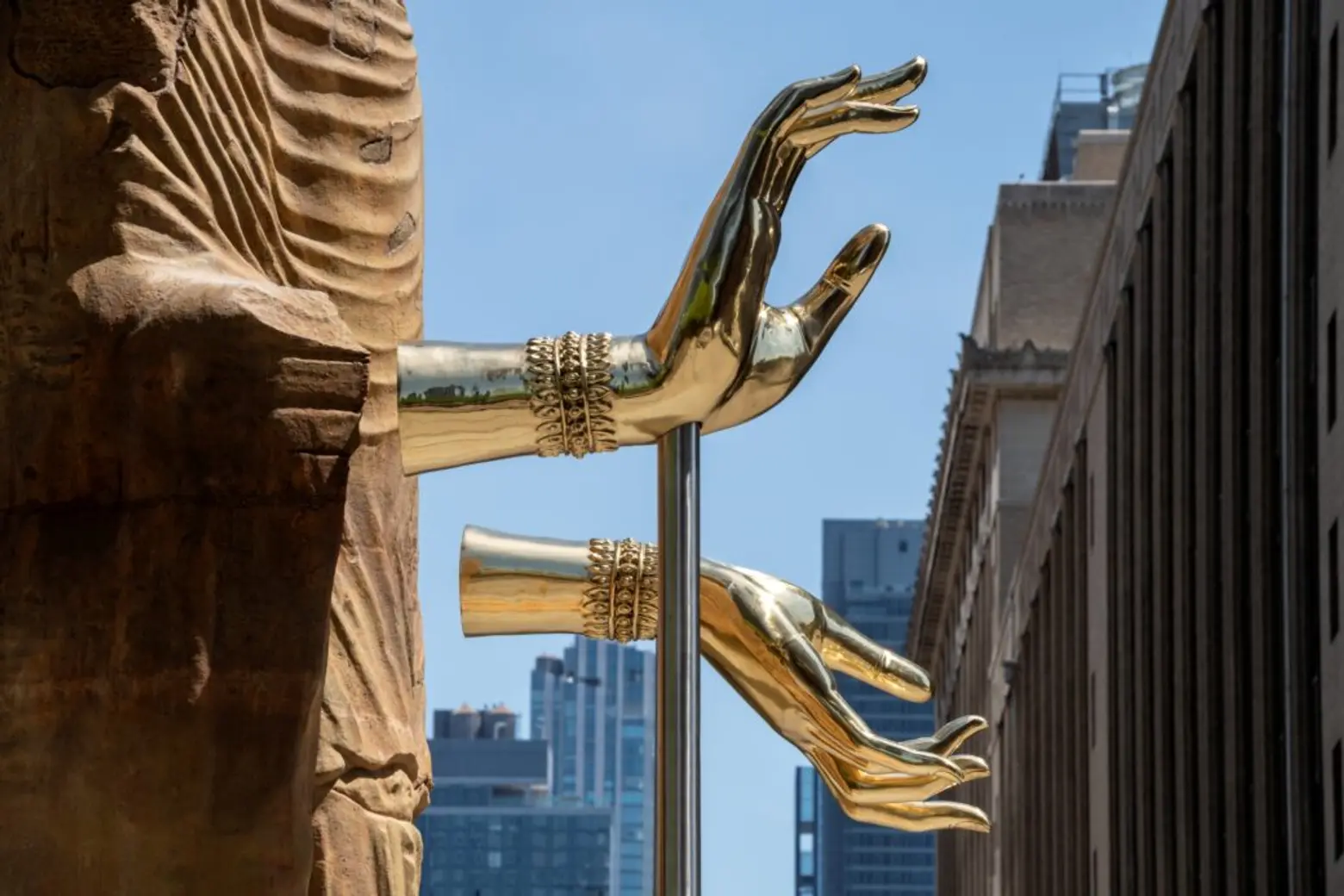
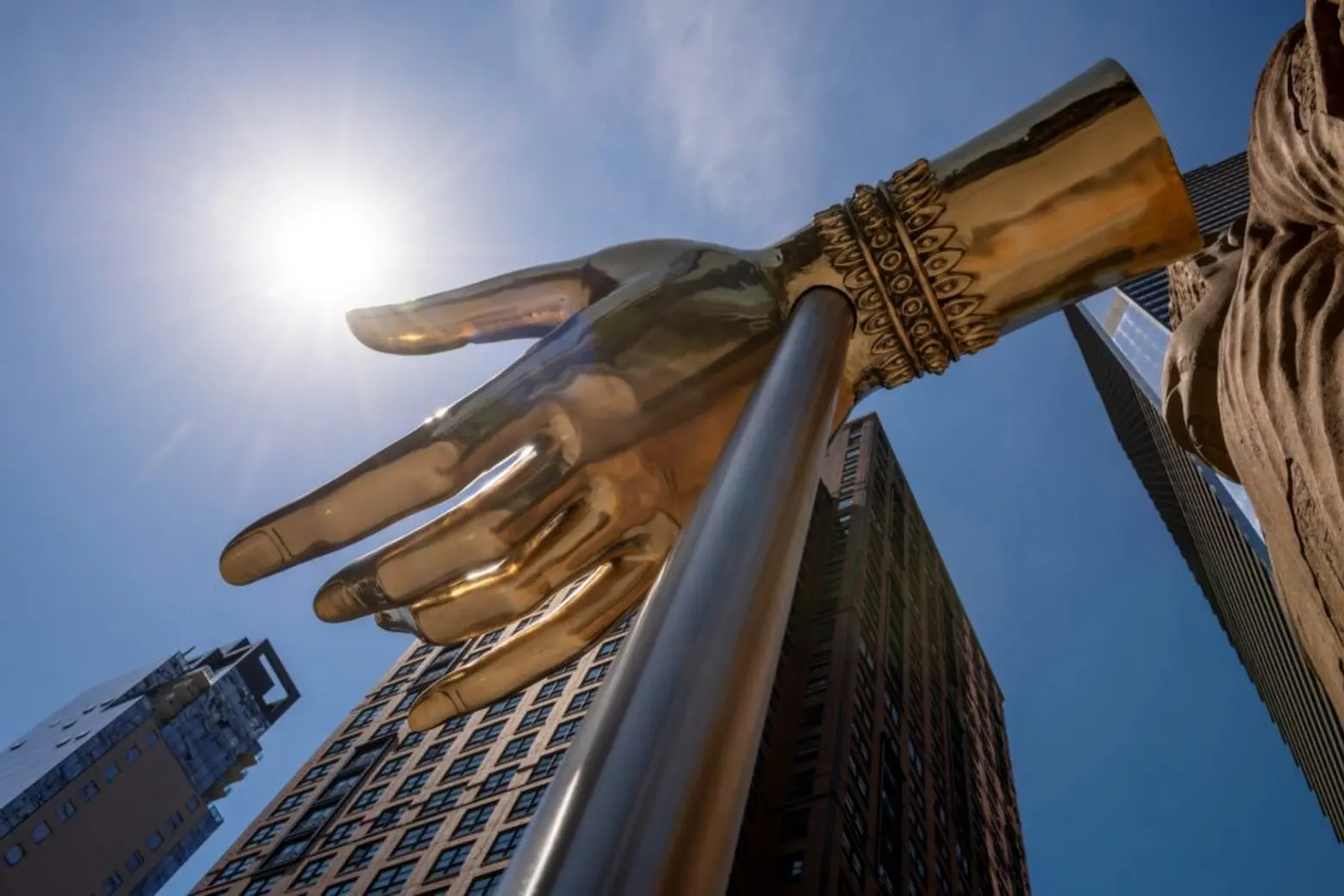
Appearing prosthetic-like, they also evoke limb loss and ongoing humanitarian crises in war-torn regions. A visible gap between the hands and the body is intended to suggest that while some damage is irreparable, there remains hope for healing the land, spirit, and people affected by devastation.
Through the use of melted-down artillery shells, Nguyen, who lives in Vietnam, also examines the legacy of the Vietnam War and the continued violence and trauma that affect local communities today. Considered by many to be the largest aerial bombardment in history, the war left the country littered with unexploded bombs, shells, and grenades that failed to detonate.
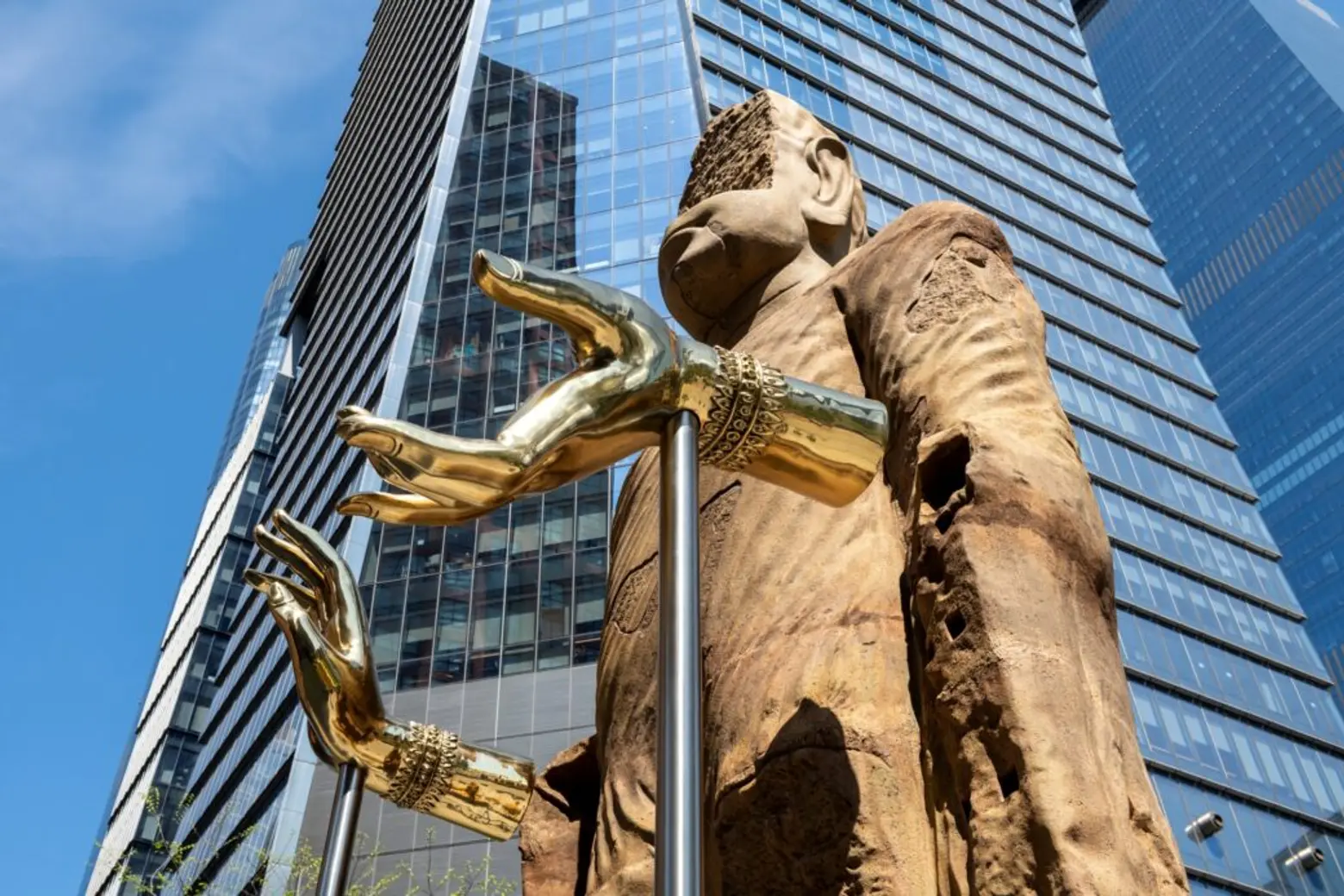
Nguyen’s work explores themes of loss and transformation, repurposing symbols of violence by melting them down and reshaping them into expressions of healing, resilience, and hope.
Alongside the sculpture’s unveiling, the High Line will host a free monthly lecture and guided meditation series at the Plinth. Taking place from May through October and presented in partnership with the Rubin Museum of Himalayan Art, the series will include lessons on Buddhist mudras, lectures on healing through ritual, the history of Buddhism along the Silk Road, and more.
High Line Plinth is located at the Spur, a dedicated area for rotating contemporary art commissions. Opened in June 2019, the Spur is the final part of the original elevated rail to be converted into public space. It runs east along West 30th Street and ends above 10th Avenue, as 6sqft previously reported.
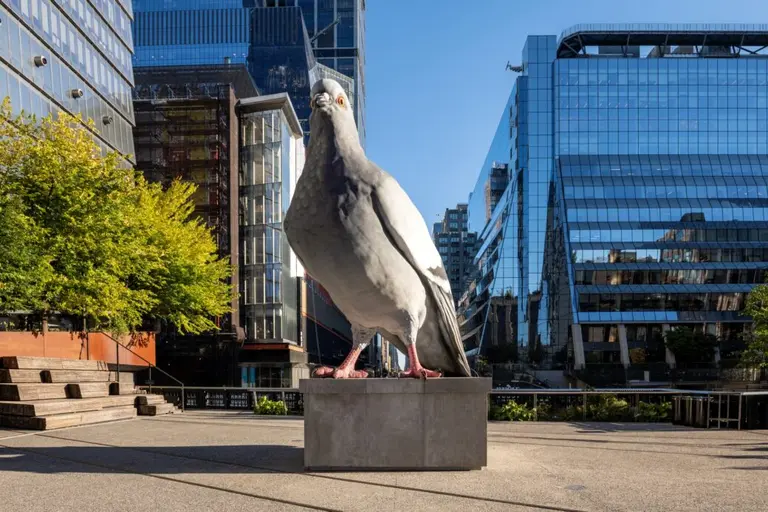
Nguyen’s work marks the fifth Plinth commission. The previous commission was a giant pigeon sculpture by Iván Argote. The 16-foot-tall hyper-realistic sculpture aimed to challenge the typical power dynamic between humans and birds by elevating the pigeon above car-filled streets and High Line visitors.
Other past installations include Simone Leigh’s “Brick House” in 2019, Sam Durant’s “Untitled (drone)” in 2021, and Pamela Rosenkranz’s “Old Tree” in 2023.
RELATED: