City to restart Flatbush Avenue redesign this month
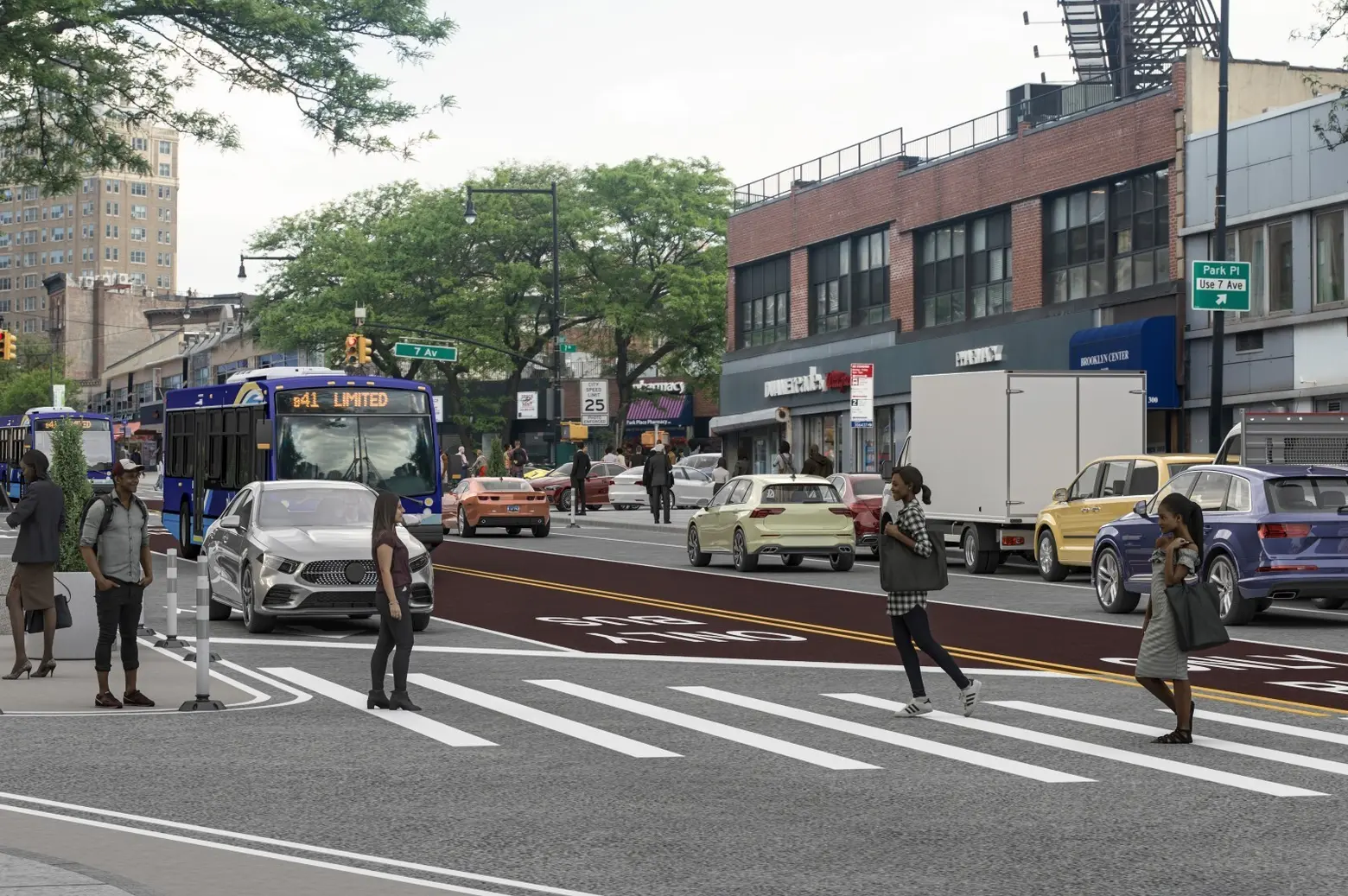
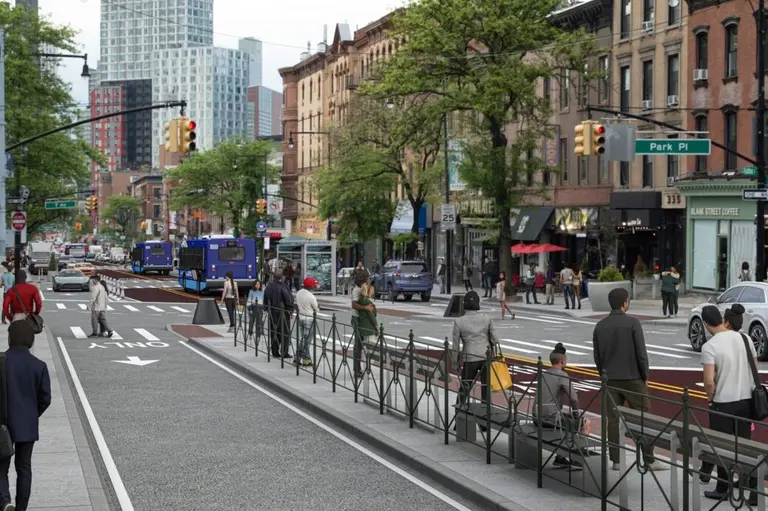
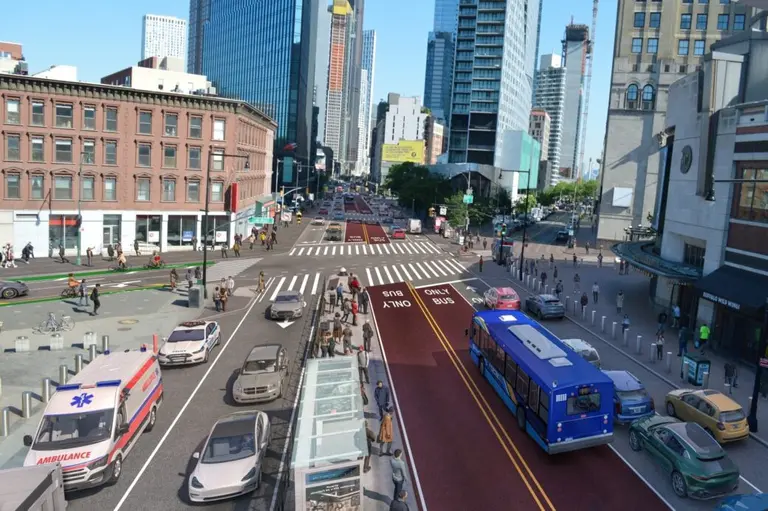
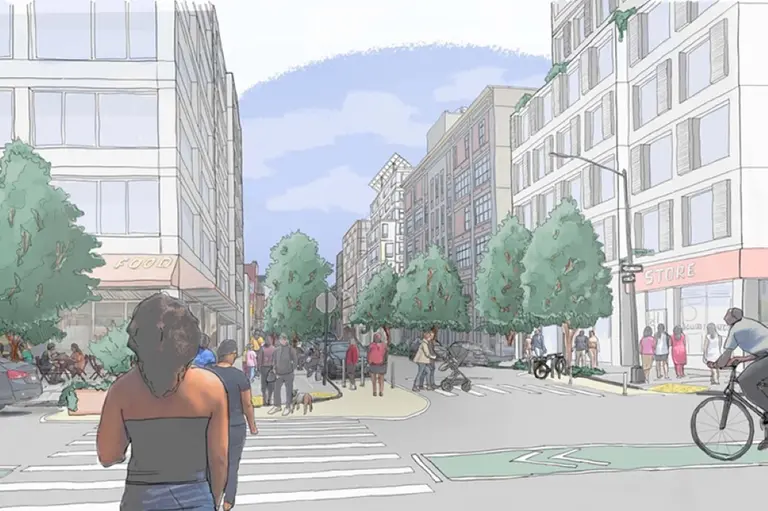
A rendering of the Flatbush Avenue bus lane proposal at Flatbush Avenue and Prospect Place. Images courtesy of NYC DOT
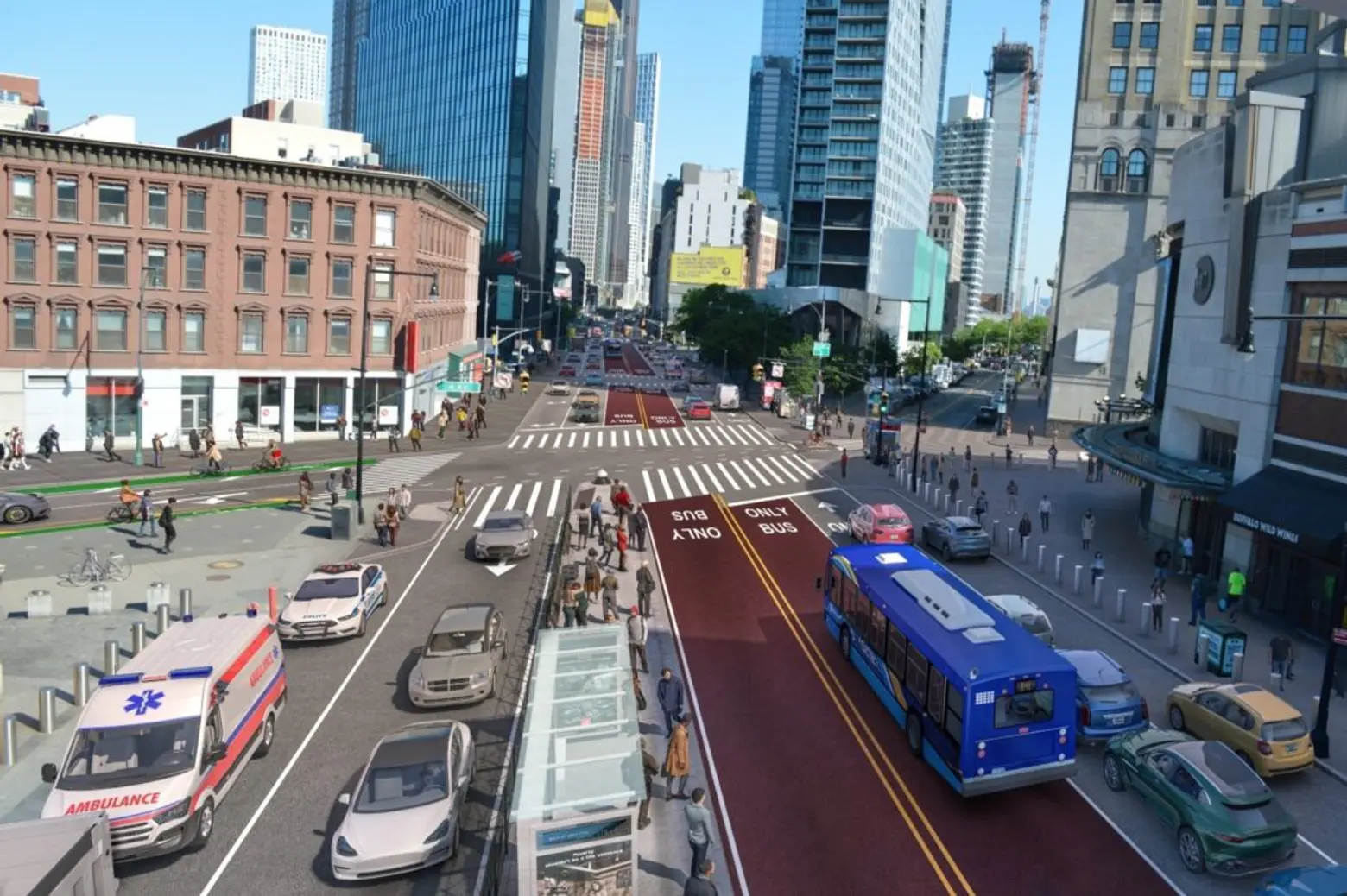
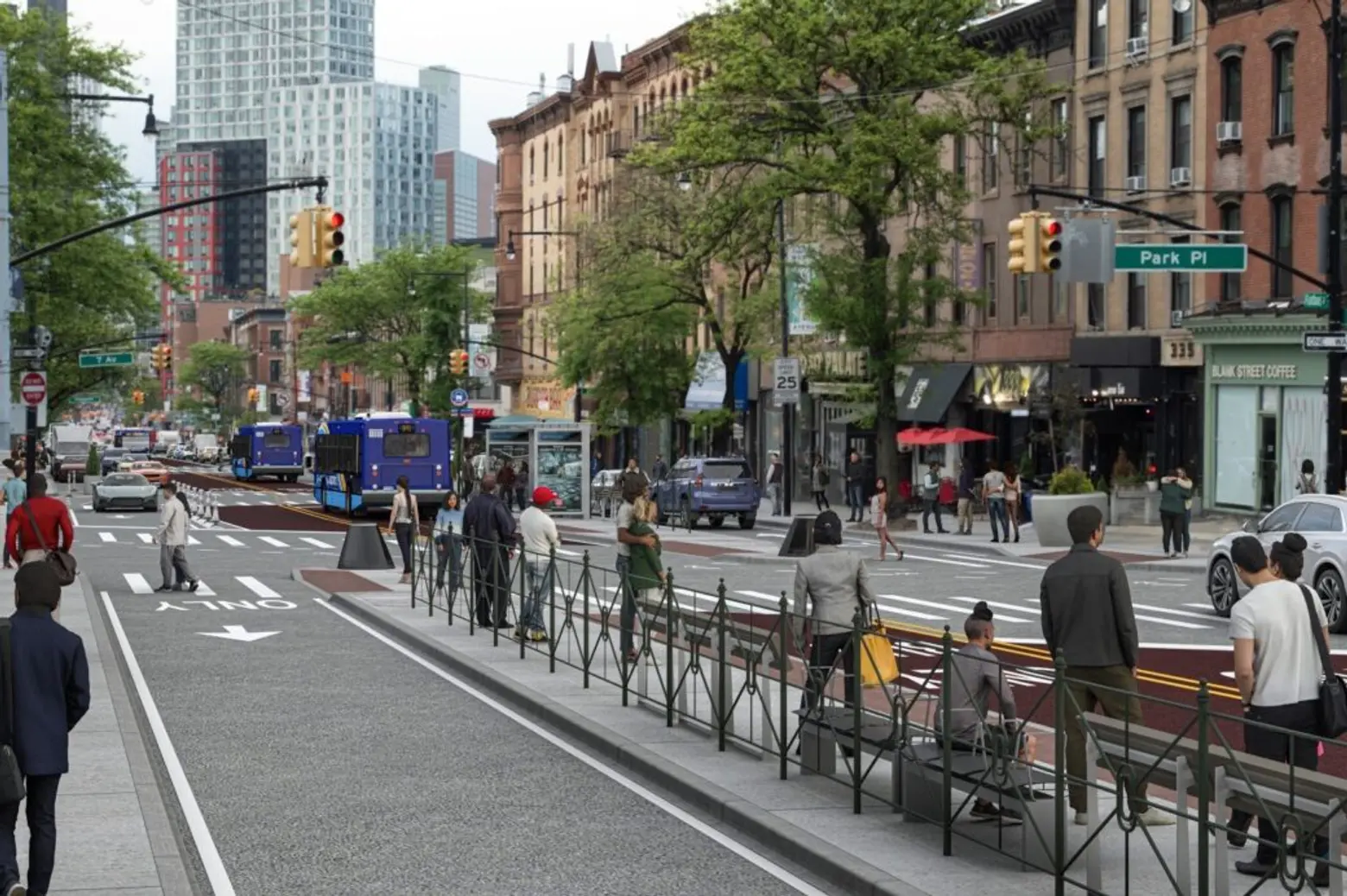
Work to redesign Brooklyn’s Flatbush Avenue will resume this month, Mayor Zohran Mamdani and the city’s Department of Transportation (DOT) announced Thursday. The project will create dedicated center lanes along the notoriously congested and dangerous corridor from Livingston Street to Grand Army Plaza, and is expected to speed up commutes for 132,000 daily bus riders, who currently travel at average speeds of under 4 miles per hour. Initial work on the four-phase project began last fall, but DOT suspended construction because of winter weather. Construction will restart at the end of April and continue into the fall of 2026, weather permitting.
Designated a Vision Zero Priority Corridor and considered one of the borough’s most dangerous streets, Flatbush Avenue has seen 55 people killed or seriously injured since 2019. The stretch between Livingston Street and Grand Army Plaza is also plagued by some of the slowest bus speeds in the city, as 6sqft previously reported.
Additionally, nearly 60 percent of households along Flatbush Avenue lack access to a personal vehicle, making reliable bus service critical. Buses along the corridor primarily serve Black, female, and low-income riders. Most live in surrounding zip codes and have household incomes below $80,000, according to a Pratt Center study.
Many riders have described long wait times for the bus in extreme weather, and one in three say slow service has led to them being reprimanded at work, losing pay, or even being fired.
Bus routes set to benefit include the B41, B67, B69, B63, B45, and B103. Citywide, the DOT has seen similar projects produce strong results. On 161st Street in the Bronx, bus speeds increased by up to 43 percent, while on Edward L. Grant Highway, pedestrian and cycling injuries fell by 29 percent, with total injuries down 17 percent.
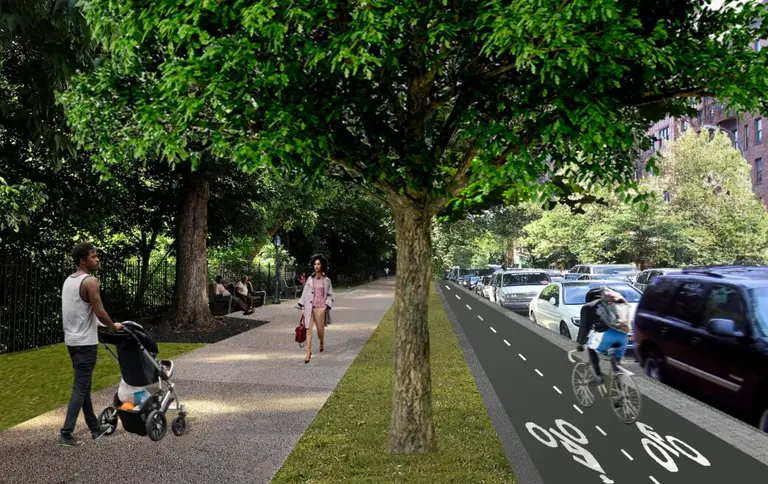
The project will also add dedicated loading zones with covered public seating, shorten crossing times, update curb regulations to support local businesses, and create 29,000 square feet of new pedestrian space along the avenue.
Phase one includes the removal of two concrete islands at Flatbush and Atlantic Avenues. Phase two involves reconstructing one side of the corridor, including removing existing roadway markings, installing concrete elements, and adding temporary markings, bus stops, and reroutes.
Phase three will reconstruct the opposite side of the avenue, while phase four will install final roadway markings, signage, signals, and street elements such as bike corrals and flexible posts.
“Time is money, and too often, our city has taken both from working people who rely on our buses,” Mamdani said. “These center-running bus lanes will give New Yorkers back something precious: time with their families, time at work, time in their communities.”
“Long waits and unreliable service are not inevitable — they are the result of political choices. Today, we are choosing a system that puts bus riders first and builds safer streets for everyone,” he added.
The DOT will maintain clear signage and protections throughout construction to ensure safe conditions for drivers and workers. During construction, drivers are encouraged to take alternative routes, use public transit, or allow for additional travel time.
“For the more than 130,000 people who rely on Flatbush Avenue every day, this project puts bus riders first with faster, more reliable service and safer streets,” Council Member Shahana Hanif said.
“This is what prioritizing everyday New Yorkers who depend on buses looks like. Center-running bus lanes will speed up commutes, improve reliability and make our streets safer.”
Flatbush Avenue joins a growing number of major NYC corridors receiving or slated for bus improvements. In May, DOT unveiled plans for a dedicated busway on 34th Street between Third and Ninth Avenues in Manhattan. Modeled after the successful 14th Street busway, the redesign could increase speeds by up to 15 percent for the more than two dozen bus routes that serve the corridor.
The DOT also announced in January that it would complete the long-delayed redesign of Madison Avenue, extending double bus lanes from 23rd to 42nd Streets. The upgrades are expected to improve commutes for the avenue’s 92,000 daily riders along a stretch where buses crawl at speeds as low as 4.5 miles per hour.
RELATED: