History

February 23, 2015

Video: Footage Dating from 1896 Is the Oldest of NYC

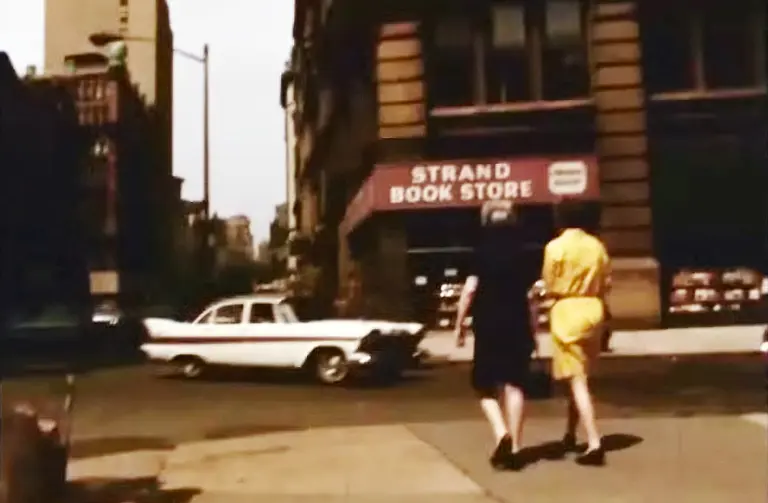
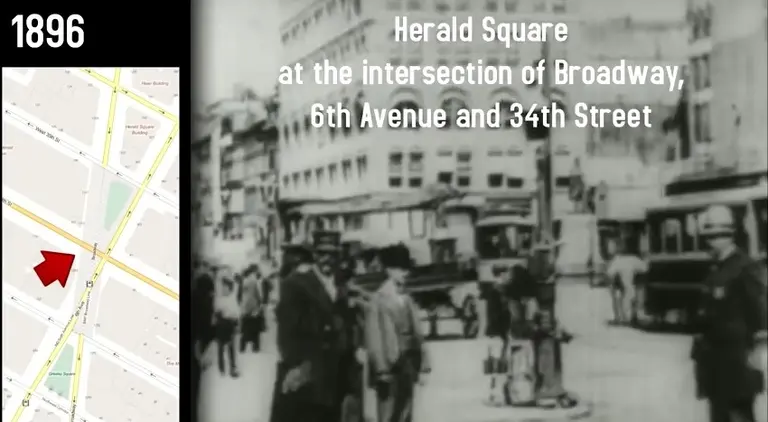
Can you visualize what New York City looked like in 1896? If not, a new video will let you step back in time. It shows shots of 28 locations from 1905 all the way back to 1896, making it the oldest known footage of the city. The absolute oldest shots were taken on May 11, 1896 and were of Herald Square. Since in many cases a lot has changed over the last century, pinpointed maps with dates provide a welcome commentary.
Watch the full video here
February 20, 2015

NYC’s Oldest and Tallest Tree Grows in Alley Pond Park, Queens

In case you haven't noticed, we typically talk about buildings here at 6sqft, but today we're taking a look at a different kind of structure important to the urban fabric of New York City–a tree. But not just any tree; this is the oldest and tallest tree in the entire city, and it can be found in Alley Pond Park in Queens, between Douglaston and Bayside. Known as the Queens Giant, the record holder is a 134-foot (when last measured in 2005) tulip poplar tree that is believed to be 450 years old, according to Untapped Cities. Despite its impressive status, however, even the most seasoned New Yorkers don't know about this gem, which is likely what has led to its longevity.
Find out more here
February 13, 2015

Love Set in Stone: Bring Your Date on a Valentine’s Day Trolley Ride in Green-Wood Cemetery

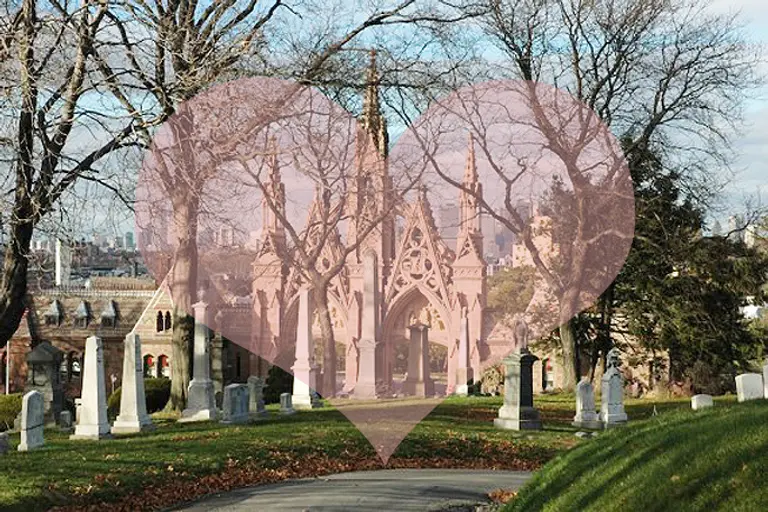
What could be more romantic than a cozy mid-winter afternoon trolley ride through one of NYC’s most interesting national historic landmarks, Green-Wood Cemetery? Celebrate this most romantic of holidays with a bit of a gothic twist: Expert guide Ruth Edebohls will lead a tour highlighting historic power couples, romantic monuments and tales of love everlasting, both triumphant and grim. You can also view Civil War love letters […]

February 12, 2015

The Meatpacking District: From the Original Farmers’ Market to High-End Fashion Scene

Why is it called the Meatpacking District when there are only six meat packers there, down from about 250?  Inertia, most likely. The area has seen so many different uses over time, and they're so often mercantile ones that Gansevoort Market would probably be a better name for it. Located on the shore of the Hudson River, it's a relatively small district in Manhattan stretching from Gansevoort Street at the foot of the High Line north to and including West 14th Street and from the river three blocks east to Hudson Street. Until its recent life as a go-to high fashion mecca, it was for almost 150 years a working market: dirty, gritty, and blood-stained.
Read the full history here
February 8, 2015

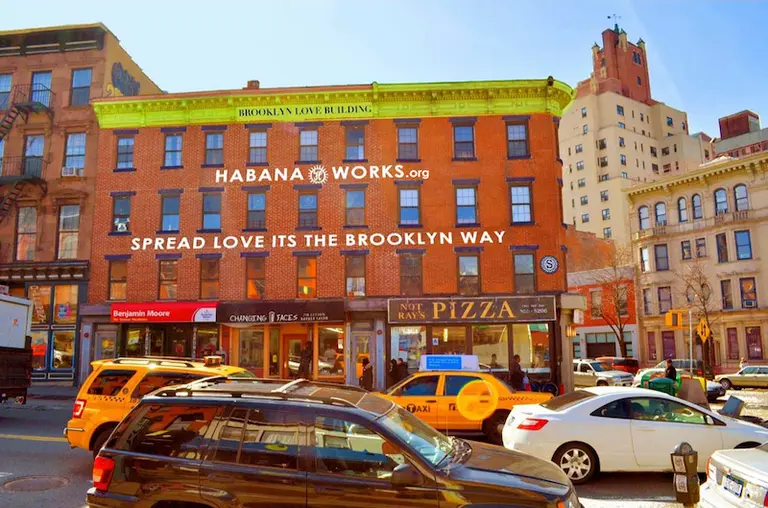
MADE IN BROOKLYN: A Rep for Authenticity and Excellence That’s Well-Earned–and Far from New

The story behind cheese-aging facility Crown Finish Caves in Crown Heights tells of an enormous amount of risk and dedication to making something on a small scale; to doing one thing well. It also once again stirs the hive of buzz around today’s Brooklyn. Article after article raises the idea that Brooklyn’s moment as the new hot spot for excellence in food, culture and authentic, hand-crafted goods, is in some quarters regarded as trite and trendy hype with little substance to it. For some, the underground cheese caves are just one more example: Cheese caves. How Brooklyn. Thirty feet below street level, in the lagering tunnels of a former brewery beneath the Monti Building in Crown Heights, Benton Brown and Susan Boyle spent several years renovating and creating “Brooklyn’s premier cheese-aging facility” complete with state-of-the-art humidity control and cooling systems. The couple created the 70-foot space with advice from the world’s top cheese experts; Crown Finish Caves opened in 2014. On an article in Cheese Notes, a commenter raves: “If I were a mouse, I would move to Crown Heights.”
More excellence and authenticity this way
February 3, 2015

Then and Now: From Luchow’s German Restaurant to NYU Dorm

For those of us who came to the city within the past decade, it's hard to imagine East 14th Street without its stretch of bulky NYU dorms, big-box supermarkets, and mini-chain restaurants. But of course this wasn't always what the area looked like. In the late 19th century, the area centered around Irving Place, was full of entertainment venues like the Academy of Music, the city's opera house, Steinway Hall, Tammany Hall, and the City Theatre movie house. And at the heart of it all was a restaurant that catered to both the theater crowd and the German population of the East Village–Luchow's. Luchow's was established in 1882 at 110 East 14th Street at Irving Place when German immigrant August Lüchow purchased the café/beer garden where he worked as a bartender and waiter. It remained in operation for a full century, becoming an unofficial neighborhood and city landmark, until it was replaced by NYU's University Hall dormitory.
Read the full history here
February 2, 2015

Brooklyn Paramount Theatre Will Reopen as a Gilded Public Performance Venue

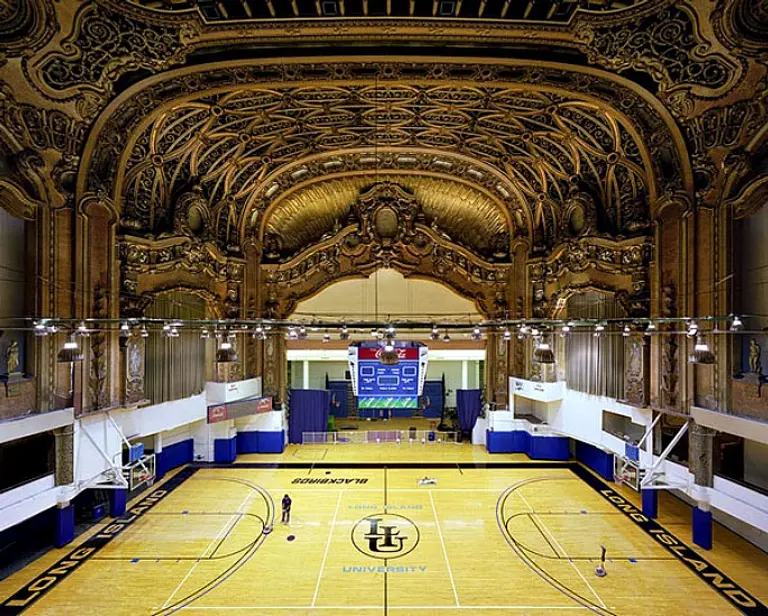
Back in the summer we uncovered the history of the Brooklyn Paramount Theatre, which has been home to Long Island University's gymnasium since 1963. But now, the day before the Loew's Kings Theatre, a fellow historic movie house in Brooklyn, is set to reopen to the public, we've learned that the Paramount will follow suite. Brooklyn Daily reports that the Flushing Avenue theatre in Downtown Brooklyn will once again show live performances to the public, thanks to a deal between LIU and an affiliate of the Barclays Center, which will bring 1,500 seats back to the venue (down from the original 4,000) and showcase musical and comedy performances and boxing matches, all with an emphasis on emerging artists. The remainder of the space will still serve as a practice gym for LIU athletics.
More details ahead
January 29, 2015

Bushwick Buzz: A Look at the Neighborhood That’s Dethroned Williamsburg as Brooklyn’s Most Hipster

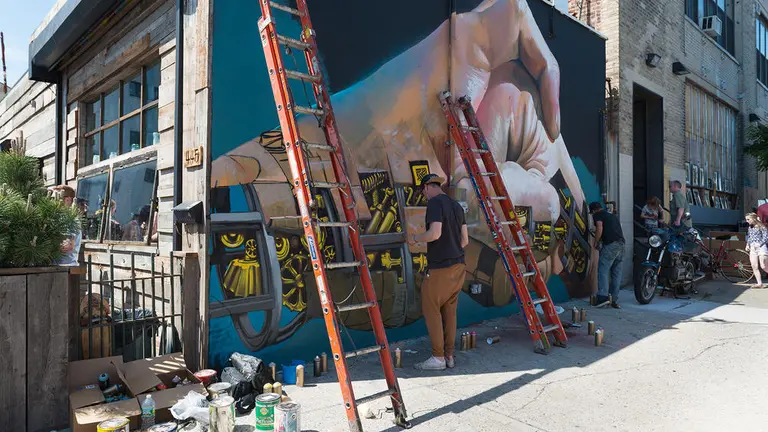
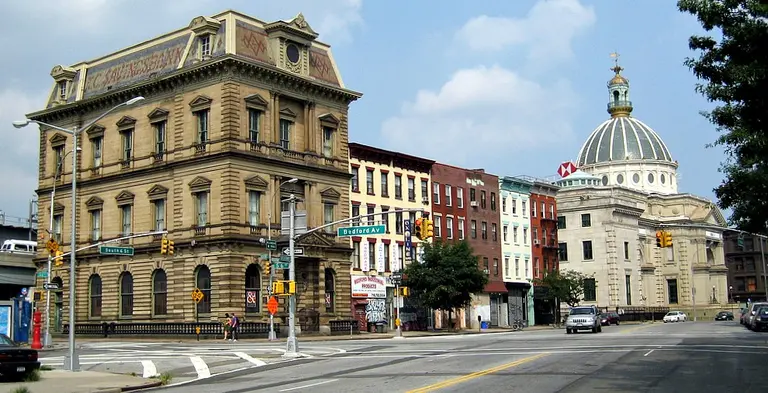
Of Brooklyn's gentrifying neighborhoods, few have seen such rapid change as Bushwick. The neighborhood, which sits in the northern portion of the borough, running from Flushing Avenue to Broadway to Conway Street and the Cemetery of the Evergreens, has grown as a natural extension of Williamsburg—a haven for creatives and young folks looking for lower rents. But well before its trendy vibe put it on the map, Bushwick was a forested enclave originally settled by the Dutch—its name is derived from a Dutch word "Boswijck,"defined as “little town in the woods”—and later, German immigrants who began building breweries and factories. Unfortunately, as the breweries along Brewer’s Row and factories closed and farms disappeared, derelict buildings and crime took hold—with the looting, arson and rioting after the city’s blackout during the summer of 1977 playing a starring role. According to the New York Times, "In a five-year period in the late 1960s and early 70s, the Bushwick neighborhood was transformed from a neatly maintained community of wood houses into what often approached a no man's land of abandoned buildings, empty lots, drugs and arson.”
More on Bushwick's past... and present
January 29, 2015

See New York’s Subway Through the Eyes of a 17-Year-Old Stanley Kubrick (Photos)

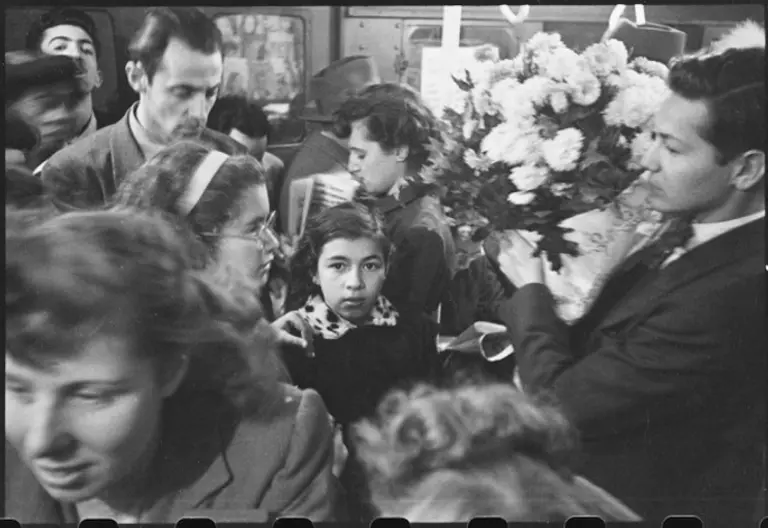
As one of the world's most respected film directors, screenwriters, producers, cinematographers and editors, it's really no surprise that Stanley Kubrick was also quite the shutterbug. Well before creating mind-bending movies like A Clockwork Orange and Dr. Strangelove, Kubrick was shooting for New York's (now defunct) LOOK magazine as a way to help make ends meet. His street photos, which are quite dramatic in subject and composition, give us a look into the mind of a young Kubrick, who at just 17 was already showing a talent for creating atmosphere with a lens.
See more photos ahead
January 26, 2015

Street Fight Round Two: What’s with All the Broadways in the Outer Boroughs?

Last week we took a look at why there are three Broadways in Manhattan–the thoroughfare proper, East Broadway and West Broadway– and learned that Broadway actually extends through the Bronx and into Westchester. There's even a one-block street in Harlem called Old Broadway. As if that weren't enough confusion, though, there are four other Broadways in the outer boroughs–one in Brooklyn, one in Staten Island, and two in Queens.
Learn about these outer-borough Broadways
January 23, 2015

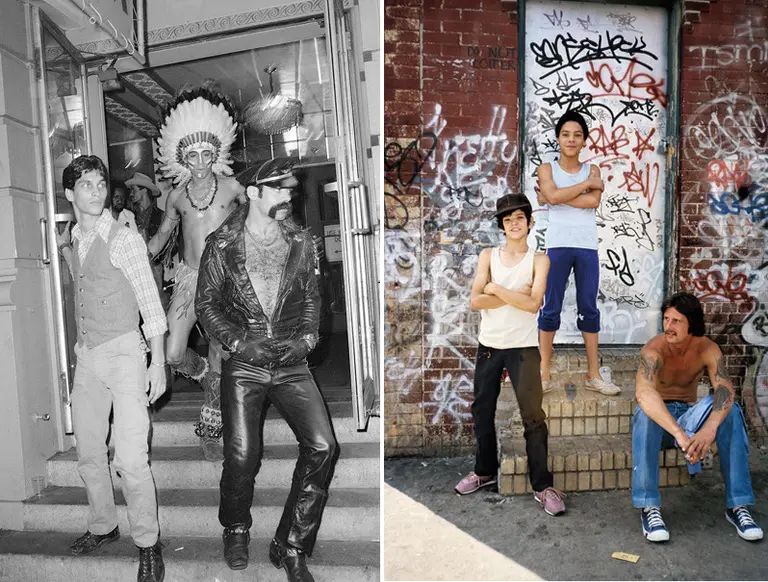
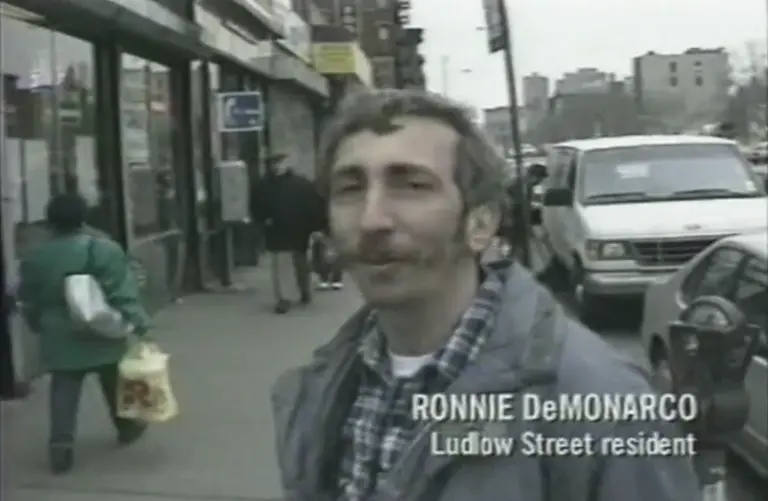
VIDEO: Visit the Wonderfully Weird Lower East Side of 1995

It's hard to imagine the Lower East Side without all of its barflies and bros, but get ready for a blast from the past. Bowery Boogie has found an amazing video that gives us a glimpse into the neighborhood's quirky past—well before it became a nightlife mecca for New York's downtown set. The four-minute film, aptly titled "Planet Ludlow," takes us through the block via Ludlow Street circa 1995.
Watch the video here
January 23, 2015

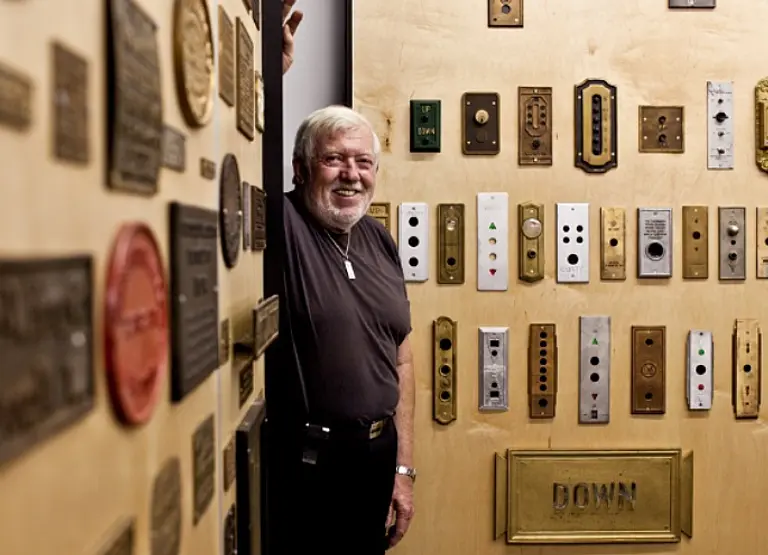
Take a Private Tour of the Long Island City Elevator Historical Society Museum This Weekend

Even true New York City culture buffs may have never heard of the Elevator Historical Society Museum (or known that such a society exists), so if you really want to impress a crowd with your knowledge of little-known urban trivia, be sure to sign up for tomorrow's tour of the Long Island City museum. The private tour, hosted by the New York Adventure Club, is being led by the museum's founder and curator Patrick Carrajat, who has collected more than 2,000 pieces of elevator ephemera like manuals, metal identification plates, pop culture paraphernalia, and obscure mechanical parts from the early days of vertical travel.
More on the museum and tour here
January 21, 2015

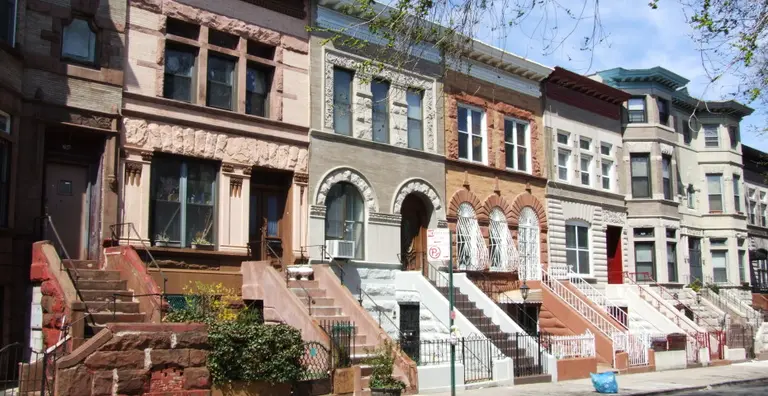
Get ‘Em While They’re Cheap: A Look at Crown Heights Real Estate Past and Present

What once seemed unheard-of in terms of where to rent or buy in tertiary neighborhoods is now a thing of the past—be it Harlem, Williamsburg, Hell’s Kitchen, Long Island City, or the Lower East Side. But one of the best examples of rapid transformation is Brooklyn. Certainly there are many coveted communities such as Brooklyn Heights, Prospect Heights, and Park Slope, but there is another neighborhood making what looks like a very successful run at gentrification: Crown Heights.
More on the Crown Heights renaissance here
January 19, 2015

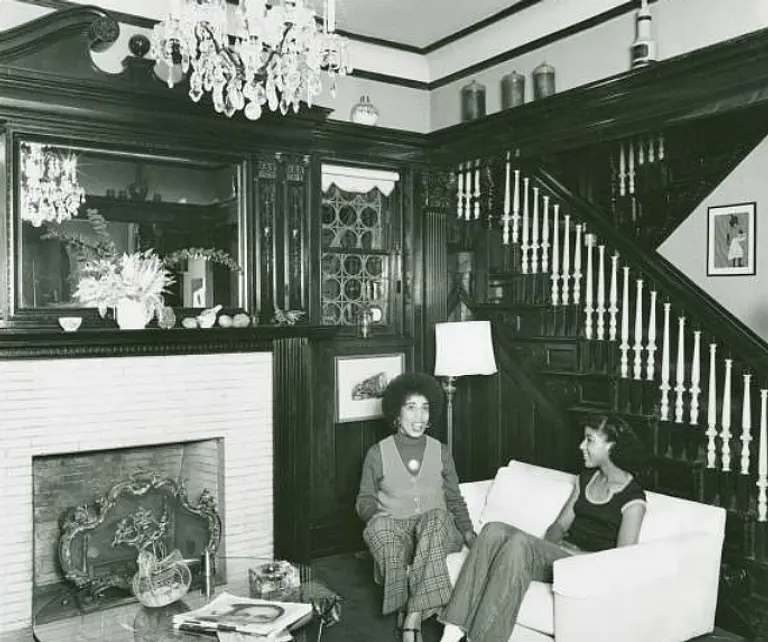
Take a Peek Inside Hundreds of Brooklyn Homes in the 1970s, Including Where Basquiat Grew Up

An online gallery from the New York Public Library provides a stunning glimpse into domestic life in Brooklyn in the 1970s, courtesy of photographer Dinanda Nooney, who traveled through the borough from January 1978 to April 1979, capturing locals in their homes and asking them to then suggest other subjects. The black-and-white photos range from everyday scenes of Brooklynites to the residence of a local celebrity biker to the childhood home of Jean-Michel Basquiat.
Take a look at Dinanda Nooney's photos here
January 16, 2015

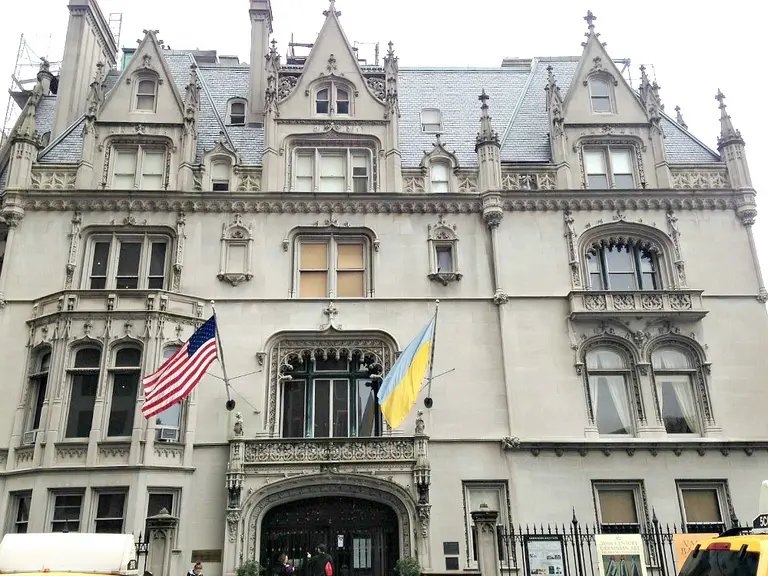
How the Fletcher-Sinclair Mansion Went from Private Home to the Ukrainian Institute of America

Earlier this week, the Ukrainian community rang in the new year, so we thought it appropriate to take a look at one of the city's largest centers of Ukrainian-American life. Located at 2 East 79th Street at the corner of Fifth Avenue, the Fletcher-Sinclair mansion was built in 1897 by famed architect Charles Pierrepont Henry Gilbert (C. P. H. Gilbert) as a single-family home for Isaac D. Fletcher, a banker, broker, and railroad investor. Today, the French Gothic masterpiece houses the Ukrainian Institute of America, a nonprofit organization dedicated to promoting the art, music and literature of Ukraine and the Ukrainian diaspora. But how did this massive home become home to the Institute?
Find out here
January 14, 2015

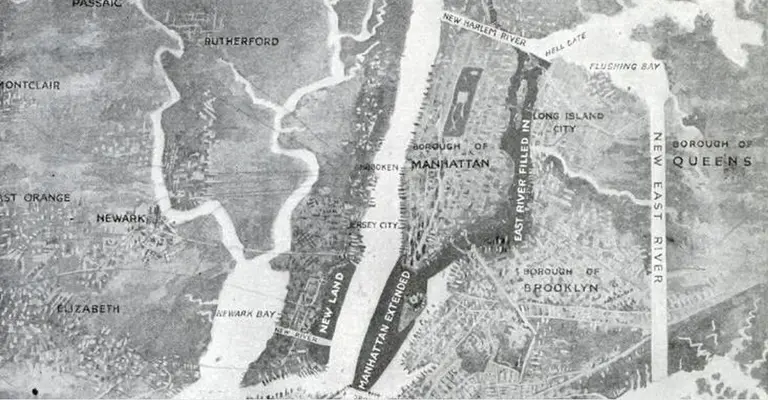
A Madcap Engineer Wanted to Pave Over the East River to Create a “Mega-Manhattan”

The East River may not be the most beautiful body of water we've ever witnessed, but that certainly doesn't mean we'd like to see it paved over. That's exactly what T. Kennard Thomson, an engineer and planner, proposed in 1911, hoping to create a mega-Manhattan. Plus, he wanted to add a long hunk of infill at the southern tip of Manhattan, creating a new peninsula bolstered by Governor's Island, add more new land in the Hudson between Bayonne and Manhattan, and relocated the Brooklyn Navy Yard.
Let's take a closer look at this ambitious, but never realized, plan
January 12, 2015

Street Fight: Why Are There Three Broadways in Manhattan?

Broadway is arguably the most famous street in New York City. It's synonymous with the Theater District; it runs from the southern tip of Manhattan all the way up to Westchester County; and it's the oldest north-south thoroughfare in NYC. While we might not all know these fun facts about the street, we undoubtedly know a thing or two about Broadway and its nonconformity to the street grid. But did you know there's also a West Broadway in Tribeca/Soho and an East Broadway on the Lower East Side/Chinatown? They're not extensions of Broadway proper, so how did they receive their monikers?
Find out about the Broadway conundrum here
January 5, 2015

1949 Film Shows Iconic NYC Sights in Amazing Technicolor

Seventy years from now, new generations of New Yorkers will be able to watch old episodes of Law & Order or Girls to get a glimpse into a past life in the city. Our generation isn't so often afforded that luxury, unless we're looking at a grainy black-and-white video. But a clip from the 1949 film Mighty Manhattan – New York’s Wonder City showcases some of the NYC's most iconic sights in amazing Technicolor.
See New York in 1949 here
December 24, 2014

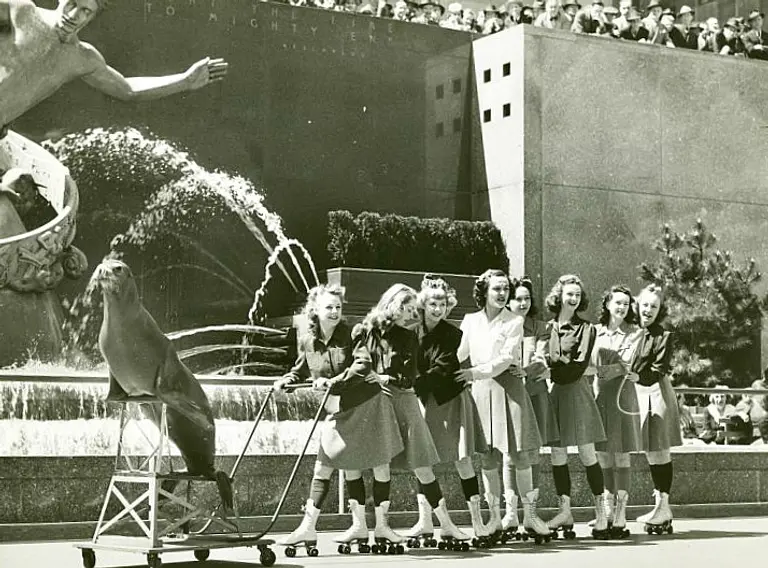
Skating Through Time: A Look Back at NYC’s Ice Rinks

One of the most festive holiday activities doesn't end at New Year's, but rather lasts through the winter. Ice skating in NYC is a hot activity, with lines easily wrapping around the block at the Bryant Park Winter Village and Rockefeller Center's ice rink. But this isn't a new trend. Ice skating has long been a popular social pastime for New Yorkers, whether on a frozen pond in Central Park or at the Biltmore Ice Garden at the Biltmore Hotel. Plenty of historic photographs exist, documenting the transformation of the New York ice skater; so we've put together a timeline of this winter activity.
All the photos ahead
December 24, 2014

Is It Possible to Keep an Octopus in a Private Home? And Other Questions Posed to the New York Public Library

Remember the old days of pay phones, encyclopedia collections, and writing letters on actual pieces of paper? Before the internet, life was a lot different, and the New York Public Library has a fun new project to remind us of that. Referring to themselves as "Google before Google existed," the NYPL will be posting old reference questions from the 1940s to 80s on their Instagram account every Monday. The staff recently found a box of these old gems, all of which were asked either via phone or in person.
Take a look at the first batch of questions from the NYPL
November 21, 2014

Happy 112th Birthday to the Algonquin Hotel, A NYC Literary Landmark

In a town overrun with fancy hotels, the Algonquin–which turns 112 tomorrow–has true staying power, proving that history and heritage are every bit as important as plush bedding and sweet-smelling bath products. Designed by Goldwin Starrett in a Renaissance limestone and red brick façade, the 12-story Algonquin Hotel, at 42 West 42nd Street, opened on November 22, 1902, initially operating as an apartment hotel with year-long leases but switching to a hotel after the owner failed to find enough renters. Today, the Algonquin–both a literary landmark and a New York City Historic Landmark–remains one of New York’s most cherished institutions, drawing a mix of artists, tourists and cultural elites.
Read the full history of the storied Algonquin
November 20, 2014

Forest Hills Gardens: A Hidden NYC Haven of Historic Modernity

This unique sheltered enclave might be the perfect spot for residents who can handle the rules; just don't call it FoHiGa. Occupying a 175-acre wedge just south of the Forest Hills LIRR station and within the greater Queens neighborhood of Forest Hills, Forest Hills Gardens is one of America’s oldest planned communities. Modeled after England’s “garden cities,” originally intended to create an ideal environment that incorporated shared green space with urban convenience for the working classes, the Gardens (as it's known) is home to about 4,500 residents. The private community is managed by the Forest Hills Gardens Corporation, an organization made up of property owners. This unique community consisting of over 800 free-standing and attached houses and 11 apartment buildings as well as churches, parks and storefronts, dates from 1909, when architect Grosvenor Atterbury and landscape architect Frederick Law Olmsted Jr.–-son of Frederick Law Olmsted, landscape architect who helped design Central Park–-were commissioned to plan a new town. Though the community lies within the boundaries of one of the world’s most modern and populous cities, it has retained much of its co-operative, idyllic nature.
Find out more about this unique community
November 20, 2014

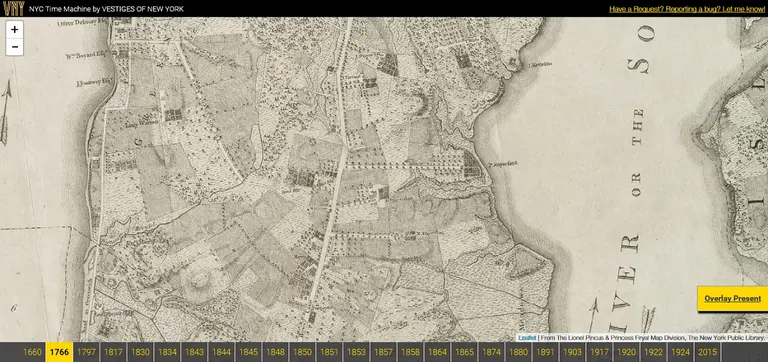
How One Man Created a 3D Map of Manhattan When It Was Just Hills, Rivers and Wildlife

Many of you probably recognize the image above, but what you may not know is that creating it required far more than a bit of Photoshop magic. The work of Wildlife Conservation Society ecologist Eric Sanderson, this incredible photo is a true-to-life depiction of what once grew on the island of Manhattan before it was all paved over. By using an 18th-century map, a GPS and reams of data, Sanderson has recreated, block by block, the ecology of Manhattan in the early 17th century. "We're trying to discover what Henry Hudson would have seen on the afternoon of September 12, 1609 when he sailed into New York Harbor," says Sanderson. Watch his riveting TED talk on the 'Mannahatta Project' ahead and see what used to make up areas like Columbia University, Greenwich Village, and even Times Square at the time of the American Revolution. You'll certainly look at what remains from our city's verdant, hilly and marshy past in a whole new way.
Watch the video here
November 19, 2014

Towers in the Park: Le Corbusier’s Influence in NYC

Any architecture history student or design nerd knows about Le Corbusier (1887-1965), one of the founders of modern architecture and a truly one-of-a-kind urban planner. For those of you who aren't as familiar with Charles-Édouard Jeanneret-Gris (his given name; he was French-Swiss), one of his most noteworthy urban ideas was concept of "towers in the park." Part of his Contemporary City plan (and later Radiant City plan) to house three million inhabitants as a way to deal with overcrowding and slums, towers in the park were skyscrapers set in large, rectangular tracts of lands with open space between the buildings. Whether they were consciously influenced by Le Corbusier or not, many projects in New York City mimic his vision of towers in the park, and we've decided to take a look at the most well known of this architectural crop, as well as some other ways the famous architect left his mark on NYC.
Take a look at NYC's towers in the park
November 7, 2014

Tenement Talks: Learn About Lowline’s Past and the Underground Park That May One Day Fill It

Ever since architects James Ramsey and Dan Barasch announced their plan to turn a forgotten trolley terminal below Delancey Street into an underground park, design enthusiasts, urban planners, locals, celebs, and, well, just about everyone who’s caught wind of it has been waiting in anticipation for what’s to come. The push to make this cool concept […]