Brooklyn’s dangerous Linden Boulevard to get center-running bus lanes, pedestrian islands
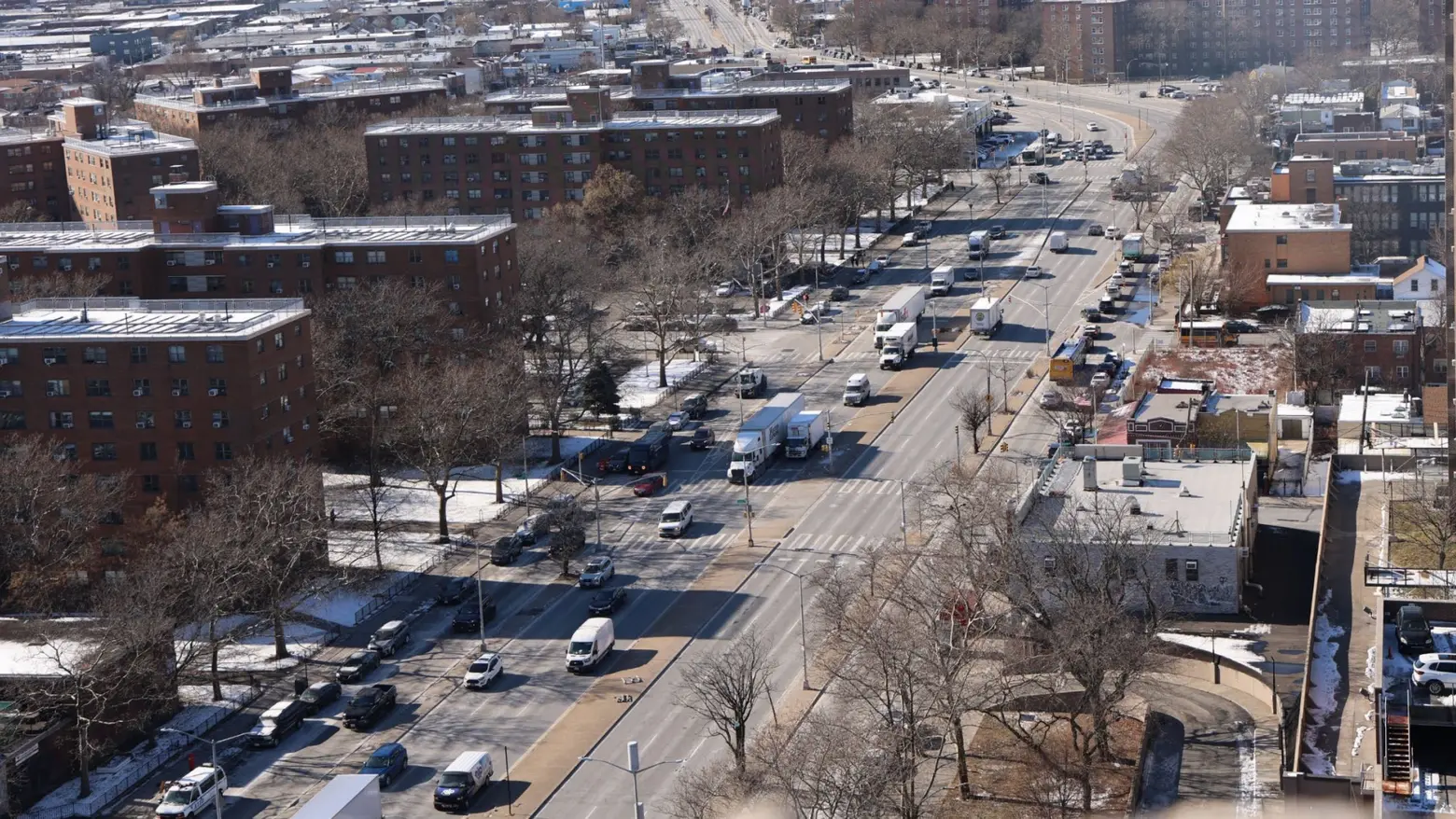
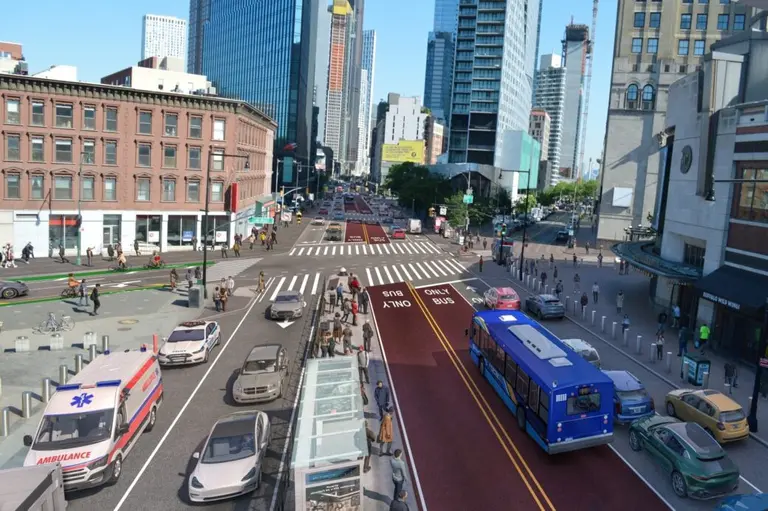
Aerial view of Linden Boulevard. All images courtesy of DOT
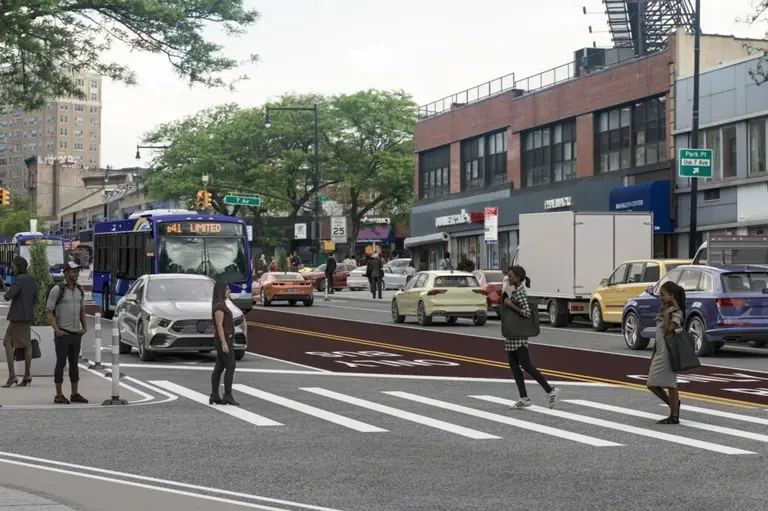
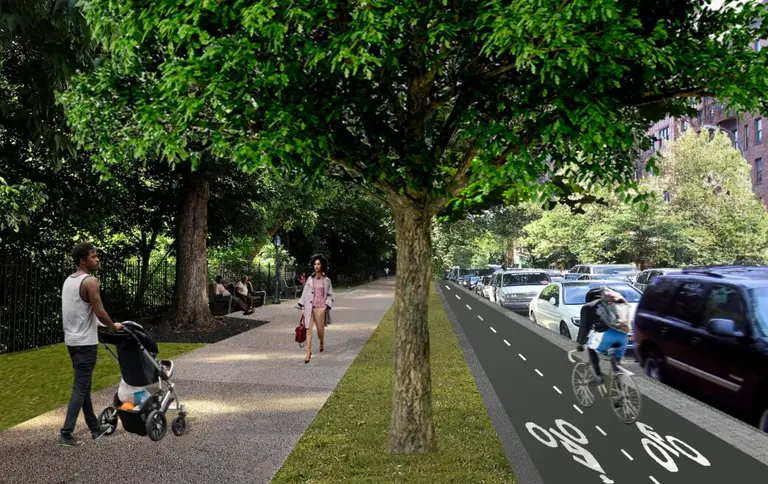
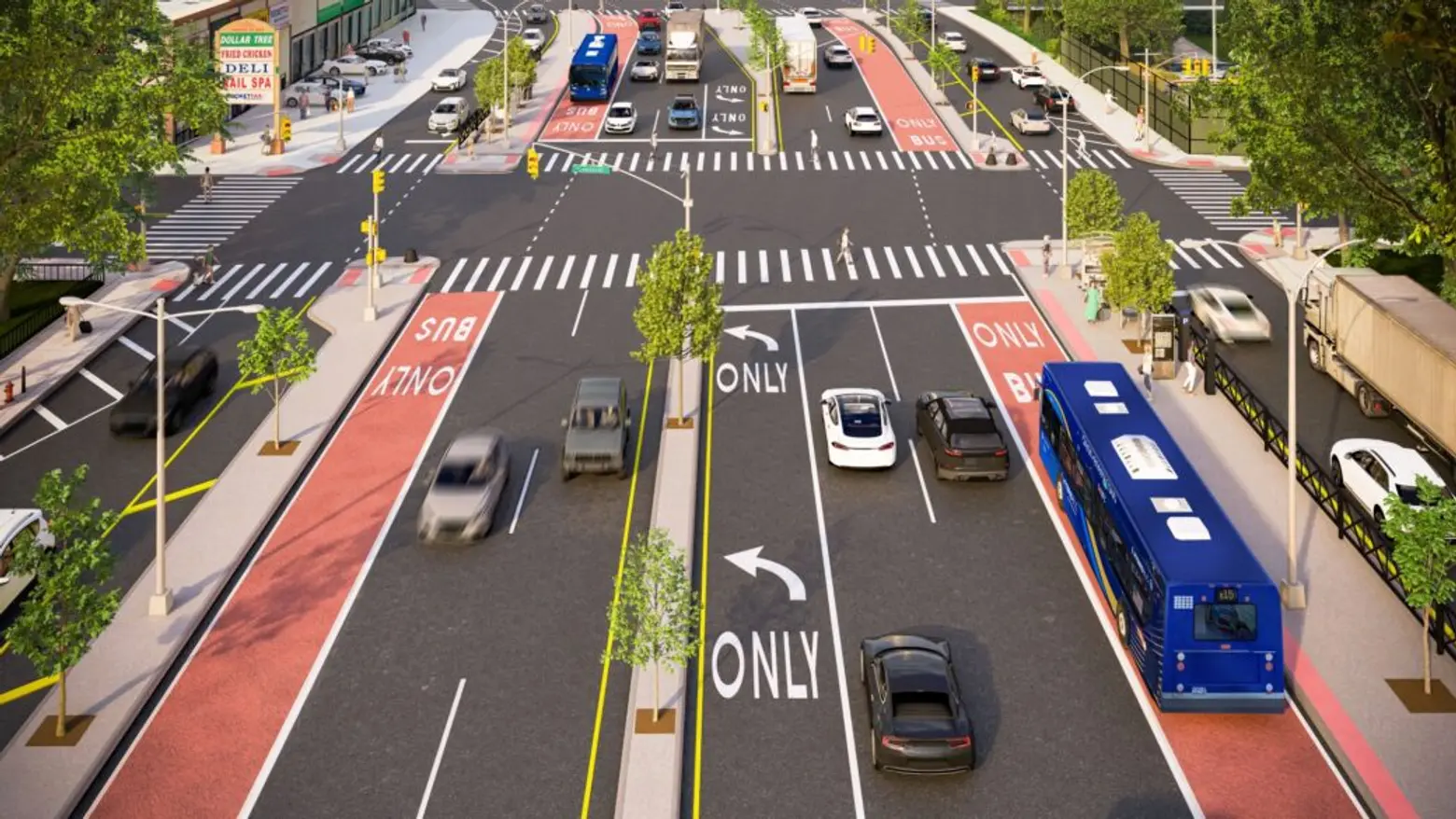
Parts of Brooklyn’s Linden Boulevard, one of the borough’s most dangerous corridors, will be redesigned with center-running bus lanes and other safety upgrades by 2027. Mayor Zohran Mamdani on Tuesday announced that the city’s Department of Transportation (DOT) will begin installing the lanes later this year along the stretch between Fountain and Conduit Avenues in East New York. The changes aim to improve safety along the corridor, which saw more than 440 traffic-related injuries and one death between 2021 and 2025. Those crashes have been linked to the road’s current design, which encourages speeding, forces pedestrians to cross multiple lanes of traffic, and leaves buses stuck behind double-parked cars, according to amNY.
“This project will deliver faster, more reliable buses for the 60,000 New Yorkers who rely on them every day — parents getting their kids to school, workers trying to clock in on time, families picking up groceries on the way home,” Mamdani said.
“And redesigning this historically dangerous corridor will make it safer for everyone who has to cross it. When we make our buses faster and our streets safer, we’re making a clear choice about the kind of city we want to be: one that puts people first,” he added.
Linden Boulevard is designated as a Vision Zero Priority Corridor and ranks among Brooklyn’s most dangerous streets for traffic deaths and injuries. Along this stretch, one person is injured in a traffic crash every four days, on average. Some lawmakers have begun referring to it as the “boulevard of death,” as reported by Gothamist.
A four-year-old was struck and killed by an SUV on Linden Boulevard and Rockaway Parkway last month. Two days later, a man standing on Linden was hit by a driver and killed, according to Gothamist.
Additionally, 54 percent of residents along the corridor commute by public transportation, and 57 percent of households do not have access to a private vehicle. With the nearest subway station more than half a mile away, many residents rely on buses serving the corridor, including the B13, B14, B15, B20, BM5, and Q8, which can move as slowly as 4 miles per hour.
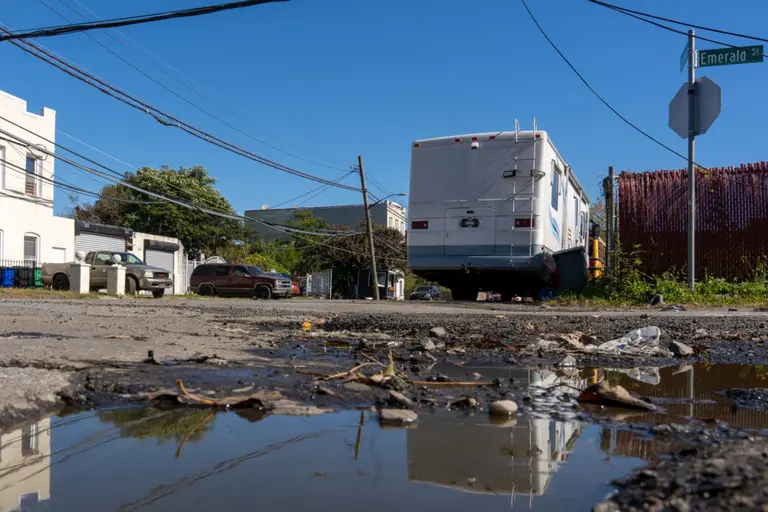
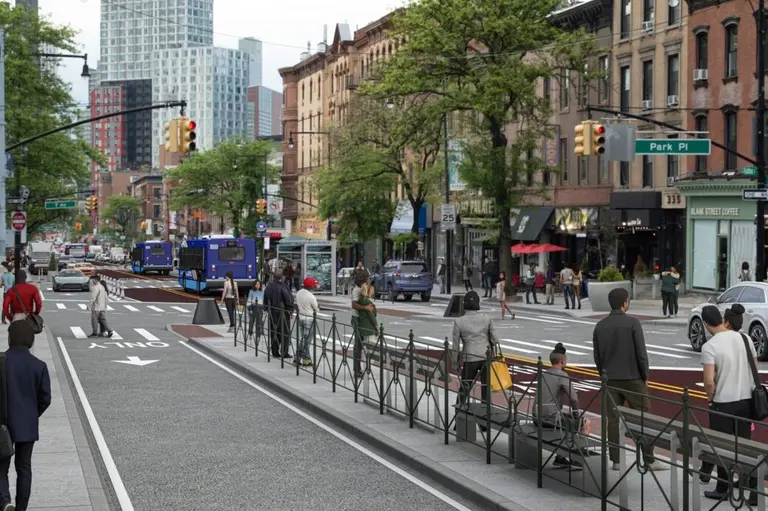
To address these long-standing traffic conditions, the city will install eight new bus boarding islands, which will also serve as pedestrian refuge islands and shorten crossing distances. The DOT will also add two new signalized intersections at Pine and Emerald Streets to reduce gaps between crosswalks and better connect the East New York and Jewel Streets areas. In addition, five slip lanes will be closed or redesigned to improve safety and support bus operations.
According to the agency, the changes will make the boulevard safer for pedestrians and speed up bus service, better connecting riders to six nearby subway lines, including the A, C, J, Z, L, and 3 trains.
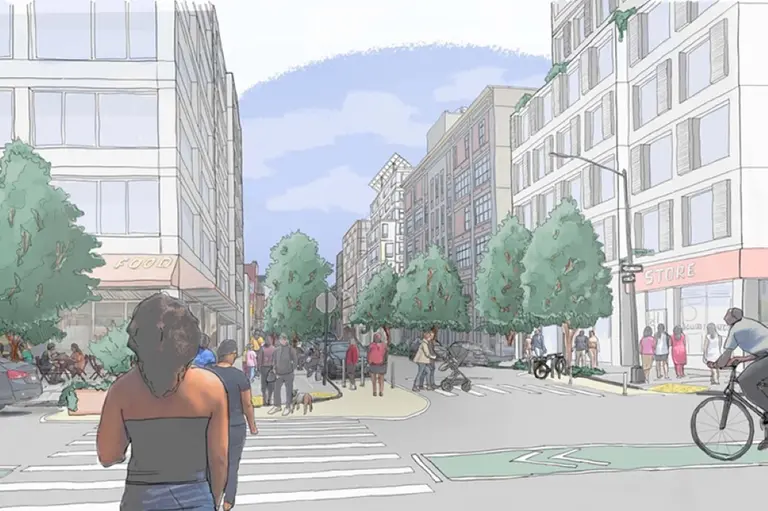
The redesign advances a community vision outlined in the city’s Jewel Streets Neighborhood Plan, led by the Department of Housing Preservation and Development. In addition to traffic safety upgrades, the plan calls for roughly 5,000 new homes, including 1,400 homes on a 17-acre city-owned site, a new sewage system for the neighborhood, which regularly floods.
DOT is currently reimagining the Conduit corridor, with the agency hosting a second round of public workshops starting this week.
The Linden Boulevard redesign should be completed by 2027, according to the city.
“Dedicated bus lanes keep buses moving and projects like the proposed redesign of Linden Boulevard are gamechangers to improve safety and bus service for riders,” MTA NYC Transit President Demetrius Crichlow said.
“It’s a win for everyone using the roads — safer for pedestrians, bus operators, bus riders and motorists, and with connections to six bus routes and six subway lines, it strengthens the transit network overall.”
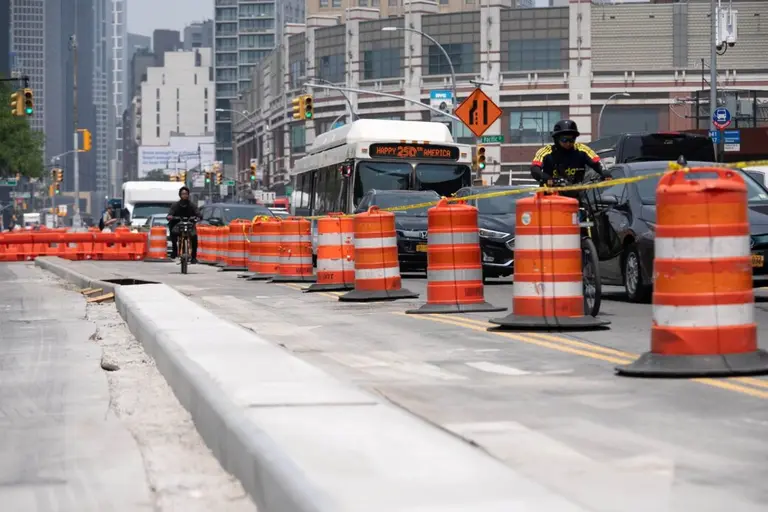
Linden Boulevard joins a growing list of major NYC corridors receiving traffic safety and bus speed upgrades. This month, work resumes on the redesign of Flatbush Avenue, which will also receive center-running bus lanes. The project is expected to speed up commutes for 132,000 daily bus riders, who currently travel at average speeds of under 4 miles per hour.
Last month, ground broke on a project to improve crosstown Bronx bus service and enhance street safety near Yankee Stadium. The project will add westbound bus-only lanes, including converting the 161st Street underpass for bus-only use. It will also include pedestrian safety upgrades, along with rider amenities such as shelters, benches, and leaning bars, as well as infrastructure to make bus boarding safer and more accessible.
Last May, DOT unveiled plans for a dedicated busway on 34th Street between Third and Ninth Avenues in Manhattan. Modeled after the successful 14th Street busway, the redesign could increase speeds by up to 15 percent for the more than two dozen bus routes that serve the corridor, as 6sqft previously reported.
The plan was halted in October after the Trump administration threatened to withhold funding for other projects due to the lack of coordination between city and state officials and the federal government, as 6sqft reported. Federal Highway Administration Administrator Sean McMaster said the agency had several concerns with the busway, including the absence of a plan “to accommodate truckers” and “maintain access for emergency vehicles.” Because the street is connected to the National Highway System (NHS), the project falls within the purview of the U.S. Department of Transportation.
RELATED: