NYC Council announces slate of bills aimed at regulating AI
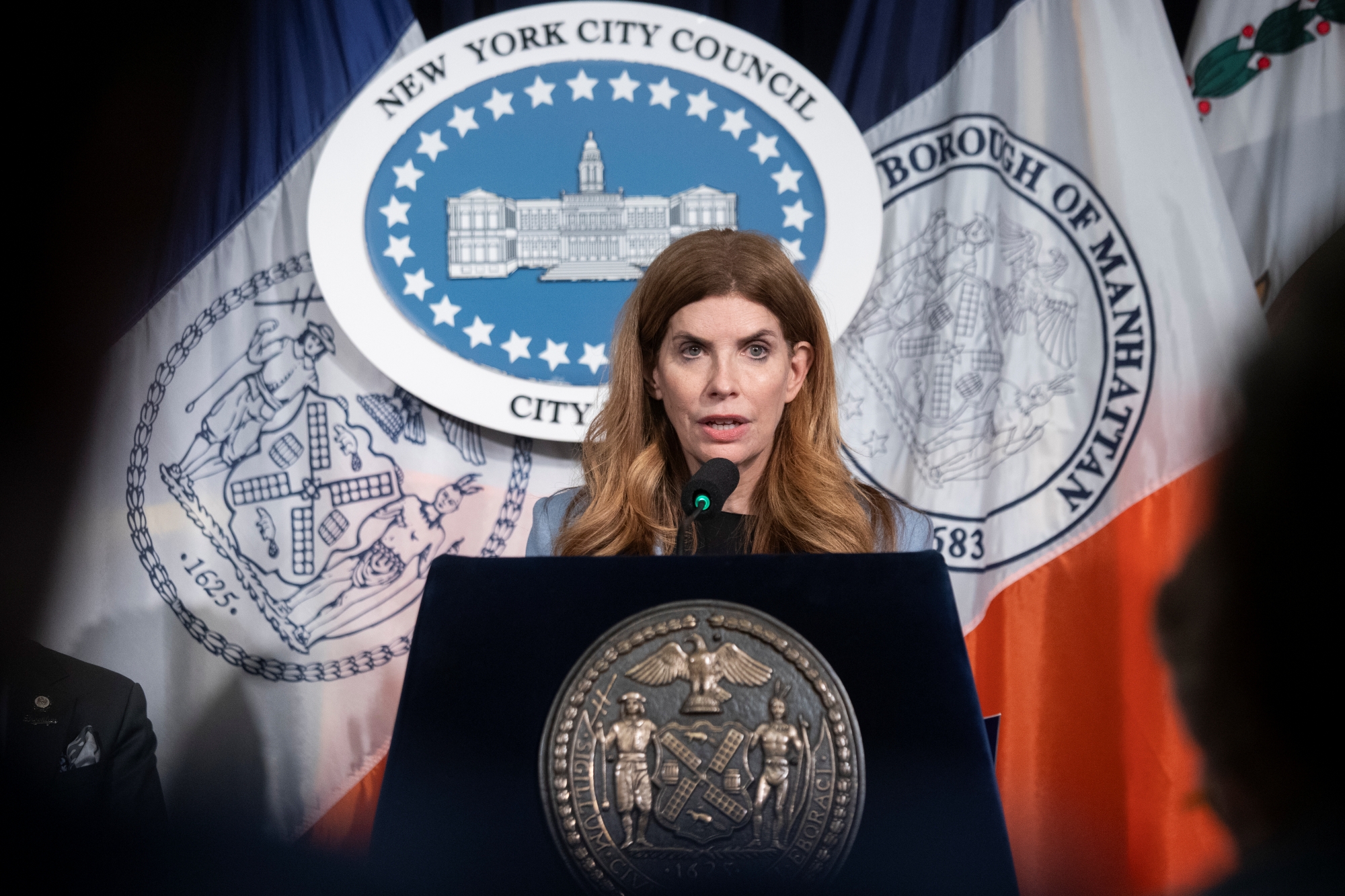
Credit: NYC Council on Flickr
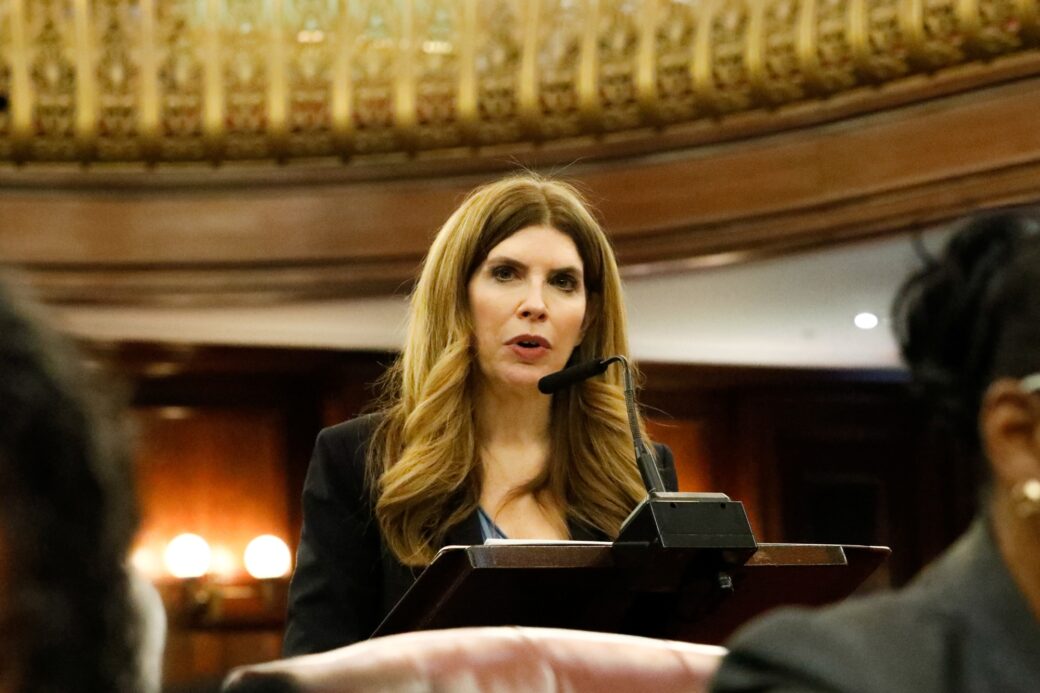
The New York City Council has unveiled a slate of bills aimed at regulating artificial intelligence ahead of a rare full Council hearing with industry officials early next month. Speaker Julie Menin on Friday announced the proposals, which include measures that would prohibit businesses from deploying AI systems without third-party validation, require all AI systems deployed in the city to have a “kill switch,” and establish a first-in-the-nation incentive program allowing whistleblowers to receive a portion of fines or penalties recovered from AI companies. The Council is set to hold a “Committee of the Whole” hearing on October 5, with OpenAI CEO Sam Altman and Anthropic CEO Dario Amodei invited to attend by Menin.
Menin announced the meeting last week, coming amid a broader debate over how governments should respond to the rapid advancement of the technology. Some prominent AI leaders have called for a slowdown in AI development, while the Trump administration has rejected calls to regulate the industry, as 6sqft previously reported.
The speaker sent letters to Altman and Amodei, as well as SpaceXAI CEO Elon Musk, Meta CEO Mark Zuckerberg, and Google CEO Sunder Pichai, requesting their participation in the hearing and making clear that the Council reserves the right to use its subpoena powers if necessary.
It is rare for the full Council to convene for a special hearing. A “Committee of the Whole” includes all Council subcommittees and is reserved for high-priority issues, according to the New York Times.
The initial set of bills under consideration covers a wide range of AI uses. Intro. 26835, sponsored by Menin, would make it illegal for any business to market, offer for sale, or use an AI system in the city that has not received third-party validation.
The validation would be required to assess the system’s data quality, potential bias, decision outputs, data privacy, security, and any other criteria required by the Council’s Cyber Command. Validators would also be required to disclose any conflicts of interest related to the AI system being evaluated.
The bill would also require every AI system used in NYC to have a “kill switch,” or a human override capable of shutting down the system. Validators would be required to verify that the system has a kill switch.
Both the business and validator would face a $25,000 penalty for each instance in which an AI system is marketed, offered for sale, or used without third-party validation, or when a validation is falsified.
Intro. 26887, also sponsored by Menin, would establish a first-in-the-nation incentive program allowing whistleblowers to receive a portion of fines recovered from AI companies that violate applicable laws. The program is intended to encourage individuals to report major violations.
Council Member Virginia Maloney’s bill, Intro. 26834, would establish a private right of action against AI companies for “foreseeable harms” stemming from the malicious use of or circumvention of safety controls, also known as “jailbreaking.”
Individuals harmed by AI tools could hold AI companies liable if the harm was foreseeable to the company, the company failed to implement reasonable safeguards, and the harm was caused by a third party that exploited that failure.
Similarly, Intro. 26831, sponsored by Council Member Kevin Riley, would amend the city’s whistleblower law to extend protections to NYC employees, contractors, and subcontractors who report conduct related to the use or development of AI that they believe poses a threat to public safety.
Another bill, Intro. 26378, sponsored by Council Member Chi Osse, would require the city to develop a response plan for AI-related incidents that compromise its information systems, infrastructure, government operations, or public safety. Cyber Command would be tasked with developing the plan in collaboration with NYC Emergency Management.
Other bills would prohibit the creation of deceptive deepfakes and seek to better understand the impact of algorithmic tools on workers’ job duties.
The slate of legislation follows laws the Council has already passed in response to the risks posed by AI. In 2025, the Council created the Office of Algorithmic Accountability to review city agencies’ use of AI and algorithmic systems, conduct risk assessments, investigate potential harms, and require corrective action when appropriate.
The Council has also established requirements governing the development, procurement, and use of AI by city agencies, including provisions related to privacy, civil rights, security, monitoring, and risk management. The laws also require the city to maintain a publicly accessible inventory of AI systems subject to algorithmic accountability review.
At a broader level, New York in July became the first state in the country to impose a statewide moratorium on new large data centers. The one-year pause temporarily halts the construction of new data centers that require 50 megawatts or more of power, giving officials time to develop measures to protect New Yorkers and the environment, as 6sqft previously reported.
Earlier this month, Mayor Zohran Mamdani and NYC Schools Chancellor Kamar Samuels announced a one-year ban on the use of generative AI in public schools for students from preschool through eighth grade, the largest school system in the country to do so.
In a statement, Menin emphasized the city’s responsibility to establish safeguards around AI and criticized the federal government’s “failure” to enact meaningful regulations.
“NYC is fast becoming the technology and AI capital of the world, which we want to encourage. But that also means we now have an even greater responsibility to ensure that we have the appropriate safeguards in place to protect New Yorkers from unintended consequences,” Menin said.
“While the federal government fails to meet the moment and take decisive action, New York City will explore nation-leading measures that protect the public while allowing innovation to thrive. We can and must be both pro-innovation and pro-safety,” she added.
RELATED: