City begins construction on first busway in the Bronx
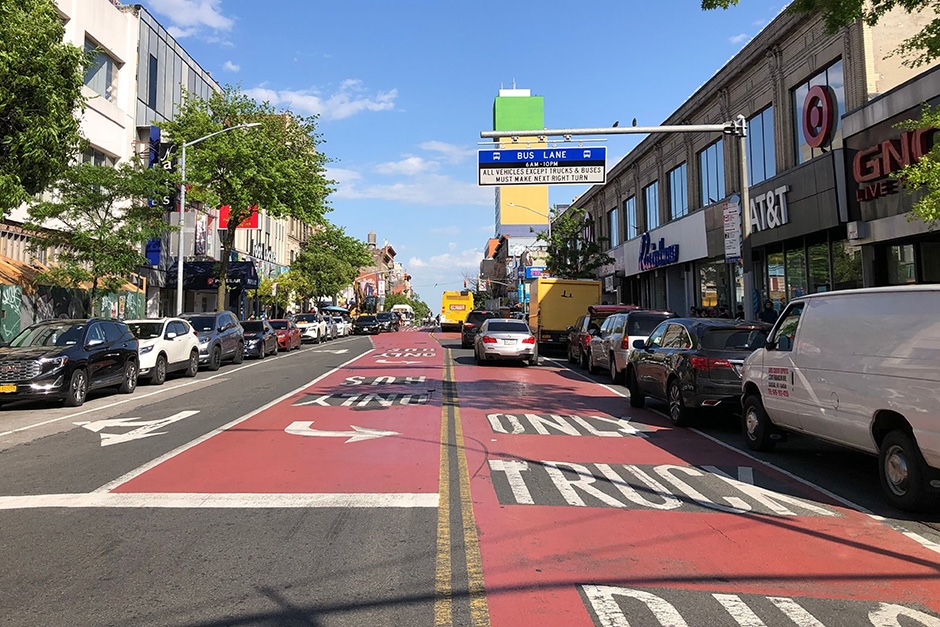
Photo courtesy of DOT
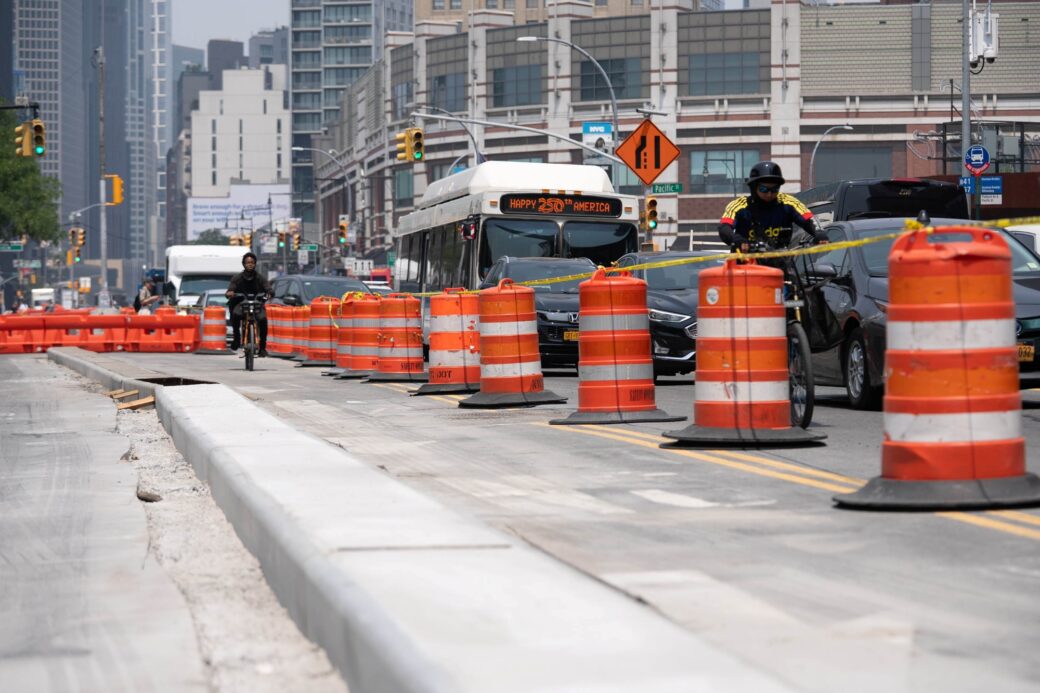
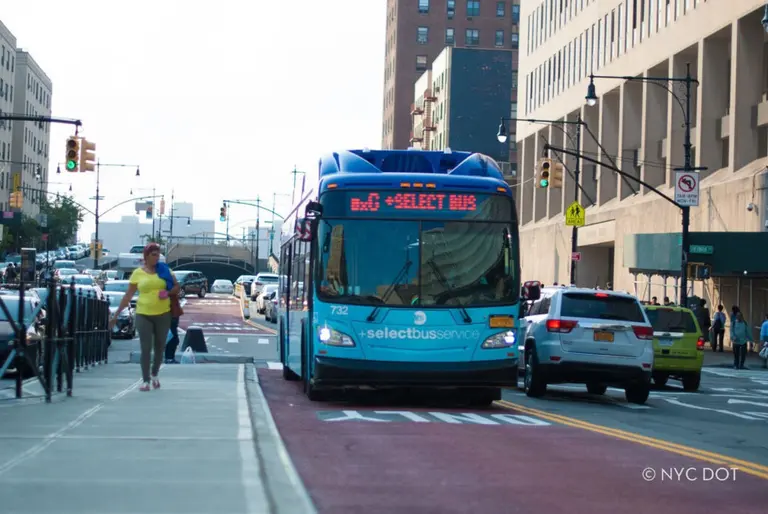
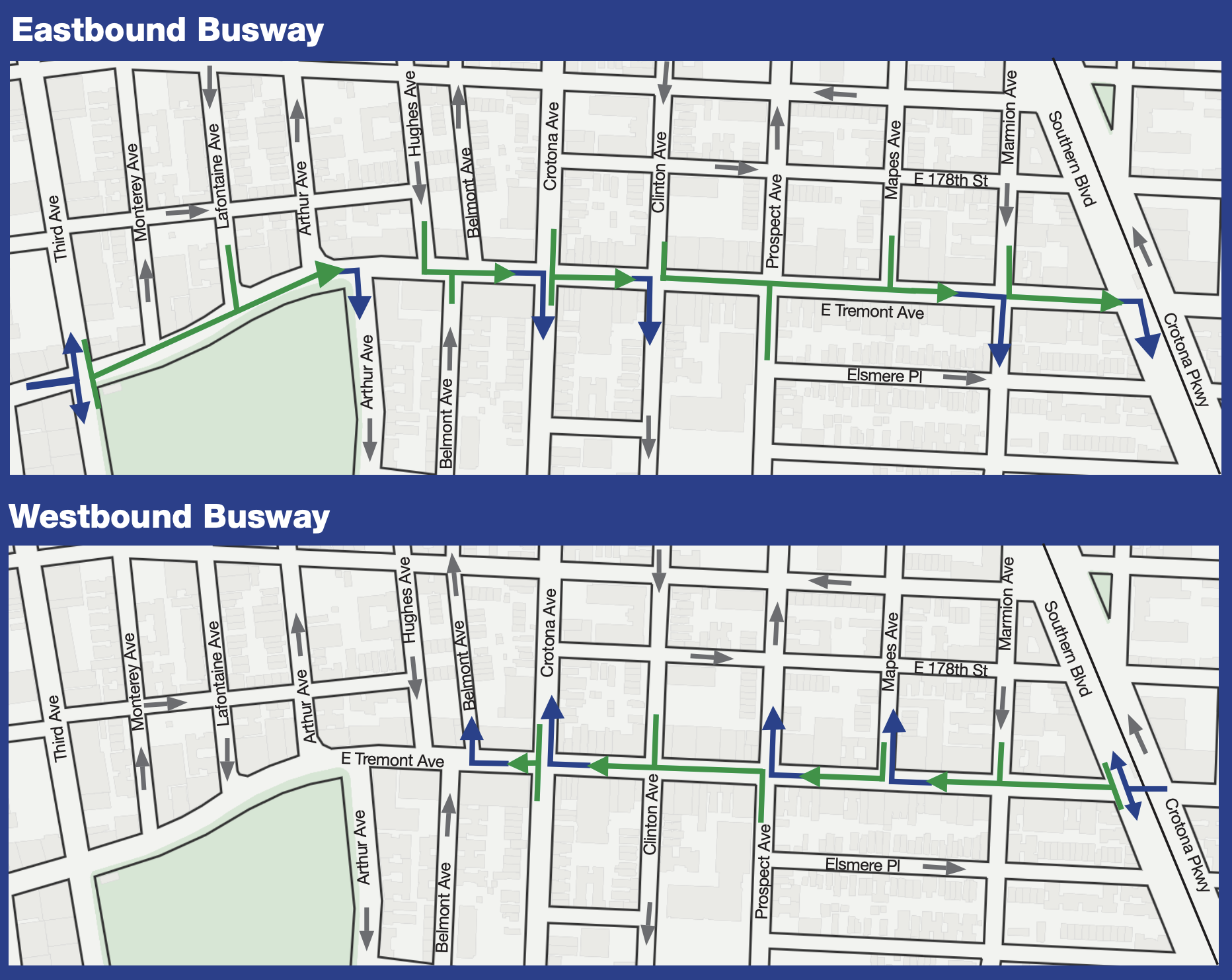
Starting next month, 39,000 bus riders in the Bronx will have a faster daily commute. The city’s Department of Transportation (DOT) this week officially started construction on the Tremont Avenue Busway, a mile-long, car-free lane designated for the Bx36 bus from Third Avenue to Southern Boulevard. The busway, the eighth to be installed in the city, aims to speed up commutes by 60 percent for the bus route, which currently travels at less than five miles per hour.
The busway project was ready to go in 2025, but former Mayor Eric Adams shelved the plan, as Streetsblog reported at the time. Mayor Zohran Mamdani announced plans to build the busway last month as part of a broader plan to improve bus speeds at 50 priority corridors.
Tremont Avenue is seen as a priority because most residents in the area rely on public transit and the corridor is dangerous. According to the DOT, 72 percent of residents do not own a car. The agency said between 2020 and 2024, nearly 630 people were injured in crashes on Tremont Avenue, with four people killed.
Starting September 19, the busway will operate every day from 6 a.m. to 8 p.m. The busways will be enforced via stationary cameras, bus-mounted cameras, and NYPD enforcement.
“Every day, 39,000 bus riders will spend less time stuck in traffic and more time where they need to be: with their families, loved ones and friends, or at work and appointments,” DOT Commissioner Mike Flynn said. “We look forward to building off the success of this busway and working with the community to develop Tremont Avenue into a world-class rapid transit corridor.”
As part of the street redesign, an eastbound busway will be installed from Third Avenue to Southern Boulevard. A shorter westbound busway will be built from Southern Boulevard to Belmont Avenue, and an offset shared bus-bike lane will eastbound from Webster Avenue to Third Avenue.
Every block of the busway will be painted red with “Bus Truck Only” white markings. Buses, trucks with six or more wheels, emergency vehicles, and Access-a-Ride vans can travel through the entire corridor. All other vehicles may enter from side streets for local access but must take the next available right turn.
The city will also boost safety for pedestrians at eight intersections along the corridor and nearby streets with new painted sidewalk extensions that shorten crossing distances and slow drivers while turning.
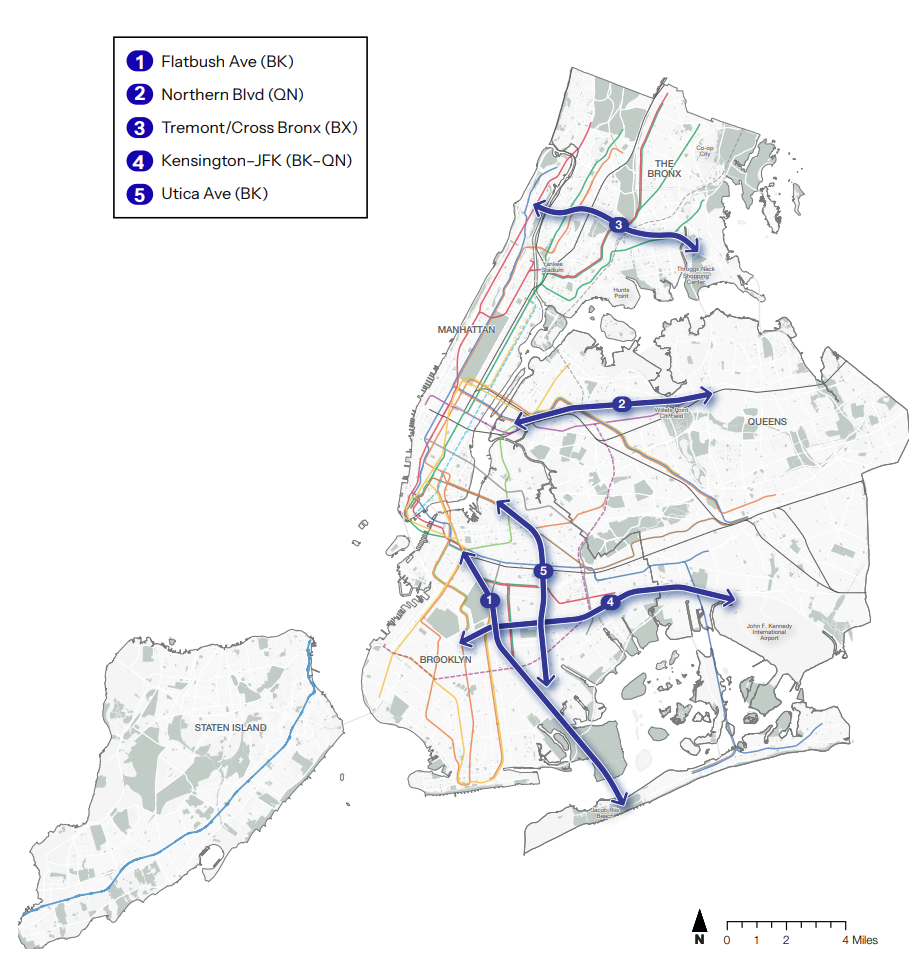
Other bus corridors set to receive upgrades include Flatbush, Utica, and Church Avenues in Central Brooklyn. These corridors carry 150,000 bus riders every day across 13 routes, with buses crawling as slow as 5 mph, as 6sqft previously learned.
Of the city’s 50 priority corridors, five would be designated as “rapid bus corridors,” featuring bus-only infrastructure such as busways, fully separated lanes, or center-running lanes with transit signal priority at intersections and limited cross traffic.
RELATED: