Here are the NYC neighborhoods with the highest storefront vacancy rates
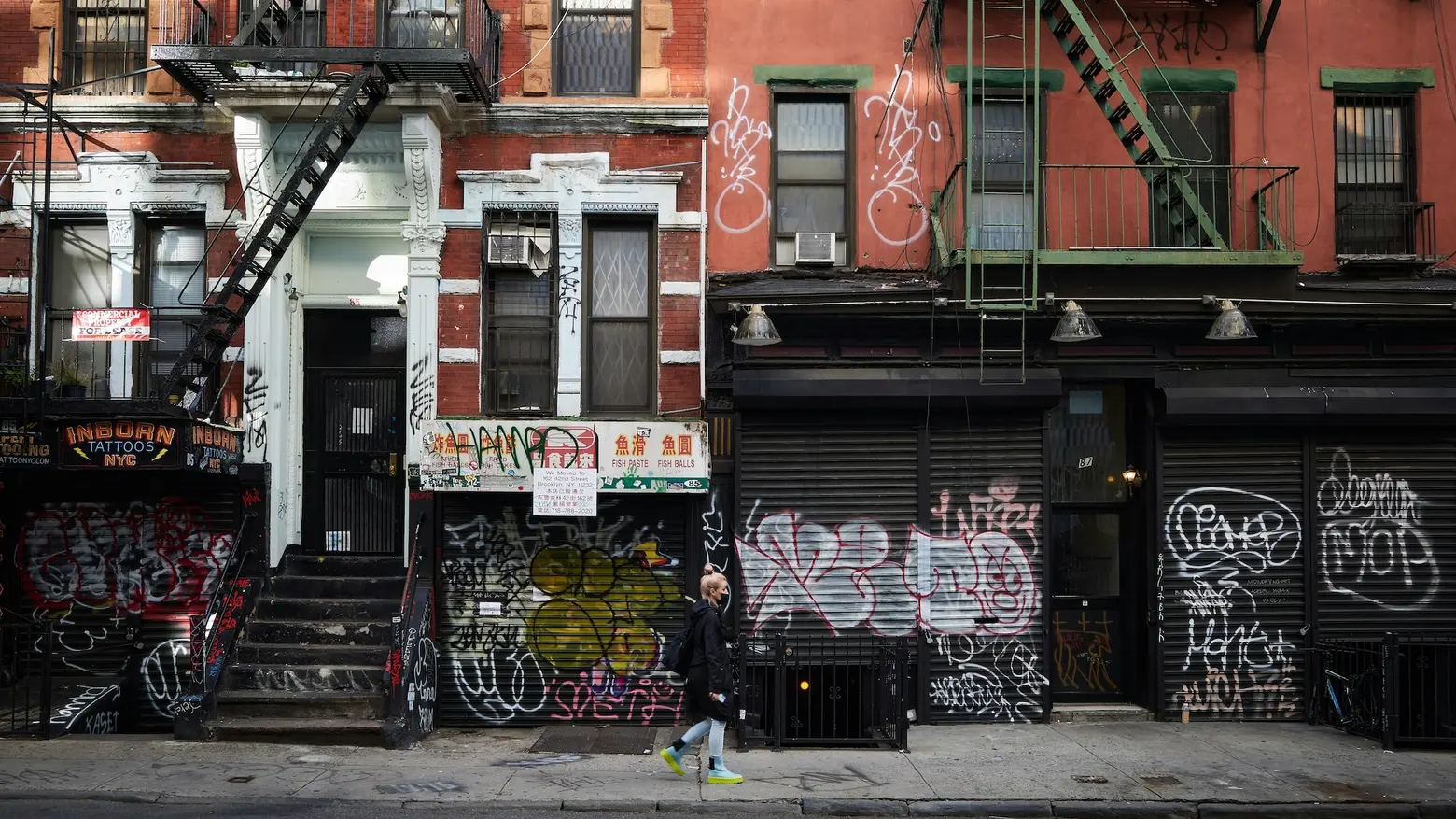
Though New York City’s storefront vacancy rate has rebounded since the pandemic, some neighborhoods still have retail vacancy rates as high as 20 percent, according to a new report. Released on Thursday by the city’s Comptroller Mark Levine, the report, titled “Who’s Minding the Storefront? An Analysis of Storefront Vacancies,” found that while the citywide vacancy rate has returned to near pre-pandemic levels, parts of Lower Manhattan, Battery Park City, Northern Brooklyn, and Western Queens continue to see retail vacancy rates at or above 20 percent. Citywide, roughly 15,700 storefronts remain vacant, representing an 11 percent vacancy rate, about half a percentage point above pre-pandemic levels.
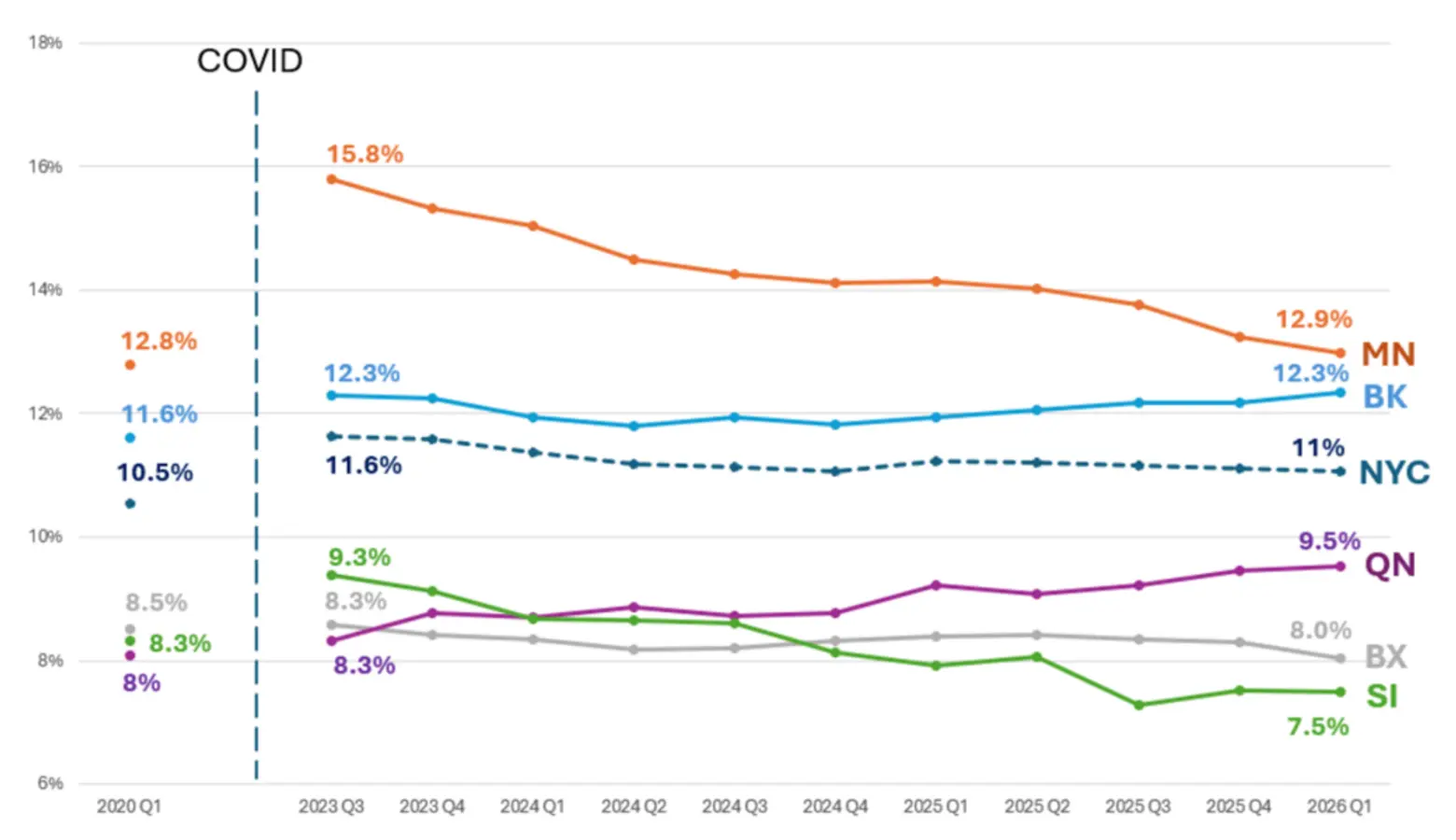
According to the report, the pandemic had a significant impact on storefront businesses citywide, with the vacancy rate rising from 10.5 percent at the start of 2020 to 11.6 percent in late 2023. Since then, the rate has improved to 11 percent as of April 15, 2026.
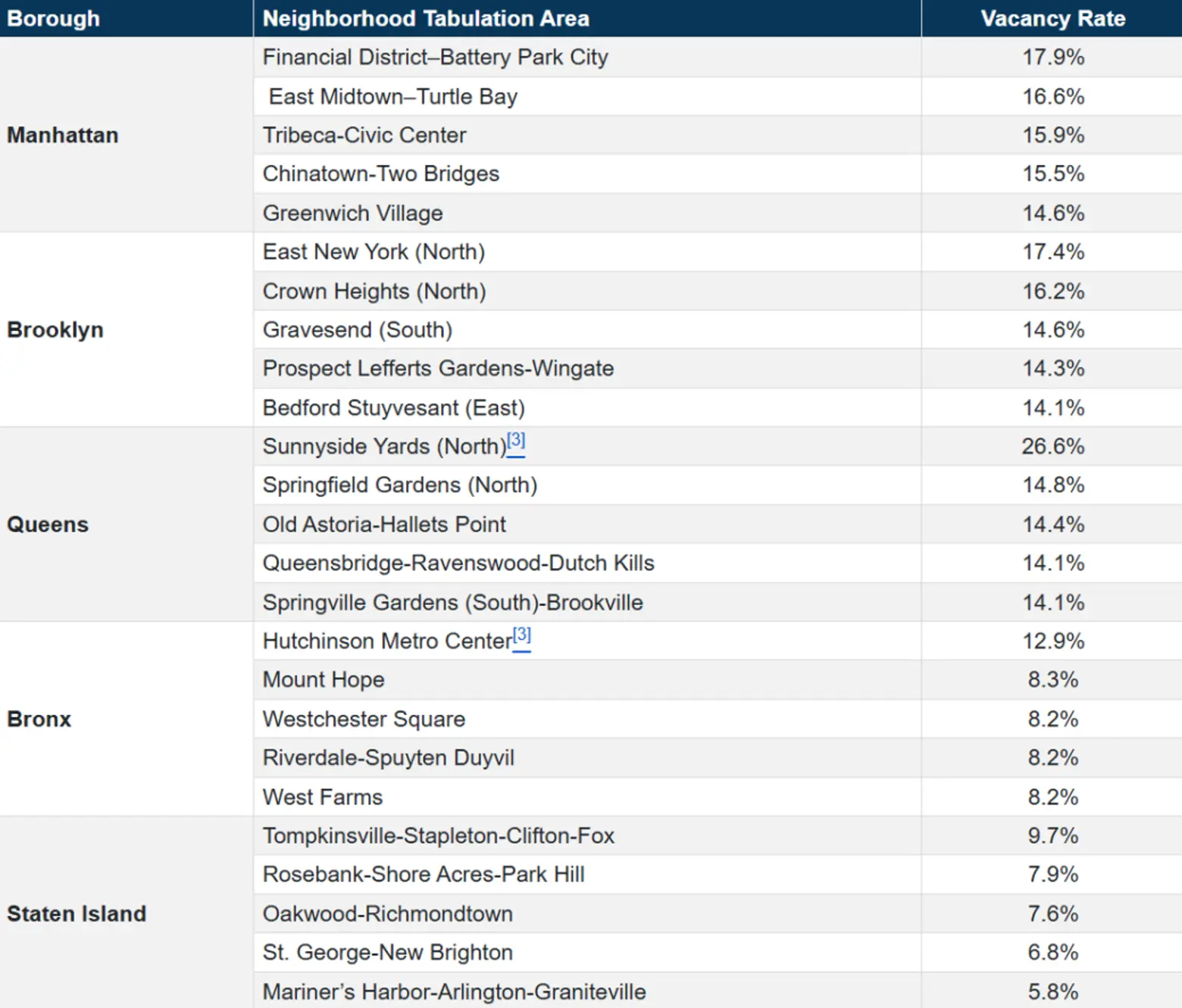
However, this rebound has been uneven, with certain areas of the city still struggling to return to pre-pandemic levels. In the Financial District and Battery Park City, 21.1 percent of retail spaces remain vacant, followed by Old Astoria-Hallets Point at 20.1 percent, Ocean Hill at 19.5 percent, Tribeca-Civic Center at 19.5 percent, and East New York at 19.4 percent.
In many neighborhoods, 80 to 90 percent of storefronts that were vacant in early 2026 had already been vacant for at least nine months. In Lower Manhattan, Harlem, Bedford-Stuyvesant, Crown Heights, Williamsburg, East Flatbush, Astoria, and parts of Southeast Queens, more than one in 10 storefronts that were previously occupied by small businesses remain vacant.
The report also found that vacancies tend to cluster, with storefronts located within one block, or 250 feet, of a vacant business 30 percent more likely to be vacant than the city average. Storefronts within roughly three Manhattan blocks, or 750 feet, are still two percentage points more likely to be vacant than the overall rate.
Additionally, despite retail demand largely recovering from the pandemic nationwide, neighborhoods across the five boroughs show a wider range of vacancy rates compared to peer cities. Among the nine largest metropolitan areas in the nation, NYC had the widest disparity in neighborhood retail vacancy rates in 2024.
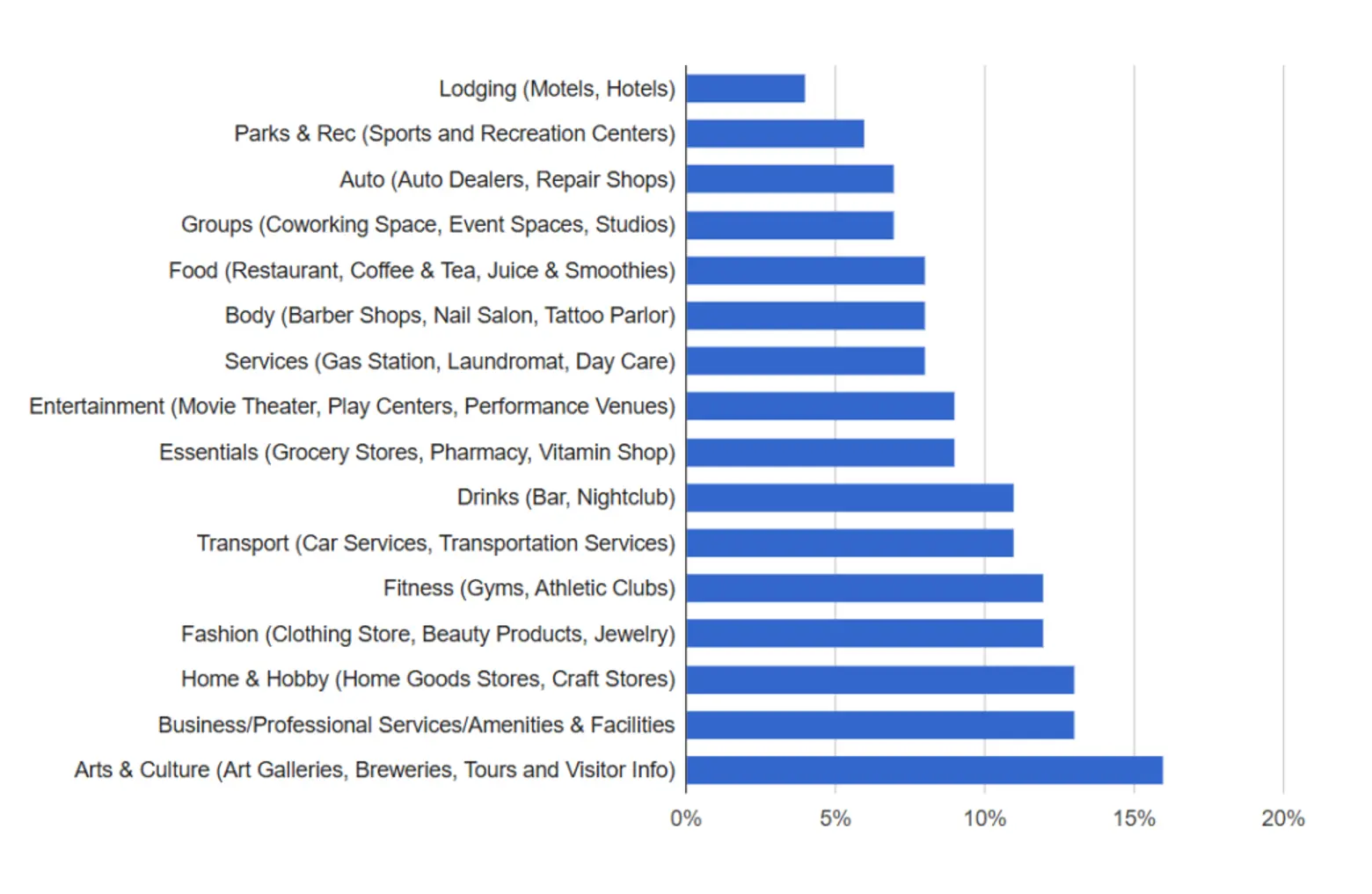
Of the vacant storefronts, nearly one in six are art galleries, breweries, tour operators, visitor information centers, or businesses classified as “arts and culture,” the highest category vacancy rate at 16.1 percent.
Other sectors with high vacancy rates include business-to-business fields such as real estate firms, tax services, and travel agencies at 13.3 percent, and bars and nightclubs at 10.9 percent.
Closed storefronts that last operated as food-related businesses account for 13.6 percent of vacancies, while shuttered essential goods providers, such as grocery stores, pharmacies, and vitamin shops, make up 10.5 percent of vacancies.
In more optimistic news for small businesses, the report found that, despite the growth of larger chain retailers displacing independent shops, 84 percent of the 96,500 storefronts occupied by small businesses in early 2020 were either still operating or had been replaced by another small business.
Levine concludes that in order to address this unevenness in vacancies, policymakers and stakeholders should develop a more comprehensive understanding of the drivers, duration, and localized impacts of storefront vacancies when considering future interventions.
“Retail storefront occupancy is a key indicator of the economic health, vibrancy, and strength of a neighborhood, as well as our entire city,” Levine said. “This report gives us a clear picture of how we’ve recovered since the pandemic and provides a clear roadmap for the areas we still need to address.”
“As we rethink the future of New York City’s economy, we must remain focused on cultivating the conditions to help entrepreneurs thrive, in turn modernizing, sustaining, and growing our commercial corridors,” he added.
Last week, Levine announced a new partnership with the Hebrew Free Loan Society to deliver $8 million in interest-free loans to small businesses. Eligible low- and middle-income entrepreneurs will be able to access loans of up to $60,000 at zero interest, providing an alternative to high-interest debt and predatory lending that often burdens small businesses.
RELATED: