Congestion pricing funds major air quality upgrades at Bronx’s Hunts Point Market
Credit: Ray Raimundi/MTA on Flickr
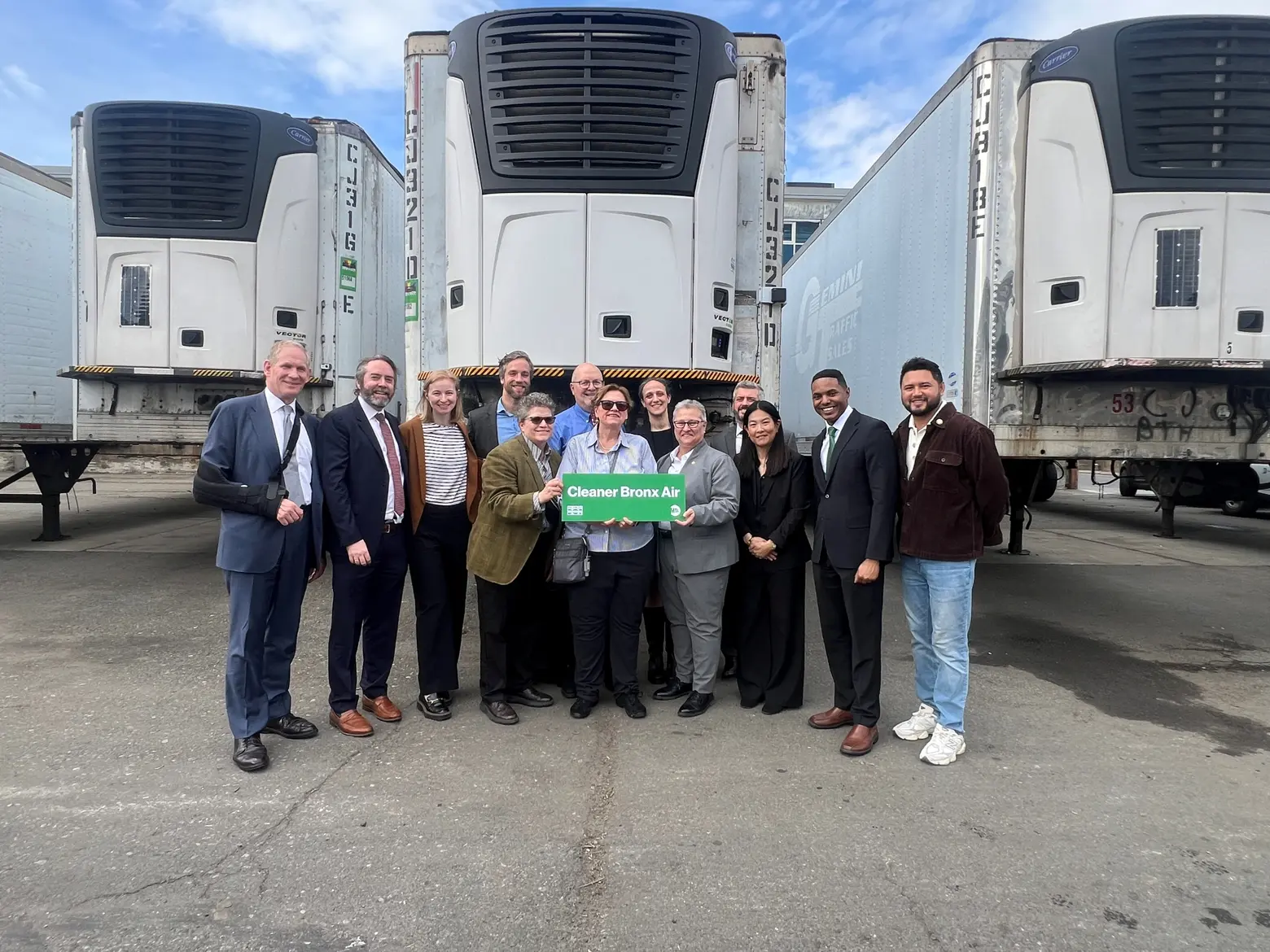
Diesel-powered refrigeration units that have long emitted air pollution in the Bronx will be replaced by cleaner models, funded by revenue from New York City’s congestion pricing program. Gov. Kathy Hochul on Monday announced 20 diesel-powered transport refrigeration units (TRUs) at the Hunts Point Produce Market will be replaced with cleaner diesel and hybrid units, which are projected to cut annual particulate matter emissions by 99.7 percent and nitrogen oxide by 66 percent. Replacing just one diesel-powered TRU with a newer model eliminates the equivalent particulate matter emissions of 330 truck trips per day on the Cross Bronx Expressway.
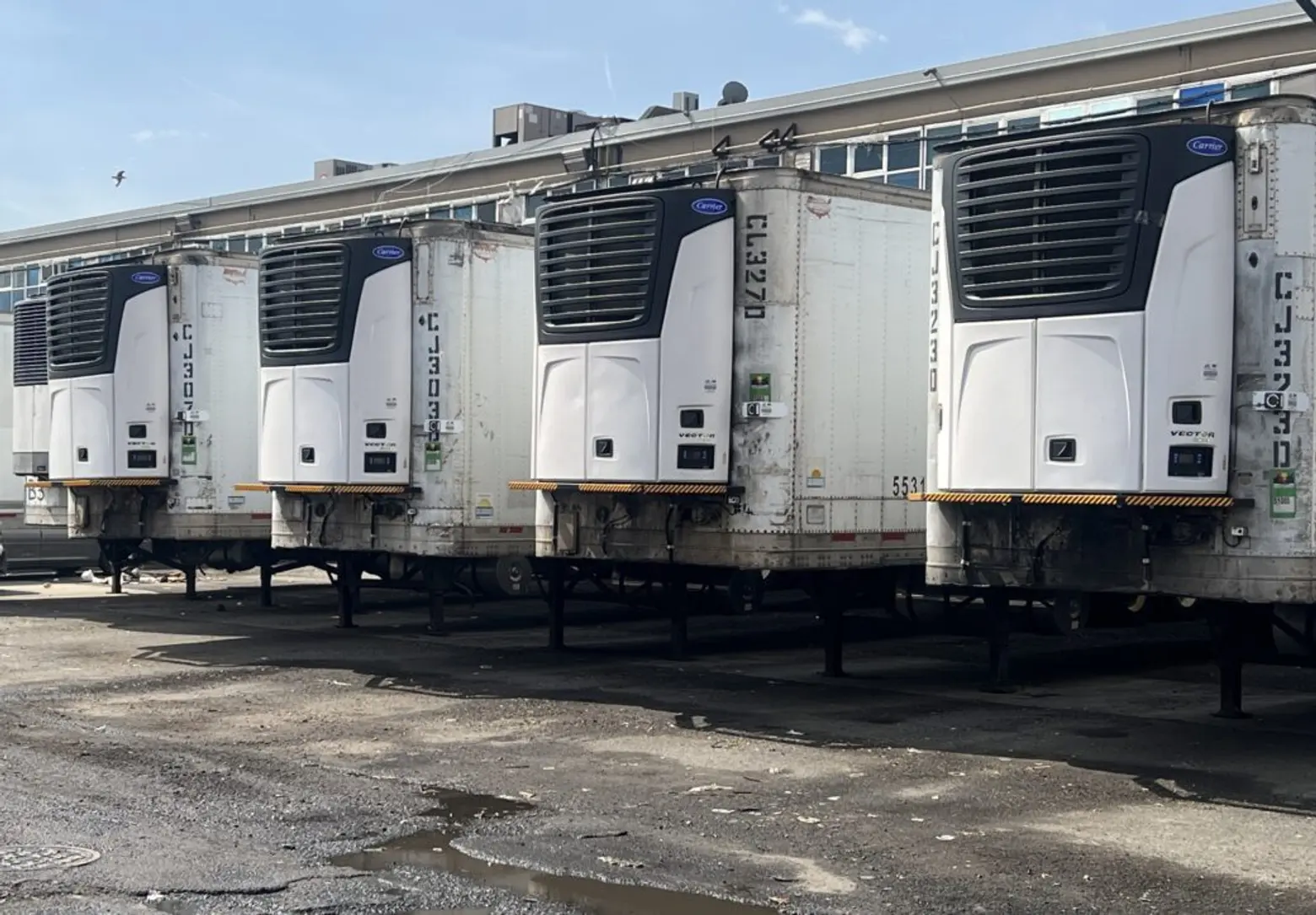
“Congestion pricing has been a once-in-a-lifetime success story, leading to cleaner air, better transit, and faster and safer traffic throughout the city,” Hochul said. “We knew that to do this right, we had to bring real air quality improvements directly to parts of NYC that have been neglected for far too long.”
“These new refrigeration units will be a game changer for Hunts Point market, with air quality improvements equivalent to removing thousands of truck trips on our roads every day, making the Bronx’s air cleaner and improving quality of life.”
The TRU replacements are part of the mitigation package included in the environmental assessment for congestion pricing. Under the program, drivers entering Manhattan below 60th Street pay a base toll of $9, a fee designed to discourage vehicle travel through the borough’s central business district and reduce traffic, as 6sqft previously reported.
The city’s Department of Transportation (DOT) has been accepting new units on a rolling basis since December, when the first was delivered. An additional 75 units are slated for replacement this year, with $15 million allocated for the air quality initiative.
Marking the first major mitigation investment funded by congestion pricing, the effort builds on environmental gains linked to the toll system. In 2025, more than 27 million fewer vehicles entered Manhattan’s congestion relief zone, contributing to improved air quality, reduced noise, and fewer pedestrian accidents.
On any given day, about 73,000 fewer vehicles are entering the zone, an average decline of 11 percent. Officials also said concerns about increased traffic in the Bronx have not materialized.
The Metropolitan Transportation Authority and project sponsors are in the last stages of developing the final mitigation plan required under the program’s environmental review process. The plan will outline specific locations for each mitigation measure, as well as the allocation of funds. It is slated for release this spring.
Roughly 70 percent of funds set aside for mitigation measures under “place-based mitigation” will be invested in the Bronx.
In addition to the TRUs, other initiatives include a $20 million Bronx Asthma Initiative, a $20 million effort to expand electric truck charging infrastructure, $20 million for the NYC Clean Trucks Program, $10 million for roadside vegetation, $10 million for installing air filtration units in NYC and Newark schools near highways, and $5 million to expand the DOT’s Off-Hours Delivery Program.
Congestion pricing recently secured a legal victory over the federal government after the Trump administration sought to end the toll system. In March, a judge ruled that U.S. Transportation (U.S. DOT) Secretary Sean Duffy’s move to terminate the program was “arbitrary and capricious.” The MTA filed suit against the U.S. DOT in February 2025 to block the effort, allowing the program to continue operating indefinitely
RELATED: