
New York sues Trump administration to resume SNAP payments
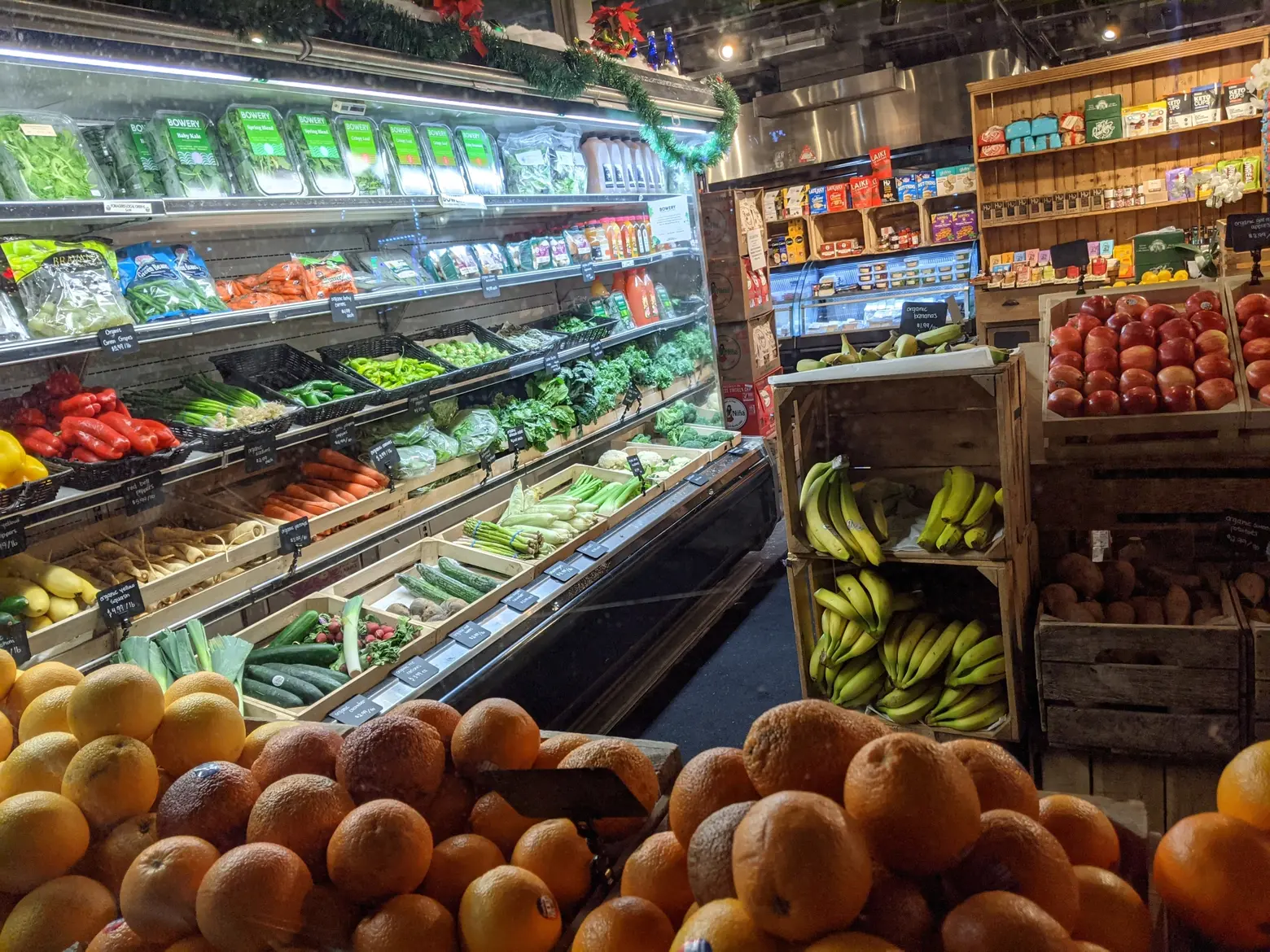
Credit: Eden, Janine and Jim on Flickr
New York Attorney General Letitia James is suing the Trump administration to block its plan to halt SNAP payments during the federal government shutdown. On Tuesday, James announced plans to sue the U.S. Department of Agriculture (USDA) for its intentions to cease SNAP benefits starting Saturday, arguing that the move violates federal law. James says the USDA is legally obligated to continue distributing assistance as long as it has funding, and that billions in contingency funds approved by Congress are available to sustain payments during the lapse.
James called SNAP one of the country’s most effective tools to fight food insecurity and called upon the Trump administration to reverse its decision.
“Millions of Americans are about to go hungry because the federal government has chosen to withhold food assistance it is legally obligated to provide,” James said. “SNAP is one of our nation’s most effective tools to fight hunger, and the USDA has the money to keep it running.”
She added, “There is no excuse for this administration to abandon families who rely on SNAP, or food stamps, as a lifeline. The federal government must do its job to protect families.”
The Supplemental Nutrition Assistance Program (SNAP), commonly referred to as food stamps, is the nation’s largest anti-hunger program, with funding distributed monthly by the federal government to nearly 42 million low-income Americans to help them afford food.
Children and seniors make up nearly 60 percent of all SNAP recipients nationwide, and more than one million veterans receive benefits each year. In New York, the program serves close to three million people, including nearly one million children and more than 600,000 seniors. About seven percent of the state’s SNAP recipients have disabilities.
On Sunday, the USDA announced plans on its website to halt SNAP benefits, saying that “the well has run dry” and no further payments would be issued starting November 1. The department had previously assured the public it would use contingency funding to sustain benefits during the shutdown. It blamed Senate Democrats for the funding lapse:
“Senate Democrats have now voted 12 times to not fund the food stamp program, also known as SNAP. Bottom line, the well has run dry. At this time, there will be no benefits issued November 1.”
The notice continued, “We are approaching an inflection point for Senate Democrats. They can continue to hold out for healthcare for illegal aliens and gender mutilation procedures or reopen the government so mothers, babies, and the most vulnerable among us can receive critical nutrition assistance.”
While the federal shutdown began on October 1, SNAP benefits had already been approved for that month, making November 1 the first day Americans will feel the impact. Because SNAP benefits are distributed through scattered issuance—multiple payments throughout the month—each day the shutdown continues, more people will lose their benefits, according to The City.
To make matters worse, November 1 also marks the date the city’s Human Resources Administration (HRA) must implement new federal SNAP eligibility rules for hundreds of thousands of recipients classified as able-bodied adults without dependents (ABAWDs).
Roughly 231,600 New Yorkers will be affected by the new rules, which apply to adults ages 18 to 64. The requirements target individuals who do not live with a child under 14, are not pregnant or caring for someone unable to care for themselves, and have no physical or mental barriers to employment.
More than 250 organizations, service providers, and unions across NY sent an urgent letter to Gov. Kathy Hochul on Wednesday, urging the state to fund SNAP benefits during the ongoing federal shutdown. The letter calls on the governor to allocate up to $700 million in state funds to allow the Office of Temporary and Disability Assistance to issue full SNAP benefits in November.
It also notes that the state has a surplus of more than $4 billion in the current fiscal year and nearly $30 billion in reserves—funds advocates say should be used to cover SNAP payments while federal support remains suspended.
During a press conference on Thursday, Hochul said the state could not replace the $650 million in federal SNAP funding it receives each month. However, she officially declared a statewide food emergency and unveiled a series of measures to help New Yorkers cope with the loss of benefits.
Hochul said the state first allocated $11 million for emergency food relief last week and on Monday fast-tracked another $30 million. To further expand food access, she announced an additional $65 million in funding, bringing the total emergency investment to $106 million—the equivalent of roughly 56 million meals statewide.
The governor also said NY will deploy members of the Empire State Service Corps and SUNY Civic Engagement Corps, made up of students, to assist food pantries across the state. In addition, the state is exploring ways to use schools as “food hubs” and will begin covering the full cost of breakfast and lunch for every schoolchild in NY.
“Over 3 million New Yorkers—including 1 million children, or 15 percent of the state’s population—depend on SNAP to feed themselves and their families,” the letter reads. “Even a brief interruption in food assistance places New Yorkers—particularly young children—at risk of long-term nutritional harm.”
It continued, “Similarly, a pause in SNAP benefits could put financial strain on 16,000 New York SNAP retailers—including grocery stores, bodegas, and restaurants—potentially resulting in layoffs.”
New Yorkers affected by the SNAP benefit stoppage can find free food resources through the city’s Food Help map, the Food Bank for NYC map, and City Harvest’s food assistance map. While food pantries can’t fully make up the difference, experts told The City that New Yorkers should still use them as a critical resource.
Wednesday marks day 29 of the federal government shutdown, caused by ongoing budget disputes between Republican and Democratic lawmakers that have stalled passage of a funding bill for October and beyond, according to the BBC.
Senators have already voted on the bill 13 times, with another vote scheduled for Thursday. While Senate Majority Leader John Thune told reporters that bipartisan talks to end the shutdown have “ticked up significantly,” Sen. Thom Tillis told CBS News there is still no sign those discussions have evolved into formal negotiations.
Editor’s Note 10/30/25: This article was updated to include Gov. Kathy Hochul’s announcement of new measures to support New Yorkers affected by the suspension of SNAP benefits.
RELATED:
Get Insider Updates with Our Newsletter!
Leave a reply
Your email address will not be published.

























[…] New York sues Trump administration to resume SNAP payments […]