Majority of affordable housing in NYC built in just 10 of 51 NYC Council districts, new report finds

Credit: Nelson Ndongala on Unsplash
Just 10 of New York City’s 51 Council districts have produced more than half of all new affordable housing since 2014, according to a new report. Released as a special update to the New York Housing Conference’s NYC Housing Tracker Report, the analysis—titled “Why Charter Land Use Reforms Are Needed“—finds that 13 districts have built more than 4,000 affordable homes, while 10 have added fewer than 300, and four have produced under 100. The report comes as New Yorkers are currently voting on four housing-related ballot questions, which would change the city’s land use review process and, according to critics, give the mayor more power and remove Council oversight.
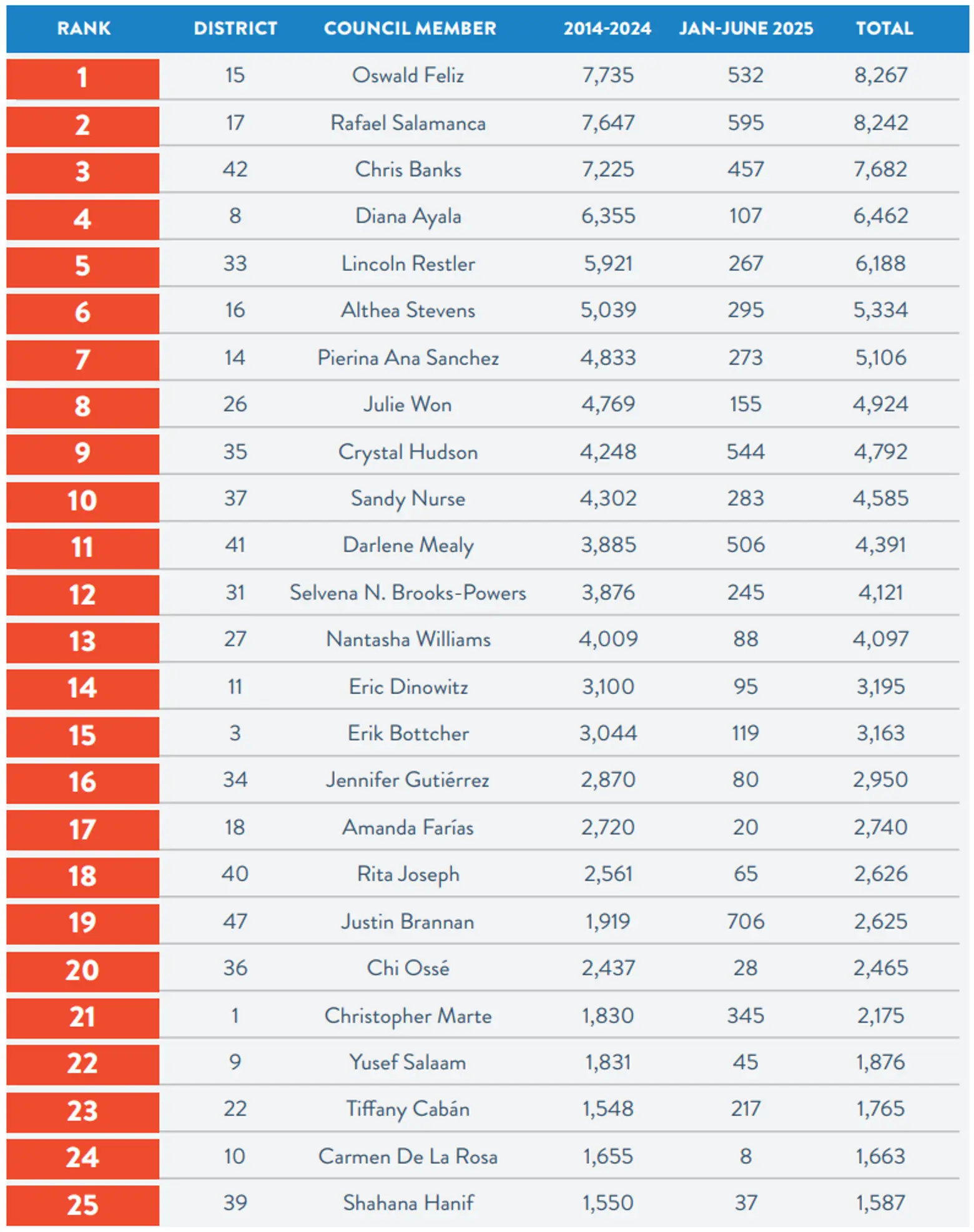
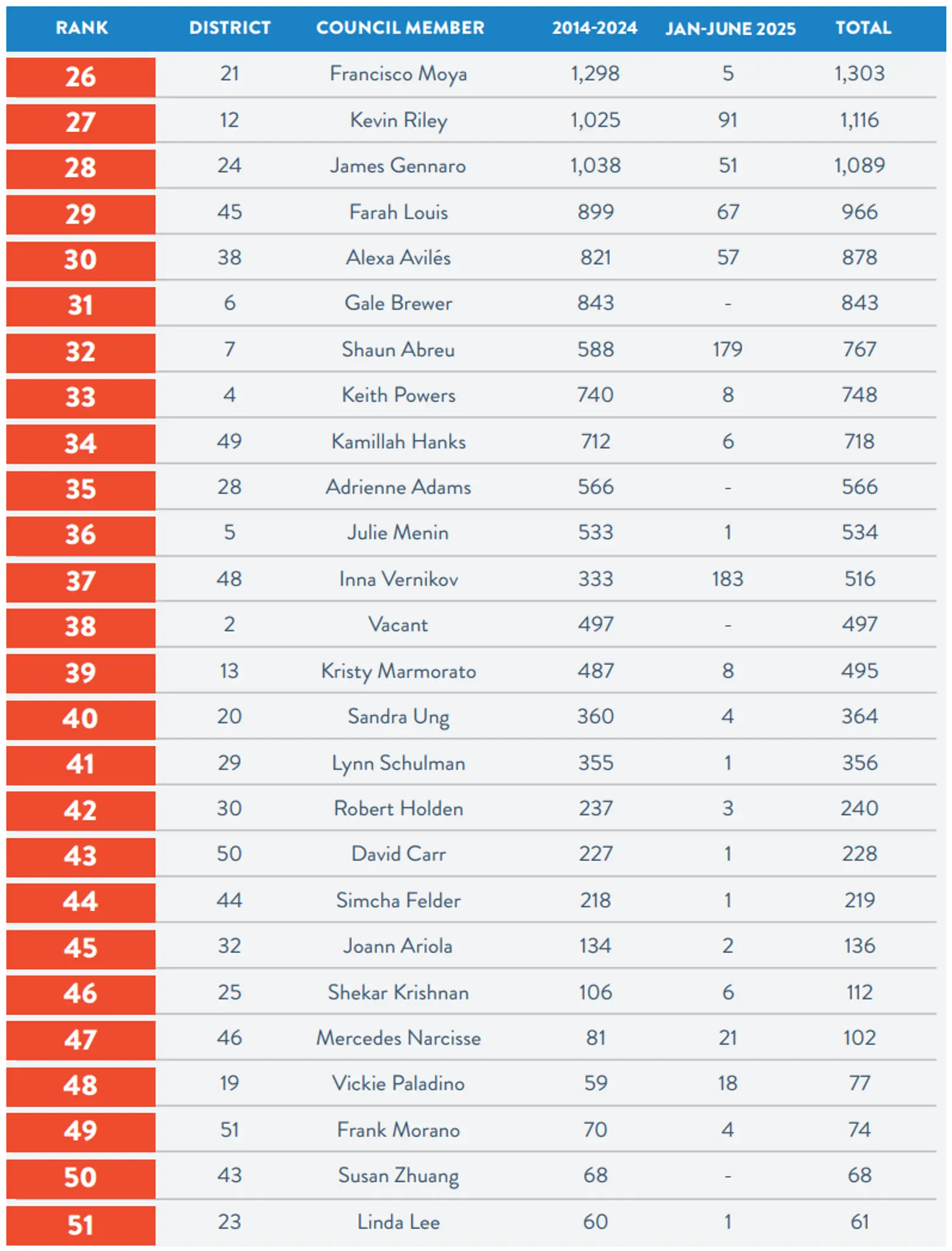
Typically released annually, the special edition of the Housing Tracker Report covers data from January through June 2025 as a way to explain the group’s support for the charter reforms.
During this period, the 10 highest-performing districts averaged 454 new affordable homes each, led by Brooklyn’s District 47, which financed 706 units in just six months.
In contrast, the 10 lowest-producing districts added just seven units combined, less than one per district on average, most likely through homeowner assistance programs. Four districts reported no new affordable housing whatsoever.
Overall, the top 10 districts accounted for 53 percent of all new affordable housing built citywide, while many others produced little to none. The report points to the city’s Uniform Land Use Review Procedure (ULURP) and the political practice of member deference, in which the council typically votes in line with the local member on land use decisions, as major obstacles to housing growth.
Projects that enter ULURP can spend more than two years in pre-certification before the public review process even begins, adding costs and uncertainty. While most housing is built as of right, nearly 19,000 affordable homes sponsored by the city’s Department of Housing Preservation and Development have undergone ULURP over the past decade, a process that slows production and discourages new development.
As detailed in the report, large swaths of Brooklyn, Queens, and Staten Island have become “no-go zones” for multifamily affordable housing, producing only about 130 affordable homes on average over the past decade.
While some low-density areas have welcomed growth along commercial corridors and near public transit, the current system allows others to stall or block new affordable housing altogether—leaving critical projects dependent on the whim of a single Council member.
The report’s release arrives as voters head to the polls to decide four housing-related ballot questions that would change the city’s land-use and affordable-housing review process.
These questions were drafted by a commission appointed last year by Mayor Eric Adams and have earned support from Gov. Kathy Hochul, Manhattan Borough President Mark Levine, the Democratic nominee for city comptroller, and other prominent officials, according to Gothamist.
Question 2 would create two accelerated land use review tracks for affordable housing, eliminate the pre-certification phase, and replace ULURP with a streamlined review managed by the Board of Standards and Appeals.
Question 3 would establish a faster approval process for small-scale housing and infrastructure projects by consolidating review periods and reducing costs for modest zoning changes.
Question 4 would create a new Affordable Housing Appeals Board, composed of the mayor, borough presidents, and the City Council speaker, with the authority to overturn unreasonable project denials that block new affordable housing.
Question 5 would modernize and centralize the city’s mapping system to eliminate costly delays caused by antiquated, paper-based processes.
Rachel Fee, executive director of the NYHC, described the measures as an opportunity for voters to “fix the broken system” that has contributed to the city’s historic housing shortage.
“For too long, just a few neighborhoods have held the responsibility of adding new housing for New Yorkers while others opt out entirely,” Fee said. “It’s time to fix the broken system that has driven us into a historic housing shortage.”
She added, “The charter reform proposals on the ballot this November will make it easier and faster to build housing—and make sure every neighborhood is part of the solution to New York’s housing crisis.”
The City Council has voiced opposition to the measures, reportedly spending $2 million in taxpayer funds on mailers, advertisements, and other campaign materials opposing the proposals, according to the NYHC.
Labor unions, civic associations, and several tenant groups have also opposed the measures, arguing that they would undermine community input on projects proposed in their neighborhoods.
Support from the mayoral candidates varies. Gov. Andrew Cuomo, running as an independent, has said he supports the measures; Republican nominee Curtis Sliwa opposes them; and Democratic nominee Zohran Mamdani has not yet taken a position.
RELATED: