Three buildings linked to New York City’s immigrant history designated as landmarks
All photos courtesy of the Landmarks Preservation Commission
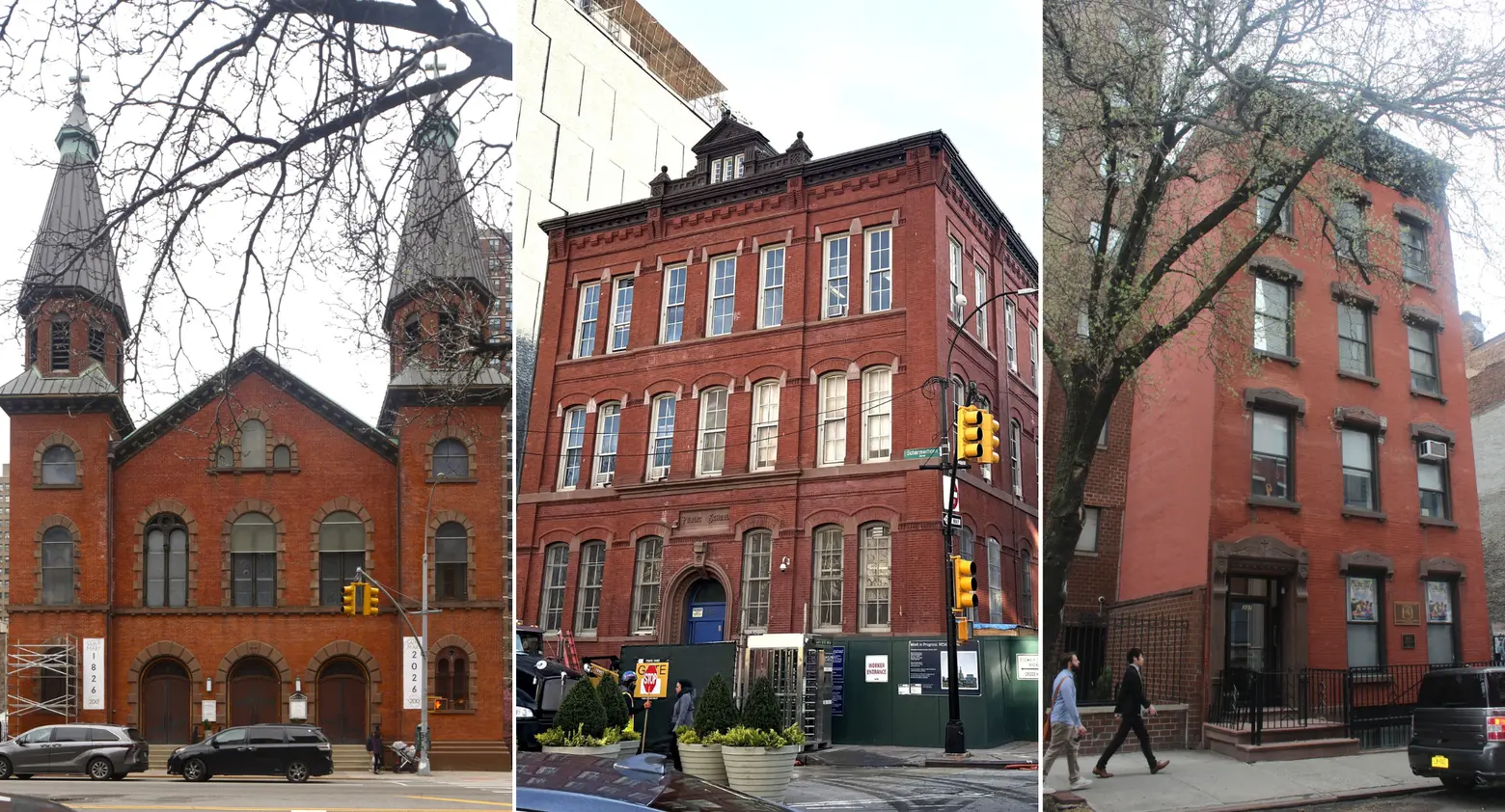
Three buildings in New York City with long histories of serving immigrant communities have been designated as individual landmarks. On Tuesday, the Landmarks Preservation Commission (LPC) voted to designate Public School 15 Annex in Downtown Brooklyn, the Church of Saint Mary on the Lower East Side, and the Lithuanian Alliance Building in Midtown as landmarks, citing their “value as part of the development, heritage, and cultural characteristics” of the city. The designations come amid a heightened crackdown on immigration under the Trump administration.
“Immigrants built New York City. Their stories live in every block, every neighborhood, every corner of the five boroughs,” Mayor Zohran Mamdani said in a statement.
“Today, I’m proud to recognize three more sites that carry that legacy forward—places that, for generations, have opened their doors to newcomers and helped define what it means to belong in the greatest city in the world.”
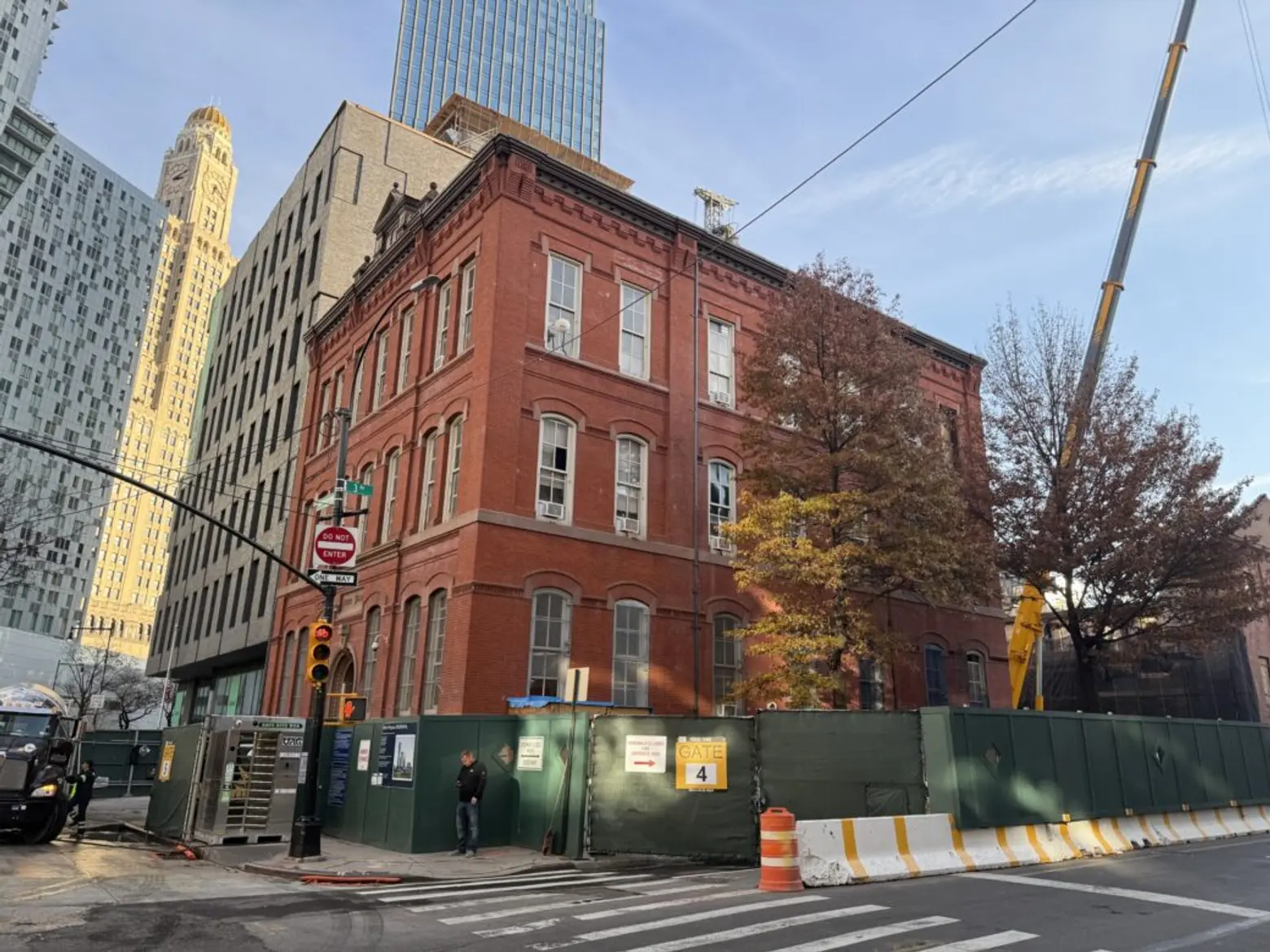
P.S. 15 Annex at 372 Schermerhorn Street was built in 1889 and designed by Irish-born architect James W. Naughton in the Romanesque Revival style with Queen Anne features. Naughton immigrated to the country as a child and later became superintendent of the Brooklyn Board of Education, during which he led the construction of more than 100 schools.
The original school building on the site was constructed in 1859 on what was previously farmland. It served as a local school until the 1880s, when overcrowding required an expansion. The annex was built in 1889, which, according to the LPC, made the school “one of the handsomest in the city.”
In the mid-1920s, the surrounding Downtown Brooklyn neighborhood was home to a largely immigrant population from Europe, including communities from Lithuania, Italy, Poland, Ireland, and the Netherlands. The school’s students reflected that diversity, as did its teaching staff, which was composed largely of immigrants or the children of immigrants.
The Girls’ Continuation School provided continuing education for children under the age of 18, who, until 1919, often had no legal right to schooling and instead entered the workforce in dangerous, low-paying jobs. Continuation schools are regarded historically as the “forefront of democracy,” expanding access to education as a right for all children.
The school also addressed the specific challenges faced by girls, including expectations to care for their families and manage households. Students learned home remedies, dressmaking, and household budgeting, while also studying bookkeeping, stenography, nursing, and other subjects requiring technical training.
Notably, the school was so successful that it opened a women’s summer school that attracted students of all ages who needed an income during the Great Depression. In the 1930s, the school also became an evening vocational school for both men and women, teaching English and vocational skills to immigrant students.
In the late 1930s, as child labor laws tightened and the Depression ended, schooling became the primary occupation for most children. As a result, enrollment at the continuation school declined, and the institution eventually closed in 1942.
The building later became a Department of Education outpatient clinic for child psychology, reflecting early efforts to incorporate mental health services into schools. In the 1990s, it housed a specialized business high school, and in 2007 it became home to the Khalil Gibran International Academy, the first English-Arabic public school in the country focused on Arabic language and culture.
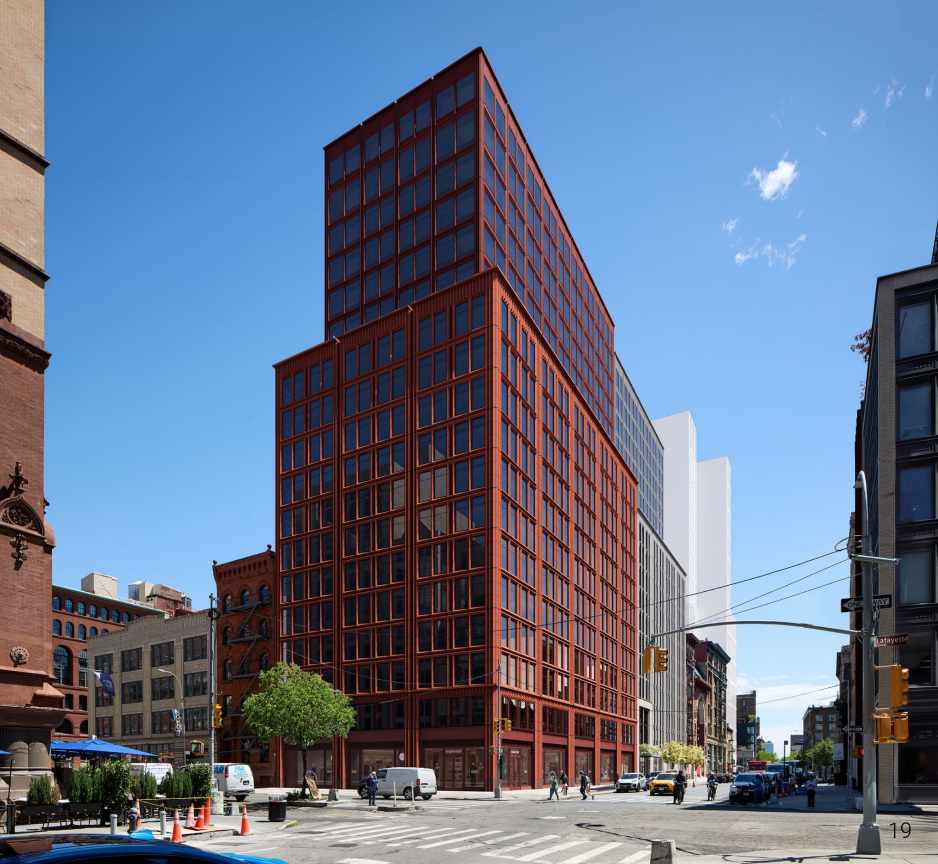
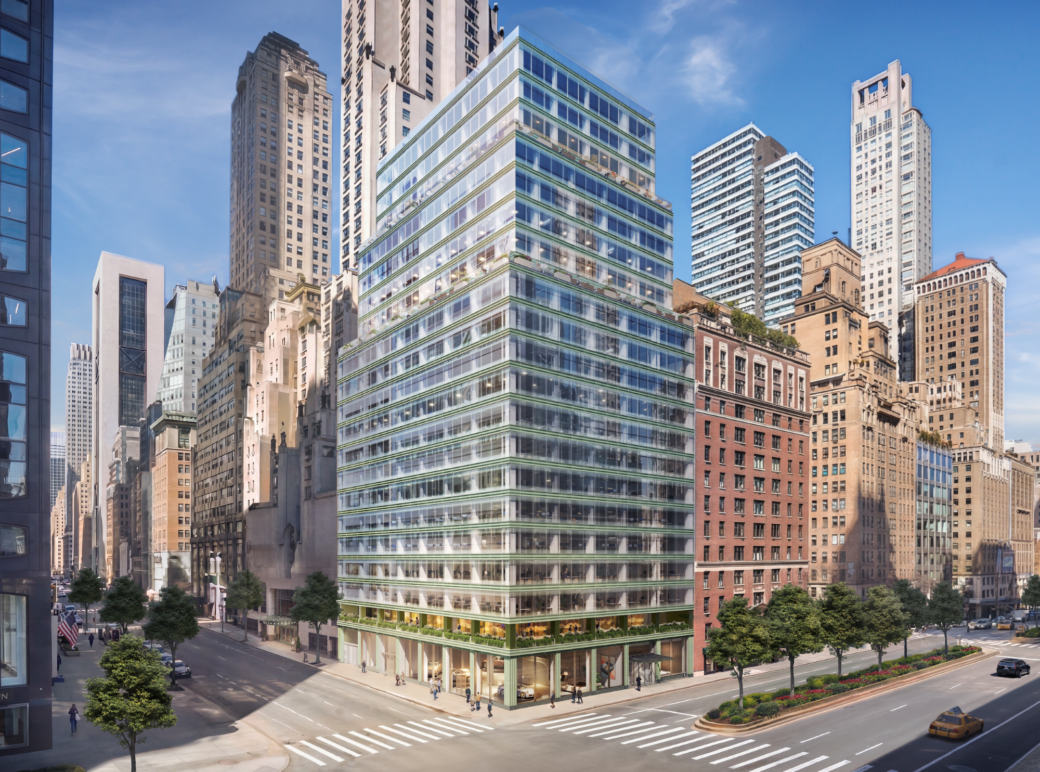
The school is part of the broader Alloy Block development, a sprawling mixed-use project of five old and new buildings that will bring 1,020 apartments, office space, retail, and two schools to the neighborhood, as 6sqft previously reported.
“For more than a century, the P.S. 15 Annex has stood in the heart of Downtown Brooklyn as a community anchor, making it well deserving of landmark designation,” Jared Della Valle, CEO of Alloy, said.
“When we first started working on this site 10 years ago, we committed to preserving the P.S. 15 Annex and over time, our connection to this historic building has only strengthened. From its wealth of original details to its ornate architecture, the P.S. 15 Annex is an important symbol of public education in NYC and deserves to be protected for generations to come,” he added.
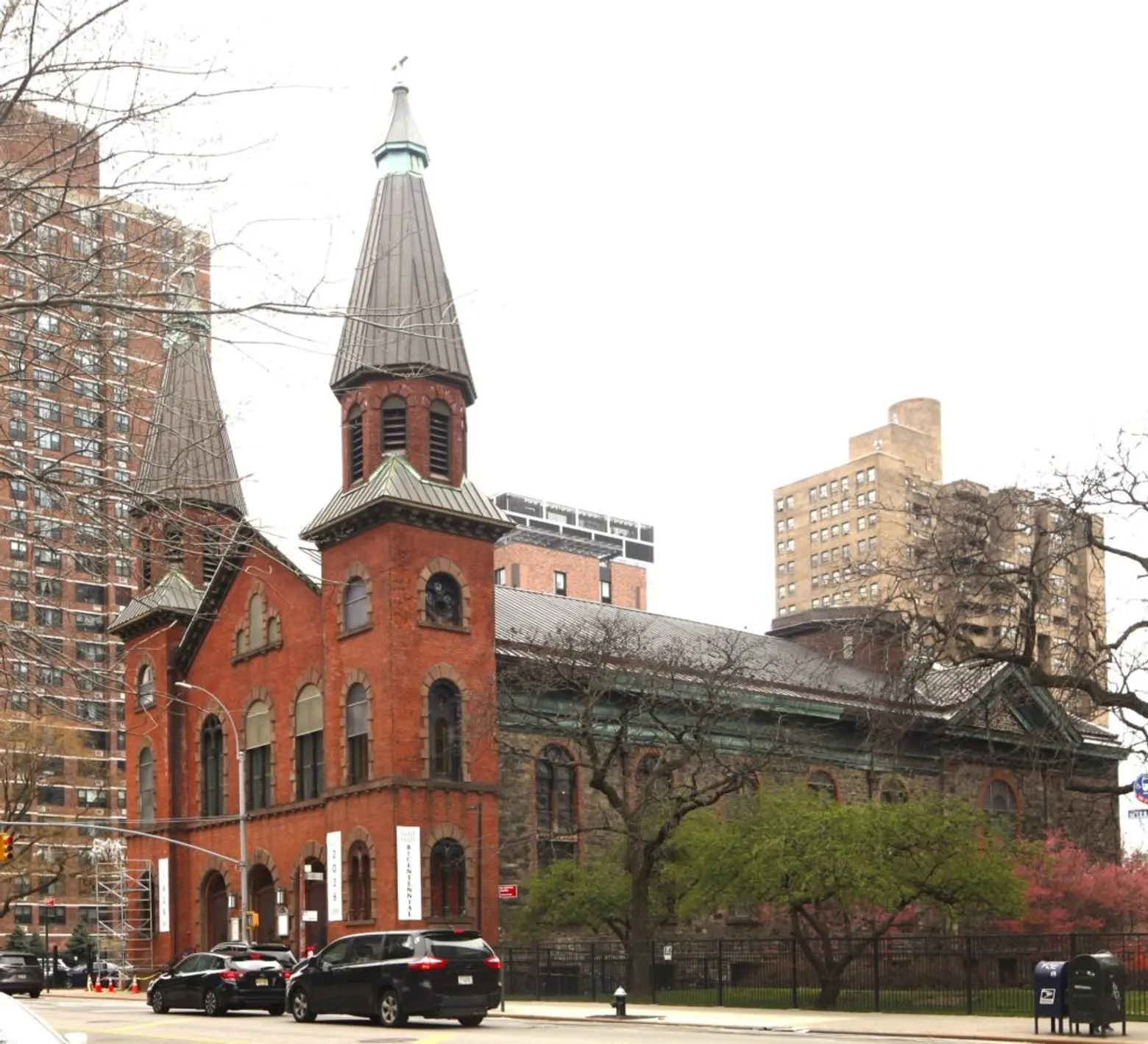
Located at 440 Grand Street, the Church of Saint Mary is Manhattan’s third-oldest Catholic parish, founded in 1826 to serve the city’s rapidly growing Irish population on the Lower East Side.
After a wave of anti-Catholic and anti-Irish sentiment led to the destruction of the parish’s first home in a former Presbyterian church, the current building, completed in 1933, became the Lower East Side’s first Roman Catholic church building and is the second-oldest existing Catholic church building in the borough.
In 1864, as the parish continued to grow, it commissioned renowned cathedral architect Patrick Charles Keely, an Irish immigrant, to expand the church and redesign its facade. Though he lacked formal architectural training, Keely went on to design more than 600 churches across the northeastern United States over the course of his career.
Less than a decade later, in 1871, further growth prompted another expansion, this time designed by architect Lawrence J. O’Connor.
The church’s brick facade, original fieldstone side walls, dual bell towers, and late 19th-century stained glass make it a striking example of Romanesque Revival architecture and a lasting reminder of NYC’s early Catholic history and the neighborhood’s immigrant heritage.
Today, it continues to serve as an active community institution for newer generations of Catholic immigrants, including many from Spanish-speaking countries.
“St. Mary’s Church tells the story of Lower Manhattan. It is one of NYC’s earliest Catholic parishes, built by and for immigrants, and it has remained a vital institution on the Lower East Side for nearly two centuries,” Council Member Christopher Marte said.
“St. Mary’s reflects the history, resilience, and diversity of our neighborhood. This designation is a recognition that this history matters and must be preserved.”
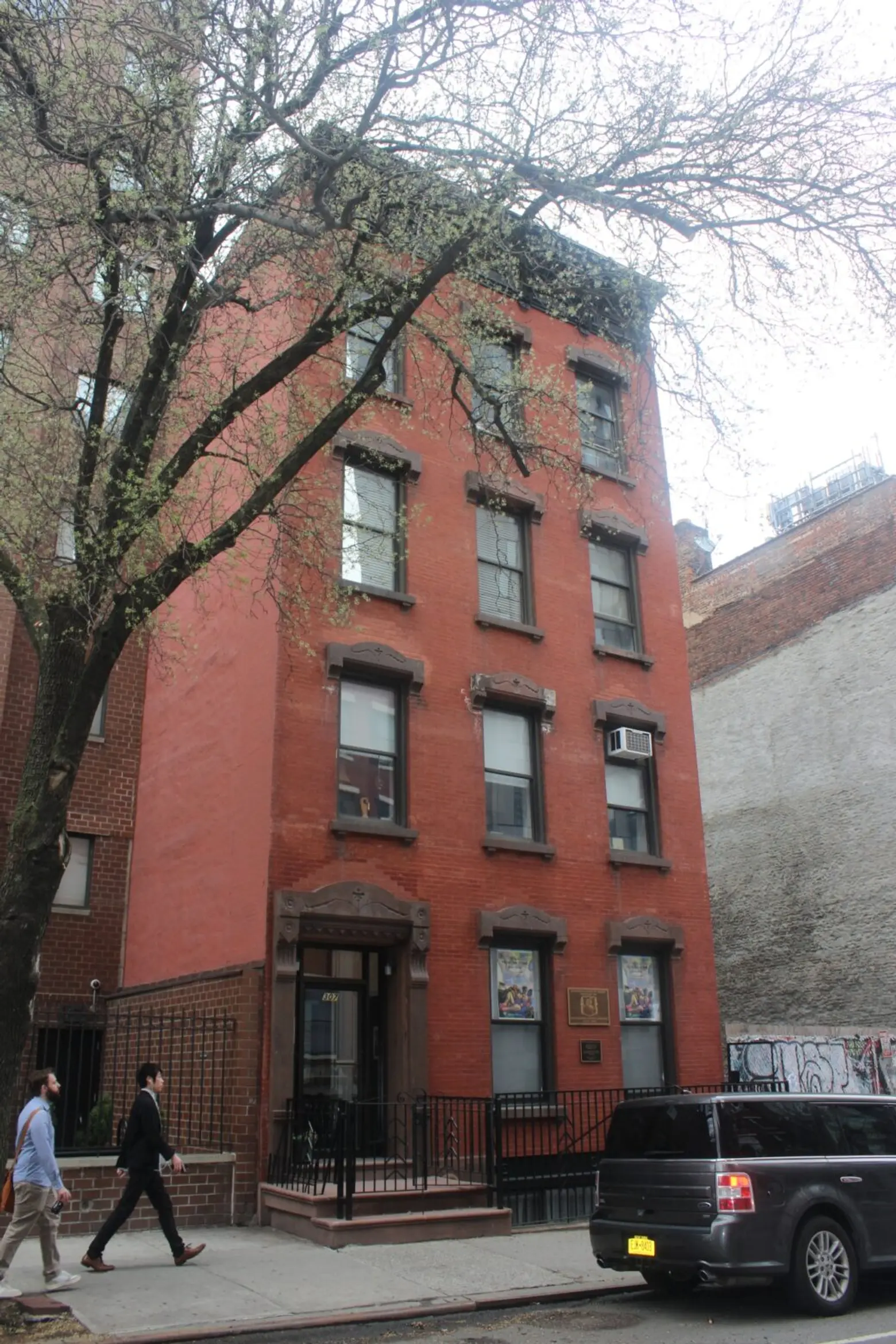
Located at 307 West 30th Street, the Lithuanian Alliance Building was constructed in 1876–77 in the Neo-Grec style by James C. Springstead. The Lithuanian Alliance has occupied the building for more than a century, supporting the area’s historic Lithuanian community through services including insurance programs, health benefits, and loans.
Like many fraternal organizations of the era, the Alliance was founded to help fellow immigrants navigate the challenges of life in the United States. In 1910, the group purchased the West 30th Street property, citing its proximity to Ellis Island. From 1910 to 1971, the building housed the printing operations of Tėvynė, the Alliance’s weekly newspaper covering Lithuanian news for immigrants.
The building was altered in 1976 as part of a modernization plan that painted the facade white and added metal panels at the ground level. In 2018, those panels were removed under the guidance of preservation architect Dean Koga, restoring the building’s original features. In 2022, the property was listed on the National Register of Historic Places.
“Lithuanian Americans in New York love and cherish their only Lithuanian-owned building in the greater NYC area. Being recognized by the LPC is a great honor and one that recognizes our efforts to preserve the building as it was when we acquired it in 1910,” Danius Glinskis, a Lithuanian Alliance of America board member, said.
“Landmark status will strengthen our efforts to continue to preserve our building for the Lithuanian community far into the future.”
RELATED: