Mamdani unveils revamped Vision Zero plan with 100+ policy goals
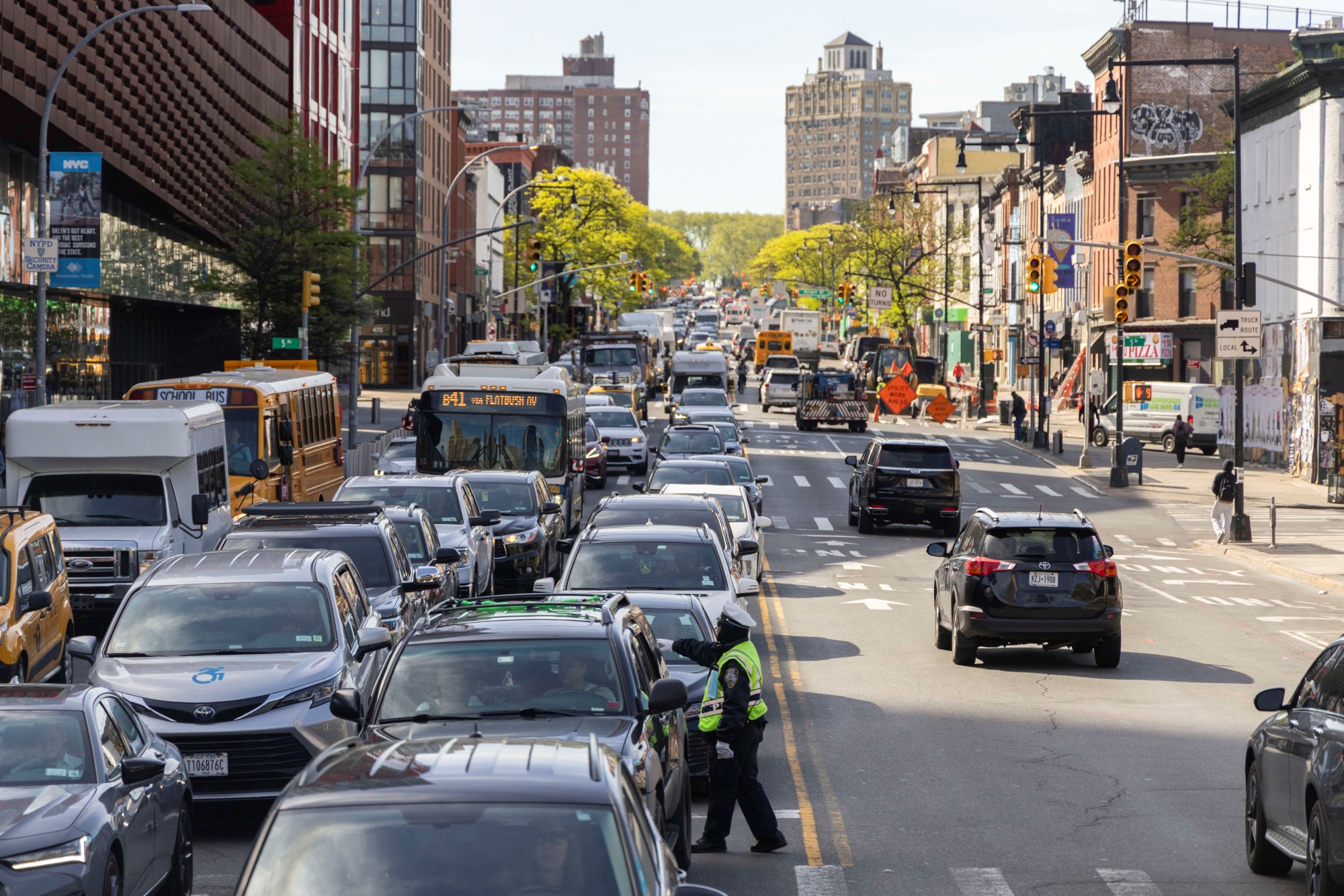
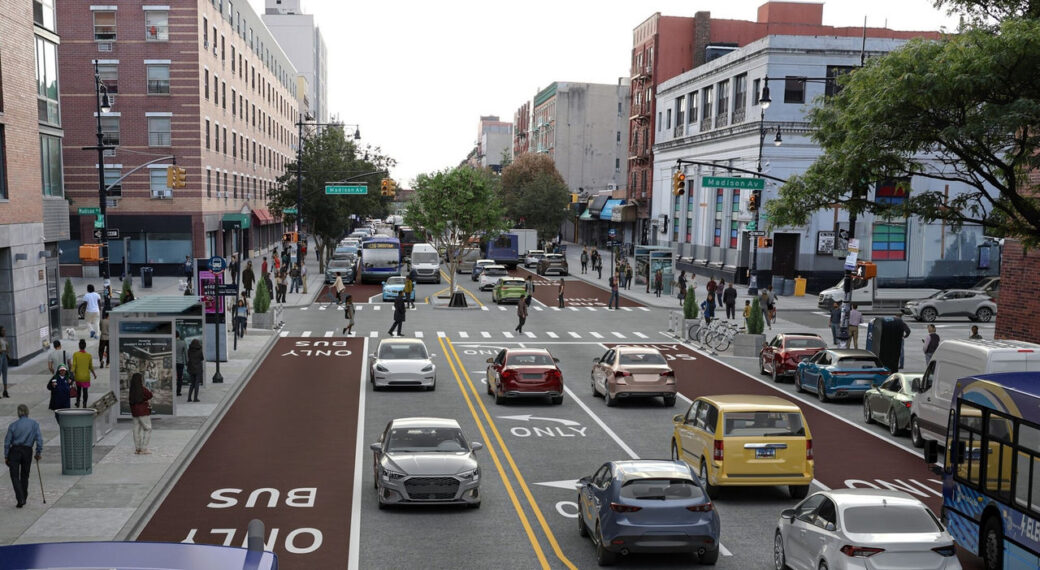
Vision Zero is getting an overhaul. Mayor Zohran Mamdani on Tuesday released “Vision Zero Reimagined,” a plan that builds on the original initiative’s goal to eliminate traffic deaths and serious injuries but introduces 100 policy goals for the next decade. The safety commitments are organized around eight “big-picture goals,” including pedestrian-only zones, safety redesigns for nearly 200 untreated Vision Zero priority corridors citywide, and stronger enforcement against reckless drivers.
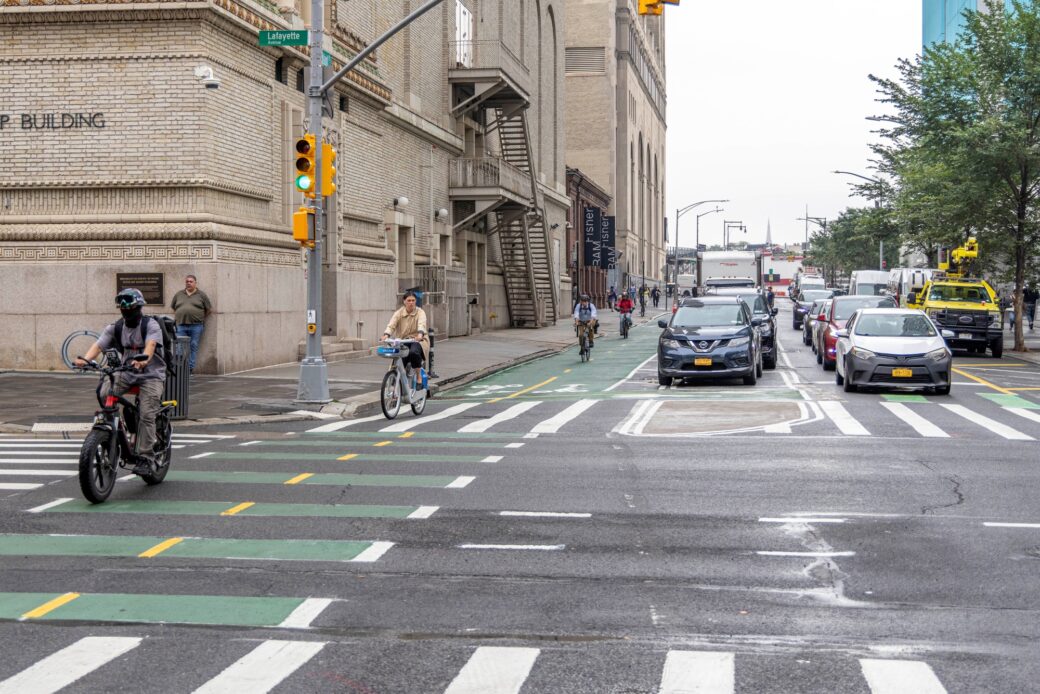
Since introduced by Mayor Bill de Blasio in 2014, Vision Zero in New York City has led to several major changes aimed at making the city’s streets safer. The program has led to significant policy changes, including lowering the citywide speed limit from 30 mph to 25 mph, installing 3,300 speed bumps and speed cushions, and creating 600 miles of bike lanes.
These changes have contributed to a 16 percent decrease in traffic fatalities between 2014 and 2025, according to the city, with the average number of annual deaths falling from 287 to 241.
Since taking office, Mamdani has introduced policies that complement Vision Zero’s goals, including using Sammy’s Law to lower the speed limit to 15 miles per hour in 800 school zones, as announced in March. The mayor has also advanced street-safety projects, including bike lane upgrades and daylighting at intersections.
Still, the Mamdani administration believes more needs to be done. “Vision Zero Reimagined” expands on existing commitments while introducing additional policies aimed at improving street safety. The comprehensive plan involves 19 city agencies, including the Department of Transportation and the NYPD.
For example, the revamped Vision Zero initiative would expand Sammy’s Law to lower speed limits to 20 mph across entire neighborhoods, rather than just in school zones.
The plan would also make at least 1,000 intersections safer each year through hardened daylighting, which replaces parking spaces that block visibility at intersections with physical barriers, or other “better treatments.”
Under former Mayor Eric Adams, the DOT opposed a similar measure introduced by the City Council in August 2025 that would have banned vehicles from parking within 20 feet of crosswalks and added daylighting features, such as planters and bike racks, to improve sight lines.
Previously, the DOT had committed to daylighting 1,000 intersections annually using signs rather than hard infrastructure, according to amNY.
The plan also calls for implementing the Super Speeders program, which was authorized by the state legislature this year and would require the city to install speed-limiting devices in the vehicles of repeat reckless drivers.
Other measures targeting dangerous drivers include supporting the passage of a proposed “Drugged Driving Bill,” which would allow prosecutors to charge drivers who use drugs that impair their ability to drive. The plan also calls for legislation that would allow the seizure of license plates from reckless drivers and establish higher penalties for repeat offenders.
Though street safety has improved since 2014, the city is still far from reaching its goal of eliminating traffic deaths and serious injuries. After a series of hit-and-run crashes killed four New Yorkers in a single week late last month, street safety advocates staged a “die-in” outside City Hall, calling on Mamdani to release his first Vision Zero plan.
At least 18 cyclists have died so far this year, up from 10 during the same period in 2025, according to Gothamist. Pedestrian deaths, meanwhile, are down, with 58 fatalities so far this year compared with 70 during the same period last year.
While recognizing Mamdani’s progress on bus lanes, bike projects, street-safety upgrades, and other pedestrian-safety initiatives, street safety advocates were beginning to lose patience as they awaited the release of the mayor’s broader Vision Zero plan.
Last month, Furnas released a statement titled “Where is Mayor Mamdani’s Vision Zero Plan?,” urging the mayor to release his version of the plan, which is typically published at the beginning of each new administration.
“Too many New Yorkers are being killed and injured to not yet know how the new mayor will shape Vision Zero in his administration,” Furnas said. “Nearly one in three New Yorkers killed in the last six months died on a known-dangerous Vision Zero Priority Corridor, but City Hall has not yet laid out their whole-of-government street safety strategy.”
The NYPD’s role in Vision Zero has also come under scrutiny as the department’s enforcement against reckless driving has declined sharply since the pandemic. In 2019, officers issued 642,000 moving violations across seven Vision Zero categories. By 2025, that number had dropped to 379,000, a 41 percent reduction, according to Streetsblog.
Similarly, in 2019, officers issued 81,612 tickets to drivers who failed to yield. By 2025, that number had fallen to roughly 42,000, nearly half as many as in 2019.
In a statement to Streetsblog, an NYPD spokesperson said the department has shifted its focus toward micromobility riders, who account for a small percentage of crashes and an even smaller share of pedestrian injuries.
“The department’s enforcement strategy adapted to address the lethal challenge of new e-mobility devices,” the spokesperson said. “In 2019, e-bikes, e-scooters, and mopeds were a relatively limited component of the city’s traffic-safety problem, accounting for seven fatalities.”
“Following the pandemic—and changes in law, policy, and transportation patterns—the city experienced a significant increase in motorized two-wheeled devices,” they added. “Since then, we have seen a rise in e-scooter, and e-bikes conditions with triple-digit-percent increases, so enforcement has shifted to address those issues.”
RELATED: