
Amtrak reveals first renderings of the new Penn Station
Renderings courtesy of PAU and Penn Transformation Partners
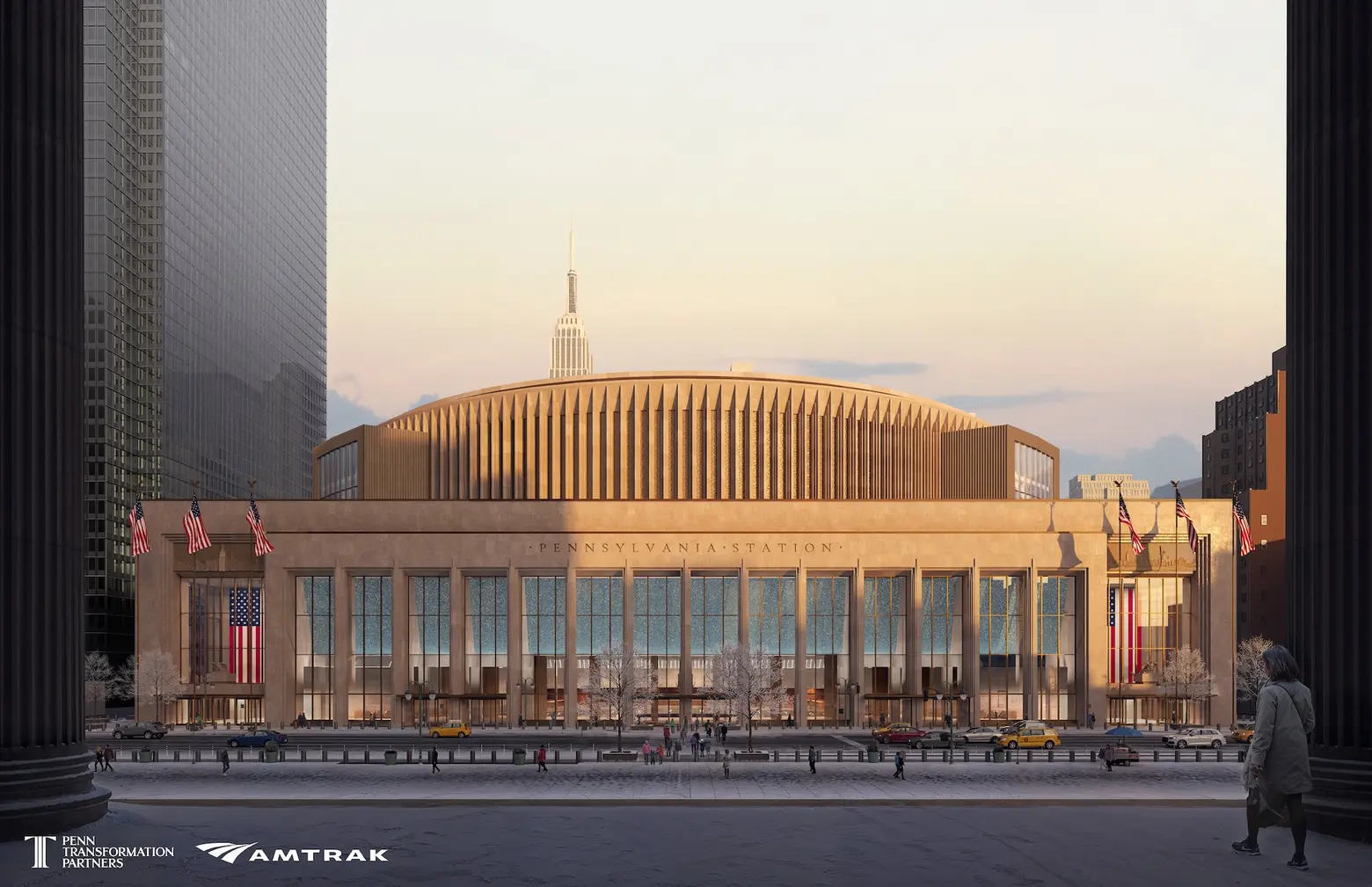
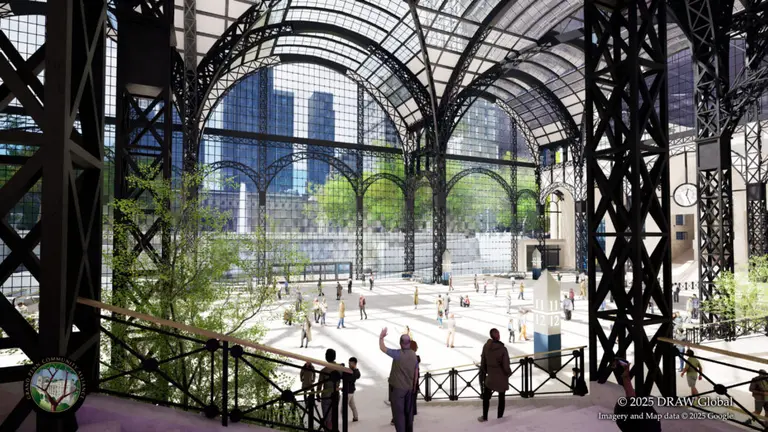
A few weeks after announcing the master developer for the redevelopment of Penn Station, Amtrak released the first renderings of the project on Monday. Penn Transformation Partners (PTP), a joint venture led by Halmar and Skanska, is leading the long-awaited redesign of the detested Midtown commuter hub, which aims to transform the station from cramped, dark, and overcrowded into a modern, light-filled civic landmark that can serve 600,000 daily commuters. The overhaul could cost $8 billion; construction is expected to begin late next year.
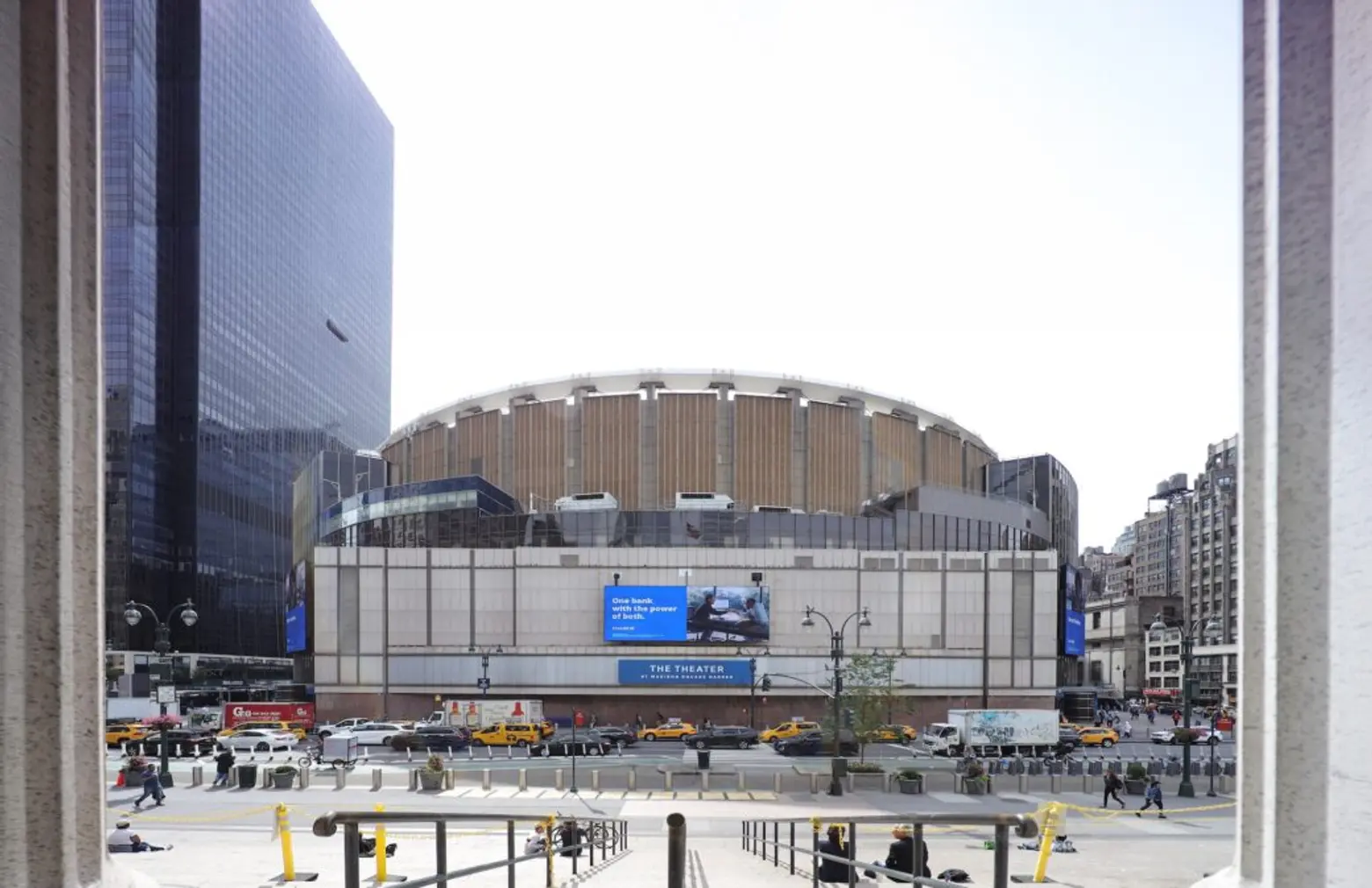
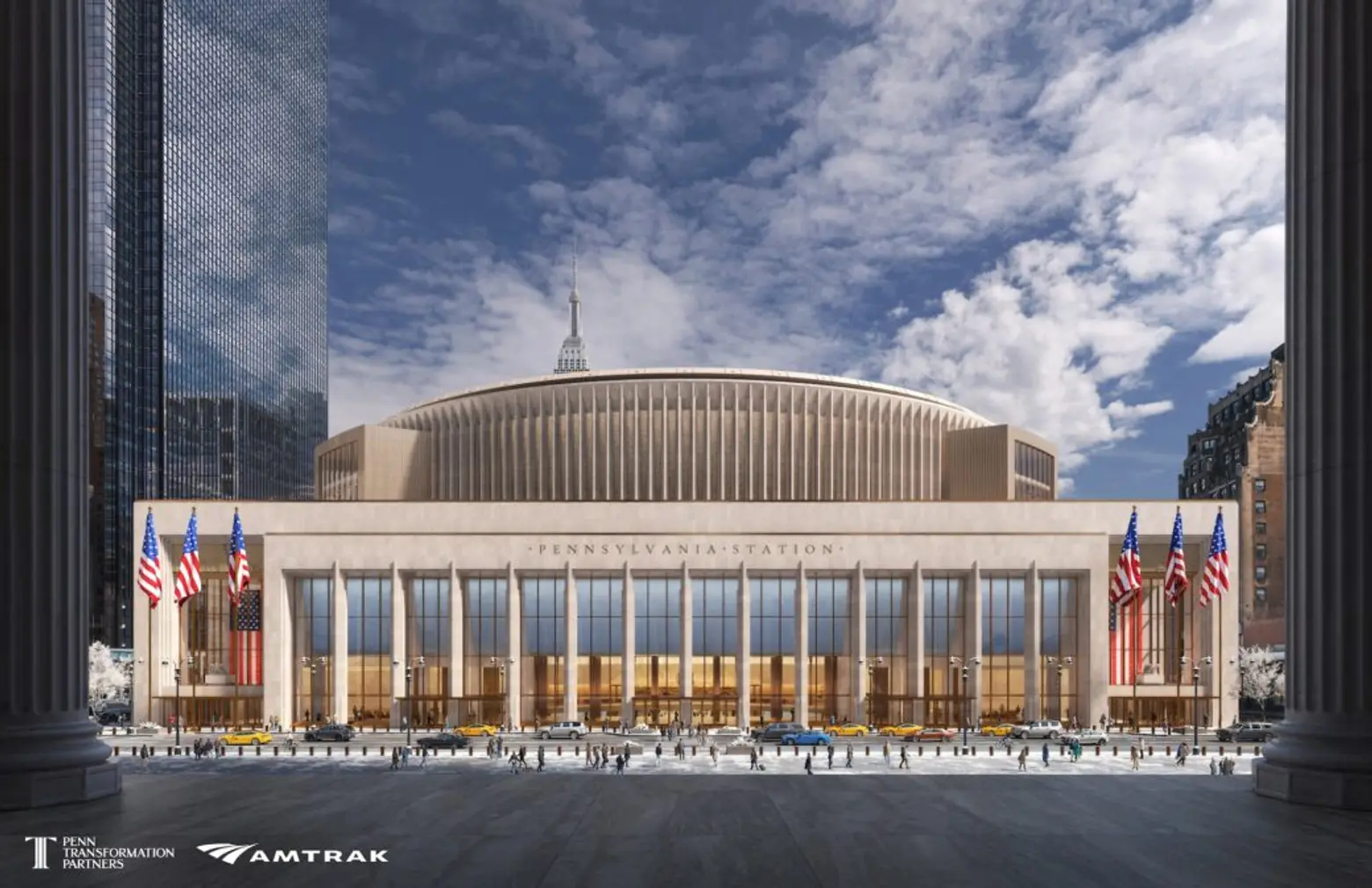
Designed by Practice for Architecture and Urbanism (PAU), the new train hall references the architectural legacy of the original Penn Station, designed by McKim, Mead & White and demolished in the 1960s, and the Farley Building across 8th Avenue.
Rather than demolishing blocks to relocate Madison Square Garden and build a new station, the design preserves much of the existing structure through “surgical reconstruction paired with radical thinking,” according to PAU.
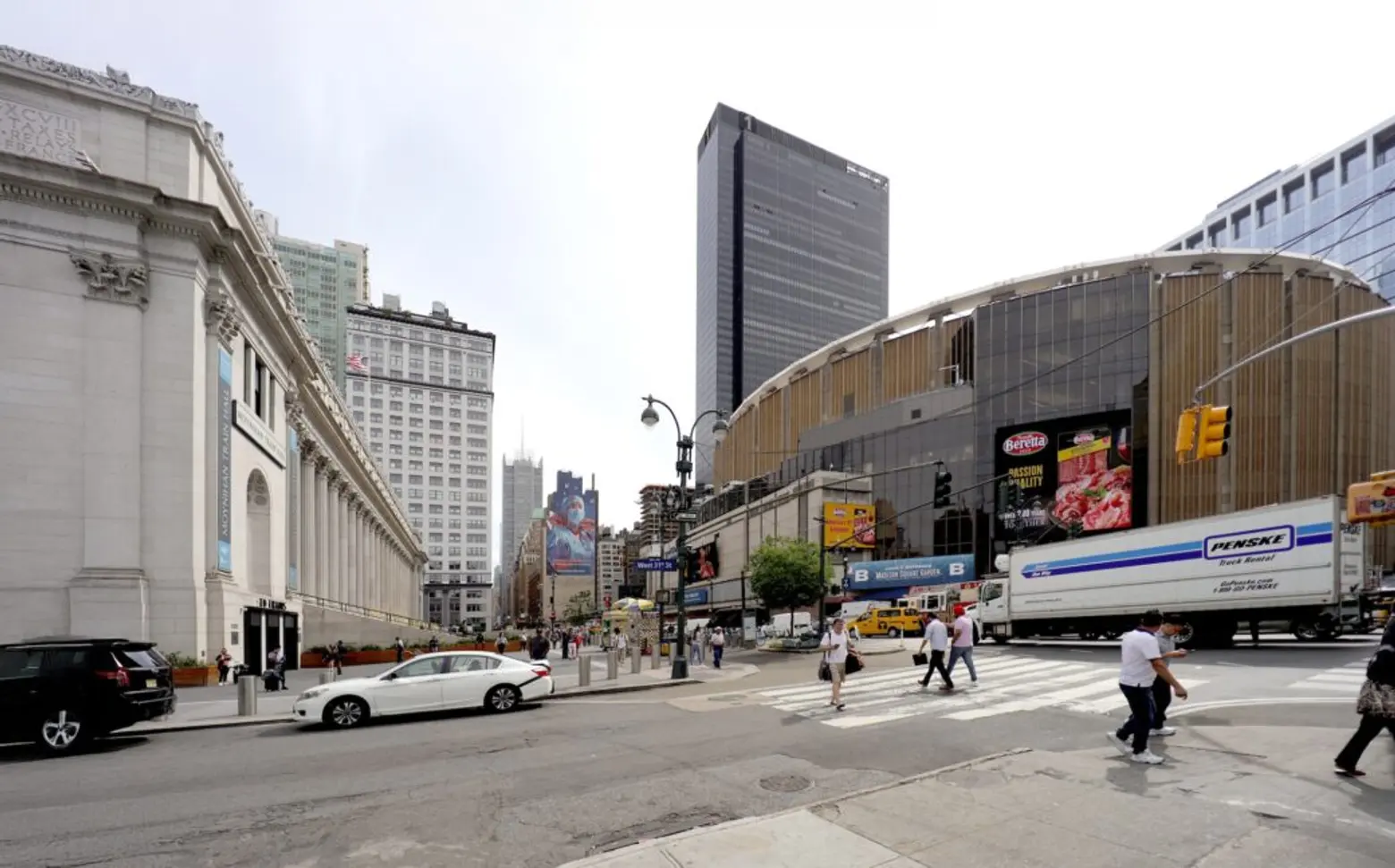
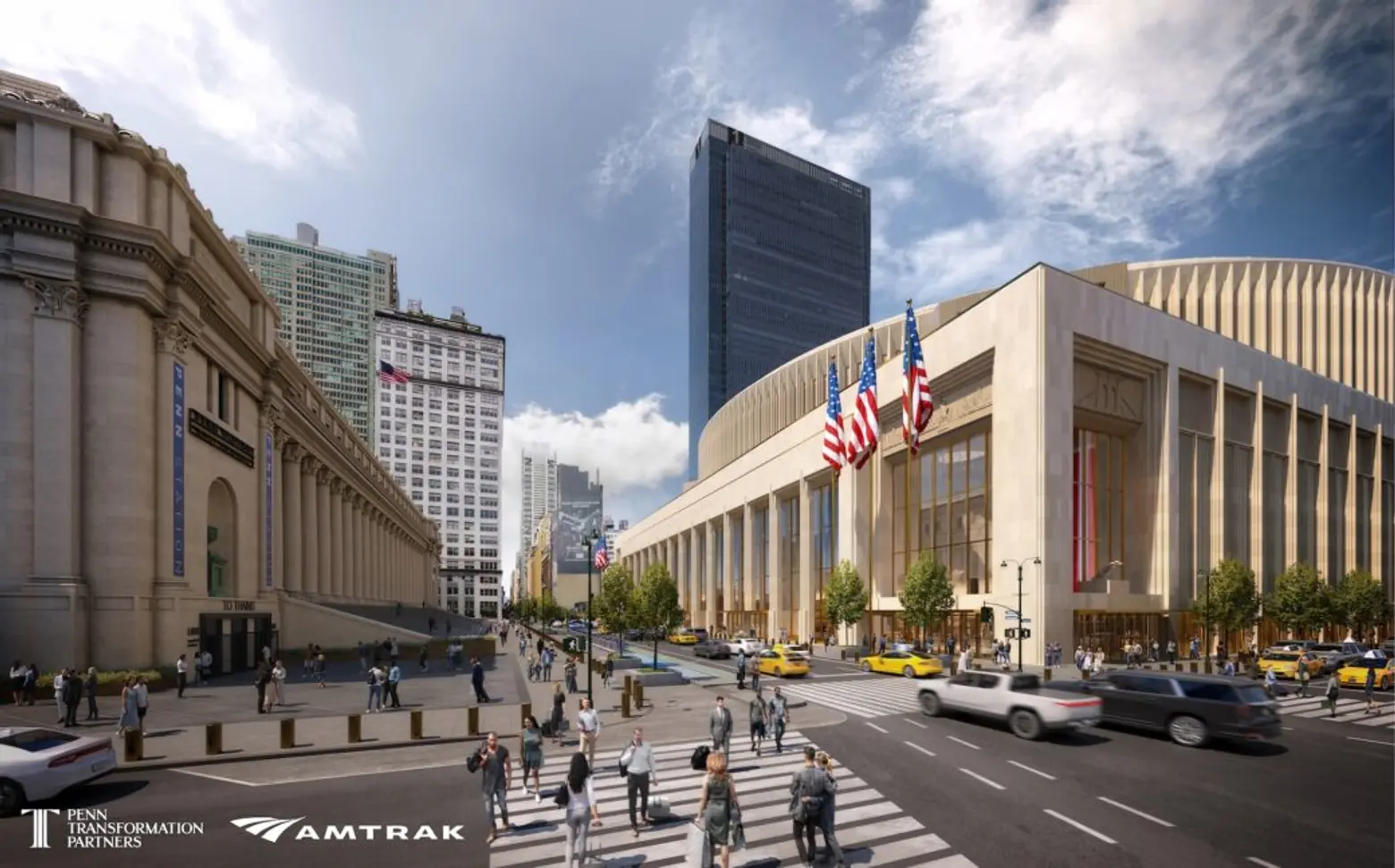
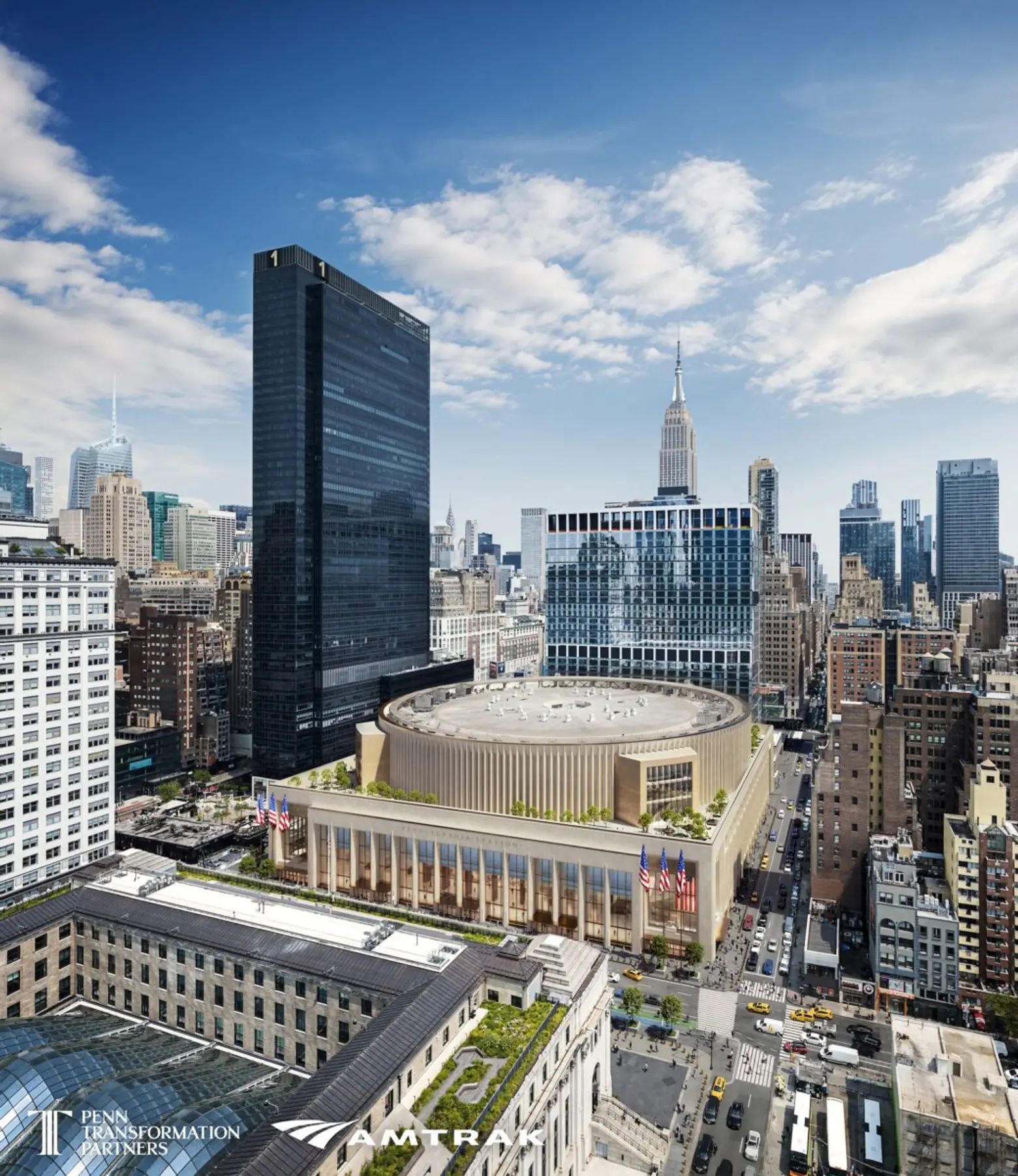
The project uses structural elements of MSG in the new building. Existing columns will become a series of stone entry porticos, and the arena’s mast columns will be clad in ribbed bronze and incorporated into the train hall’s interior.
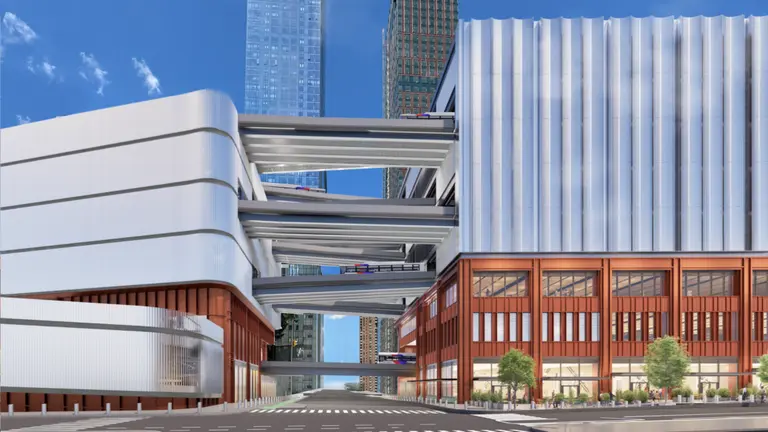
A full block square structure will be built around Madison Square Garden, stretching from 31st Street to 33rd Street and from 8th Avenue to the west side of the taxiway. The plan calls for a 450-foot colonnaded facade, inspired by the city’s Art Deco architecture and classical civic style of buildings in D.C., to replace the Infosys Theater at MSG and open onto 8th Avenue.
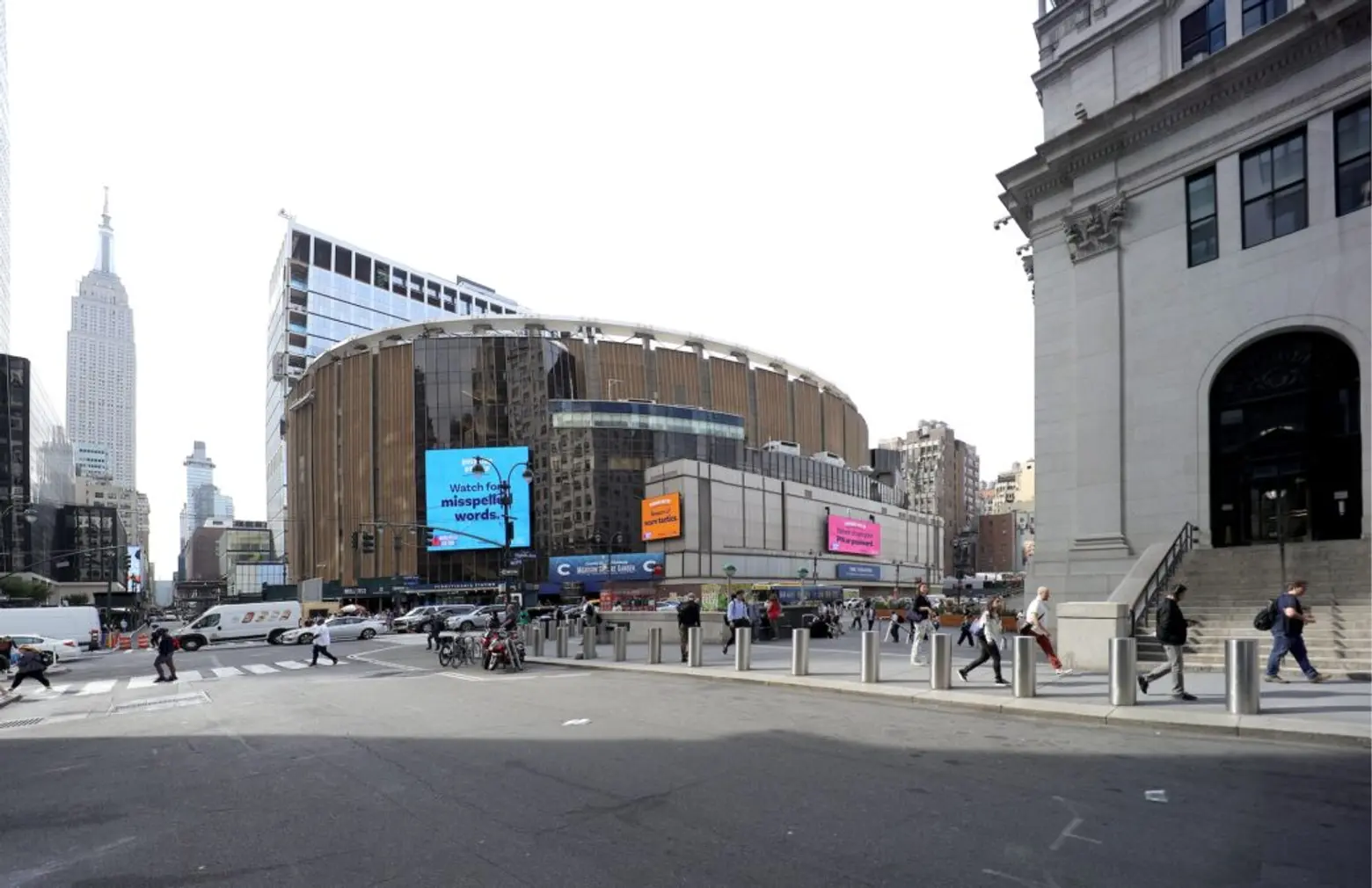
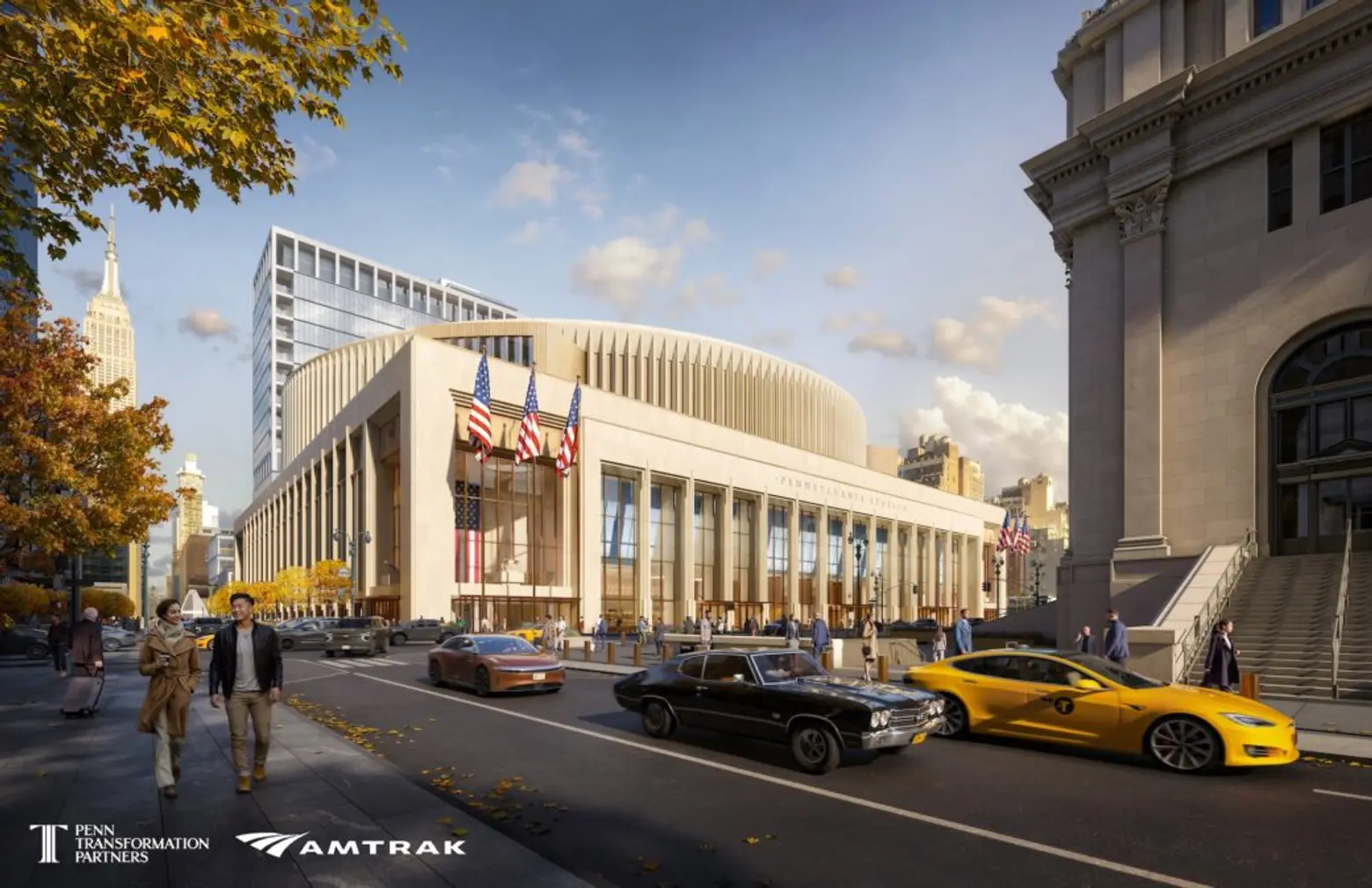
The facade will combine “stone, bronze, layered entablatures, and expansive glazing to create a civic facade that is both porous and monumental,” according to the architects.
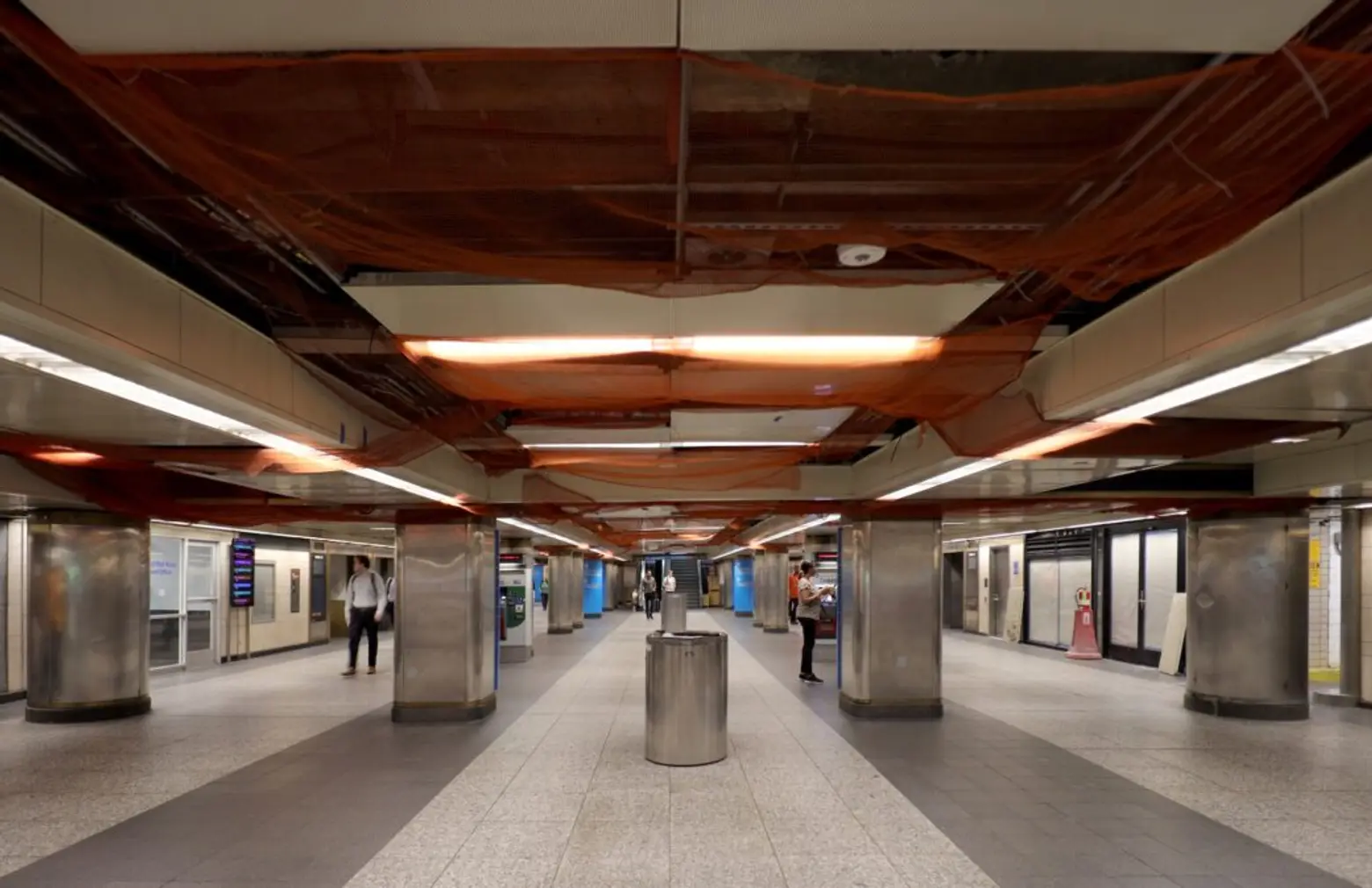
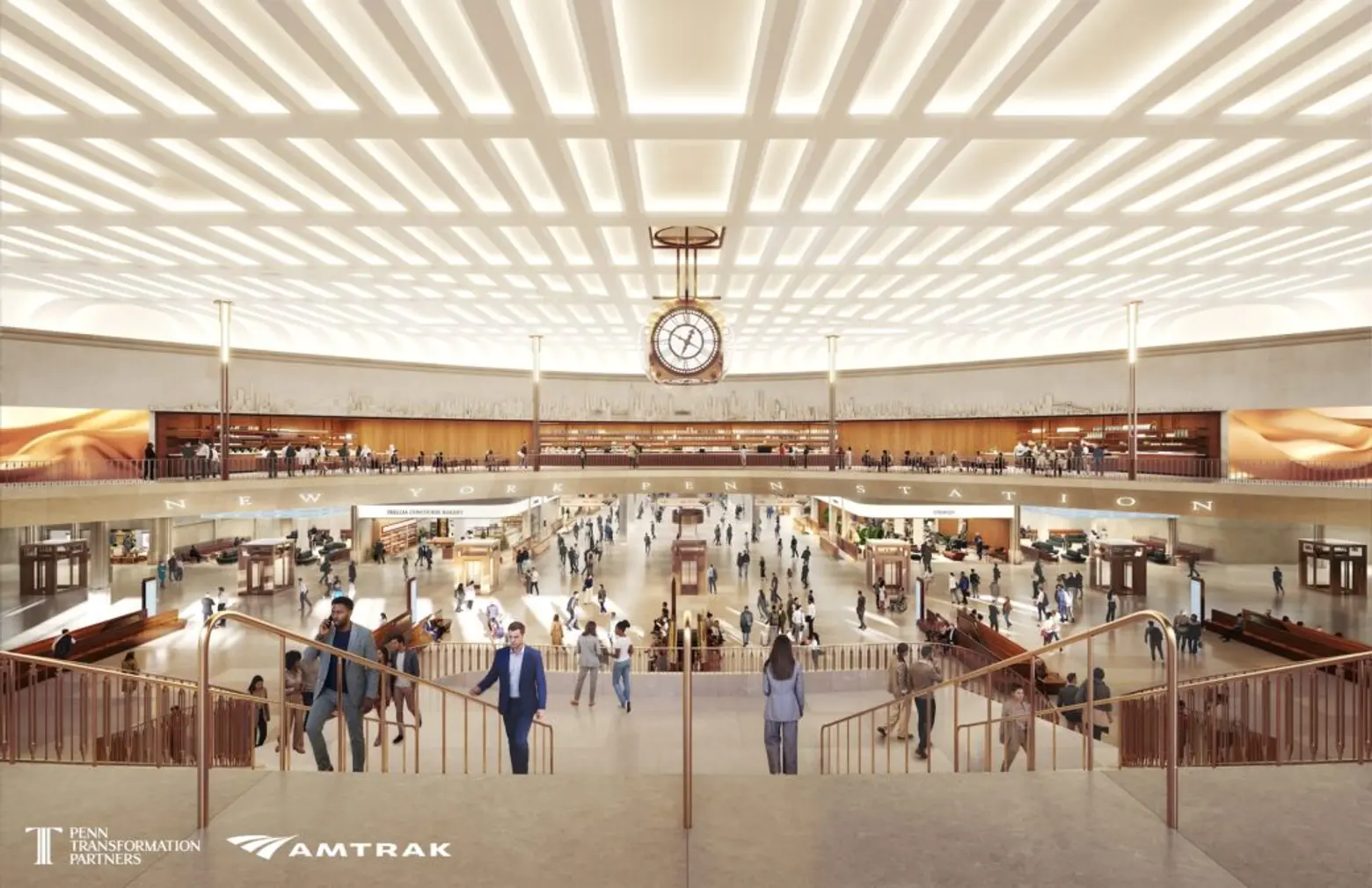
Inside, the station is organized around a 50-foot-tall train hall with light-filled public spaces, including shops, restaurants, bars, and waiting areas, integrated throughout. A sculptural stair connects the street to the single-level concourse level, which will include widened corridors, ceiling heights of at least 20 feet, and upgraded public amenities.
The train hall’s coffered street grid reflects the Manhattan street grid and a blue-tiled wall that represents the Hudson River, according to Curbed. As Gothamist first reported the new renderings last month, a plaque with “President Donald J. Trump” is etched into marble with a presidential seal next to the new 8th Avenue entrance.
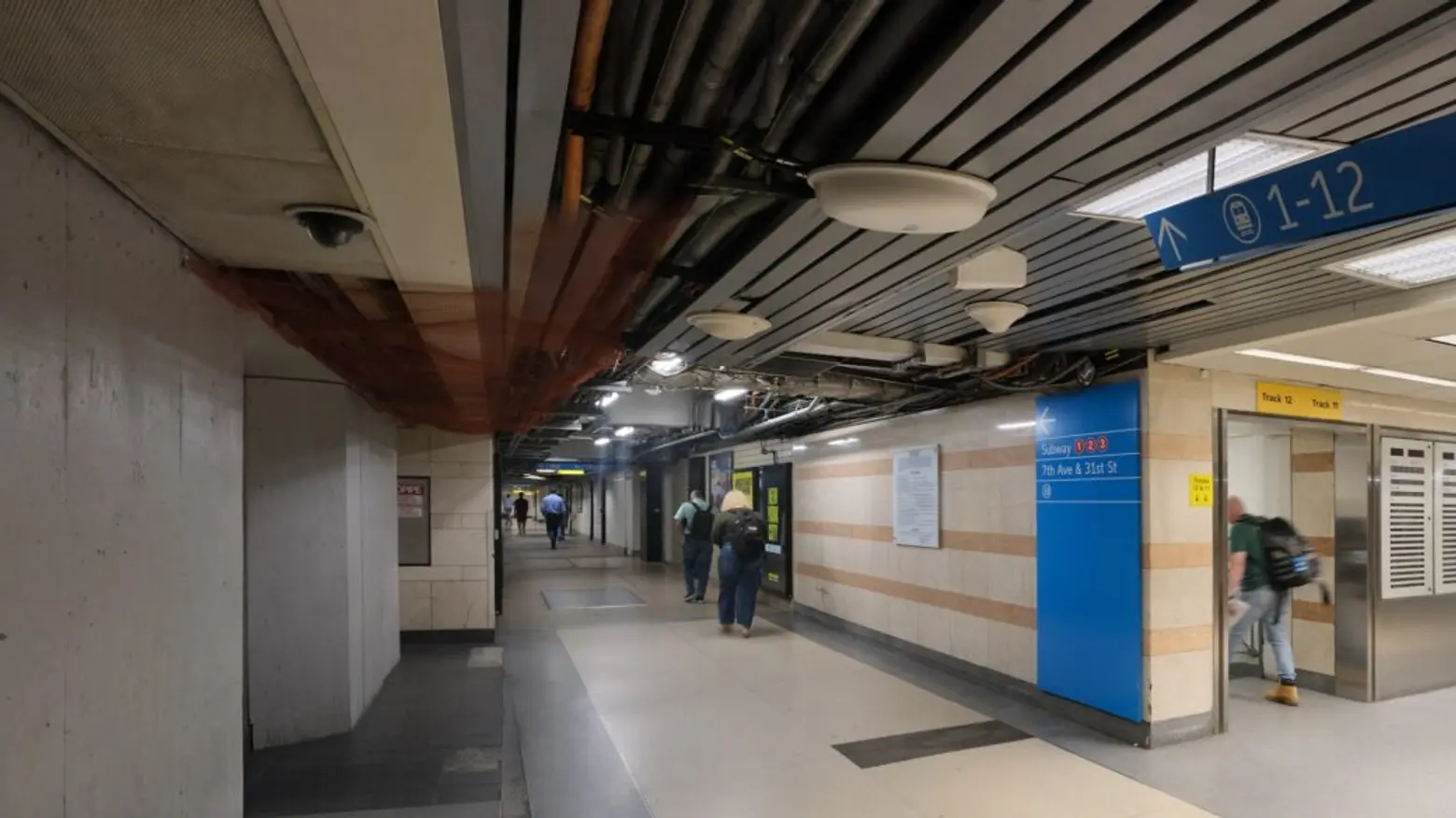
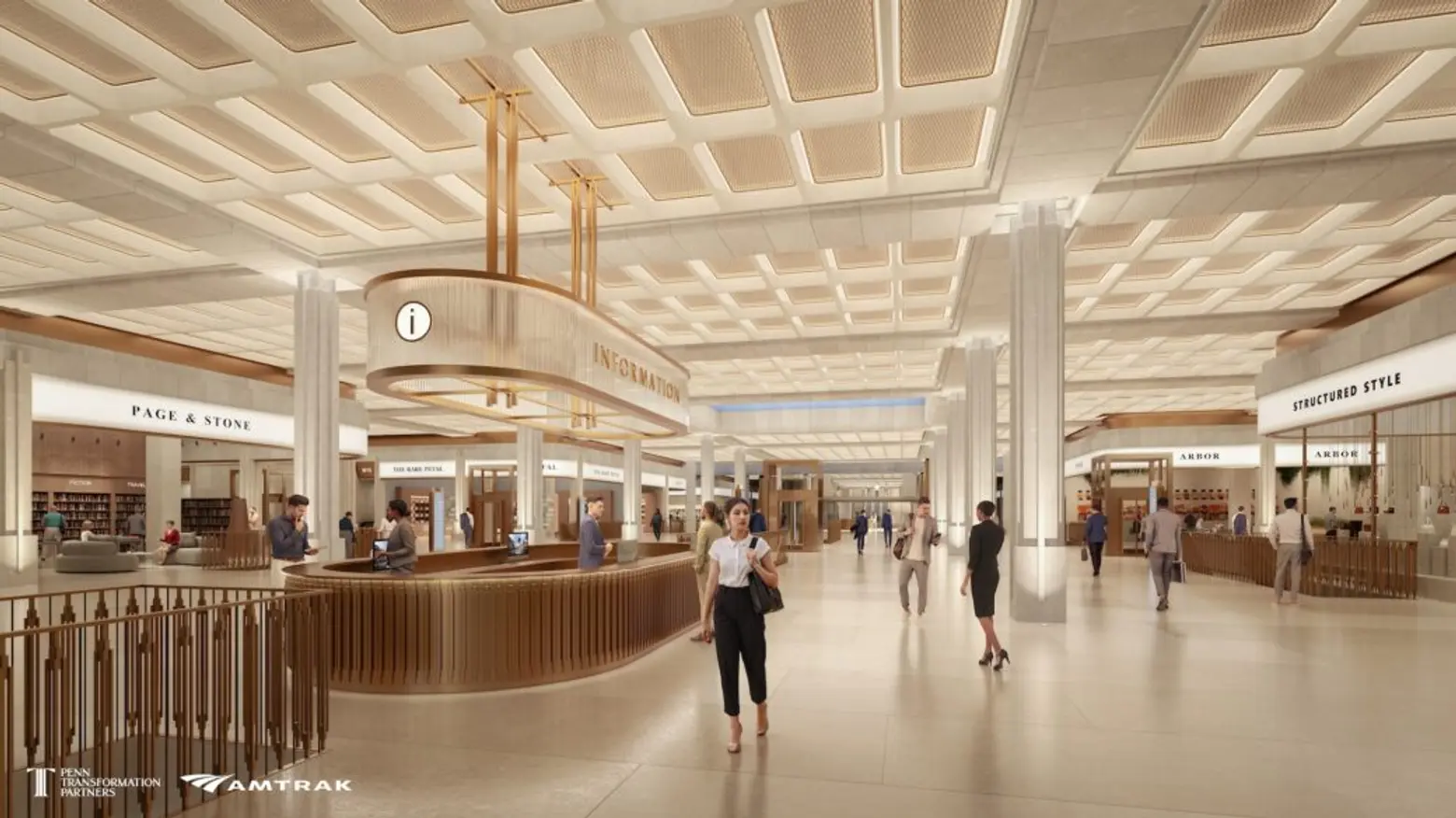
The project will also expand track capacity, including possibly through-running on the regional rail network to increase efficiency.
“After more than 30 years of thinking about and working on the seemingly intractable problem of Penn Station, it is beyond thrilling to unveil this ambitious vision for a re-imagined civic icon,” Vishaan Chakrabarti, founder of PAU, said.
“Our design not only creates more capacity and improves operations for the busiest transit hub in the Western hemisphere, but it also will create – once again – a gateway to New York that is befitting our great city and will bring a sense of dignity to the experience of train travel to and from New York.”
Starting this summer, Amtrak will start the community engagement process and allow for public comment on the plan. According to Amtrak and the U.S. Department of Transportation, construction is scheduled to begin in 2027. The project team includes Skanska, HNTB New York Engineering, Vornado, Severud Associates, and Langan.
The overhaul could cost between $7 billion and $8 billion. According to Amtrak, the project will be funded through federal grants to Amtrak, federal loans, private financing, and equity raised by PTP. Penn Station would remain in operation throughout construction, which could last about six years.
Last year, the federal government kicked out the MTA from the project and gave it to Amtrak to take over. As 6sqft previously reported, the agency had come up with its own plan to replace Penn Station with a single-level facility, but progress was delayed for years.
“We named this project Penn Station Transformation for the exact reason depicted in these renderings; a world-class, beautiful, and modern train station is coming to New York City,” Andy Byford, special advisor to the Amtrak Board, said.
“With the continued support of the President and USDOT, and the expertise of Halmar, Skanska, and the rest of our partners, we are continuing to drive momentum and meet more milestones to get shovels in the ground next year and turn these renderings into reality.”
RELATED:
Get Insider Updates with Our Newsletter!
Leave a reply
Your email address will not be published.













The outside is OK, but that grand staircase (a la Grand Central Terminal) needs to be brought into the 21st century. It does not work for people with mobility disabilities, families with strollers, travelers with luggage. There should be escalators and elevators to be fully accessible. Have places to sit for commuters as well as long distance travellers. And please have a functional taxi stand with a dispatcher and taxis that will pick up passengers.
In one before/after rendering the before people are gen x’ers one pay check from being homeless after the triple by-pass surgery. The after people go to Pilates and shop at Prada.