The 100th Macy’s Thanksgiving Day Parade: A decade-by-decade history
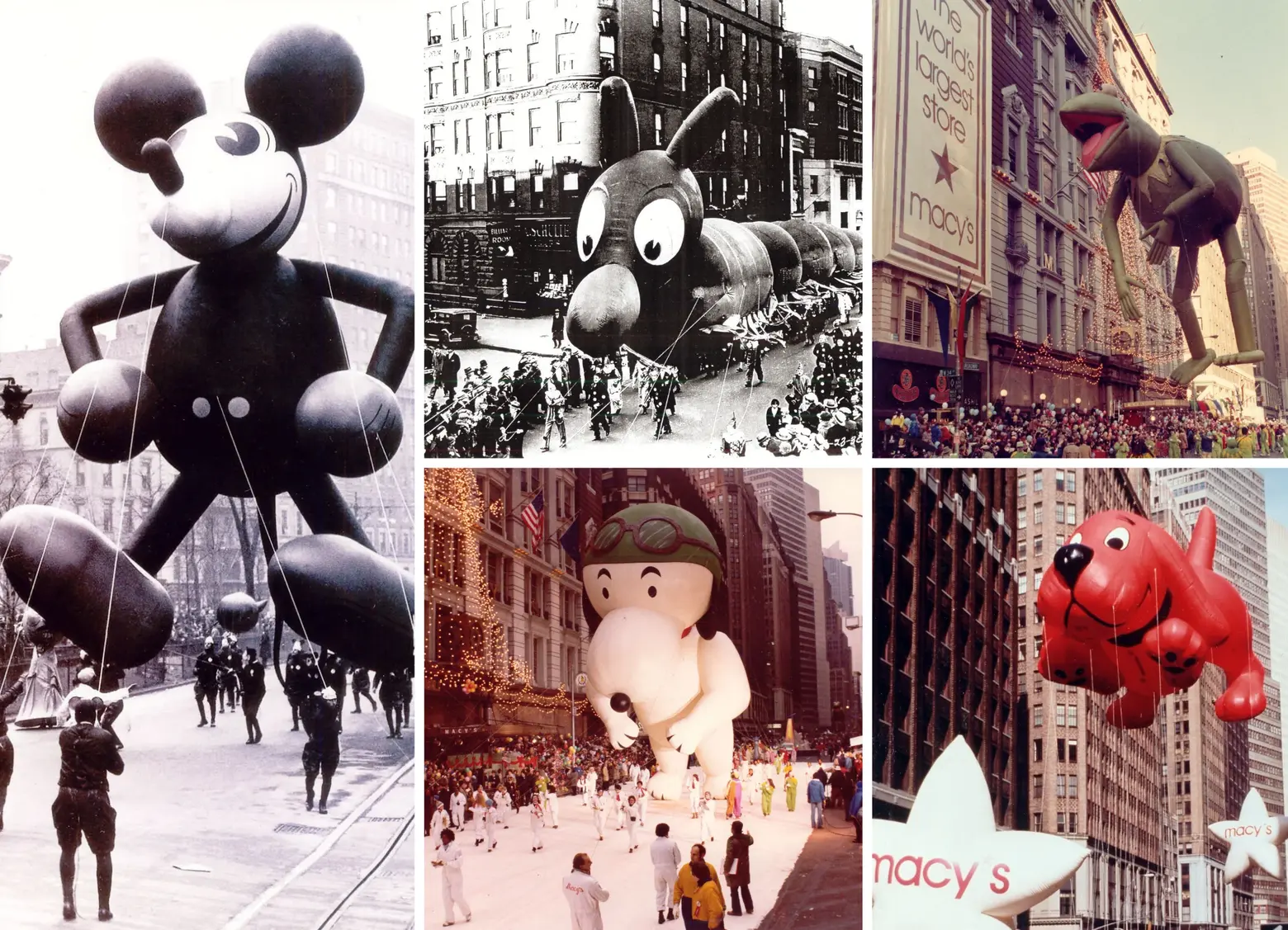
All photos courtesy of Macy’s Inc.
The Macy’s Thanksgiving Day Parade steps off for the 100th time on Thursday, November 26, marking a century of colorful floats, balloons, and performances that have become an enduring part of American culture. As the tradition rings in its centennial, here’s a look at the key balloons, floats, and moments that defined each decade, and how the parade has evolved since it first began in 1924.
1920s
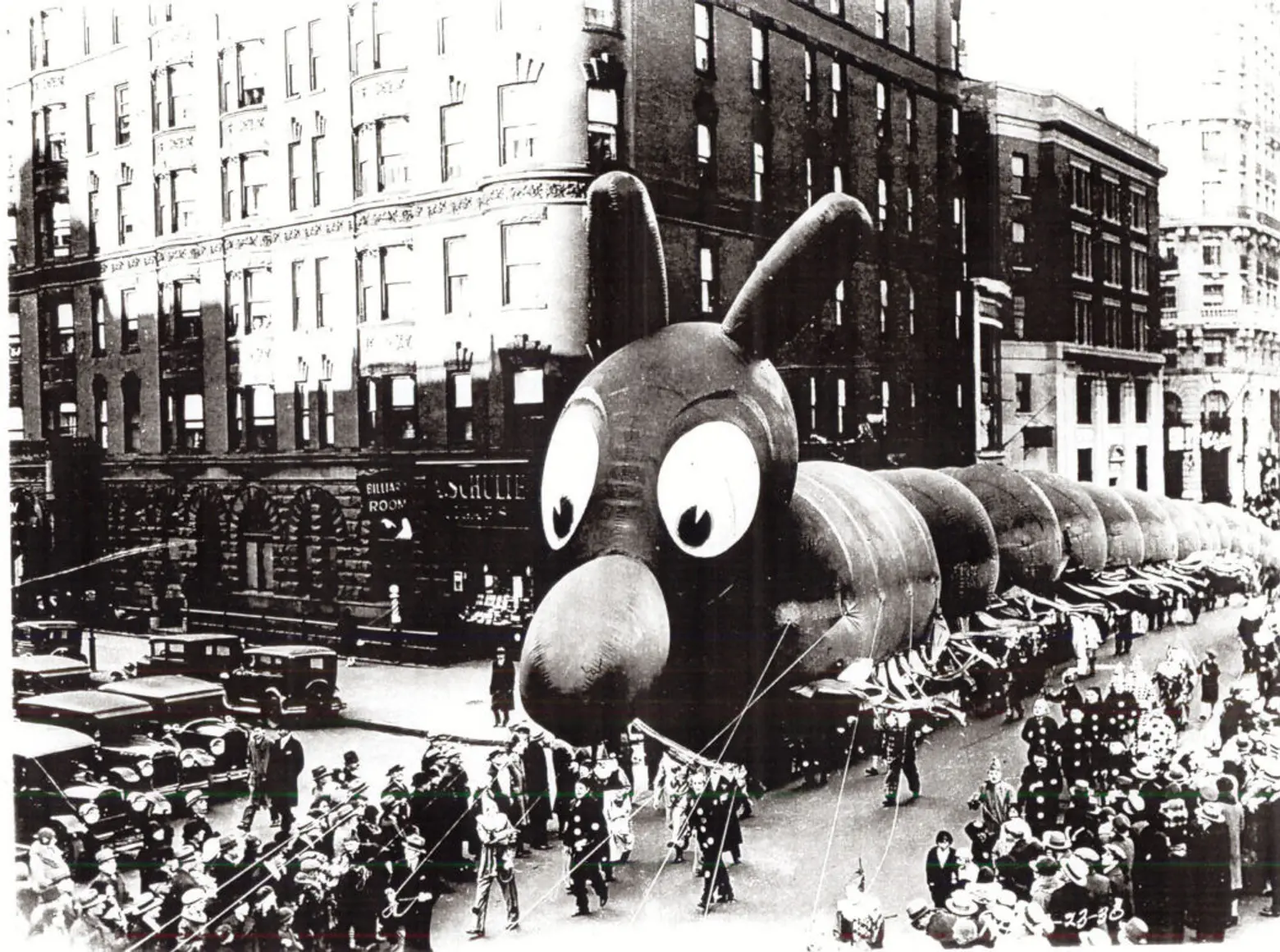
Born out of the theatrical grandeur and excitement of the Roaring Twenties, the inaugural parade was called the Macy’s Christmas Parade and was originally intended as a pre-Christmas celebration. But as the tradition grew, its association with the holiday quickly shifted a few weeks earlier to Thanksgiving, as 6sqft previously reported.
The original parade route was considerably longer than today’s, stretching six miles from 145th Street and Convent Avenue in Harlem to Herald Square. The parade itself, however, was much smaller, spanning only about two blocks.

Featuring Macy’s employees, professional bands, floats, and live animals borrowed from the Central Park Zoo, the inaugural parade was a huge success, prompting Macy’s to make it an annual Thanksgiving tradition beginning the following year.
1930s
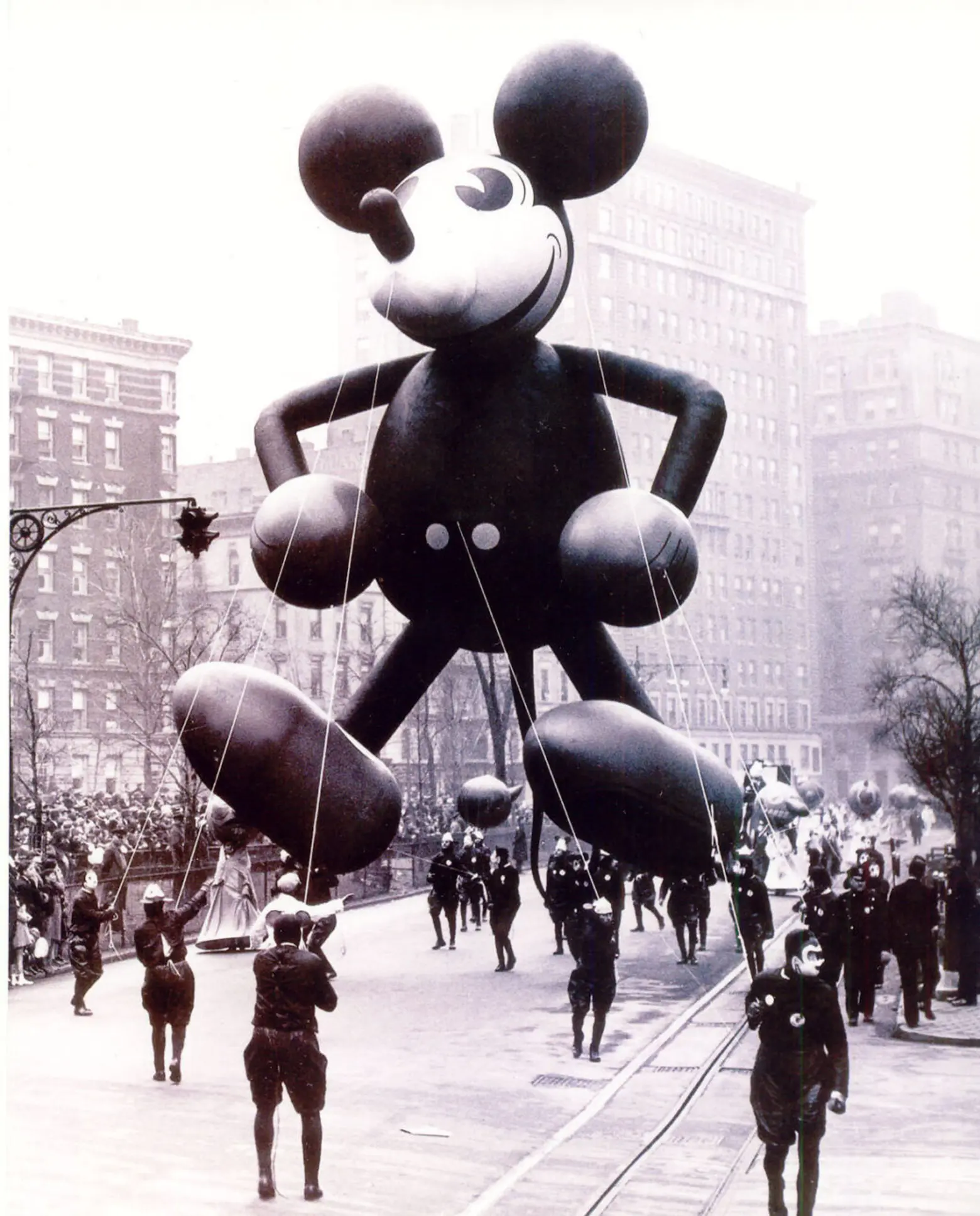
The 1930s saw the parade skyrocket in popularity with each passing year, though the decade also brought several lessons for the event’s organizers. As was tradition, the balloons were released into the sky at the end of the parade, prompting New Yorkers to chase after them.
In 1932, one balloon became entangled with an airplane piloted by someone attempting to catch it, sending the aircraft into a tailspin. Luckily, the pilot regained control and landed safely. Needless to say, parade organizers ended the yearly balloon-release tradition soon after.
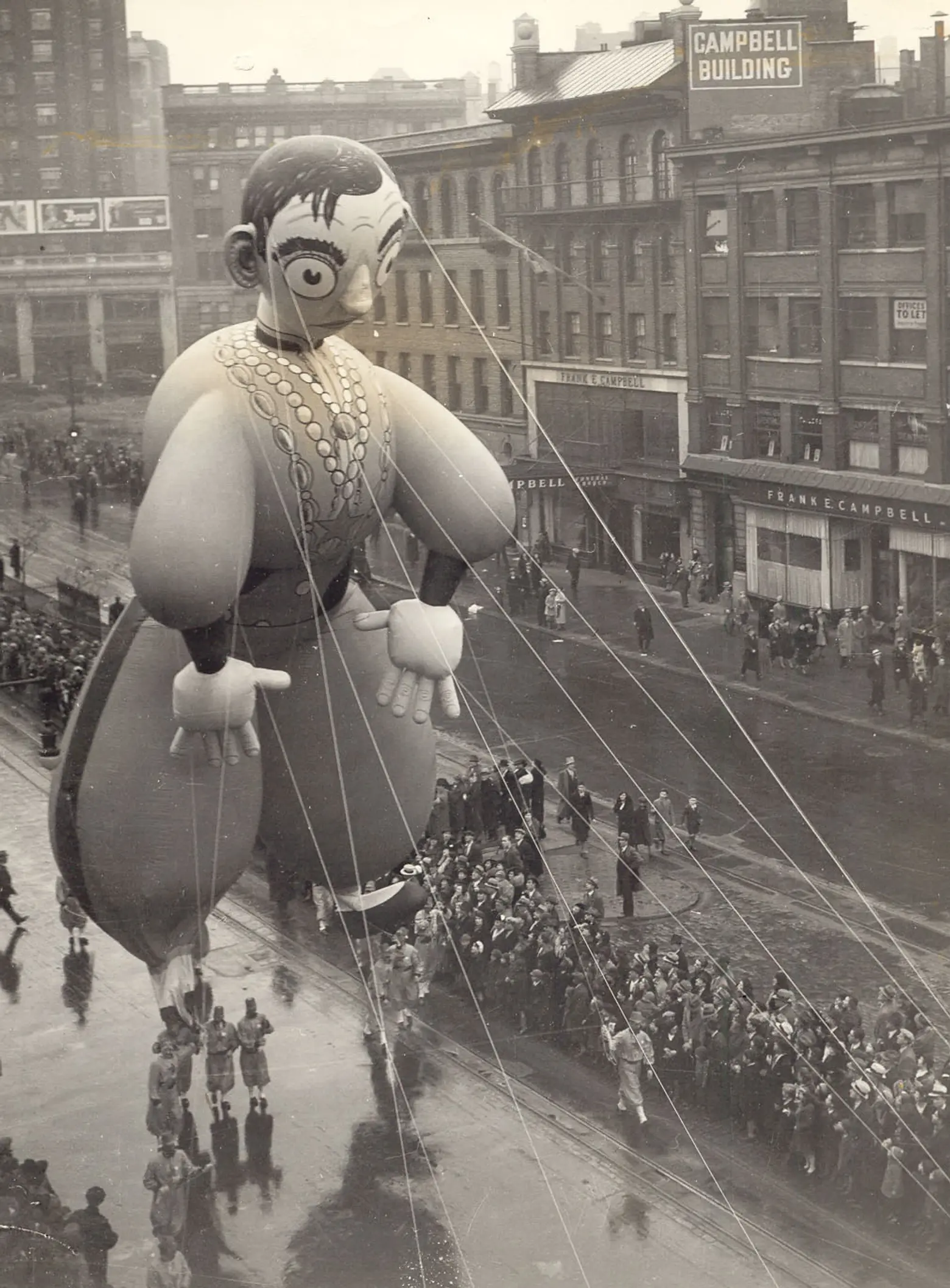
The decade also saw several parade attractions snagged on street signs, torn apart, or even catch fire, forcing organizers to send some floats and balloons away for repairs or retire them permanently.
1940s
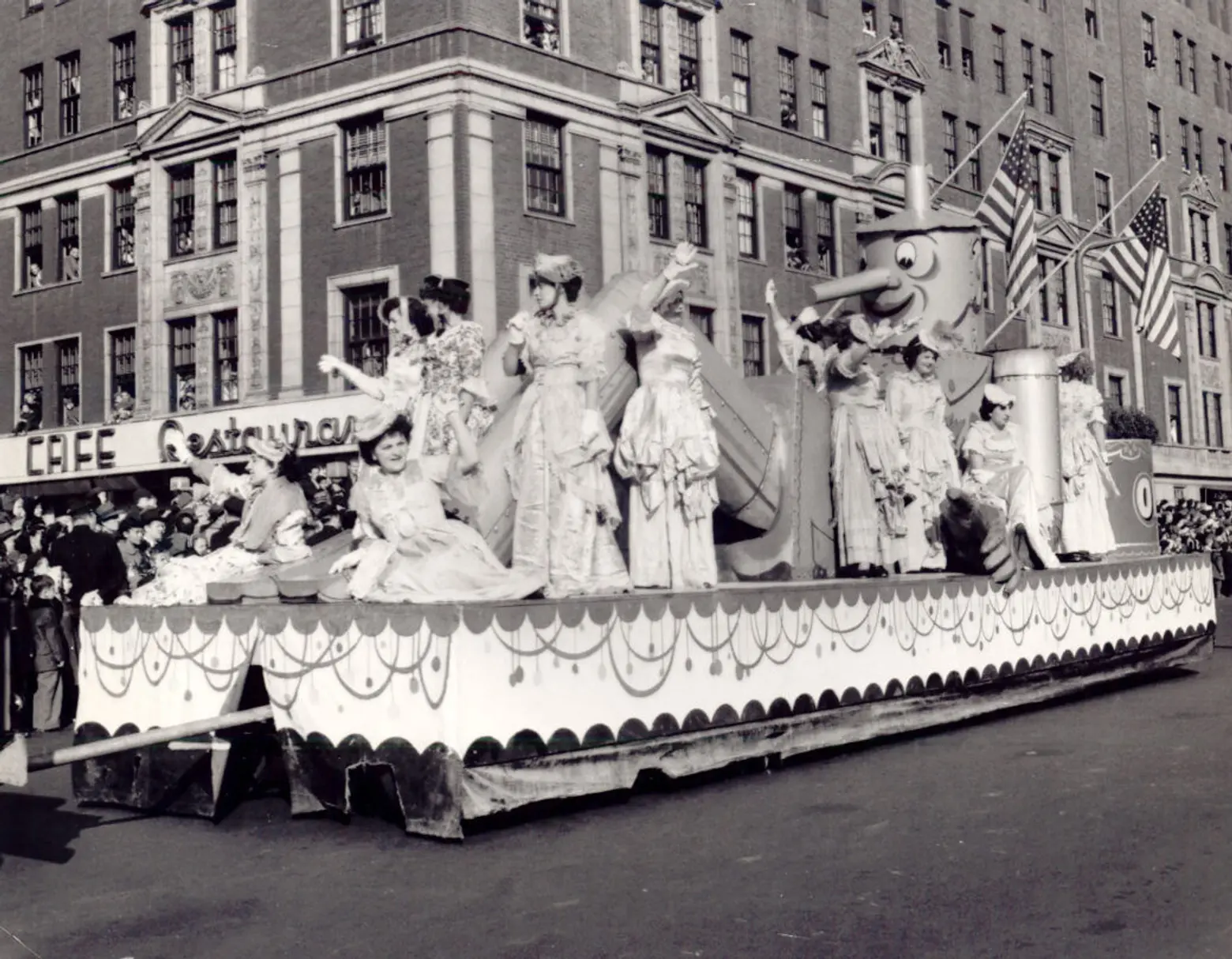
By 1940, the parade began drawing as many as one million spectators. However, the economic troubles of the Great Depression and, later, World War II disrupted the event. Although the parade continued through the economic crisis, it was suspended from 1942 to 1944 because helium and rubber were considered essential supplies for the war effort.
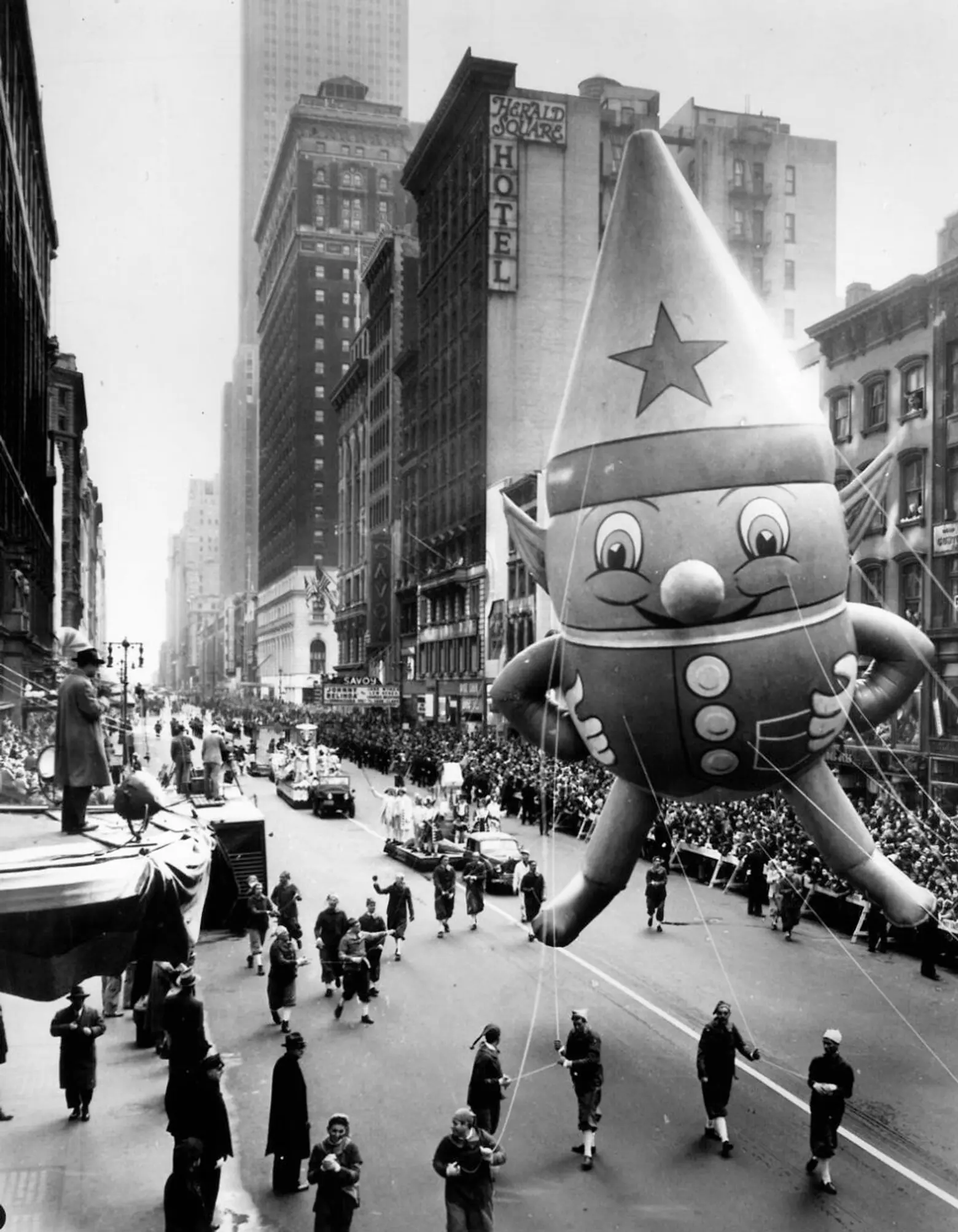
The parade returned in 1945, drawing two million spectators and following the same route still used today. A year later, it appeared in the classic holiday film “Miracle on 34th Street,” further cementing its place in American culture.
1950s
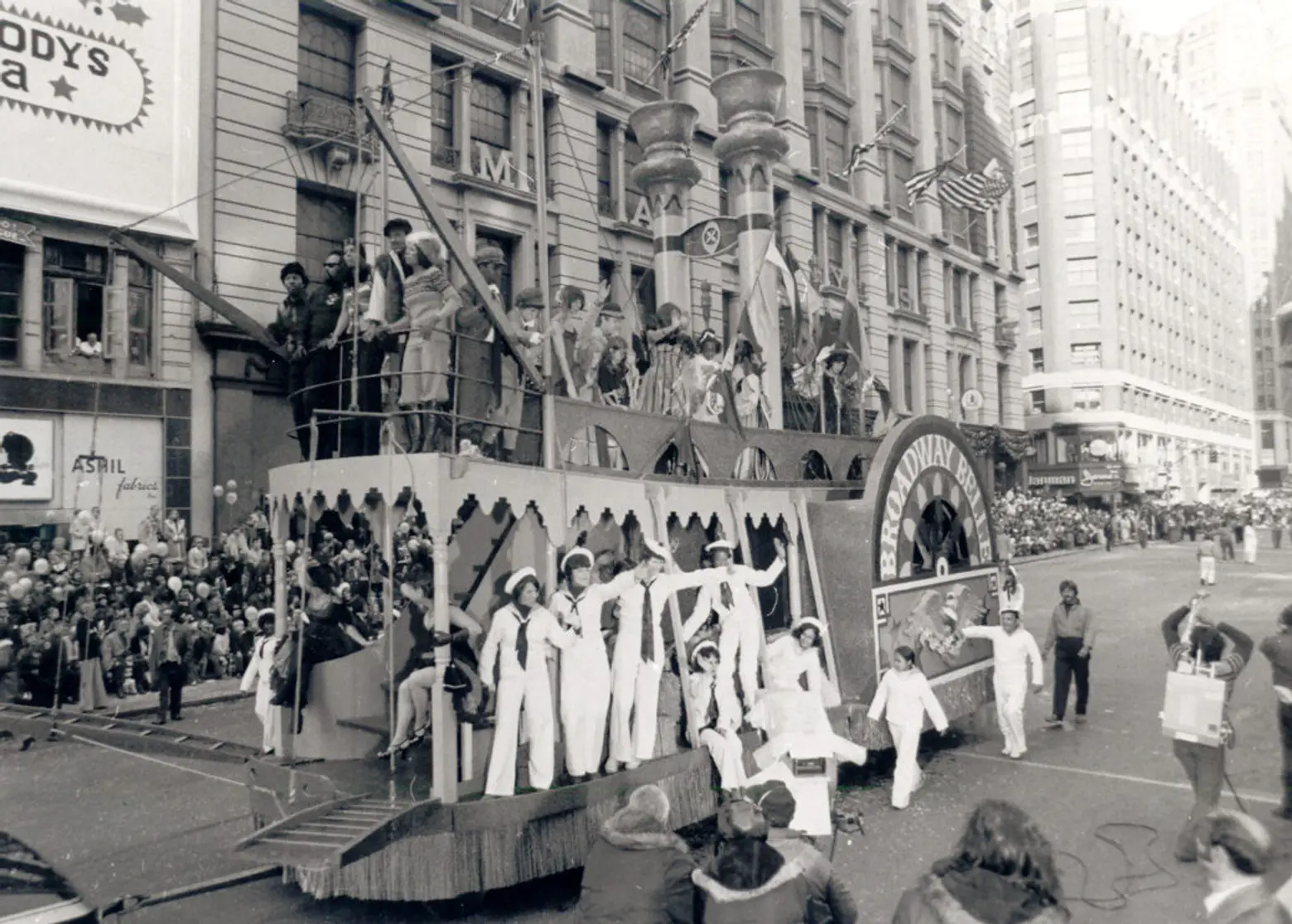
The postwar era saw the parade’s fame reach new heights. In 1952, NBC’s first national telecast, hosted by “Today Show” personality Dave Garroway, allowed viewers beyond the five boroughs to share in the festivities. The following year, nationwide audiences were treated to an even grander spectacle, as eight Alaskan reindeer joined the floats and balloons marching down Broadway.
In 1954, Macy’s welcomed marching bands from across the country, introducing a popular parade fixture that continues today. The tradition gives young musicians from all corners of the country an opportunity to represent their hometowns in the procession.
1960s
In 1960, the parade’s televised broadcast aired in full color for the first time, allowing viewers to experience the vibrant floats and balloons as they appeared in person. Just three years later, however, the parade nearly faced cancellation following President John F. Kennedy’s assassination on November 22, 1963.
Macy’s ultimately decided to proceed with the event in an effort to lift the spirits of the American people. According to Macy’s, the late president was honored with flags flown at half-staff and bearing 7-foot-long black streamers.
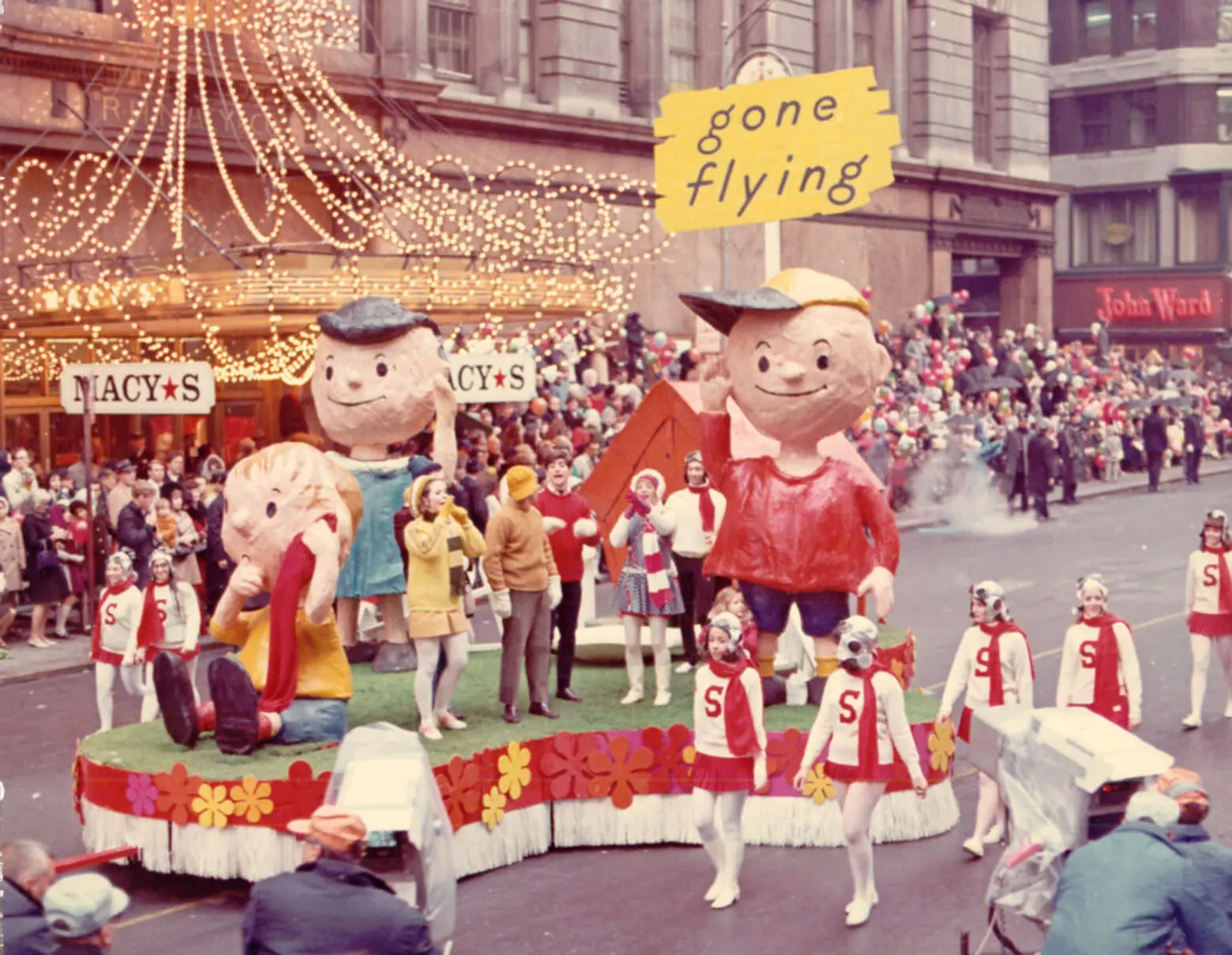
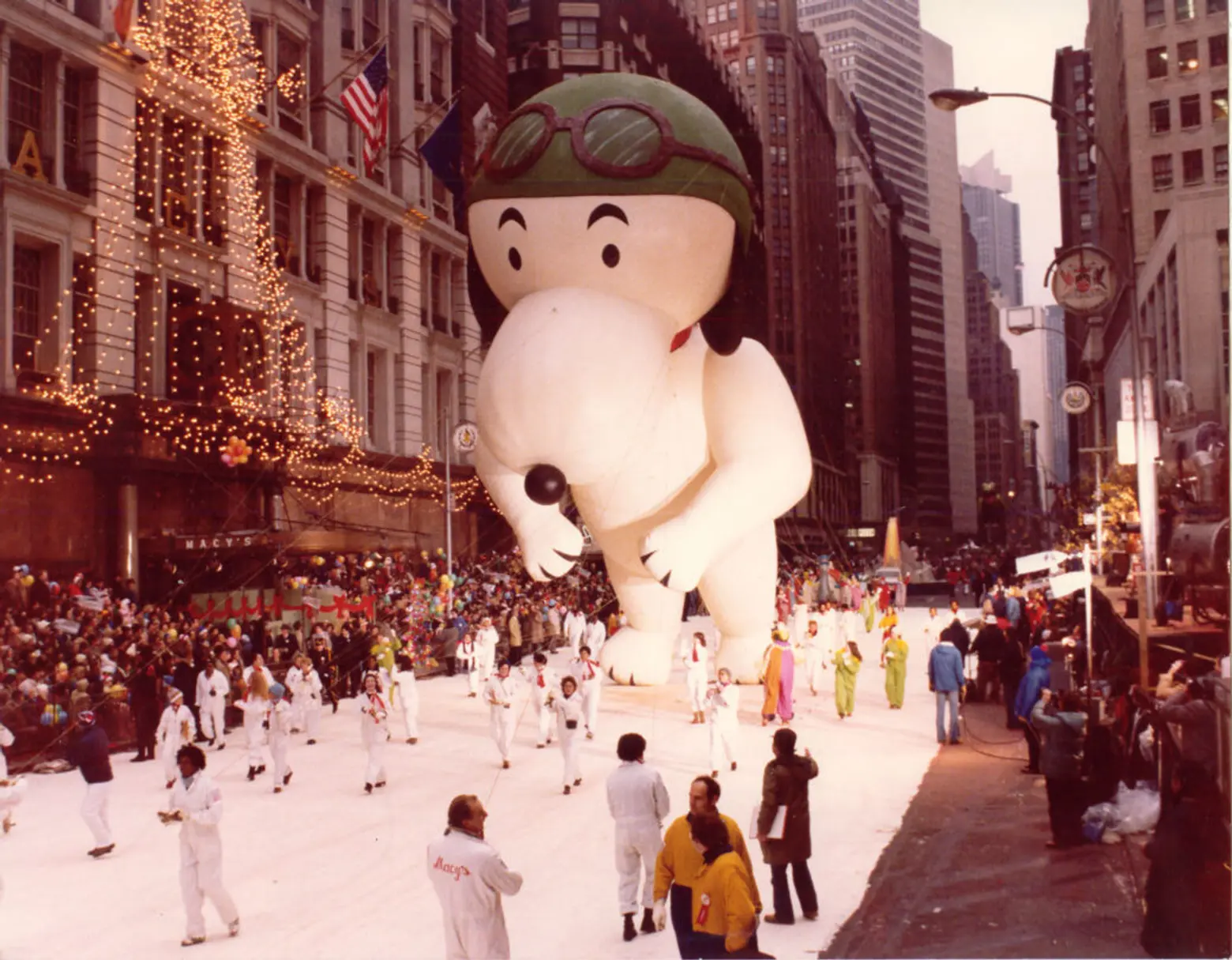
In 1968, the first Snoopy balloon made its debut in the parade, beginning the beloved cartoon character’s long history with the event. Since then, Snoopy has appeared more than 40 times in a variety of shapes and forms.
1970s
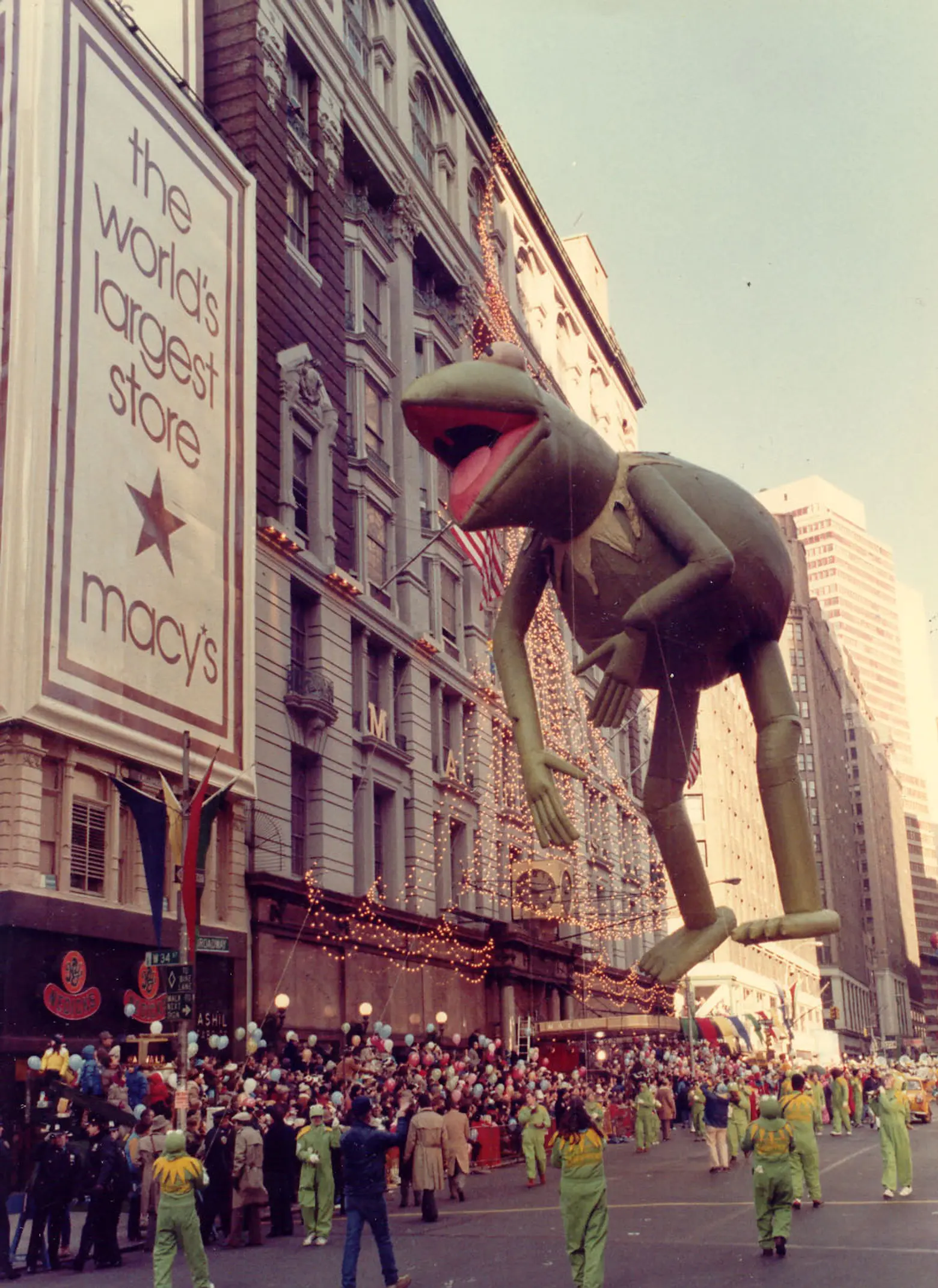
Though modest by today’s technological standards, the 1970s saw significant upgrades to the parade’s design and live audio as its cultural relevance continued to grow. The decade also marked the debut of several now-beloved parade fixtures, including the Tom Turkey float, which continues to lead the procession today, and “Sesame Street” characters, including Kermit the Frog, in 1977.
1980s
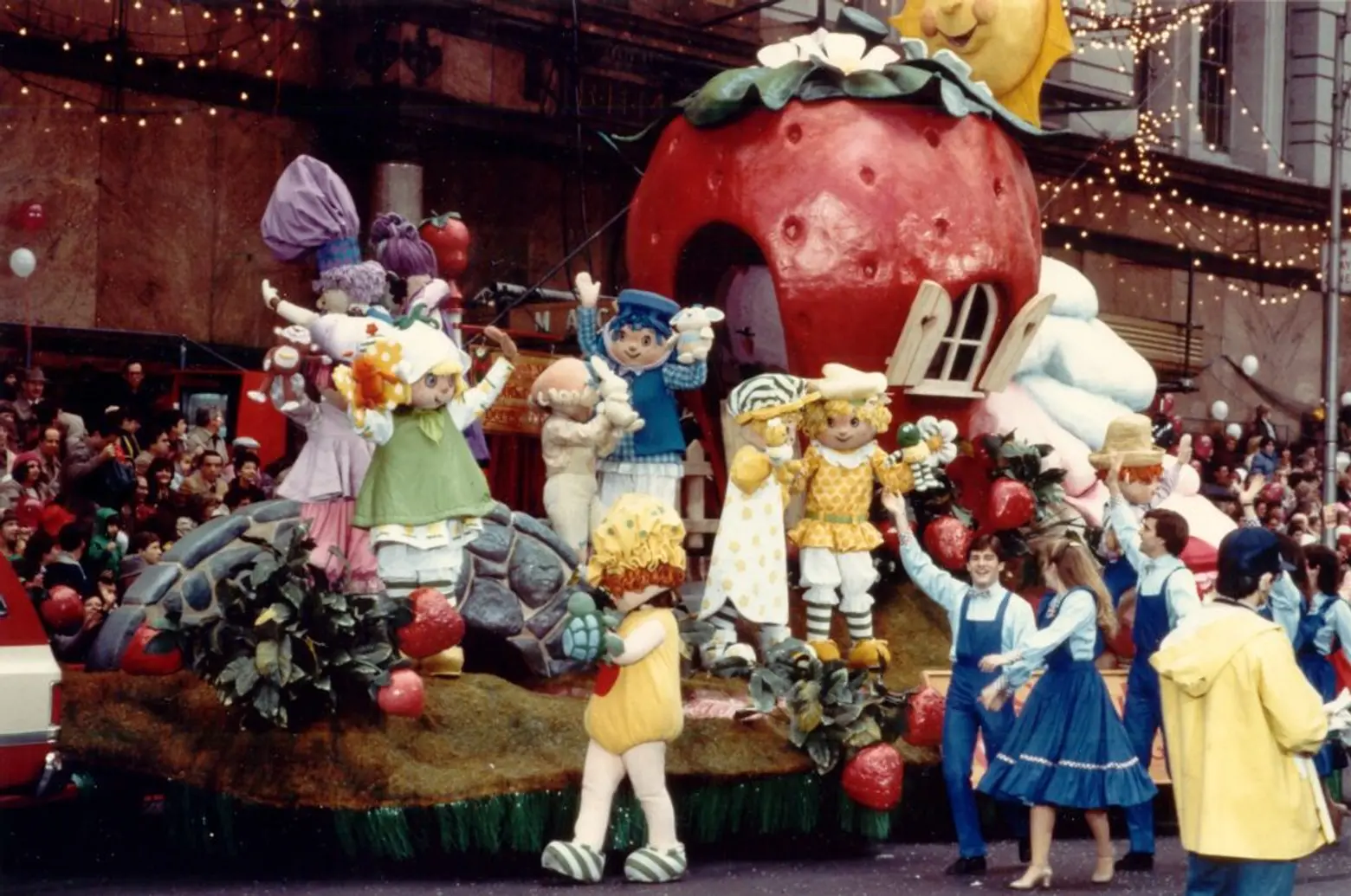
In 1980, Goodyear Tire and Rubber Company produced its final parade balloon, Superman, ending a 50-year partnership. In this decade, Macy’s began designing the famed giant character balloons in-house; today the Macy’s Parade Studio is located in Moonachie, New Jersey. The 80s saw the debut of Olive Oyl, joined by Swee’Pea. The giant balloon reached 102 feet tall, becoming one of the tallest balloons ever.
1990s
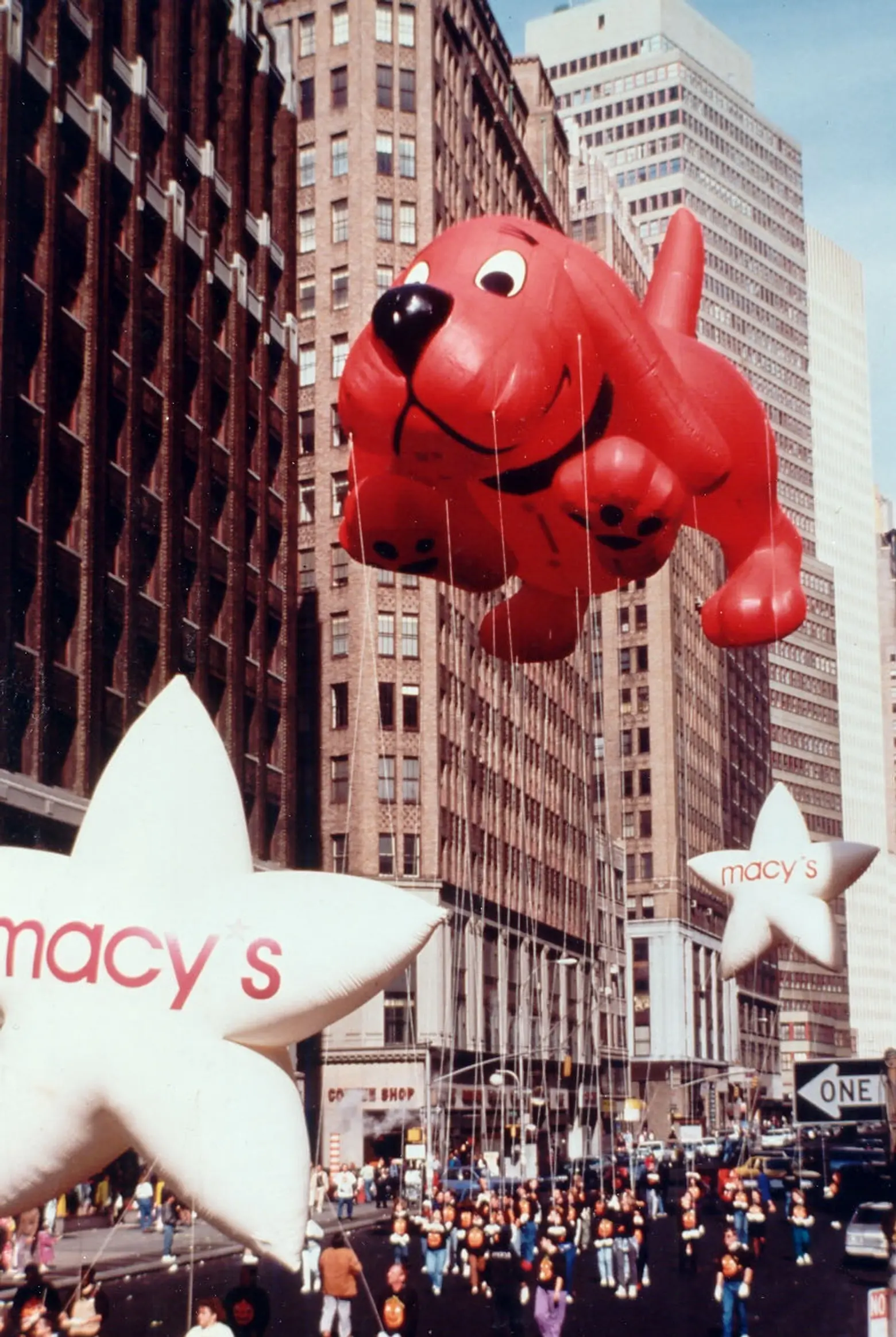
In the 1990s, Macy’s debuted the first-ever “Falloon,” a combination float-balloon. Rocky & Bullwinkle, which had a spinning propeller beanie, became the first giant balloon with moving parts.
The parade perhaps most memorable for many took place in 1997. The 71st annual parade went on despite gale-force winds. “Only, at times, the balloons were not gliding but instead were careering as their handlers on the ground struggled to keep control in winds that reached as high as 43 miles an hour,” the New York Times reported.
“For a while, the balloons seemed to be falling like flies. Barney suffered extensive damage and had to be removed at 51st Street. The Pink Panther succumbed at 42nd Street. Quik Bunny and the Cat in the Hat limped away at 36th Street.”
The biggest accident involved a six-story-tall Cat in the Hat balloon, where gusts blew the balloon into a lamppost at 72nd Street and Central Park West, and caused the metal arm to break off. Four people were injured, according to the Times. Following the accident, the city announced new safety measures to prevent balloons from flying if there are sustained winds over 23 miles per hour or gusts exceeding 34 miles per hour.
2000s
As the city, and the country, continued to recover from the September 11 terrorist attacks that took place just two months prior, the parade went on. To honor those who lost their lives that day, the 75th annual parade featured a tribute featuring the children of NYPD and FDNY heroes to lead the procession. First responders marched in the parade carrying American flags, which formed the Twin Towers.
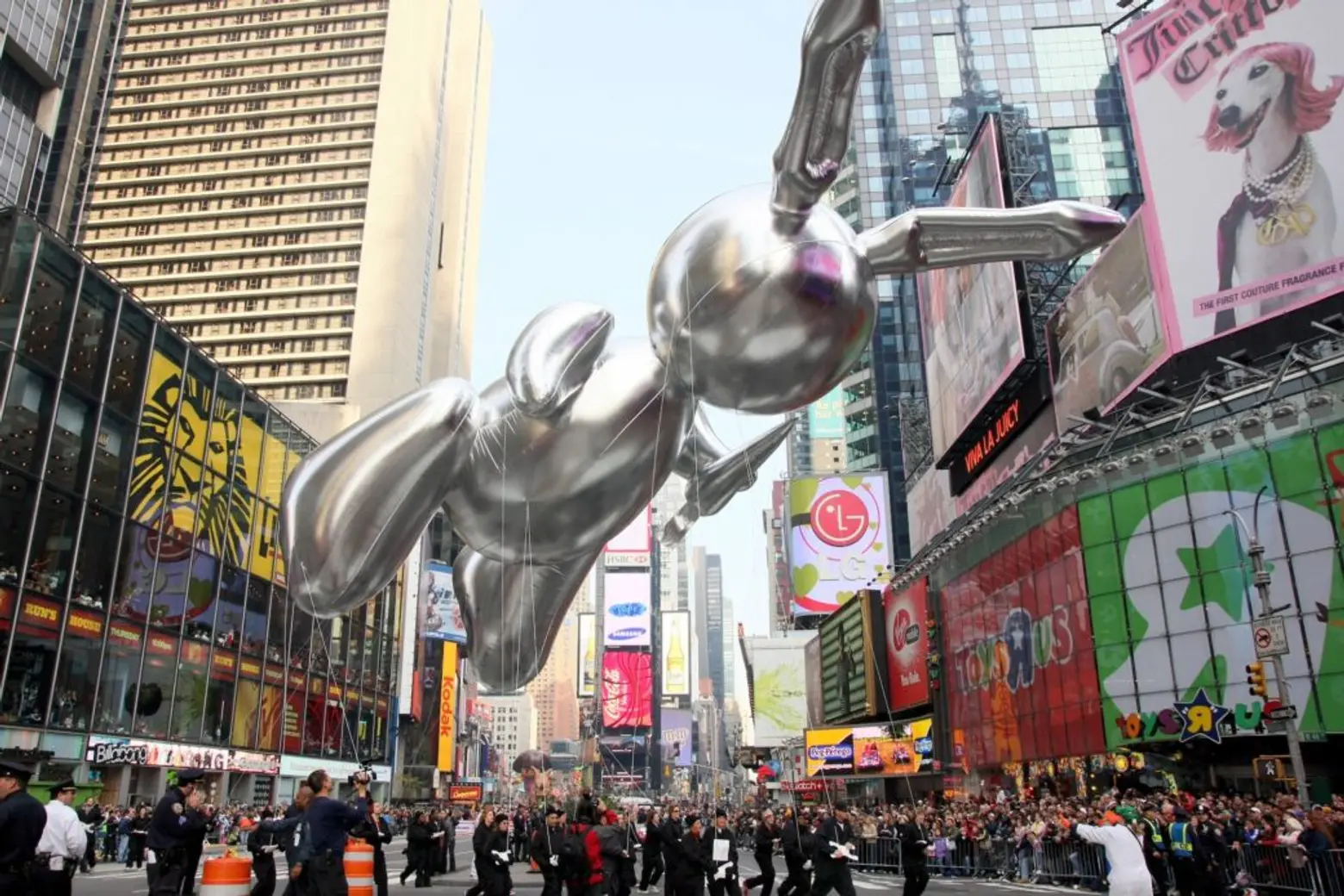
During the early 2000s, the parade began its collaboration with Blue Sky Gallery, which turned artists’ creations into giant balloons. Some early iterations included “Rabbit” by Jeff Koons in 2007 and “Figure with Heart” by the late Keith Haring in 2008.
In addition to the artful additions, this decade may also be remembered for introducing SpongeBob SquarePants to the parade. The beloved yellow square balloon has appeared in almost every parade since 2004; this year, SpongeBob will appear with Gary.
2010s

The parade continued to evolve alongside advancing technology. In 2011, the 85th Macy’s Thanksgiving Day Parade became the first time NBC live-streamed the event online, allowing spectators to watch it from their smartphones.
In 2019, late contemporary artist Yayoi Kusama became the first female artist featured as part of the Blue Sky Gallery balloon program. Her creation “Love Flies Up to the Sky” was inspired by her painting series, “My Eternal Soul,” which began in 2009.
2020s
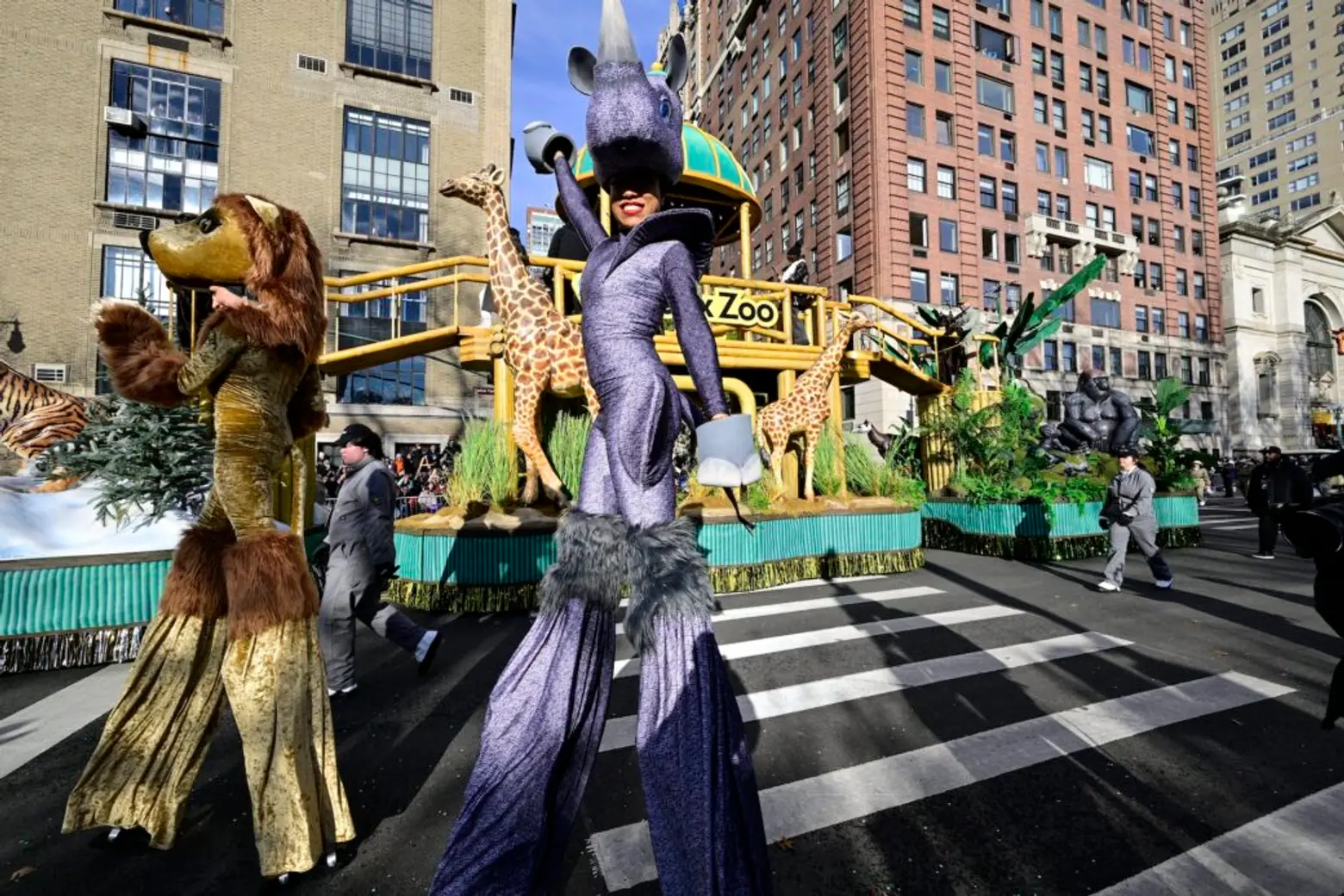
Even amid the Covid pandemic, the parade was held, as Macy’s and city officials found it important to keep traditions going despite everything else happening. The 2020 parade was a television-only event, with participant capacity reduced by 75 percent. Plus, balloons were flown by vehicles instead of the usual 80- to 100-person teams that corral each balloon. The following year, the usual handlers, performers, and spectators returned.
To celebrate the 100th anniversary of the beloved parade, Macy’s is planning a “celebration of unprecedented scale,” with 100 inflatables. With more than 11,000 participants, this year’s event will include iconic characters from past parades as well as new balloons and inflatables.
The event kicks off at 8:30 a.m. on Thursday, November 26. Watch on NBC, Telemundo, or stream live on Peacock.
RELATED: