Brooklyn gets its first on-street trash containers for apartment buildings
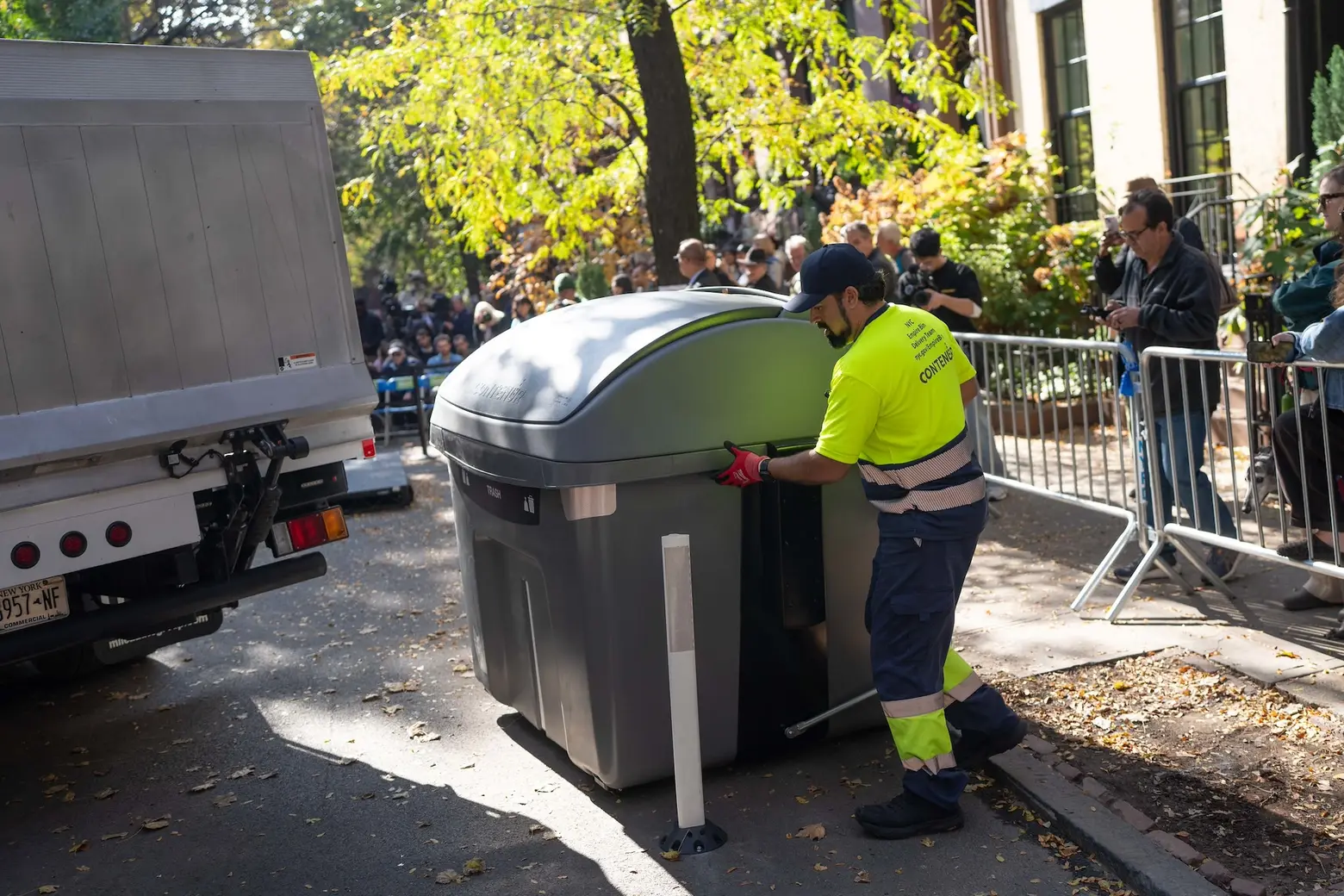
Photo courtesy of Michael Appleton/Mayoral Photography Office on Flickr
Brooklyn’s first residential on-street trash containers were installed on Thursday in the city’s latest effort to get rid of piles of trash on sidewalks. Mayor Zohran Mamdani announced that Brooklyn Community District 2 will receive 700 on-street trash containers, known as Empire Bins, with full containerization targeted for completion by the end of fall. The announcement follows Mamdani’s April plan to expand the program to six additional community districts and builds on the success of a pilot in West Harlem, which became the first neighborhood in North America to containerize its trash in June 2025.
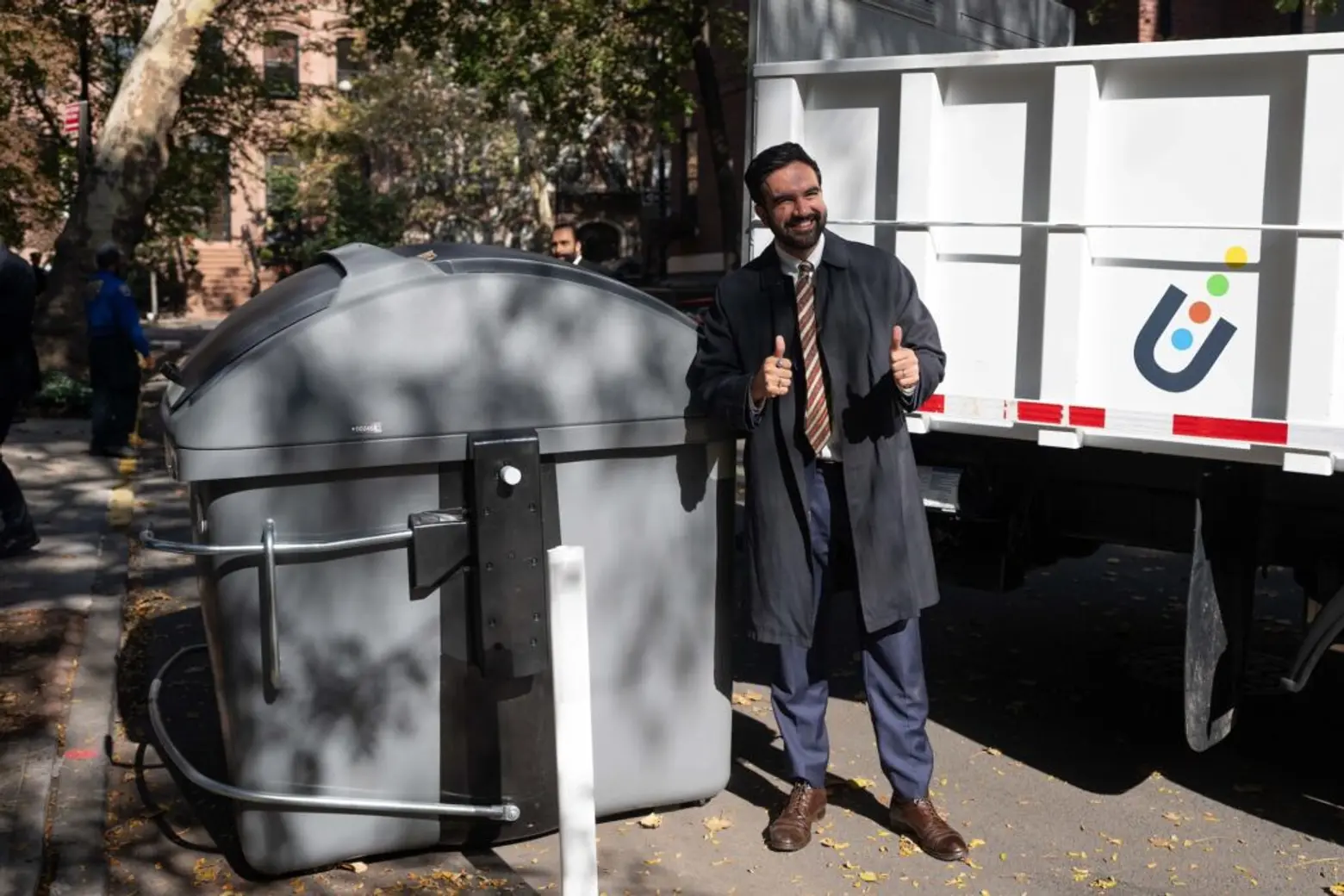
Empire Bins can hold about 794 gallons of waste, or about 25 large 32-gallon trash bags. Buildings with 10 to 30 units can either have an Empire Bin assigned to them or to use smaller “wheelie bins” for their trash, as 6sqft previously reported.
Trash is collected from the bins three times a week by automated side-loading garbage trucks, which were first introduced in the Department of Sanitation’s (DSNY) “Future of Trash” report. Developed in collaboration with designers in Italy, Hicksville, and Brooklyn, the trucks use specialized side-loading technology to service the on-street containers.
Community Board 2 neighborhoods receiving the new bins include Downtown Brooklyn, Vinegar Hill, Boerum Hill, Brooklyn Heights, Dumbo, Fulton Ferry, Fort Greene, Clinton Hill, and the Brooklyn Navy Yard.
All large buildings with more than 30 units will receive an Empire Bin. Medium-sized buildings with 10 to 30 units can choose between an Empire Bin and smaller city-issued bins available at Home Depot. Property managers and building staff can access the containers using a key card or a new mobile app. The bins will also receive year-round maintenance and quarterly cleanings.
By the end of 2027, the city plans to add 6,500 bins across six more community districts, encompassing 18 neighborhoods in the five boroughs.
These include Brooklyn District 8 (Crown Heights, Prospect Heights, and Weeksville); Bronx Districts 2 and 5 (Hunts Point, Longwood, University Heights, Mount Hope, Morris Heights, and Fordham Heights); and Queens District 2 (Sunnyside, Hunters Point, and Woodside).
Additionally, Staten Island’s District 1 (Stapleton, Randall Manor, Westerleigh, West Brighton, Clifton, and Shore Acres) will also see full containerization, as will Manhattan District 2 (West Village, Soho, Little Italy, Greenwich Village, and Nolita).
The program’s expansion will add roughly $15 million to the city’s expense budget next year and $35.5 million in capital funding over this fiscal year and the next, as 6sqft previously reported. Mamdani said the city aims to achieve full containerization by 2031, with an estimated 67,000 bins serving roughly 1.8 million homes.
Early data suggest that trash containerization may be helping reduce rat activity. In August, Bloomberg reported that rat sightings in West Harlem during the first seven months of 2026 were 34 percent lower than during the same period in 2025.
The benefits may extend beyond cleanliness. In April, Streetsblog reported that crashes and serious injuries in West Harlem had declined by 15 percent and 52 percent, respectively, following the installation of Empire Bins.
Since the program began, some have raised concerns about the loss of parking spaces associated with curbside bins. During Thursday’s press conference, Council Member Lincoln Restler, whose district includes neighborhoods in Brooklyn Community District 2, acknowledged the trade-off but said it was worthwhile.
“Yes, there’s a modest loss of parking, but, in exchange for that, we’re going to have the cleaner and healthier streets that we deserve,” Restler said. “This model started in West Harlem, but it’s actually been operating in cities around the world, from Berlin to Barcelona. Now, containerization of trash has finally come to Brooklyn.”
Earlier in the press conference, Mamdani linked trash containerization to his administration’s broader focus on improving housing conditions.
“New Yorkers deserve homes without rats loitering on their doorstep or feasting in the basement,” Mamdani said. “They deserve to live without cockroaches climbing in through the window, and they deserve to be able to exit their homes without being hit with the odor of week-old leftovers when it spends a few days in the sun.”
“Containerization will allow us to deliver that across every corner of our city, and will help us do so for years to come,” he added. “Let today mark the beginning of a new era, one of a ‘can-do’ greatness for our trash, our streets, our sidewalks, and our people too.”
RELATED: