Visionary architect Frank Gehry dies at 96
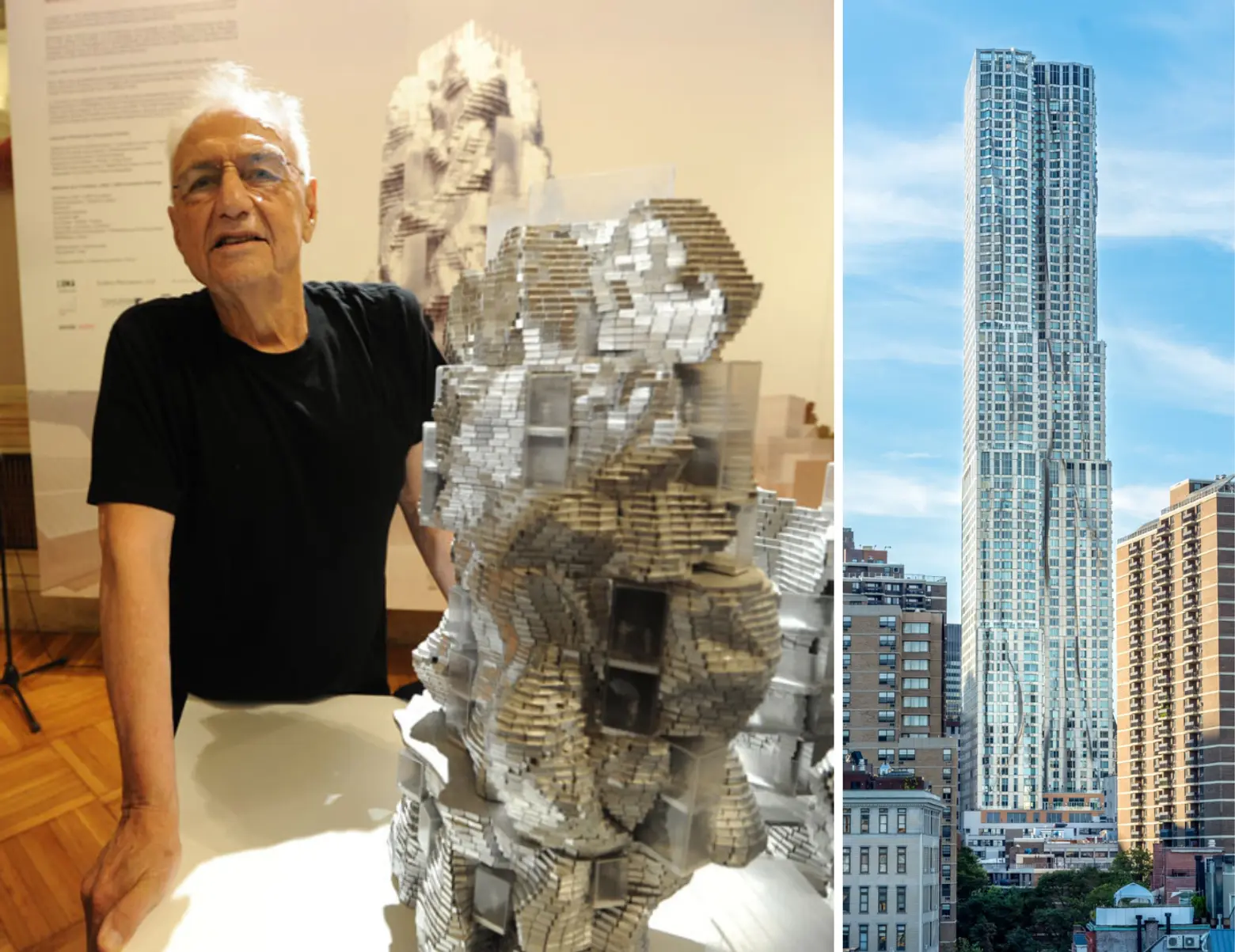
(L) Frank Gehry, image via WikiCommons; (R) 8 Spruce Street, Image via WikiCommons
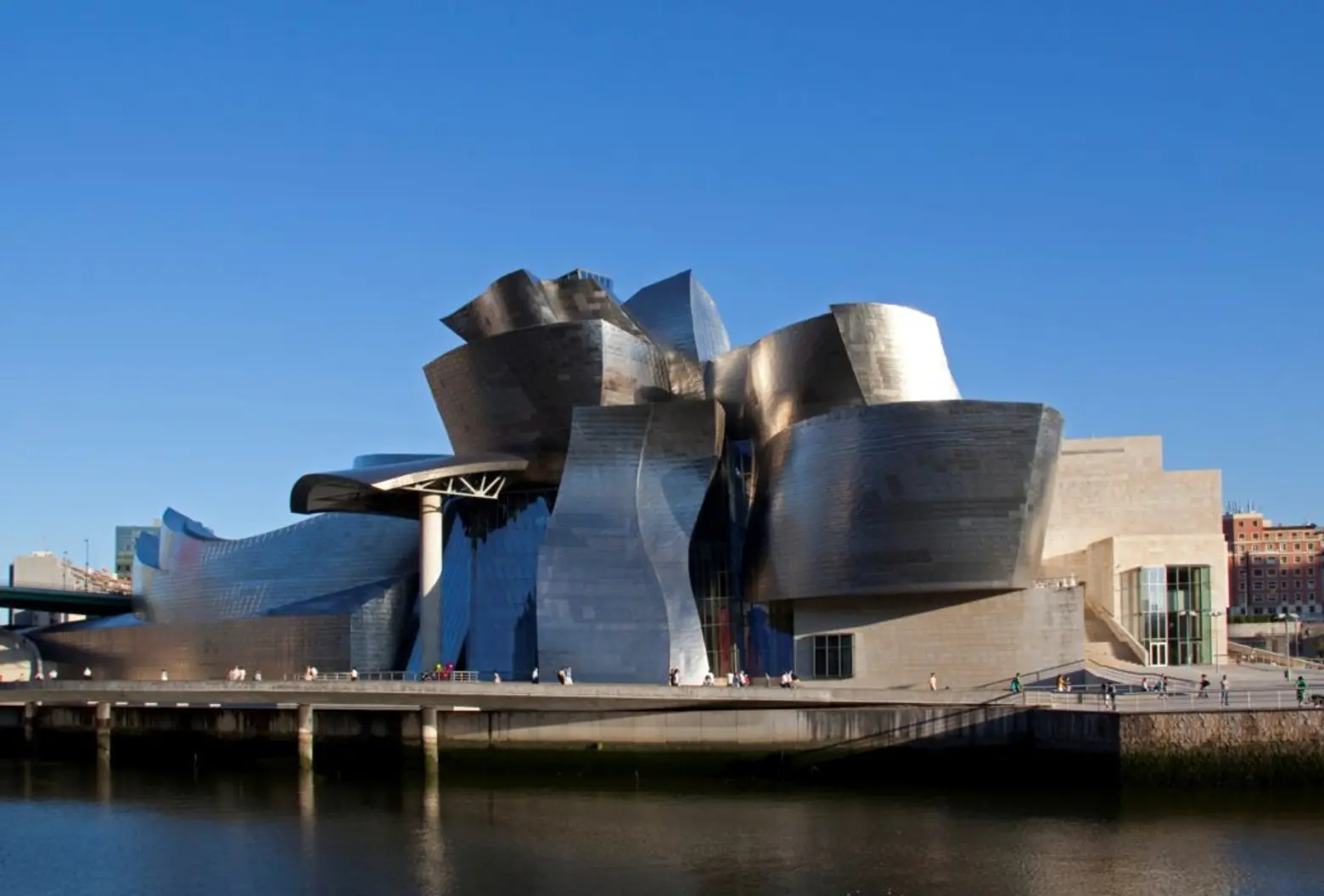
Frank Gehry, the visionary architect whose sculptural, undulating designs created some of the world’s most striking buildings, died last Friday at the age of 96. While maybe best remembered for his crowning achievement, the Guggenheim Museum Bilbao in Spain, Gehry also left a lasting mark on New York City, designing the eye-catching 8 Spruce Street in the Financial District, which opened as the tallest residential tower in the Western Hemisphere when it debuted in 2011, and Chelsea’s IAC Building. Gehry reportedly died at his home in Santa Monica, California, following a brief respiratory illness, according to the New York Post.
Born on February 28, 1929, in Toronto, Canada, Gehry first gravitated toward architecture “on a hunch,” enrolling in introductory courses at Los Angeles City College while driving a delivery truck to support himself. Encouraged by his teachers and inspired by a chance encounter with modernist architect Raphael Soriano, he soon became captivated by the possibilities of the field, according to the Academy of Achievement.
Winning scholarships to the University of Southern California, Gehry graduated in 1954 and began his architecture career at Victor Gruen Associates, where he had been apprenticing part-time while still in school, according to the Pritzker Architecture Prize.
Following a year in the military, Gehry was admitted to the Harvard Graduate School of Design to study urban planning, but returned to Los Angeles without completing his graduate degree. After a brief stint with the architectural firm Pereira and Luckman, he returned to Gruen before moving his family to Paris, where he spent a year working with French architect Andre Remondet and studying the works of modernist pioneer Le Corbusier.
Returning to Los Angeles in 1962, Gehry established his own firm, Gehry Associates—now Gehry Partners, LLP. Though he continued to work in the established International Style for several years, he was increasingly drawn to the avant-garde arts scene blossoming in the beach communities of Venice and Santa Monica.
It was here that he met influential painters and sculptors such as Ed Kienholz, Bob Irwin, Ed Moses, and Ed Ruscha, whose inventive use of “overlooked by-products of industrial civilization” pushed him to infuse his own designs with a more personal, unconventional vision.
He first drew national attention with Easy Edges, a line of furniture made from industrial corrugated cardboard. Although he created several boundary-pushing houses for friends during this period, much of his 1970s output was more conventional, including the Rouse Company Headquarters in Columbia, Maryland, and the Santa Monica Place mall.
Soon after, Gehry rebuilt his own home, using common, “unlovely” elements of American homebuilding—chain link fencing, corrugated aluminum, and unfinished plywood—as expressive elements, while stripping the interior walls of the home to reveal its frame.
According to the website for the Pritzker Architecture Prize, Gehry would say, “Personally, I hate chain link. I got involved with it because it was inevitably being used around my buildings. If you can’t beat ’em, join ’em.”
Gehry’s work soon evolved beyond typical modernist design, developing the signature style that would define his career. Known for its “whimsy” and “playfulness” absent from much of what was considered serious architecture, Gehry was awarded the prestigious Pritzker Prize in 1989.
Some architectural critics labeled Gehry’s work “deconstructivist,” noting how he dismantled traditional geometric shapes and reimagined them as visually fluid forms, frequently wrapped in shiny metallic surfaces such as titanium.
Widely considered his masterpiece, the Guggenheim Museum in Bilbao, Spain, was completed in 1997. The structure, described as an “eruption of metal and light framed by scenes of industrial ruin” by the New York Times, echoes the spiralling interior of New York’s Guggenheim, designed by Frank Lloyd Wright.
The building quickly became a must-see destination, drawing 1.3 million visitors in its first year and sparking a global architectural trend—known as the “Bilbao effect”—in which developers and city officials sought to create cultural buildings with striking, attention-grabbing designs.
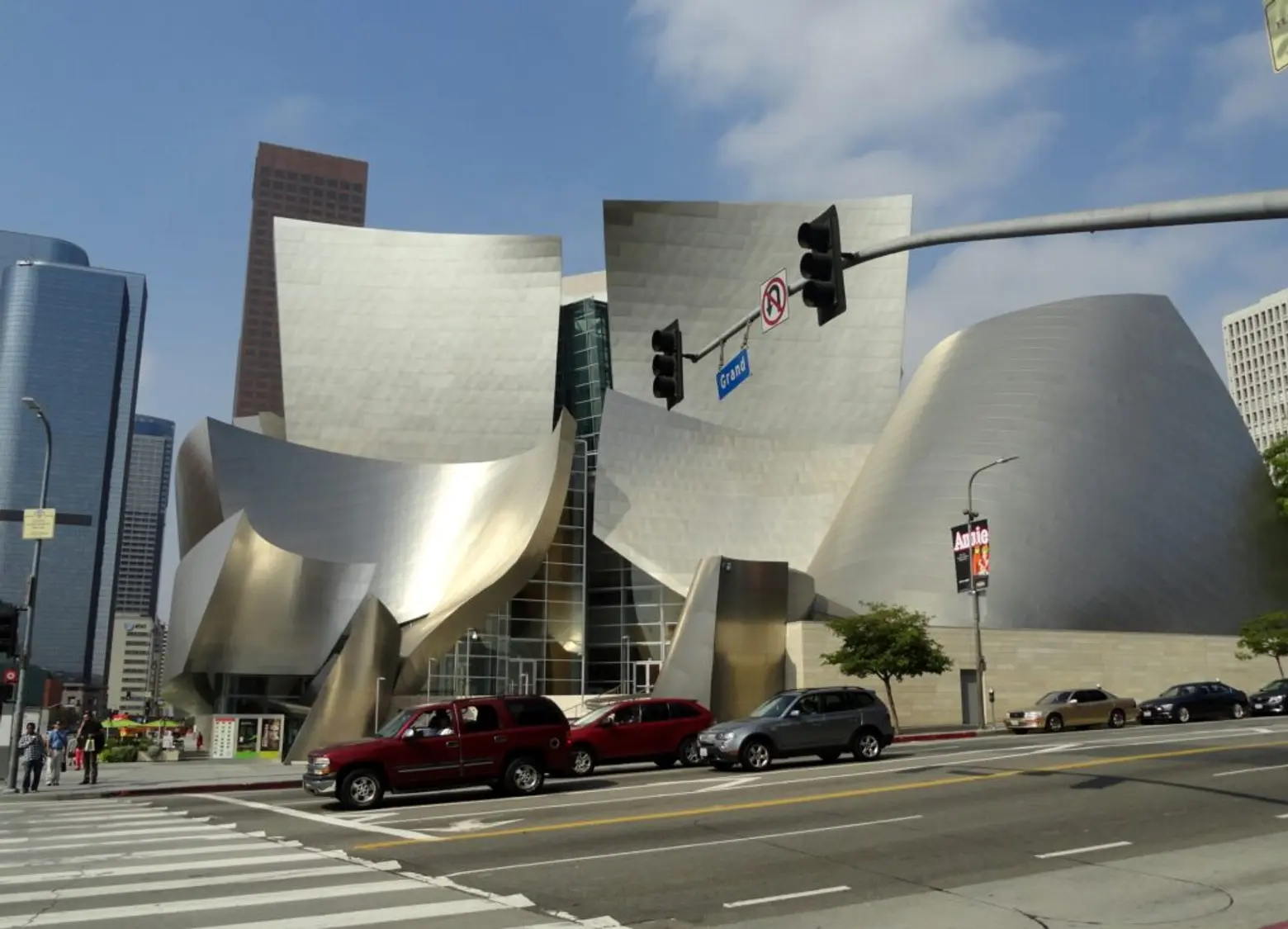
In 2004, Gehry’s long-awaited Walt Disney Concert Hall opened in downtown Los Angeles, quickly becoming one of the city’s most iconic landmarks.
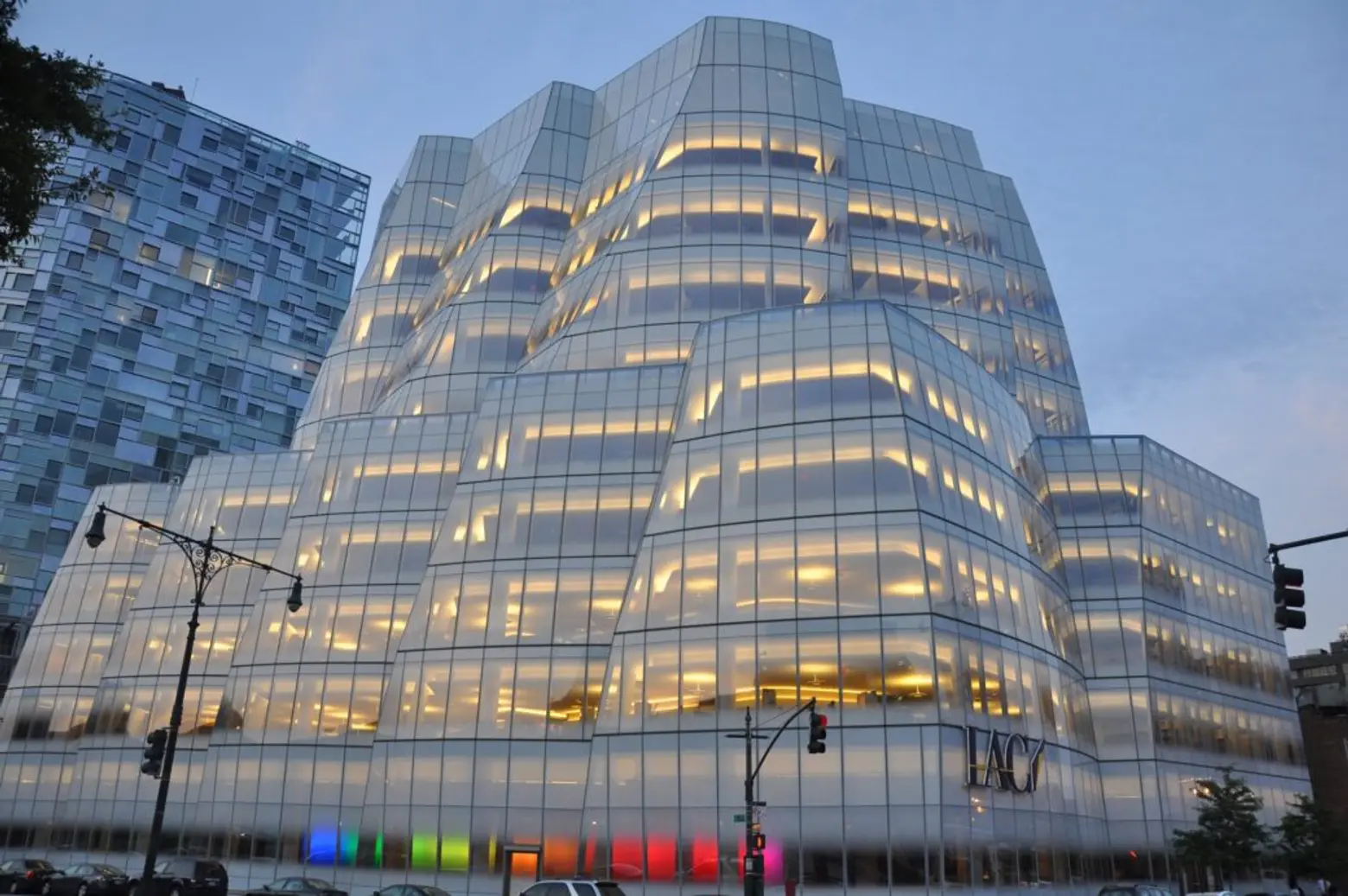
In the five boroughs, two buildings showcase Gehry’s unmistakable style. In Chelsea, his first full building design in New York City, the IAC Building, opened in 2007 and featured the world’s largest high-definition screen in its lobby at the time. Located at 555 West 18th Street, the office building’s undulating facade resembles the sails of a ship and serves as IAC’s headquarters.
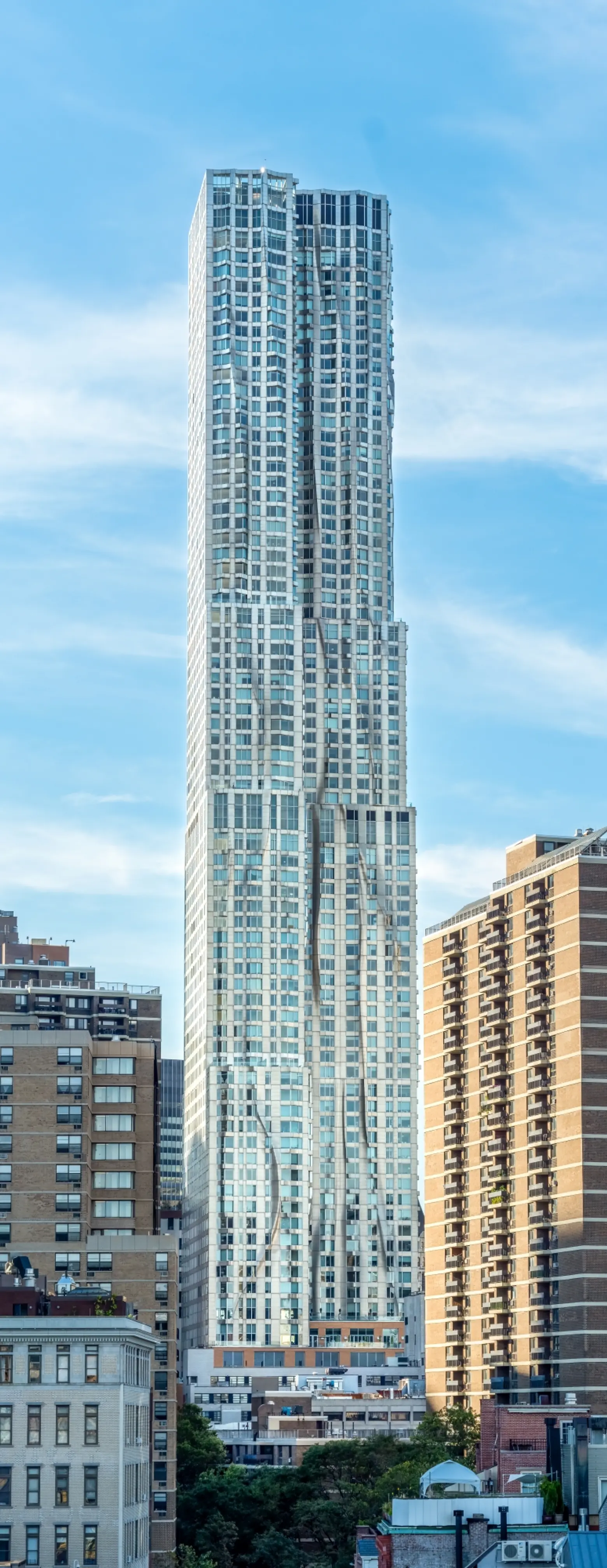
At the end of the Brooklyn Bridge in the Financial District, the 870-foot-tall luxury rental tower 8 Spruce Street opened in 2011. Its striking facade, composed of 10,500 undulating steel panels, shifts in color depending on the light and weather, making it a one-of-a-kind landmark among the area’s more conventional buildings.
The 76-story tower houses nearly 900 apartments and was designed as an architectural triptych alongside two nearby pre-war landmarks—the Woolworth Building and the Municipal Building, as reported by the Times.
“I don’t want to do architecture that’s dry and dull,” Gehry told the Guardian the year the tower opened. “When you talk to New Yorkers … like my dad, you want to show them something like Bernini or Picasso, not some dumb thing that bores the pants off everyone.”
In 2016, he was honored by President Barack Obama with the Presidential Medal of Freedom for his achievements.
“[Frank Gehry] spent his life rethinking shapes and mediums, seemingly the force of gravity itself,” Obama said at the award ceremony, as Forbes reported at the time.
“The idea of what architecture could be, he decided to upend, constantly repurposing every material available from titanium to paper towel tubes. Frank’s work teaches us that while buildings may be sturdy and fixed to the ground, like all great art they can lift our spirits—they can soar and broaden our horizons.”
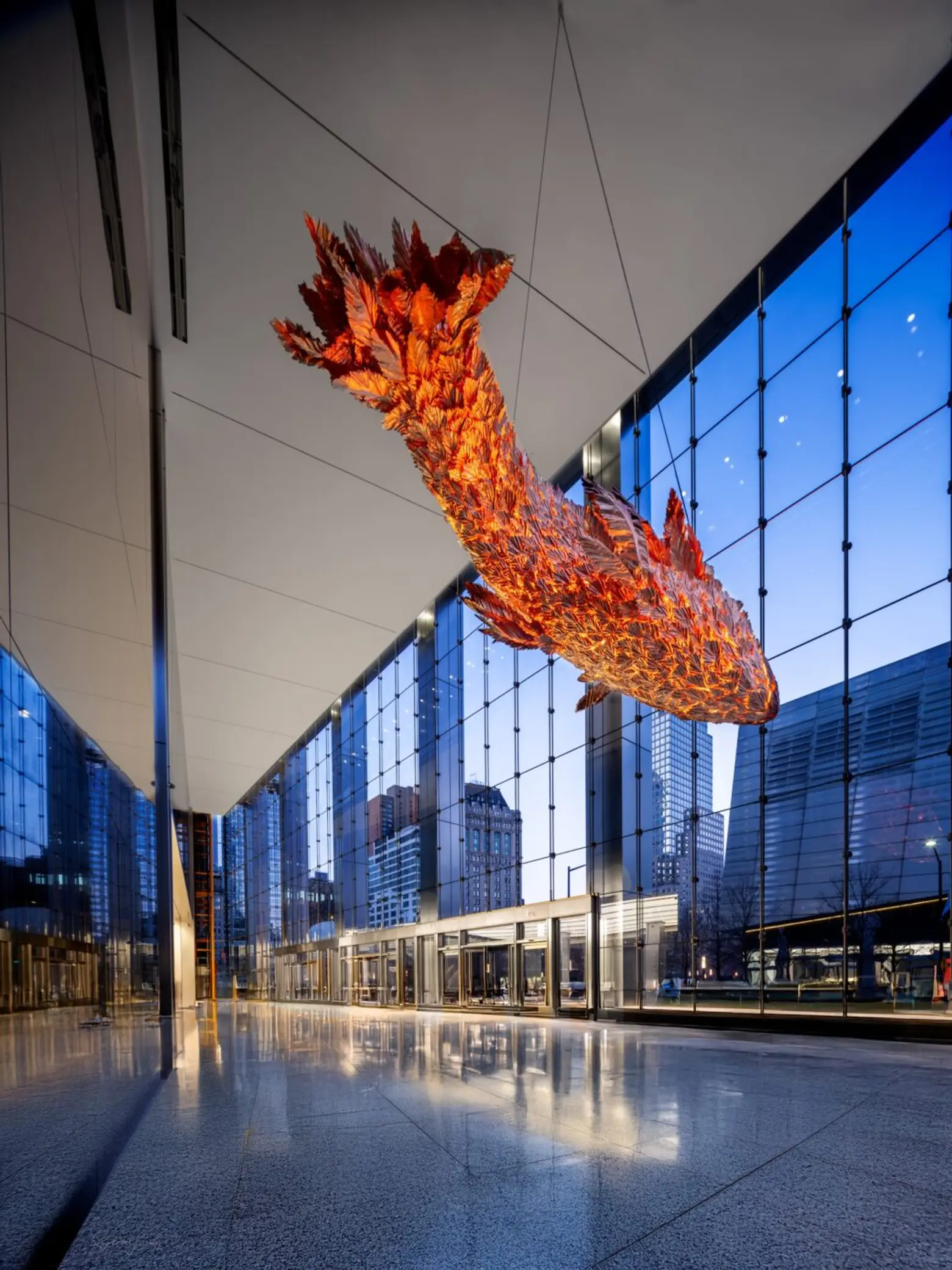
Gehry is also remembered for his massive fish sculptures, a design motif he has used since the 1980s.
In February, a 20-foot by 7-foot copper fish was unveiled in the lobby of Silverstein Properties’ 3 World Trade Center, the largest of its kind ever made by Gehry.
Gehry’s passing comes just weeks after the death of fellow groundbreaking architect Robert A.M. Stern, who died at 86 in November following a brief pulmonary illness.
The Brooklyn-born architect founded Robert A.M. Stern Architects (RAMSA) in 1969 and went on to build a portfolio that ranged from luxury residential buildings like 15 Central Park West to major institutional projects such as the expansion of the New York Historical.
RELATED: