Prospect Park will get Brooklyn’s first ‘Bluebelt’ to protect area from flooding
Images courtesy of NYC DEP
To protect Prospect Park and nearby Brooklyn neighborhoods from flooding, New York City will spend $68 million on new infrastructure, including the borough’s first Bluebelt. Announced on Wednesday, the investment will fund nature-based solutions—like enhanced lakes and wetlands—to better manage extreme rainfall fueled by climate change. The project will safeguard the Prospect Park Zoo, which closed for eight months in 2023 due to flood damage, and protect surrounding neighborhoods from future flooding.
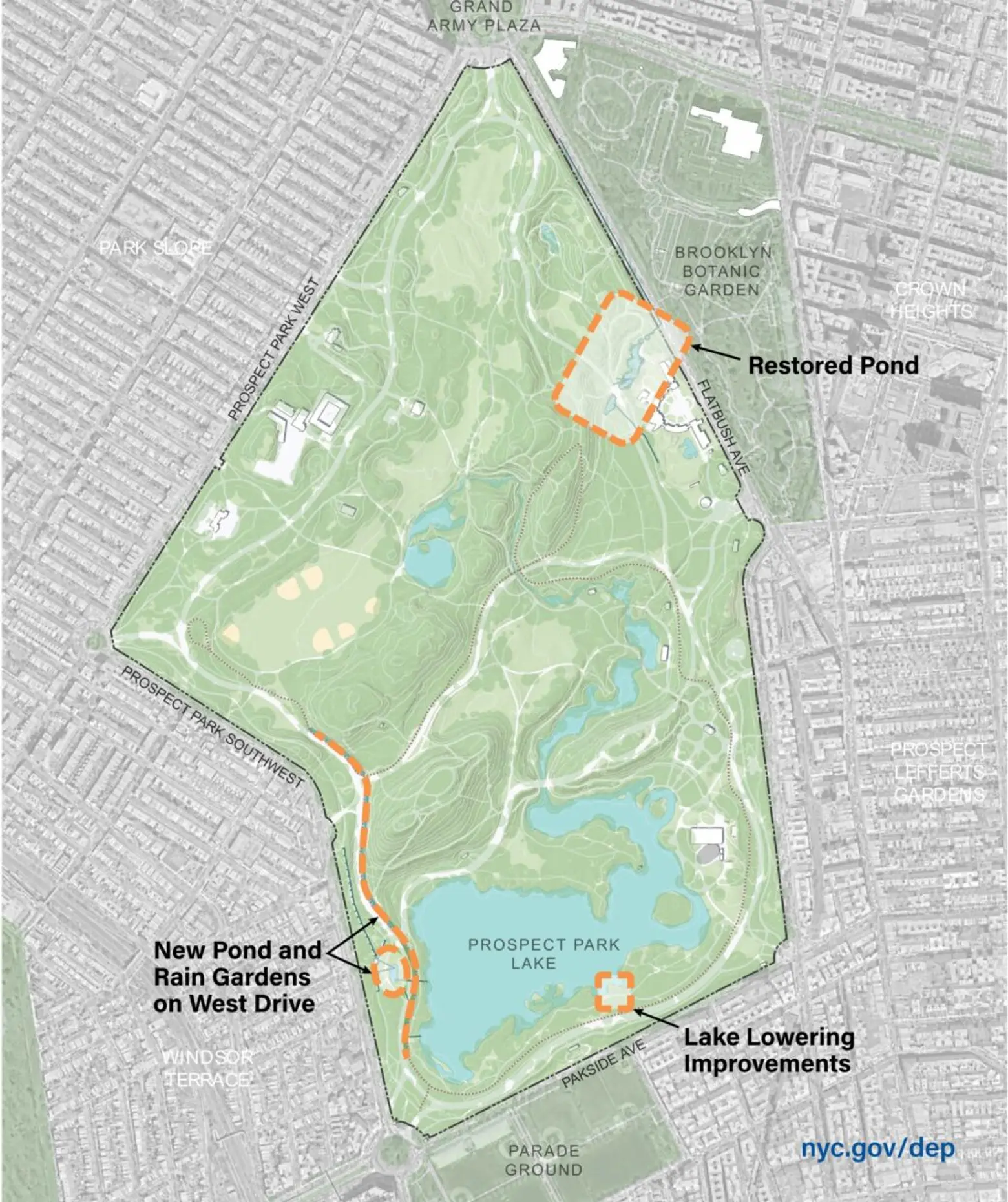
The project follows a year-long study by the Department of Environmental Protection (DEP) into flooding in surrounding Brooklyn neighborhoods and stormwater flow through Prospect Park. Working with NYC Parks and the Prospect Park Alliance (PPA), the agencies analyzed the park’s landscape and water systems to identify ways to improve drainage.
Study findings revealed that during intense storms, rainwater often runs across the ground instead of flowing into the park’s 60-acre lake, causing flash flooding. The 150-year-old lake also has a limited capacity, which can lead to overflow and strain the surrounding sewer system.
To address these issues, DEP, NYC Parks, and PPA plan to enhance the park’s original landscape features and add new ones to better manage climate-driven flooding.
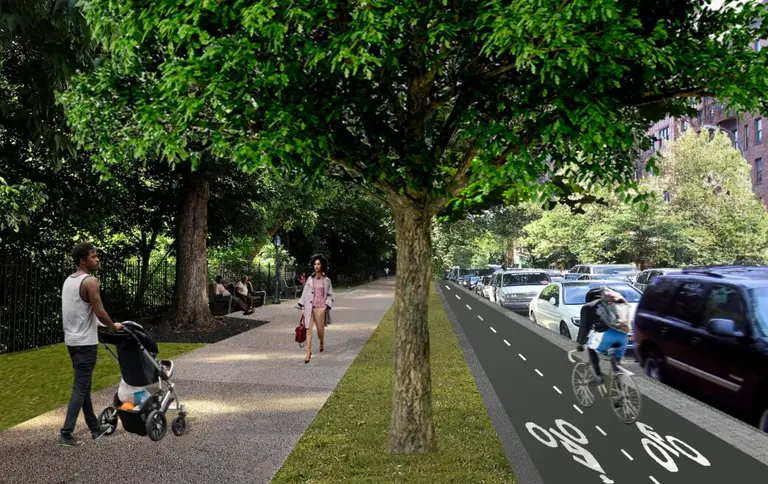
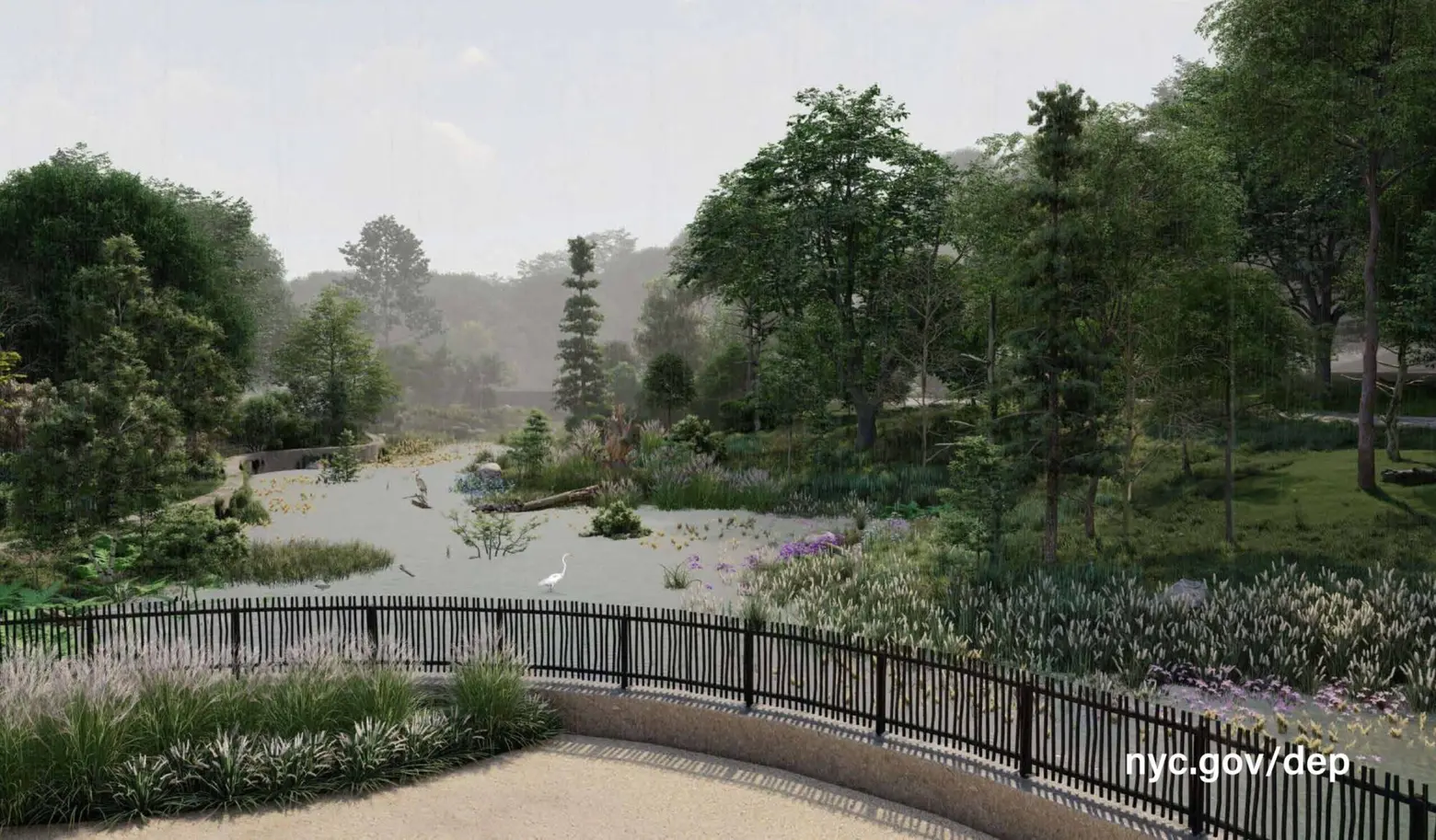
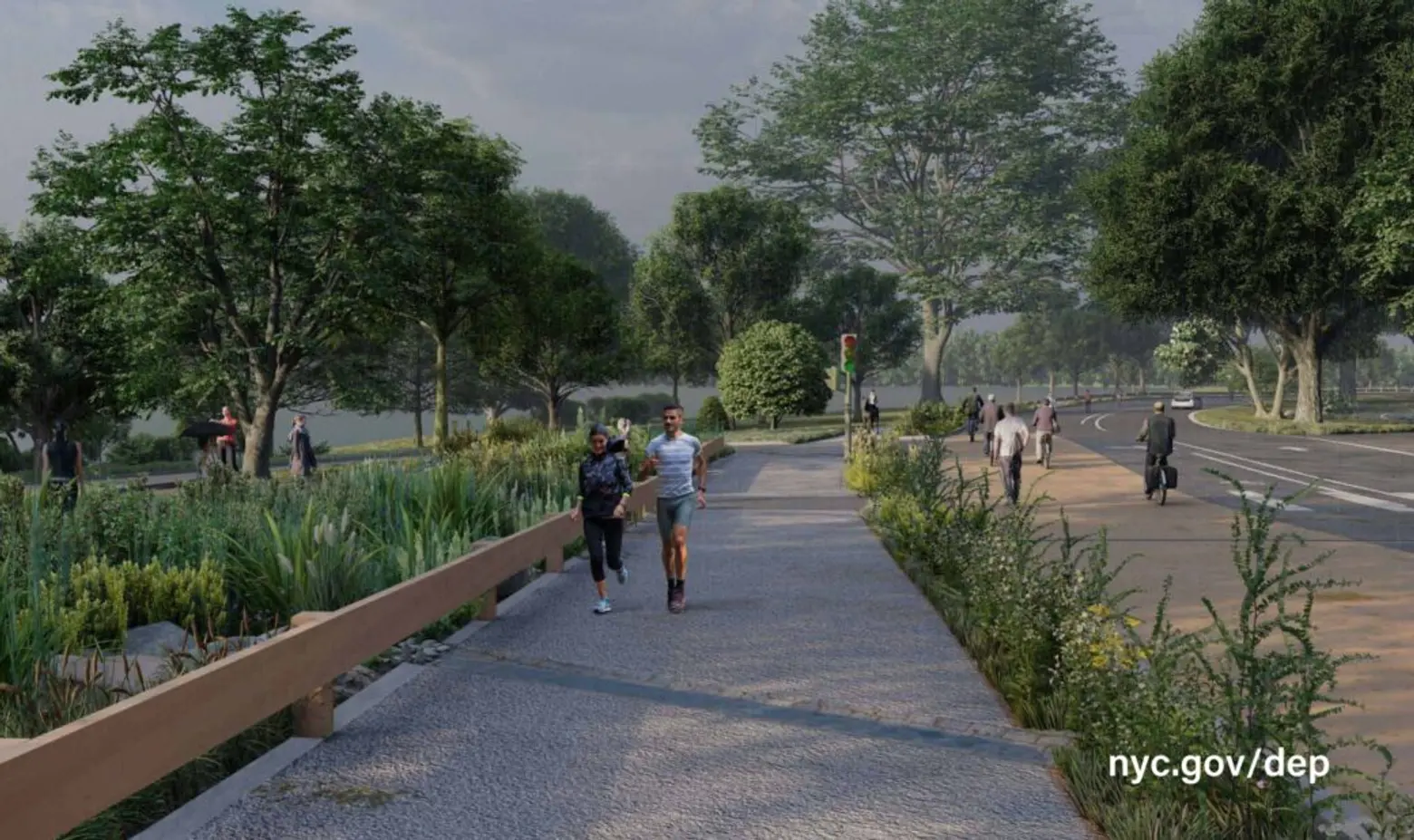
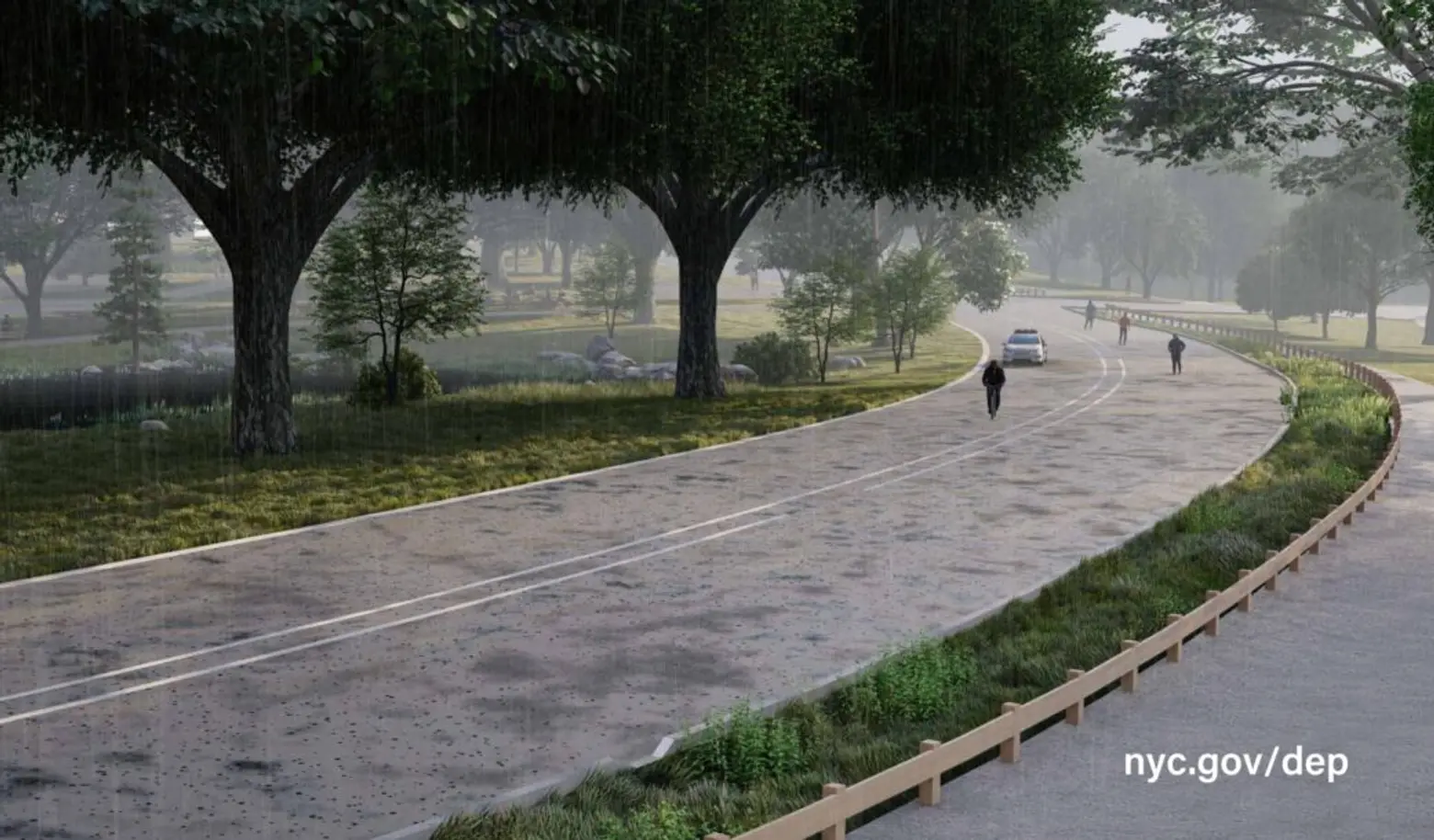
Upgrades to the lake’s infrastructure will let water drain in under 36 hours, rather than three weeks, increasing the park’s capacity to handle major storms. A new pond and a continuous stretch of rain gardens along West Drive will slow and filter rainwater, directing it to the lake after storms instead of flooding nearby homes and streets to the south.
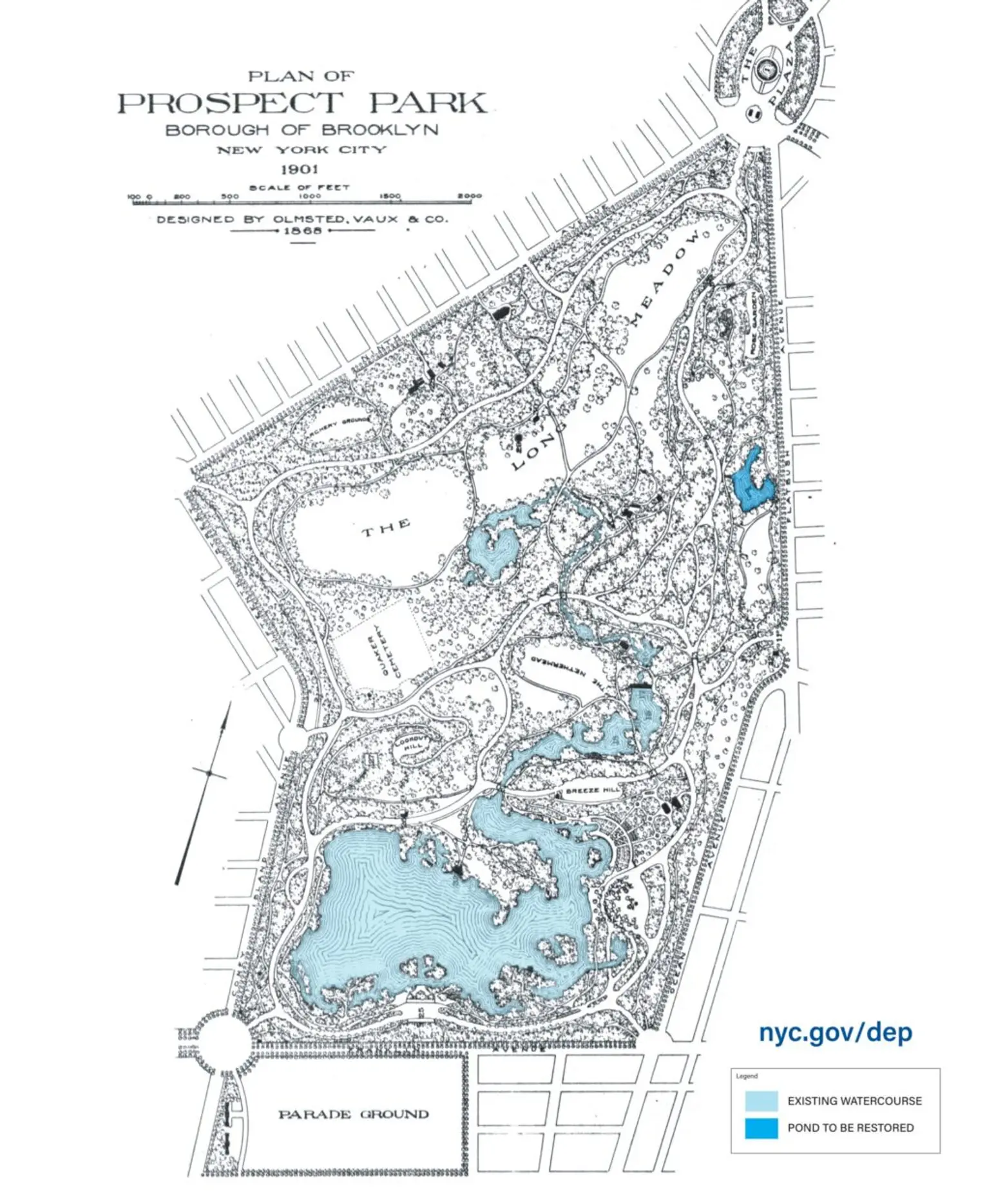
A new pond north of the Prospect Park Zoo will replace a historic pond that was filled in, collecting rainwater from Flatbush Avenue and protecting the zoo from flash floods. Tropical Storm Ophelia in September 2023 dropped over 7 inches of rain on the zoo, causing $6.5 million in damage and eight months of repairs.
Originally launched in Staten Island, the Bluebelt program enhances natural drainage corridors, like streams, ponds, and wetlands, to better collect, store, and filter stormwater. According to a press release, Bluebelts have been proven to reduce urban flooding while creating vibrant, natural environments for residents.
DEP is expanding the Bluebelt system wherever feasible across all five boroughs. The agency currently manages 545 acres of Bluebelts and natural areas in the Bronx, Queens, and Staten Island. The agency has begun designing the Prospect Park project, with construction scheduled to start in 2029 and finish in 2032.
“By using Prospect Park to manage stormwater, we’re turning one of Brooklyn’s most cherished public spaces into a powerful tool for climate resilience,” DEP Commissioner Rohit T. Aggarwala said.
“This project brings Brooklyn its first Bluebelt and demonstrates how restoring and enhancing the park’s natural drainage not only preserves its scenic waterways but also protects the surrounding neighborhood.”
The initiative complements Lakeshore, the $20 million effort to restore Prospect Park’s lake shoreline. The reconstruction follows the original Olmsted and Vaux design and adds new lighting, seating, and viewing areas, green infrastructure for stormwater management, landscaped spaces to support wildlife, and improved accessibility.
Building on the award-winning 2010 Lakeside restoration, the project enhances the Shelby White and Leon Levy Esplanade with walkways, picnic areas, boulders, and native trees, shrubs, and aquatic plants. Five acres of the lake were also excavated to recreate Baier Music Island, which now serves as a wildlife habitat.
“Our public parks are more than just beautiful places to take in the scenery—they are also natural infrastructure, making our city more resilient. With this investment, we’re helping protect Prospect Park and the surrounding neighborhoods from flooding, which is critical as climate change leads to more extreme weather events,” NYC Parks Commissioner Iris Rodriguez-Rosa said.
“We look forward to working with our partners to bring an inventive Bluebelt system to Prospect Park, complementing the ongoing Lakeshore improvement project, and making ‘Brooklyn’s Backyard’ an integral part of New York City’s sustainable future.”
RELATED: