
NYC unveils designs for revamped sidewalk sheds

Renderings courtesy of PAU
New York City officials are reimagining sidewalk sheds and street scaffolding, transforming these necessary but unsightly structures into safer, lighter, and more flexible structures. On Tuesday, Mayor Eric Adams unveiled six innovative designs by Arup and Practice for Architecture and Urbanism (PAU) that enhance circulation, improve aesthetics, and let in more natural light, all while continuing to protect New Yorkers. The new sheds, which eliminate the X-shaped bars and other confining elements of current models, could be installed on city sidewalks as early as next year.
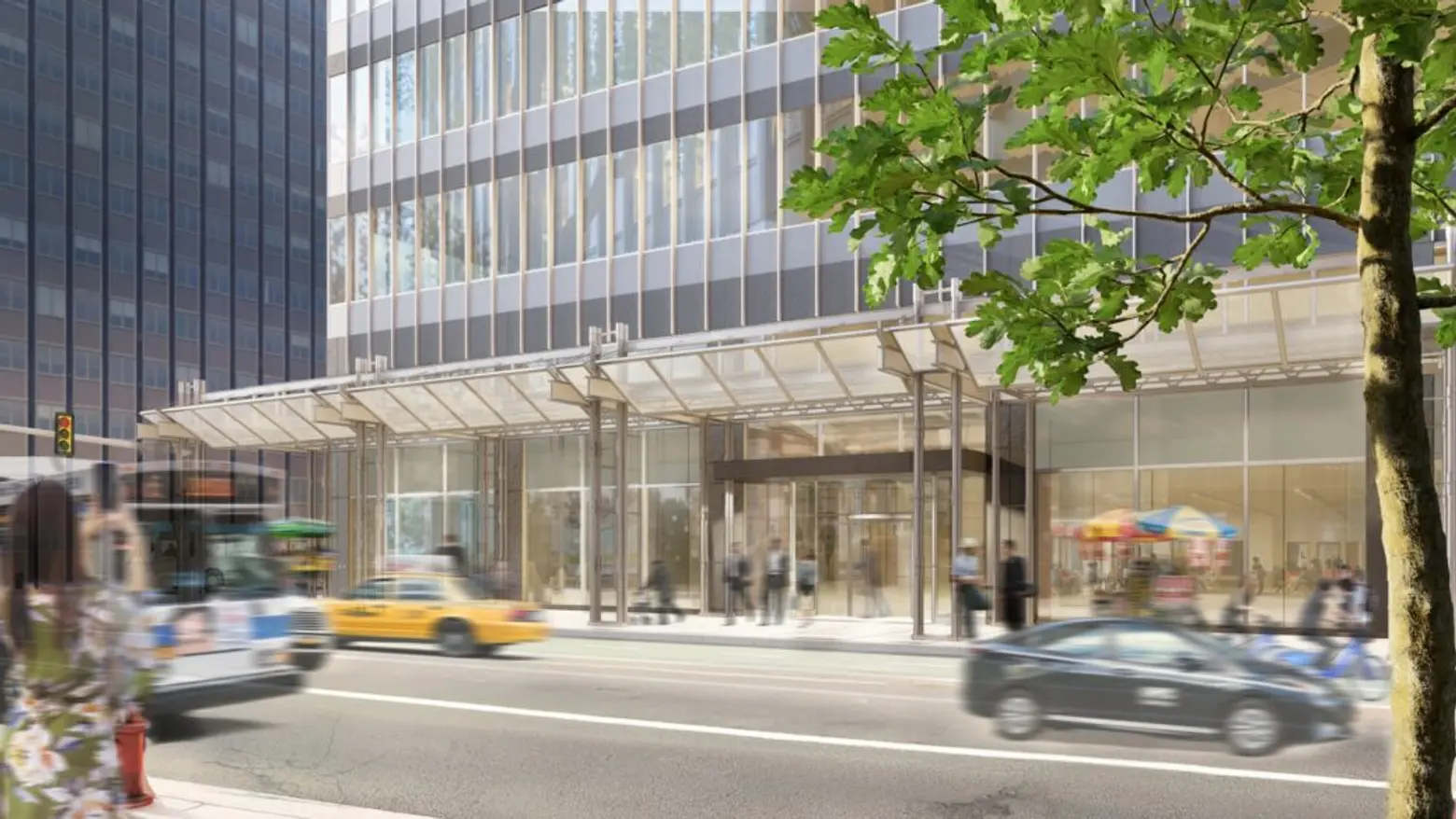
“These new shed designs are leaps and bounds above what we see on sidewalks today and coupled with scientific evidence-based reforms of the city’s façade inspection regulations, they will help us unclog pedestrian spaces for our fellow New Yorkers,” Buildings Commissioner Jimmy Oddo said.
Most of today’s sidewalk sheds follow a strict, 1980s-era design, featuring a flat deck, plywood parapet, steel columns, cross-bracing, railings, and electrical lighting. While cost-effective and code-compliant, these structures are widely seen as unsightly and a nuisance.
Early sheds were often painted in colors like red and yellow, but in 2013, the city required them to be hunter green, according to the New York Times. Today, they can also be white, metallic gray, or any color that matches the building they stand in front of.
Across the five boroughs, more than 8,400 active sidewalk sheds currently cover roughly 400 miles of sidewalk. On average, they remain in place for more than 500 days, and more than 300 have stood for over five years.
City officials have recently intensified efforts to reduce the number of sidewalk sheds and, when they must remain, transform them into more attractive additions to the streetscape.
In 2024, the Department of Buildings selected two teams—one led by PAU and the other by Arup—to redesign the structures. The firms received a $3.5 million contract under Adams’ “Get Sheds Down” campaign, aimed at removing long-standing sheds.
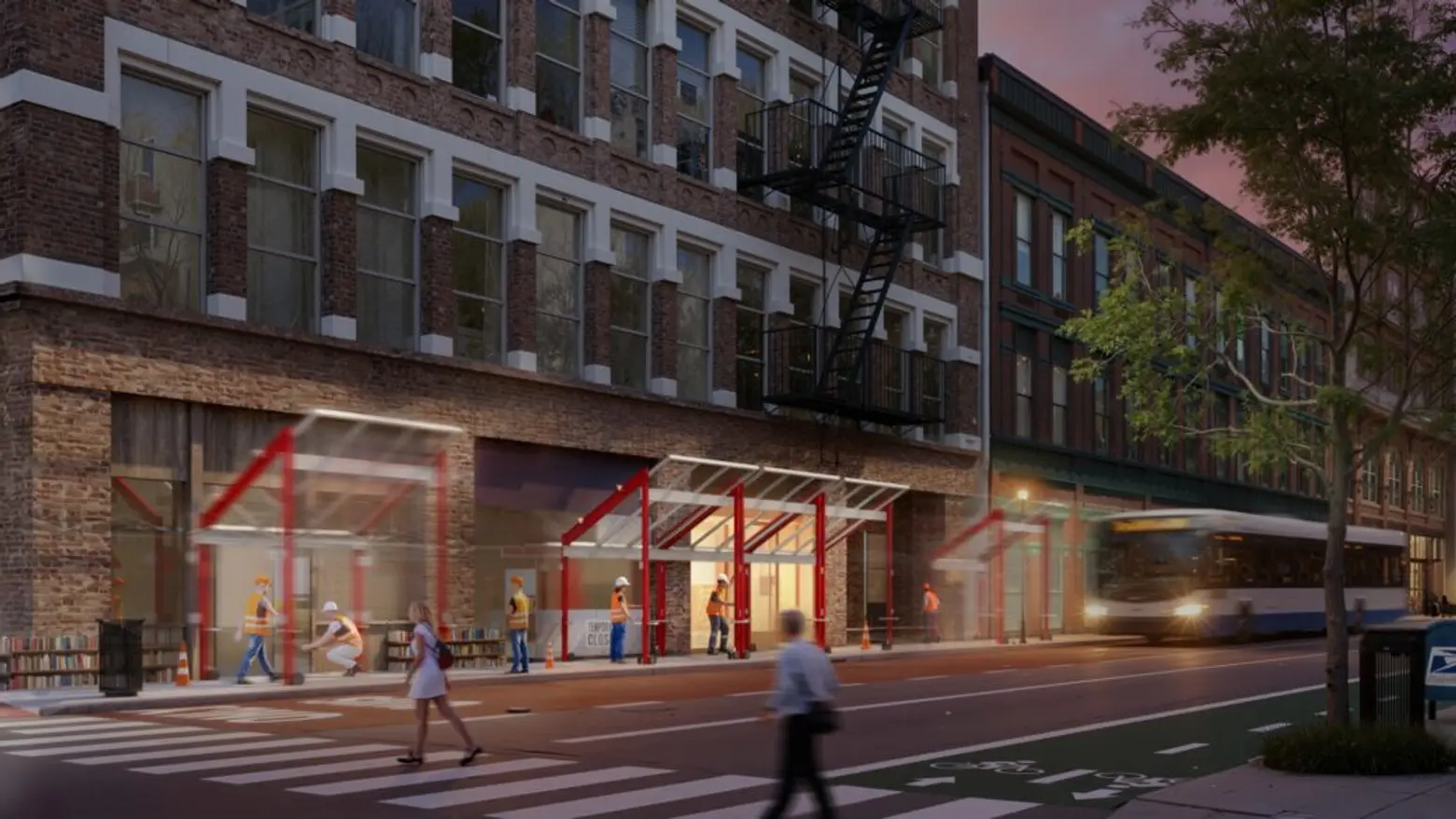
PAU, working with structural partner LERA Consulting Structural Engineers and collaborators including Tang Studio Architect, Langan, RWDI, Fisher Marantz Stone, and Dharam, developed proposals aimed at improving pedestrian flow, enhancing aesthetics, increasing flexibility, and minimizing disruption during installation and maintenance.
Three designs from PAU and three from Arup have been selected for implementation.
“PAU was established to design for the public,” Vishaan Chakrabarti, founder of PAU, said. “I can’t imagine a more impactful intervention than making Gotham’s sidewalks – the most defining aspect of our city’s public realm – safer, more egalitarian, and more beautiful.”
Early in the design process, the team identified a solution that addressed multiple needs: sloping the roofs. This removes the parapet, opens the sidewalk to the sky, and deters climbing. Flat-topped sheds will still be available in rare cases requiring roof access, and the team is exploring ways to easily convert sloped roofs into flat platforms when needed.
PAU’s three selected designs include the “Speed Shed,” a light-duty structure built for rapid deployment and easy mobility, ideal for short-term work or emergency repairs. Its angled, transparent roof lets in natural light, enhancing visibility and improving pedestrian comfort.
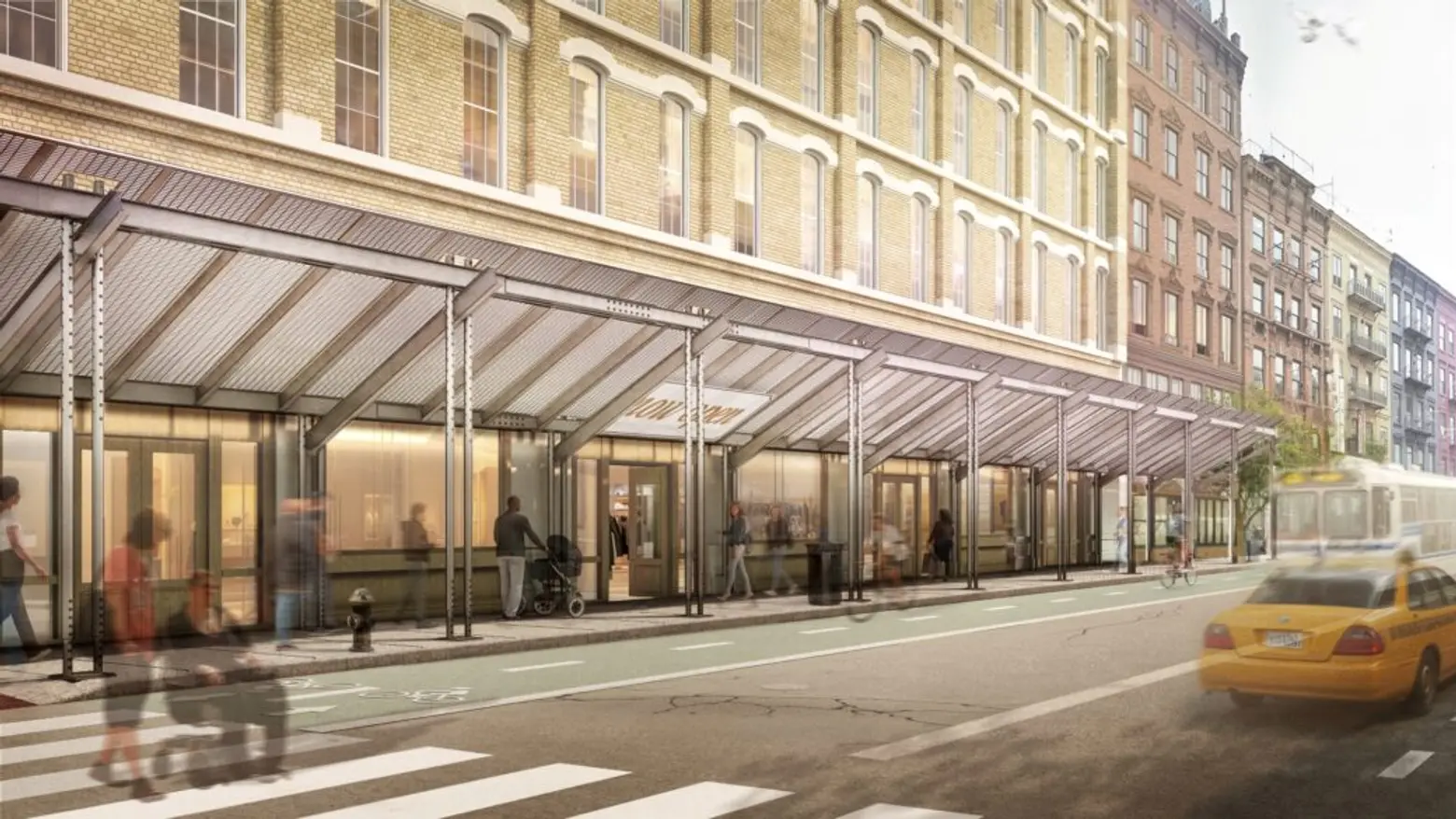
The “Baseline Shed” provides versatility for both light- and heavy-duty setups, easily adapting to a wide range of building and sidewalk conditions. Like the Speed Shed, it includes an angled, transparent roof that lets in natural light.
For larger, long-term projects, the “Wide Baseline Shed” offers a heavy-duty option specifically meant for broader sidewalks along major corridors. It features widely spaced structural columns that minimize obstructions and maintain pedestrian flow.
Additional features to improve circulation, increase natural light, and enhance the pedestrian experience include replacing solid roofs with netting, removing street-level bracing, and eliminating corner columns, which currently block movement and are vulnerable to vehicle impacts.
PAU is collaborating with award-winning architectural lighting firm Fisher Marantz Stone to introduce diffused, less conspicuous lighting solutions.
To stay within budget, the firm is designing a standardized “kit of parts” for easy assembly and maintenance. A simple, adjustable aluminum frame will allow two people to set up and move the sheds around a site as construction needs change.
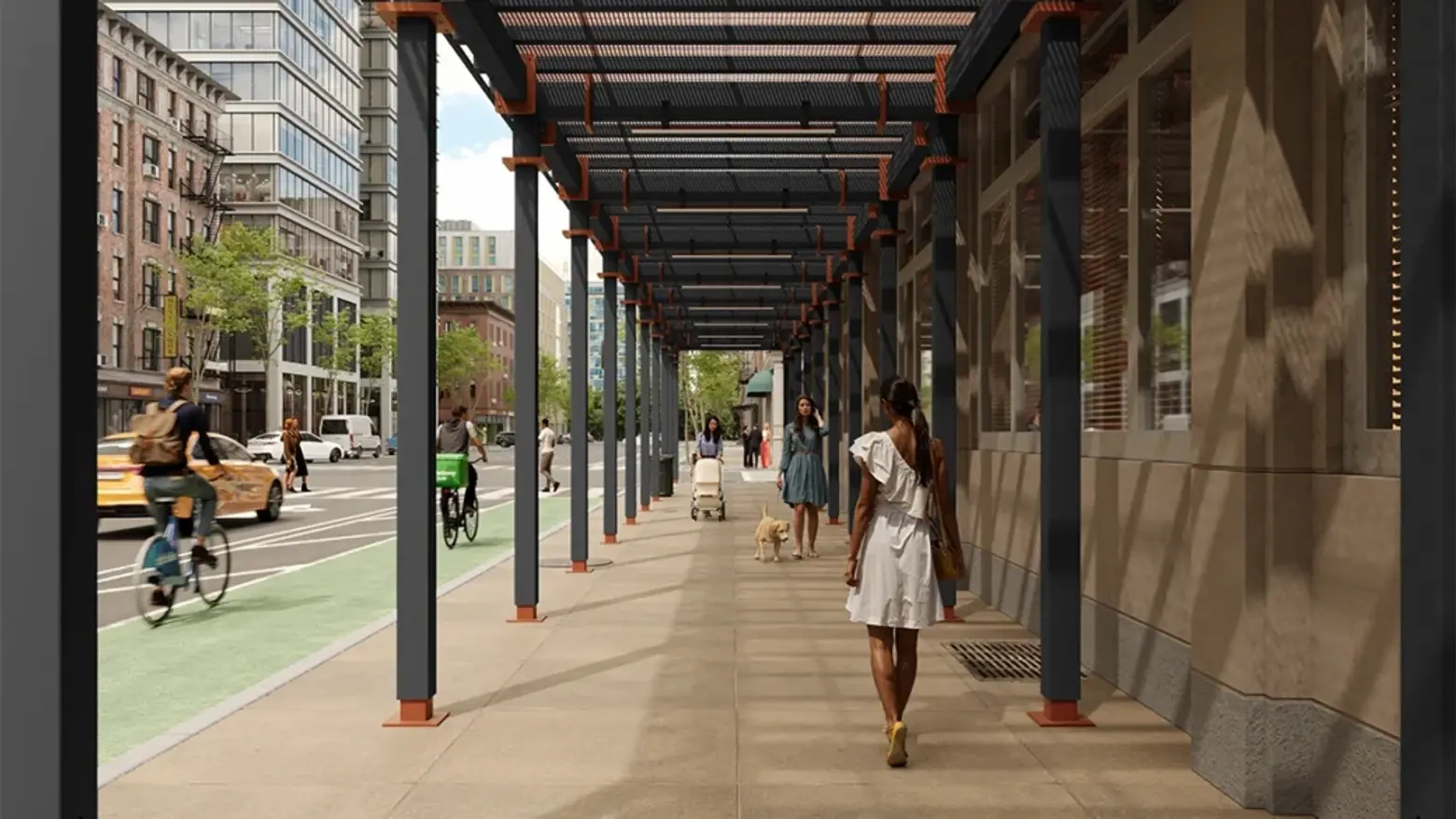
The Arup Team, working with KNE studio, Reddymade, and CORE Scaffolding, designed three sidewalk sheds that are highly flexible, made with modular components that can be reused and adjusted based on the streetscape.
The designs include the “Rigid Shed,” made for major projects, like new building construction. The design features a small footprint on the sidewalk and minimal obstruction for pedestrians.
Designed for facade repair and window replacement projects, the “Air Shed” is completely lifted off the ground and anchored into the building, cantilevered over the sidewalk like a balcony without any impact on passersby.
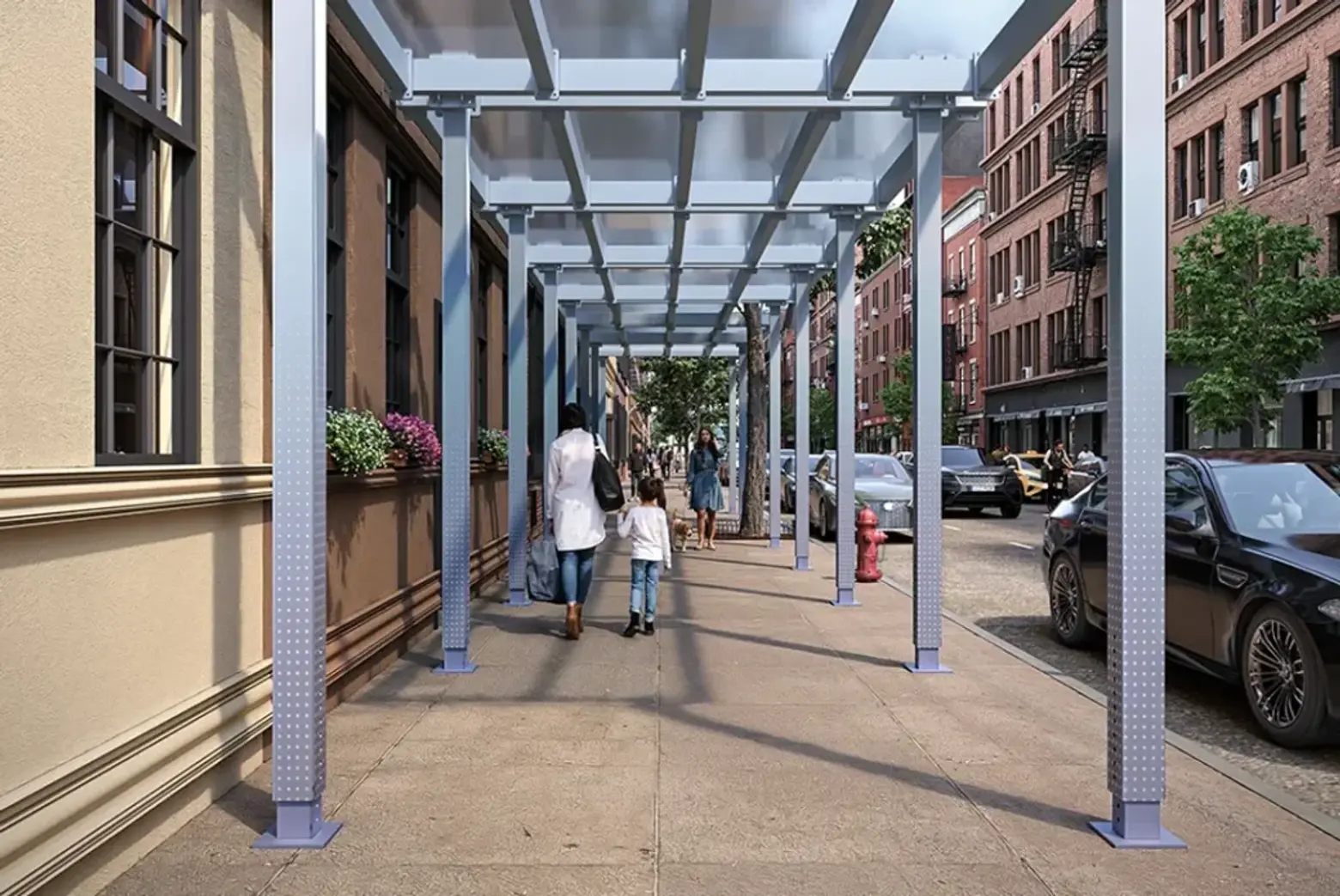
The “Flex Shed” is a light-duty shed for maintenance work and emergency repairs. The platform heights and column placement can be adjusted, allowing for a smaller footprint on the sidewalk.
“Scaffolding sheds serve an important role in protecting pedestrians from overhead construction, but they shouldn’t diminish the experience of walking through our city’s streets,” Seth Wofle, a principal at Arup, said.
“Our designs have fewer obstructions to overcome the tunnel-like feel of current sheds, bringing lights and life back to New York City sidewalks.”
Moving forward, the DOB will collaborate with PAU and Arup to make all six designs available for public use through the agency’s rule-making process. Registered design professionals will be able to obtain permits through the DOB’s Professional Certification program, similar to how they currently secure permits for existing sheds.
This is the city’s second major attempt to replace the 1980s-era shed design. In 2009, the DOB and partner organizations launched the global urbanSHED competition, which drew 164 submissions from 28 countries, according to the Times.
Urban Umbrella’s winning design introduced thin white frames with umbrella-like arches, and the company has since installed 105 of them citywide. However, the upgraded structures cost between $75,000 and $100,000, compared to roughly $45,000 to $52,500 for traditional sheds.
DOB officials have not yet released cost estimates for the six new shed designs, though the agency expects them to cost more than standard green sheds. At least one model, however, reuses components like steel poles.
City officials have also advanced legislation to overhaul the city’s sidewalk shed rules, shortening how long the structures can remain in place. A package of five bills passed in March, sponsored by Council Members Keith Powers and Erik Bottcher, directs the DOB to study new shed designs, tightens permit timelines for facade work, and adds penalties for property owners who let sheds linger.
RELATED:
Interested in similar content?
Leave a reply
Your email address will not be published.









The proposed shed designs look better, but are they functional in every way needed? We had shed roofs right outside our windows. I have observed that the current style of sheds also serve as places for the workers to store materials, and they walk and work on the shed when the work is in proximity with it (like brickwork repairs). How will they do that with slanted roofs or shed roofs made of lightweight non-loadbearing materials?